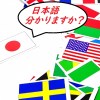

Survey suggests that east Japan and west Japan interpret the common invitation response in almost entirely opposite ways.
Japanese can be a very vague language. That’s partly because of the mechanics of the language itself, but also because Japanese society takes great pains to avoid being overly blunt and causing unintended offense.
As such, a lot of communication relies on the listener’s ability to read between the lines and decipher what the speaker is actually saying. Surprisingly, this system generally works pretty smoothly, but any message that leaves elements of itself open to interpretation has the potential to cause misunderstanding, as a recent survey suggests that people from Tokyo and Osaka take practically opposite meaning from the same exact phrase: Iketara iku.
First, let’s look at what iketara iku literally means. Iku is Japanese for “go.” All Japanese verbs end in a “-u,” and changing that to “-etara” adds the meaning to “if I can,” so iketara iku means “I’ll go if I can go,” or, more naturally, “I’ll be there if I can make it.”
But if someone gives you this non-committal response to an invitation, can you count on him actually showing up? People in Kanto, the east Japan region that includes Tokyo, seem to think you can. Japanese TV talk show Chichin Puipui surveyed people in Kanto about the phrase iketara iku, and 80 percent of respondents said that they’d take those words to mean the person is probably going to be present at the event in question.
However, Chichin Puipui got very different results when performing the survey in Japan’s central Kansai region, of which Osaka is a part. Only 10 percent of the people in Kansai said that iketara iku would have them expecting the speaker to make an appearance. In other words, most of them would be ready to write you off if they said “Let’s go get some drinks on Saturday!” and you said “Iketara iku.”
It’s worth pointing out, though, that neither group took iketara iku as an ironclad declaration either way, which is exactly the intention of such an indefinite choice of words. Still, if you’ve told a friend in Osaka iketara iku, and you schedule does in fact clear up enough that you can make it, it might be nice to call ahead and let the host know you’re now certain that you’ll be there.

Hachiji juppun mae – A Japanese phrase that even Japanese people can’t agree on the meaning of
We find out if one trending phrase can make people from Osaka flip out
Japan has a set phrase for the crazy busy feeling we all get at the start of the year
What do you call this sitting pose? Japanese netizens polled to find differences in dialect
Kansai and Kanto prove again that they are each distinct regions when it comes to food
Japanese sweets shop sells an ohagi so exquisite it sells out by noon
Studio Ghibli store Donguri Republic announces opening of first-ever store in America
Forget Tokyo go-karts – there’s a new way to sightsee on four wheels in Japan
Studio Ghibli adds new My Neighbour Totoro music box to its anime merchandise store in Japan
Gama Land, the weird Japanese amusement park celebrating toads, is now like a ghost town
7-Eleven Japan to start selling Vietnamese banh mi sandwiches this summer
Starbucks Japan releases new limited-edition summer drinks…and a pastry for dunking
Lawson Japan releases a crazy new product to remind us it’s not just famous for convenience store food
Japanese bento shop touches hearts by selling super cheap boxed lunches for around a dollar
Starbucks Japan releases new Frappuccino, tea and soda drinks for summer
New Japanese overnight train coming to connect Tokyo with Tohoku in sleep-travel style
Universal Studios Japan is giving Frieren anime fans the chance to make unforgettable memories.
Tokyo’s life-size Gundam is getting a new look before its end-of-summer removal
7-Eleven Japan joins the craze for Korean Gamja Cheese Balls
Lawson upsizes convenience store food for a limited time with two must-try Japanese meals
Uniqlo reveals third round of massive 100-year-anniversary manga T-shirts for Jump’s Shueisha
Even at twice regular Daiso price, this handy item is still great for summer travel in Japan
New official Ghibli anime food cookbook will teach you how to make Ponyo’s ramen and more
Japanese convenience store Lawson launches new “mini supermarket” chain, L Minimart
Japan’s real-world Pokémon hot spring’s first photos are here![Photos]
Kyoto public junior high school becomes first in Japan with a hoodie school uniform
Japan’s human washing machines will go on sale to general public, demos to be held in Tokyo
Starbucks Japan releases new drinkware and goods for Valentine’s Day
We deeply regret going into this tunnel on our walk in the mountains of Japan
Starbucks Japan releases new sakura goods and drinkware for cherry blossom season 2026
Japan’s newest Shinkansen has no seats…or passengers [Video]
Put sesame oil in your coffee? Japanese maker says it’s the best way to start your day【Taste test】
Japan reportedly adding Japanese language skill requirement to most common foreigner work visa
Japan’s 5.3 million beautiful Hitachi Nemophila flowers are now in full bloom[Photos]
Pokémon and Ikea Japan cross over into each other’s worlds with collaboration events
Wisteria season starts early with blooming of Japan’s Great Wisteria in its beautiful garden
McDonald’s Japan made two almost identical commercials, with one tiny, touching difference【Vids】
How should a guy say “I” in Japanese? Japanese women give their opinions【Survey】
This one delicious Japanese dessert has at least six different names
Why you shouldn’t call this food “Hiroshimayaki” if you’re talking to people from Hiroshima
Super Mega Important Debate: Tokyo or Osaka? 【Poll Closed】
The difference between onigiri rice balls in Tokyo and Osaka
Japanese readers rave about new book illustrating differences between Kanto and Kansai regions
Our Japanese-language reporter dishes on the differences between cool guys in Tokyo and Osaka
One simple kanji character in super-simple Japanese sentence has five different pronunciations
Four words that mean something very different in east Japan and Kyoto
Foreign English teachers in Japan pick their favorite Japanese-language phrases【Survey】
Wait, the Japanese word daijoubu can mean both “yes” and “no?” Why? HOW?!?
Japanese city makes list of world’s top 10 most livable cities, but not one most people expected
Why are some types of Japanese rice written with completely different types of Japanese writing?
How often do Japanese people rip silent farts? Survey investigates
Top Japanese baby names for 2016 feature flowers and other flora on both boys’ and girls’ lists