
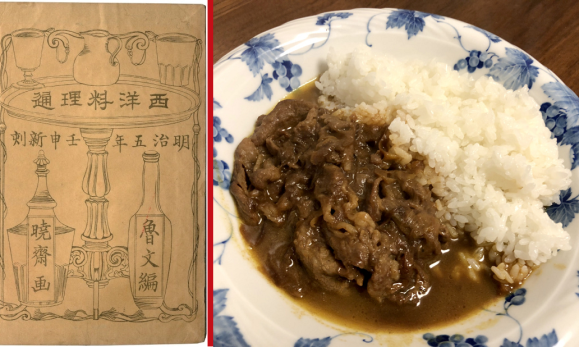
SoraNews24 goes back to the kitchen to go back in time as we taste-test the first written record of how to make curry in Japan.
Curry has become such a ubiquitous part of the Japanese diet that should you walk down a random street in Tokyo, you’re as likely to find a curry joint as you are a sushi or soba restaurant. That popularity has led to modern innovations such as matcha green tea and Attack on Titan curries, both of which we’ve happily eaten.
But today, instead of looking towards the future of Japanese curry, we’re turning our eyes to the past by making Japan’s oldest curry.
As popular as curry is in Japan now, it was entirely unknown until about 150 years ago. When Japan’s years of feudal-government isolationism ended in the late 19th century, it opened up the country not only to foreign science and technology, but foreign food as well.
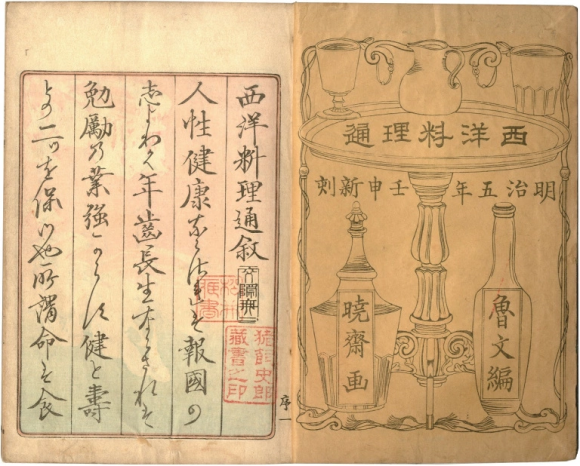
Curry came to Japan through British sailors, who’d already made the originally Indian dish a staple of their at-sea cuisine. In 1872, the Japanese-language cookbook Western Cooking Michimasa-Second Volume was published, containing 110 recipes for the exotic meals and desserts eaten by foreigners who came to Japan.
Back here in 2018, we recently attended the Tokyo International Antiquarian Book Fair, where we got to look through a copy of the Meiji-period cookbook, which contained entries for:
● Curried Beef or Muten – Powder Sprinkled on Beer Technique
● Explanation of Curried Weel or Fowl Curry Bird Meat Cooked with Curry Powder
After a few moments deciphering the pre-standardized renderings of English loanwords (in modern Japanese, “curry” is written/pronounced カレー/karee, but the cookbook’s text has “curried” as コリード/koriido, for example), we realized we were looking at the two oldest recorded curry recipes in Japanese history, one for beef or mutton and the other for chicken. So we jotted down some notes and headed to the SoraKitchen to cook, and eat, a bit of history.
Since the curry beef/mutton recipe was listed first in the book, we figured it has seniority on the chicken version, so that’s what we decided to make.
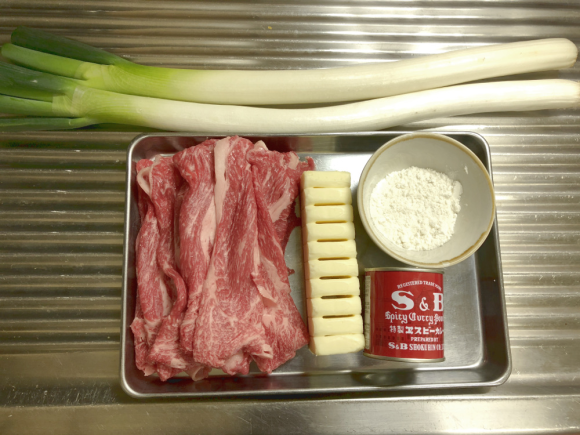
Ingredients (as listed in cookbook):
● Meat trimmings
● Spring onions (2)
● Bottor (4.5 loaves)
● Curry powder (1 shitoruto spoon)
● Flower (1 shitoruto spoon)
● Salt (a measure)
● Water or meat drippings
Ingredients we used:
● Beef (200 grams [7.1 ounces])
● Spring onions (2)
● Butter (150 grams [5.3 ounces])
● Curry powder (1 tablespoon)
● Flour (1 tablespoon)
● Salt (1 pinch)
● Water (150 milliliters [5.1 ounces])
Our entire staff was unable to figure out what a “shitoruto spoon” is or was, so we decided to use a tablespoon, under the logic that a teaspoon wouldn’t be enough curry powder to impart enough flavor. Should we ever build a time machine at some point in the future, we’ll be sure to go back and ask the book’s authors what they meant, then come back to the present and update the recipe seen in this article (but since that hasn’t happened yet, you can either assume time travel remains impossible or that we got distracted by something in the past, probably being able to meet real-life ninja).
With our ingredients assembled, it was time to look over the cookbook’s directions.
Directions (as listed in cookbook):
1. Thinly slice the spring onions. Place them in a pot along with the bottor, and sauté until gray in color.
2. Mix the shitoruto spoon of curry with the shitoruto of flour and salt, then add the mixture to the gray spring onions.
3. Thinly slice the meat and place it in the pot. Mix it with the ingredients already there while cooking over a weak flame for 10 minyutes. Add the water or drippings, let simmer on a weak flame for half an hour.
At the risk of sounding arrogant, we’re going to assume that “cook the onions and butter until they’re gray” was either something that got lost in translation from the original British chef’s explanation, or maybe just an odd quirk of historical descriptions of color (maybe “gray-colored onions and butter” is just the cookbook author’s version of Greek poet Homer’s “wine-dark sea”). In any case, we’re not sure we’re talented/terrible enough cooks to get butter to turn gray anyway, so we made a slight change to that part of the recipe, but otherwise stuck to the cookbook’s plan, using a deep frying pan since it was large enough to hold our modestly-sized edible endeavor.
Directions we used:
1. Slice onions, sauté with butter until golden
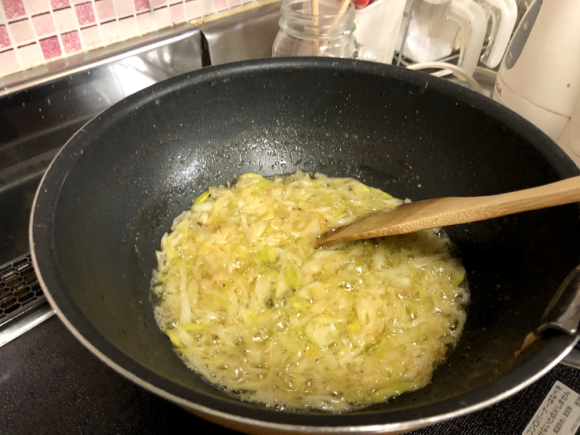
2. Mix curry powder, flour, and salt. Add mixture to onions and butter.
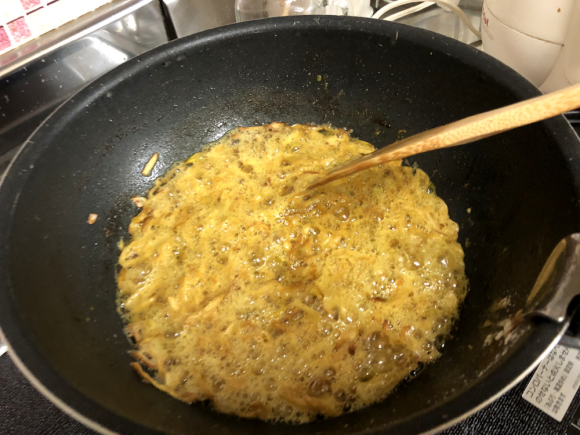
3. Thinly slice beef and add to mixture. Sauté on low heat for 10 minutes.
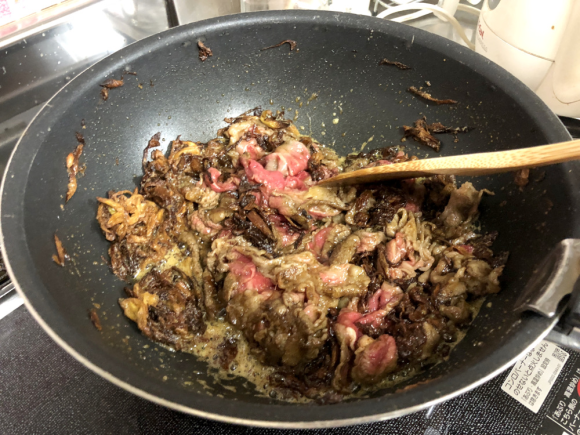
4. Add water, let simmer for 30 minutes.
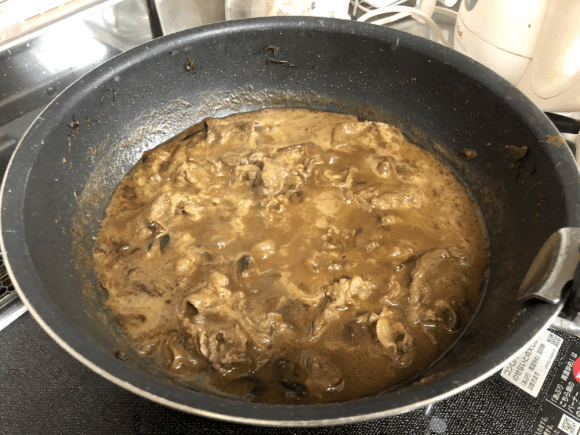
When our curry was done, we poured it onto a plate with white rice occupying the other half, as is the Japanese serving style, and it actually looked pretty tasty, if you’ll forgive us for tooting our own horn.
▼ Begging for forgiveness is a surprisingly common occurrence for us.
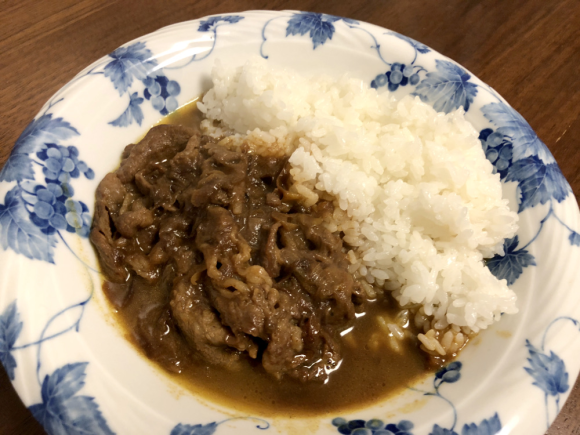
Honestly, it didn’t look significantly different from modern curry. As for the taste…
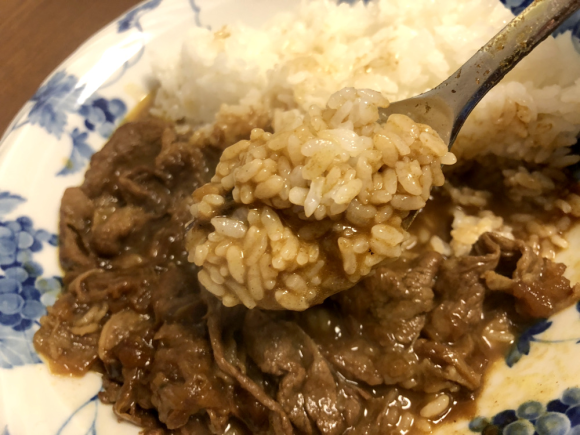
…that’s a different story. For starters, this old-school curry is much saltier than what you’ll find in contemporary Japan. There’s also a bit of bitterness, which we attribute to the onions getting slightly scorched when we tossed the curry powder and flour into the pan. Finally, there wasn’t a trace of the kid-pleasing sweetness found in modern Japanese curries.
Both of those might be problems that you could probably overcome, though. Being extra-slow and cautious when adding in the curry and flour should help prevent singeing, and as for the saltiness, we’re guessing that perhaps the 19th-century British navy didn’t use salted butter like the kind we had in our 21st-century fridge, and an unsalted variety should improve the flavor balance quite a bit.
Still, Japan’s oldest curry has a unique charm all its own, and with the adjustments we mentioned, could be even better. As for the fact that we didn’t think to do those in the first place, we guess that’s just one more piece of evidence that the SoraNews24 of the future still hasn’t sorted out time travel.
Related: Tokyo International Antiquarian Book Fair
Photos ©SoraNews24
[ Read in Japanese ]
Follow Casey on Twitter, where curry for lunch is sounding like an excellent idea.
 Anime cooking in real life – How to make Food Wars’ unagi matelote【SoraKitchen】
 How to make a “curry rice bowl” using instant oatmeal instead of rice 【SoraKitchen】
 Here’s what happens when you mix 75 types of Japanese instant curry together【SoraKitchen】
 How to use leftover Japanese curry: We test out a recipe for curry bread quiche【SoraKitchen】
 Can we successfully recreate Snoop Dogg’s cookbook recipes in Japan?【SoraKitchen】
 Japan reportedly adding Japanese language skill requirement to most common foreigner work visa
 New 7-Eleven sandwich goes viral in Japan, but is it everything it’s cracked up to be?
 New Japanese KitKats come in sakura flavour, with poetic symbolism for success
 How to take your home ramen to the next level by making your own chashu pork in a frying pan
 Man bites woman at cherry blossom park in Japan, dies shortly after
 McDonald’s Japan adds new Hello Kitty and Pompompurin drinks to the menu for a limited time
 Two food hacks take Japan’s convenience store fried chicken to amazing new sandwich heights
 Peanuts and Coke becomes a viral hit in Japan, but is it a trend worth joining?
 Deer that appeared in downtown Osaka gets a new home, a new name, and a lot of snacks[Video]
 Totoro Fund line of beautiful artwork and apparel lets you help the real-world Totoro Forest
 Pokémon and Ikea Japan cross over into each other’s worlds with collaboration events
 Starbucks Japan closing only Shinkansen platform branch for popularity-triggered renovations
 You can assemble a well-balanced team of Pokémon, them eat them, thanks to Japanese cake chain
 Fading Tokyo – Searching for signs of the Showa era as local neighborhoods evolve[Photos]
 Pokémon lacquerware series expands for Year of the Horse with new handcrafted design[Video]
 Tokyo turns its phone booths into free Wi-Fi hotspots, and here’s how to use them
 Tokyo teahouse serves up a sakura matcha dessert you won’t find anywhere else
 Japan now has a special desk for people who work at home with a pet cat[Photos]
 Famous Tokyo cherry blossom spot installs view-blocking screens to fight overcrowding[Video]
 Uniqlo announces new T-shirts for One Piece, Naruto and more for manga publisher’s 100th birthday
 Train station platform ramen store closes its doors on half a century of history in Tokyo
 Starbucks Japan releases new My Fruit³ Frappuccino at only 34 stores around the country
 Studio Ghibli releases Catbus pullback keychain that runs like the anime character
 Krispy Kreme releases Super Mario doughnuts in Japan for a limited time
 Japanese onsen egg maker from 100-yen store Daiso needs to be on your shopping list
 Survey asks foreign tourists what bothered them in Japan, more than half gave same answer
 Japan’s human washing machines will go on sale to general public, demos to be held in Tokyo
 Starbucks Japan releases new drinkware and goods for Valentine’s Day
 We deeply regret going into this tunnel on our walk in the mountains of Japan
 Studio Ghibli releases Kodama forest spirits from Princess Mononoke to light up your home
 Starbucks Japan releases new sakura goods and drinkware for cherry blossom season 2026
 Japan’s newest Shinkansen has no seats…or passengers [Video]
 Major Japanese hotel chain says reservations via overseas booking sites may not be valid
 Put sesame oil in your coffee? Japanese maker says it’s the best way to start your day【Taste test】
 No more using real katana for tourism activities, Japan’s National Police Agency says
 Japan goes crazy for “gaming eggs,” and here’s the super-easy recipe【SoraKitchen】
 Can you use McDonald’s French fries to make Japanese-style croquettes?【SoraKitchen】
 How to make so, Japan’s 1,000-year-old dessert recipe that’s back in fashion【SoraKitchen】
 Tired of your usual camping fare? Try this easy Japanese festival favorite【SoraKitchen】
 How to make Tokyo Disneyland’s awesome Mickey Mouse eggs at home!【SoraKitchen】
 How to make Disney’s Chocolate Peanut Butter Banana French toast at home【SoraKitchen】
 How to make okonomiyaki at home【SoraKitchen】
 Here’s what happens when you mix all 53 kinds of Muji curry into one crazy super curry【Taste test】
 We try making Nisshin’s Jijimi Korean Pancakes in a cup kit【SoraKitchen】
 A whole new way to eat somen noodles: Homemade somen canapés!【SoraKitchen】
 We try making a low-calorie katsu with tofu instead of pork【SoraKitchen】
 Rice cooker kuri gohan and two more super-easy chestnut recipes to make this fall【SoraKitchen】
 Is a curry donut rice bowl greater than the sum of its parts?【SoraKitchen】
 How to make cheese with just three ingredients【SoraKitchen】
 How to make your own Pringles-flavor instant noodles【SoraKitchen】
 How to turn Cup Noodle instant ramen into delicious Osaka-style dumplings【SoraKitchen】