
Otou-san is just the tip of the paternal iceberg.
Just like the U.S., Japan celebrates Father’s Day on the third Sunday in June. The way Japan celebrates it is pretty similar too: presents, dinner out, and a greater willingness to just let dad relax and sip his beer in peace while relaxing on the couch and watching golf on TV.
Some things are still uniquely Japanese, though. With Father’s Day coming at the start of the summer, a nice jinbei (a traditional Japanese roomwear garment) is a popular present, and some of the top restaurant picks are yakiniku or kaitenzushi (revolving sushi) joints. And of course, they don’t call it “Father’s Day” in Japan, since there’s a Japanese word for “father.”
Well, actually, there are a ton of different ways to say “father” in Japanese, and what better day to take a look at them than today?
1. otou-san / お父さん
Technically we’re going to look at five different but related terms here in entry #1.
If you’ve ever taken an introductory Japanese class, or watched many J-dramas or anime, this is probably the first one you learned. Otou-san is the most common, broadly usable phrase for father/dad in Japanese.
At the same time, it’s actually just one of many arrangements in a surprisingly flexible system. -san is the standard suffix to show politeness when talking about a person in Japan, but if you want to kick the politeness/formality up a notch, you can change it to otou-sama. On the other hand, if you want to go the other way and make it sound more sweetly affectionate, you can say otou-chan (though that one’s most commonly used by little kids). As a quick-and-simple rough equivalency list you can generally think of otou-san as “dad,” otou-sama as “father,” and otou-chan as “daddy.”
Speaking of politeness, the o at the start of otou-san is itself a politeness-boosting prefix, so you can remove it and just say tou-san or tou-chan. Tou-sama, however, is a combination you’ll never hear, since -sama itself is too formal to fit with the dropped o.
One important thing to keep in mind: since politeness towards others and humility regarding yourself/your own family are considered good manners in Japanese culture, when you’re talking about someone else’s father, it’s best to stick with otou-san or otou-sama, the most polite options. Out of the two, otou-san is usually the wisest choice, since otou-sama can sound a little baroque, and it’s also best to avoid otou-sama when talking about your own dad, since it can make you sound conceited about your father’s status, or perhaps intimidated by his stature.
2. chichi / 父

Our second way to say father, chichi, is actually written with the exact same kanji character as the “tou” part of otou-san (父), just with no additional hiragana characters in front of or behind it. That unfettered status makes chichi the most absolutely neutral way to say father in Japanese, and so the lack of added politeness means you usually don’t use it to talk about someone else’s dad.
However, there’s a school of thought that you absolutely should use chichi when talking about your own dad once you reach adulthood. The logic is that otou-san and its various alternate forms are all, to some extent, terms of respect. As such, if you’re talking to someone else and use the term otou-san to refer to your own father, the linguistic implication is that you’re saying that your dad occupies a position of higher respect than the person you’re talking to.
If you’re a little kid talking to another little kid, that’s not an issue, since adults are generally in a position of authority compared to children. But if you’re a full-grown adult talking to another adult, it’d be kind of presumptuous to talk as though your dad is in a position that demands the other person’s respect like it’s a matter of course, and so chichi, in some people’s minds, becomes the better choice for talking about your own dad in grown-up conversations.
All that said, “you shouldn’t use otou-san for talking about your own dad to other people” is an admittedly old-school way of thinking, and a guideline that younger Japanese people are increasingly less likely to adhere to or worry about. And last, chichi is the word used in the Japanese term for father’s day, Chichi no Hi.
3. papa / パパ
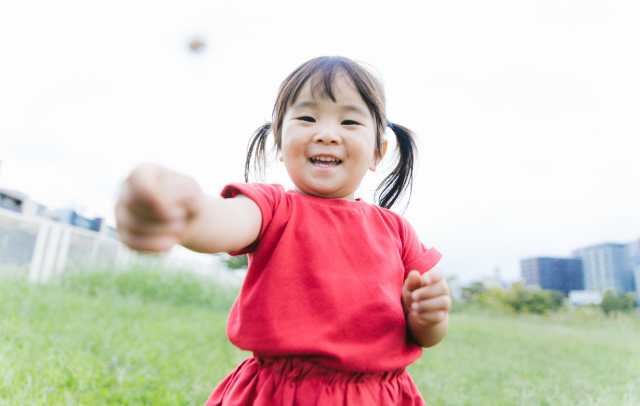
Yep, papa. Just like in English and many European languages, papa is now readily understood in Japanese. It does, however, have a very childish ring to it, and so it’s something that most kids, especially boys, start growing out of by the time they finish elementary school. Some women continue to use it into adulthood, but even then primarily when speaking directly to their father or other family members, not in conversations with other people, to avoid being seen as a daddy’s girl.
4. oyaji / 親父 / おやじ
Oyaji is really two vocabulary words in one. Written with the kanji characters for “parent” (親) and “father” (父), it not only means dad, but is also a generic term for a middle-aged or elderly man.
Oyaji is the roughest-sounding term on our list, but said with enough warmth in your voice, it can also radiate a certain masculine jovialness, and is almost exclusively used by men.
▼ Pictured: Mr. Sato’s dad, who he calls “oyaji”
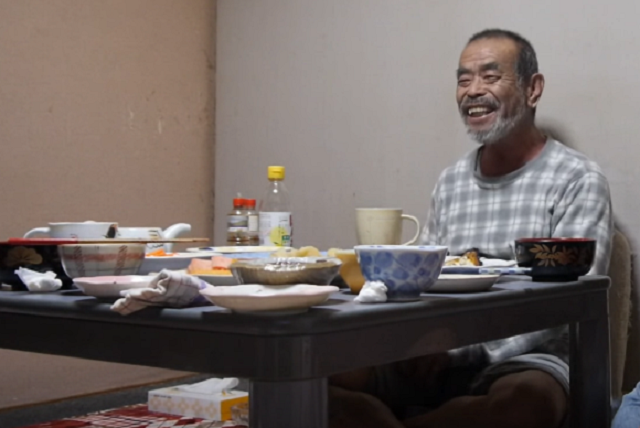
In English, oyaji is closest to “pop” or “pops.” In keeping with that casualness, while oyaji can be written in kanji, you’ll also often see it written in hiragana, which has a less formal feel. And yes, you may have also heard oyaji as part of the phrase “ero oyaji” (“dirty old man”).
5. oton / おとん
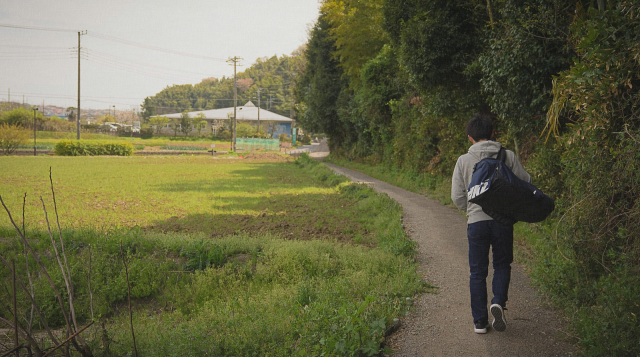
As we move further down the list, we’re also moving farther out into the countryside. To people from Tokyo and east Japan, oton has a decidedly country bumpkin feel, sort of like “pa” in English.
But oton isn’t strictly for yokels, and as you head west from Tokyo, you’ll start to hear it used by people who speak Kansai dialect, the style of Japanese prevalent in and around Osaka. That said, oton always carries a bit of a rustic feeling, and while some may say that’s just backwoods charm, it’ll probably earn a few chuckles if you say it in a formal situation.
6. chichiue / 父上

On the surface, chichiue looks like it shouldn’t be all that different from chichi. After all, it’s just the same “dad” kanji as chichi (父) with 上, meaning “up” or “above,” tacked onto the end. So it’s just a polite way of saying father, right?
Sure…if you happen to be a samurai. Chichiue is an extremely old-fashioned way of speaking, and it’s more or less like saying “exalted father.”
7. chichioya / 父親
And last, we come to chichioya. Written by reversing the kanji for oyaji, putting “father” first and “parent” second. Chichioya is a useful term for talking about fathers in a general or societal sense, perhaps in a prepared announcement or written statement. Generally, though it’s not so commonly used in conversation to talk about a specific person’s father, and especially not your own.
So just like when we looked at the different ways to say “love,” once again Japanese proves itself to be a seriously deep language. Thanks for reading, and happy Father’s Day to you and your dad, whatever you call him.
Top image: Pakutaso
Insert images: Pakutaso (1, 2, 3), SoraNews24, Pakutaso (5)
● Want to hear about SoraNews24’s latest articles as soon as they’re published? Follow us on Facebook and Twitter!
Casey didn’t have space to point out that no one ever says otou-kun in the article, but you can follow him on Twitter anyway.