Over 400 years ago, a temple in Kyoto suddenly became the site of a battle that would change Japanese history forever.
They say that idle hands are the devil’s playthings, so no sooner had we finished building our convincing model of a dingy Japanese squat toilet did we start looking for our next arts and crafts project. And sure enough, we found one, and so we set out to recreate the most famous samurai betrayal in Japanese history, the Honnoji Incident.
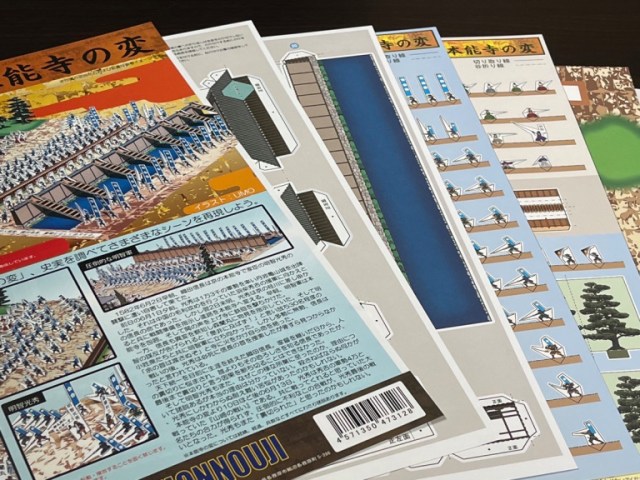
The Honnoji Incident, naturally, was an incident that took place at Kyoto’s Honnoji Temple, in 1582. With the feudal Sengoku period winding down and warlord Oda Nobunaga painfully close to unifying Japan and ending centuries of civil war, he took lodging at the temple. He had only a small a group of retainers with him, as Kyoto was deep within the territory controlled by the Oda clan and Nobunaga was sending his generals to the far corners of the country to mop up the few remaining pockets of resistance.
However, on the morning of June 21 (or June 2 by the old Japanese lunar calendar), one of Nobunaga’s top generals, Akechi Mitsuhide, ordered his troops to attack Honnoji, catching Nobunaga unaware and forcing him into a desperate fight for his life.
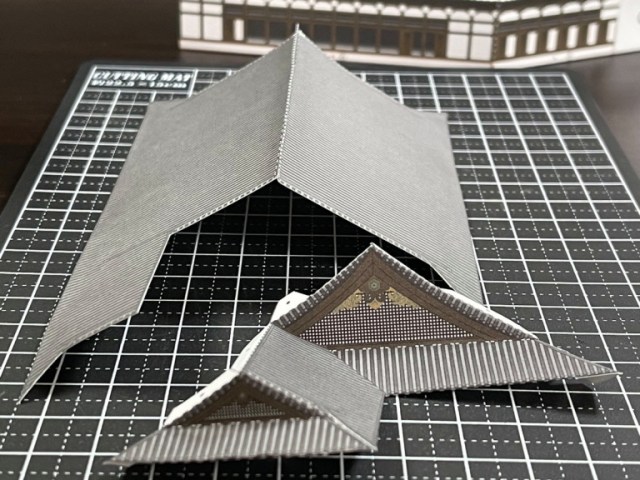
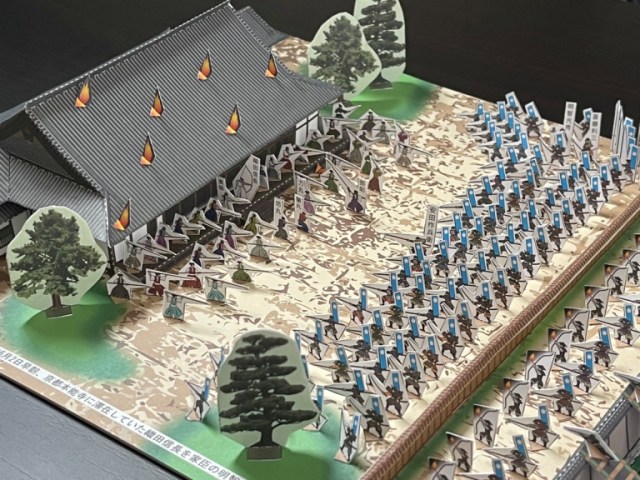
Japanese Papercraft maker Facet’s Sengoku Battle Honnoji Incident kit includes the parts and pieces for the building itself as well as the forces of the Oda loyalists and Akechi rebels. The sheets aren’t laser-cut, so you’ll need a craft knife to remove the individual pieces, but with the kit’s very modest price of just 1,320 yen (US$12.75), it’s a reasonable trade-off.
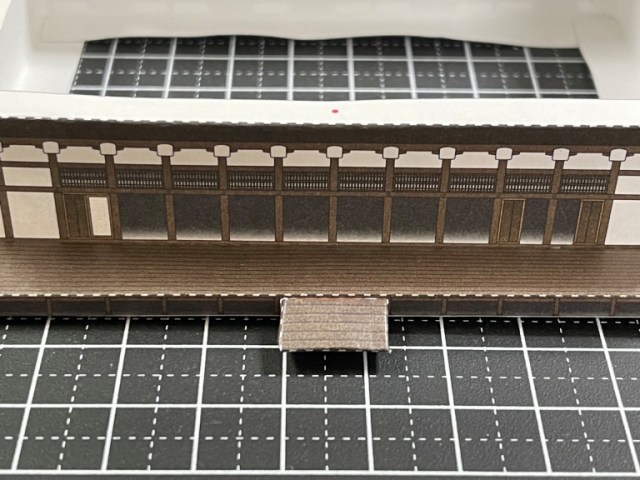
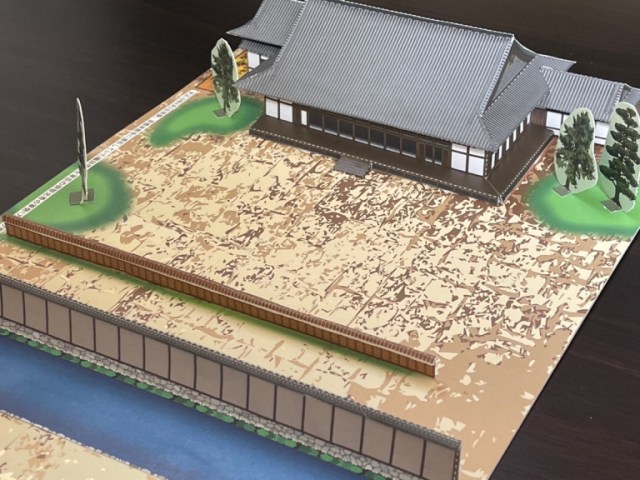
As a classic Japanese temple, Honnoji’s architecture is elegantly understated. The paper material has a nicely balanced consistency, neither too brittle or too soft. And it’s easy to assemble the walls, roof sections, and engawa veranda that runs along the edge of the building.
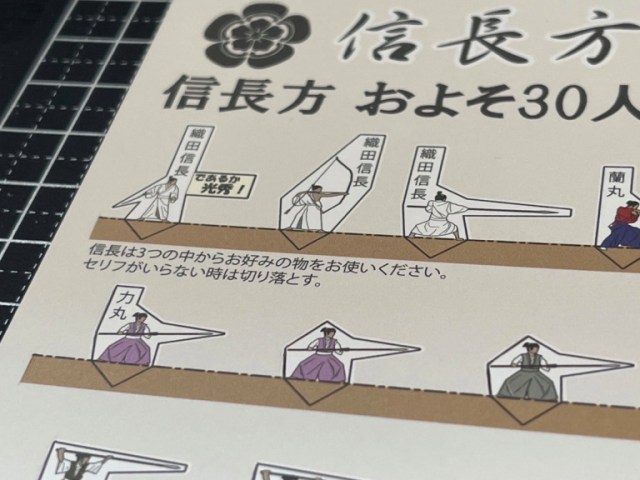
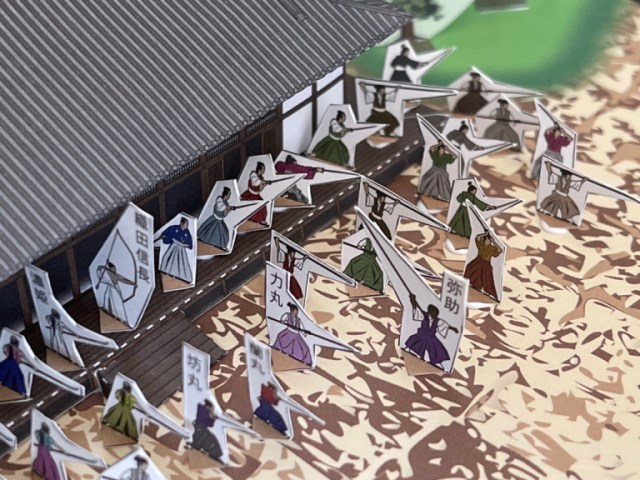
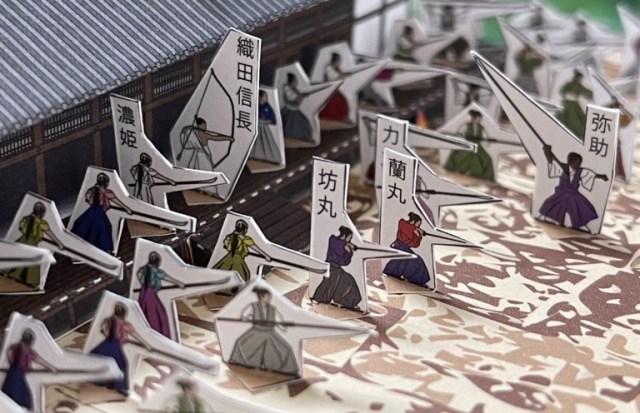
Next it was on to the human elements of the Honnoji Incident, starting with none other than Nobunaga himself. You actually get three different versions of the warlord, holding his sword while shouting “Are you out there, Mitsuhide!”, nocking an arrow into his bow, or thrusting with a spear.
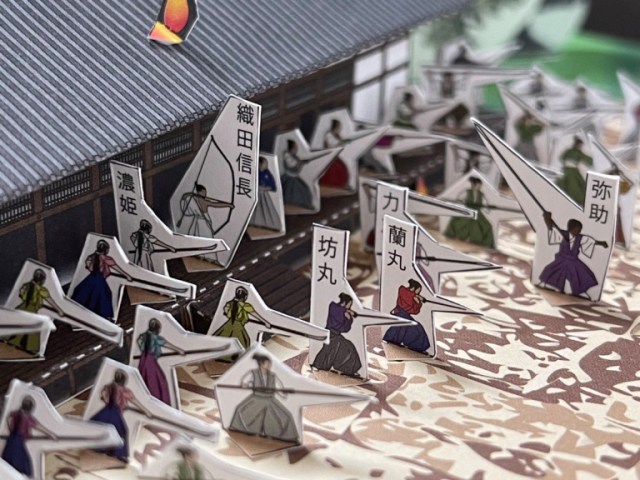
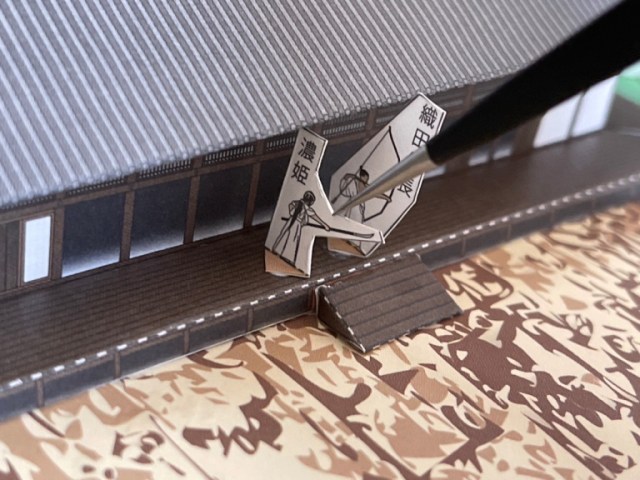
We opted for bow-and-arrow Nobunaga for our scene, and stood him in the center of the engawa. Next to him, we placed his wife, Nohime, who some believe fought as part of her husband’s forces while wielding a naginata, a type of Japanese polearm with a curved blade.
A number of other historical figures who were with Nobunaga at the time of the attack also have their names listed on their pieces. Among those standing with their lord are the three brothers who served as Nobunaga’s pages, as Mori Ranmaru (蘭丸), Rikimaru (力丸), and Bomaru (坊丸). Also represented is Nobunaga’s African retainer, Yasuke (弥助),
OK, let’s move on to the Akechi forces and…
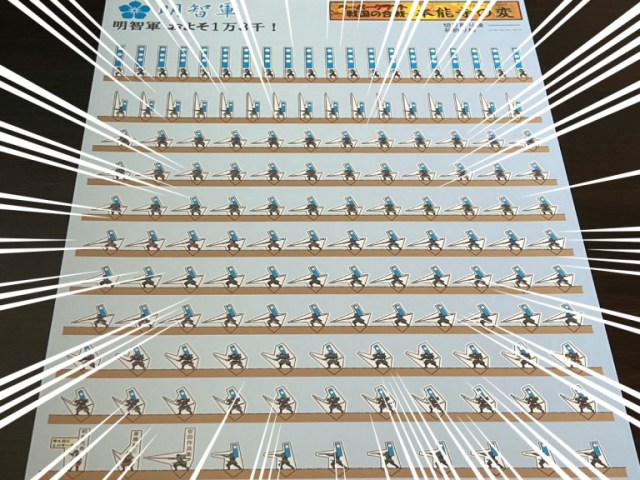
Oh, wow, there are a lot of them.
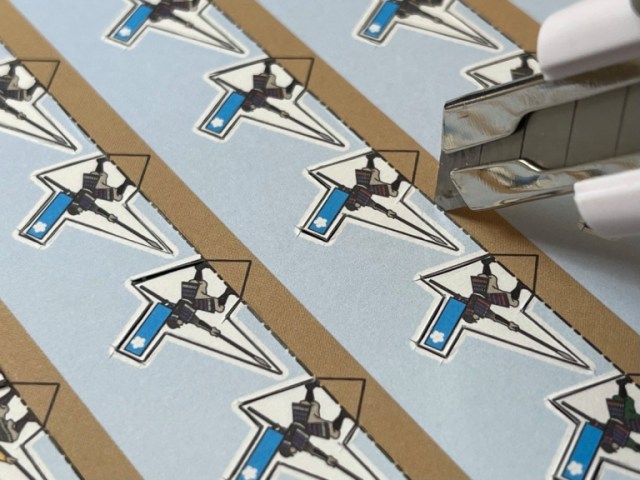
In total, there are more than 100 paper soldiers waiting to lay siege to Honganji. The pieces are all one-sided (i.e. they’re blank white on their backsides), so there’s not much complicated folding to be done per piece, but still, amassing the rebels is going to take a while, just like planning an actual rebellion does.
It would up takins us about four hours to cut out and arrange all the combatants, but when we did…

…they were an awesome sight to see, as the attackers crossed over the moat on ladders and breached the outer wall of the temple compound.
▼ Akechi was not present at the attack, but there is a special piece for Yasuda Kunitsugu (安田作兵衛), his subordinate who led the vanguard in the attack.
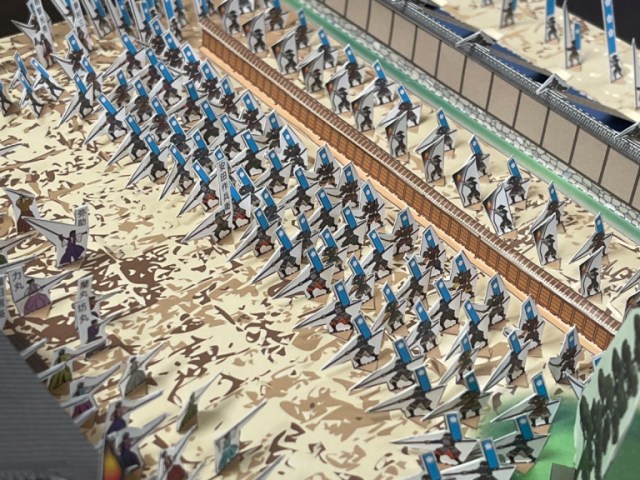
The immense difference in numbers hammers home just how shocking the attack was and how hopeless the resistance was. Something that hadn’t registered until we had everyone on the field of battle was the difference in the arms and armor of the two sides. The rebels are outfitted with full suits of armor and a full arsenal for rows of archers and even musketeers, wielding what was then new, hi-tech weaponry for Japan. In contrast, Nobunaga and his men are largely dressed in kimono and severely lacking in ranged weaponry, since no one expected they’d be taking part in a battle that morning.
In the end, Nobunaga’s forces were overwhelmed, and the warlord committed seppuku, ritual suicide, rather than be captured and executed. On his orders, his surviving retainers burned the temple to the ground so that his head could not be taken and displayed as a war trophy.
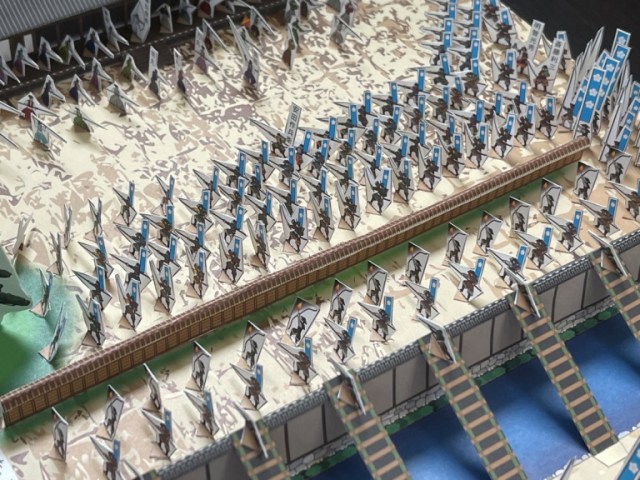
Putting together the kit turned out to be a surprisingly thought-provoking, especially since we started with the peaceful temple, positioned Nobunaga’s group, and then surrounded them with the surprise attackers. If you’re looking to take that same trip back through history, the kit can be ordered here through Facet’s online shop. And if you’re wondering what happened to Akechi, that story is right here.
Photos ©SoraNews24
● Want to hear about SoraNews24’s latest articles as soon as they’re published? Follow us on Facebook and Twitter!
[ Read in Japanese ]
Follow Casey on Twitter, where reading about the Honnoji Incident as a kid was what sparked his interest in Japanese history.