
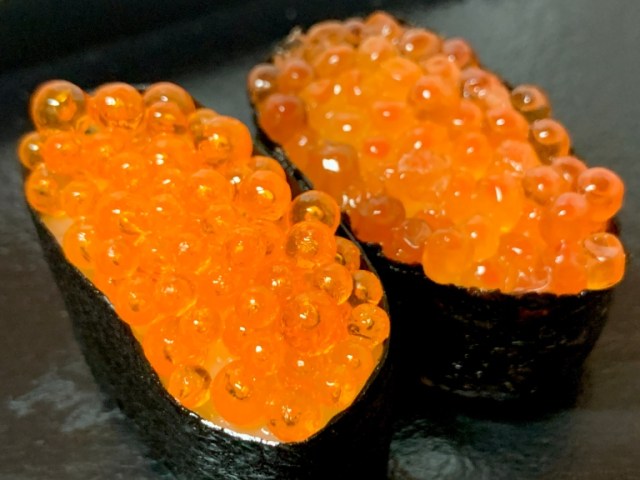
Plastic sushi reaches a new level of craziness with the new ikura gunkan model.
Part of what makes sushi so delicious is its simplicity. After all, a standard piece of sushi really only has two parts, a block of rice and a slice of fish.
So when Japanese plastic model maker Syuto released tuna and salmon sushi models kits earlier in the year, we thought they couldn’t take more than a few minutes to put together, what with the slice of fish being just two simple plastic pieces. Then we found out that each grain of rice is a separate piece.
Now, Syuto is back with an even crazier kit. This one is a gunkan-style (seaweed wrapped) piece of sushi, and this time not only is each grain of rice its own individual piece, but so is each and every piece of ikura, or salmon roe!
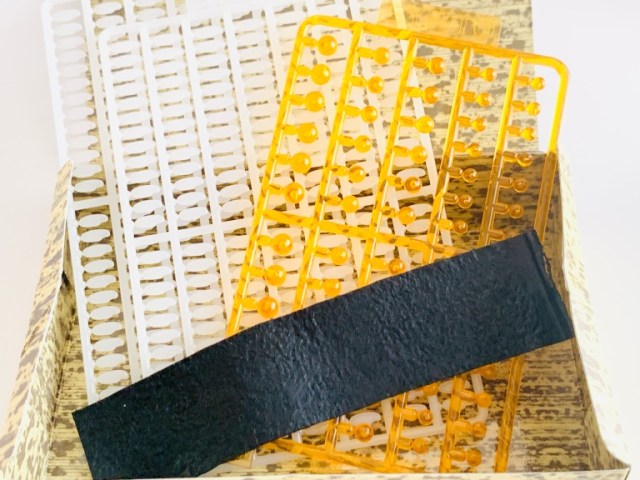
Syuto actually did the research to figure out how many grains of rice and salmon eggs there are in an average piece of ikura sushi, and came up with 364 pieces of rice and 64 eggs. Add in the singular strip of nori (seaweed), and all together there are 429 pieces in this single-piece-of-sushi model.
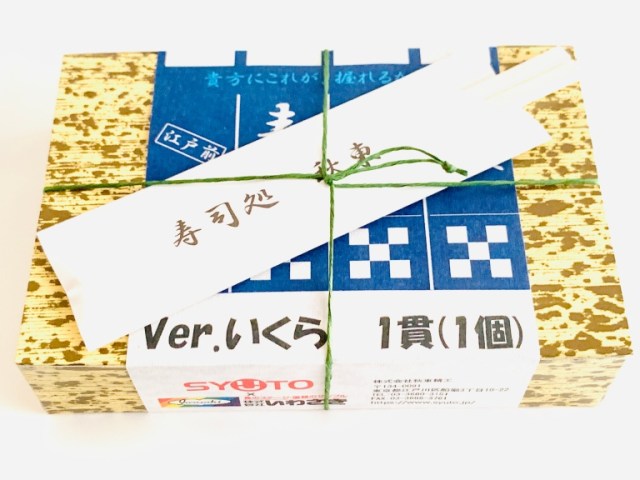
▼ The kit even comes in a package styled after the takeout boxes used by traditional sushi restaurants in Japan.
Step 1 (actually Step 1 through 364) is to remove the grains of rice from their frame, so we got to work plucking them out.
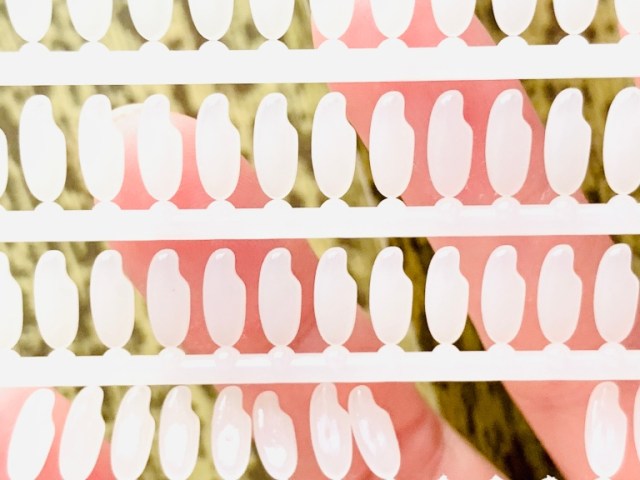
Removing them by hand is no problem, but you might end up with some bits of hanging plastic as you pull them away from the frame. If that happens, a quick snip with a pair of needle-nose pliers should remove the unwanted excess.
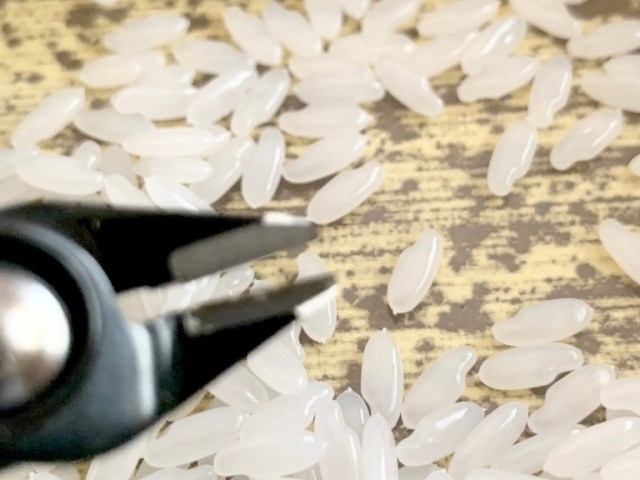
As we got further into the process, we found it mysteriously relaxing. It only requires low-level motor skills, so it’s not difficult or frustrating, but having so many pieces of rice to prep kept our minds focused enough that they didn’t have time to stray to thoughts of stress, anxiety, or any other mental unpleasantries that can build up in your daily life. It was like the rest of the world faded away, leaving just us and the rice.

Once the rice was done, the next thing to work with was the nori, which is one long, pliable PVC strip. If we were making our plastic sushi exactly like how we’d make a real one, we’d form a complete block of rice first, then wrap the seaweed around it. However, to make sure we got a nice oval shape, we instead decided to curve the plastic seaweed into a loop first, then fill it with rice.
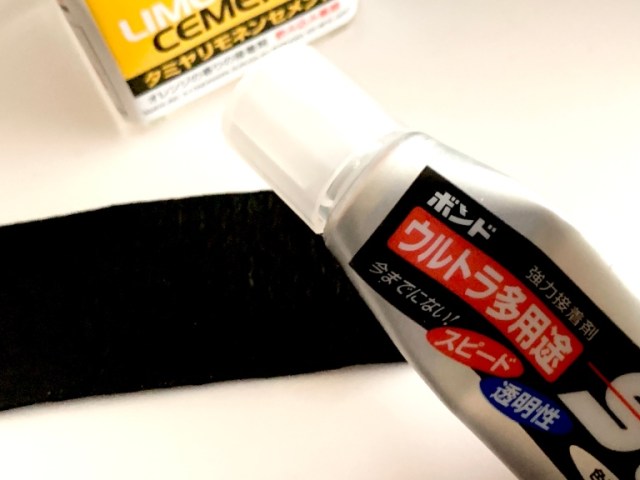
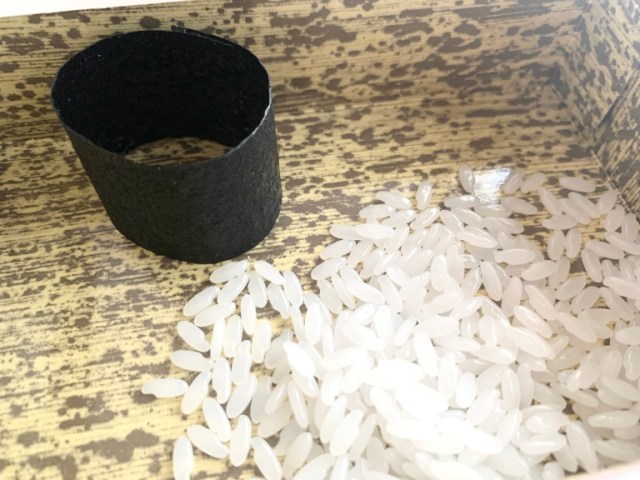
After using some adhesive to close the loop, we began pouring in the rice, bit by bit. Between pours we used a brush to apply a top layer of adhesive, since the plastic rice grains won’t stick together on their own like real rice does.

It’s important to add the rice gradually, since you’ll need to occasionally smooth out the new pieces to keep the visual effect looking fluffy, not craggy.
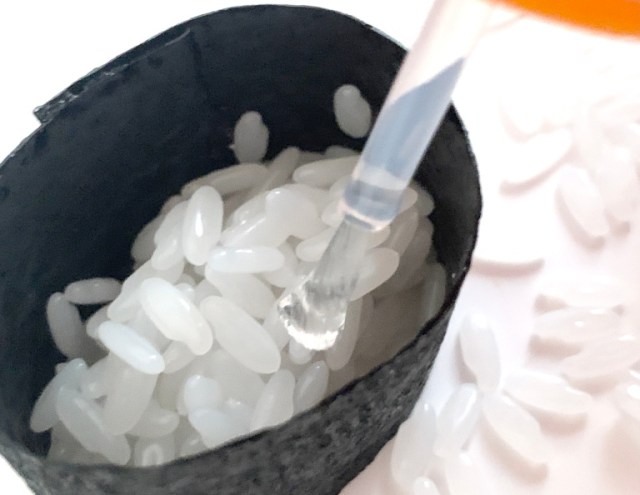
Before long, though, we got into a steady rhythm, and again there was something soothing about having a manageable cycle to focus on.
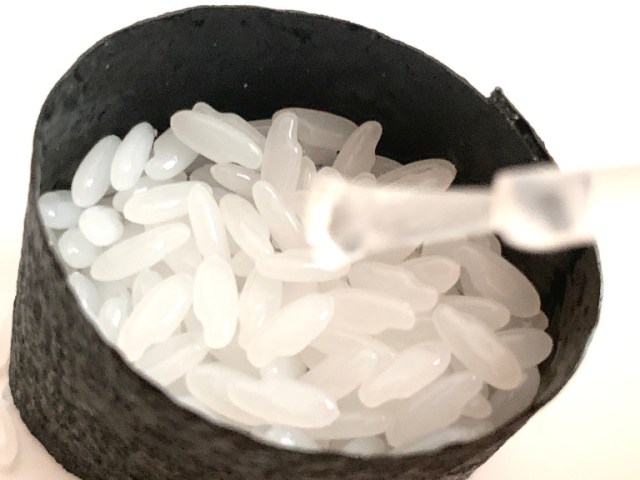
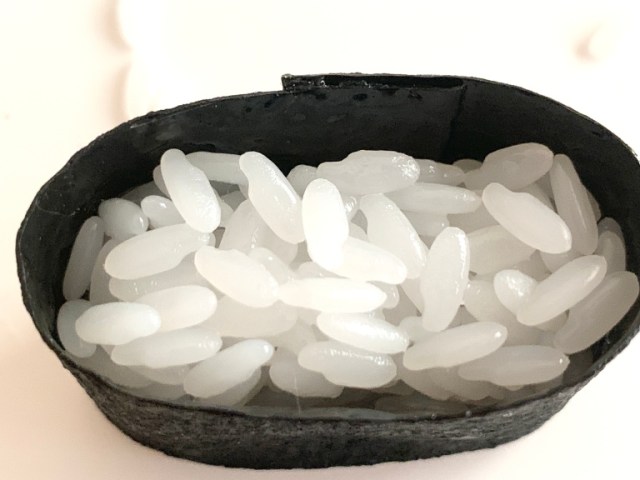
It took about 90 minutes to assemble the 364 pieces of rice and their seaweed wrap. Next it was on to the ikura itself!

Like the rice, the salmon eggs can be popped out of their frame by hand. However, we’d recommend using pliers to remove them instead. This will cut down on the amount of extra plastic hanging off at the separation point, and since the ikura is bigger and rounder than the rice, and also going to be the very top section of the model, you want them to look as nice as possible.
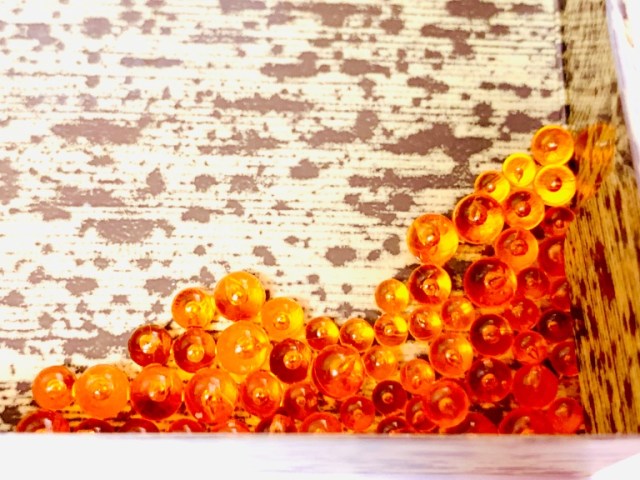
▼ The 64 pieces of ikura are made up of12 large, 24 medium, and 28 small eggs.
Once you’ve got the eggs popped and smoothed, adding them is pretty much the same process as with the rice: apply a top layer of adhesive to the sushi piece, then add the ikura on top, and repeat.
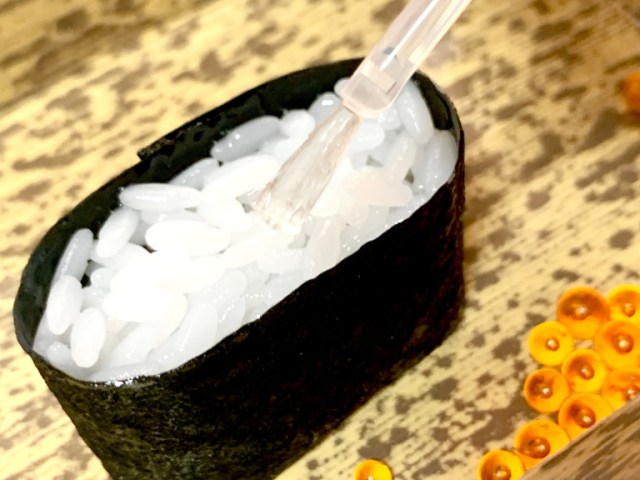
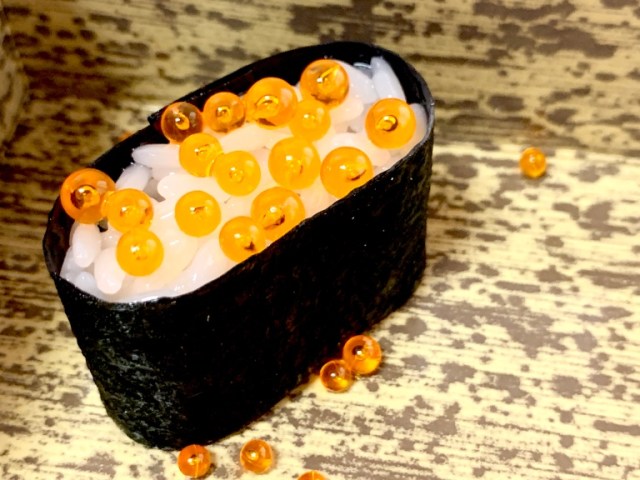
Because there are fewer eggs than grains of rice, and because even the small eggs are bigger than the grains, arranging them only took about 10 minutes, and then we were done!
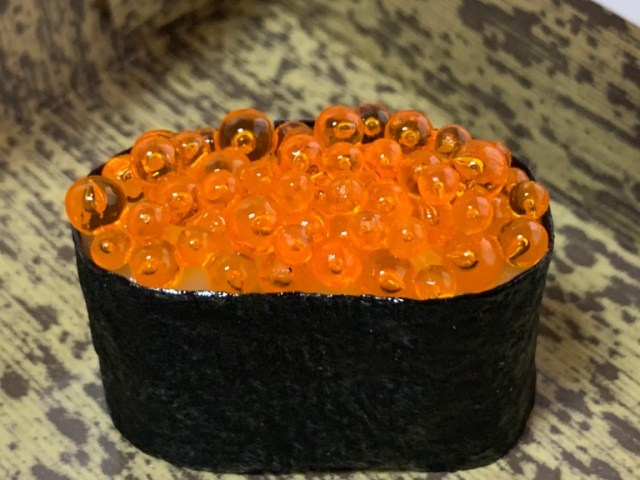
The finished kit is amazingly realistic looking. How realistic?
No, we didn’t make two sushi models. The above photo is of the plastic ikura model next to a piece of actual, edible ikura sushi, as are these.

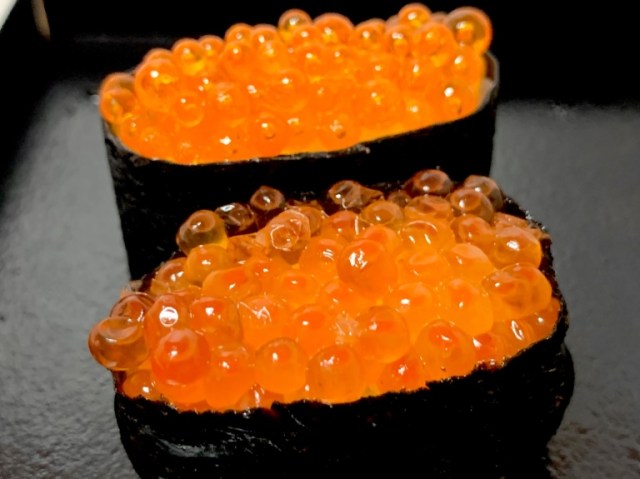
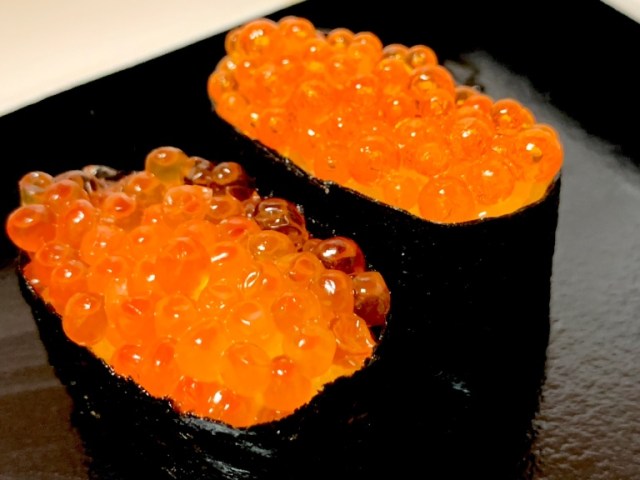
So which one is the plastic sushi, and which one is the real one? We’ve circled the model in the photos below.
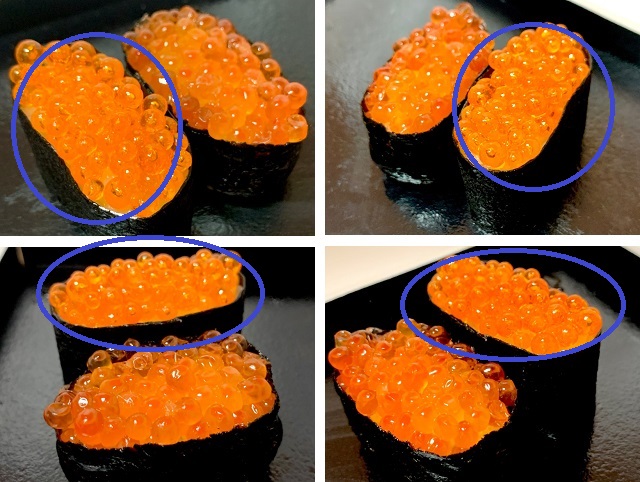
With simple steps and no need to apply paint or decals, Syuto’s Sushi Puramo ver. Ikura, as the ikura sushi kit is officially called, is easy enough for even complete newbies to put together. At the same time, the repeating nature of the assembly process means that this isn’t a kit about challenging yourself, but more about keeping your hands and mind just occupied enough so that you can relax. If that sounds like the model-building session you’re in the mood for, the kit can be purchased here through Amazon for 1,540 yen (US$13.50). We highly recommend picking up some real sushi too, though, because you absolutely will get hungry while working on the kit.
Photos ©SoraNews24
● Want to hear about SoraNews24’s latest articles as soon as they’re published? Follow us on Facebook and Twitter!
[ Read in Japanese ]
 The crazy ordeal of putting together Japan’s 366-piece sushi plastic model kit【Photos】
 This crazy plastic sushi model has 366 pieces, which actually makes a lot of sense【Photos】
 Insanely detailed 900-plus-piece Japanese model kit is…a 1:1-scale sesame dumpling【Photos】
 These beautiful pieces of sushi aren’t actually sushi
 Here’s the reason why your expensive ikura sushi often comes with some cheap cucumber slices
 Starbucks Japan closing only Shinkansen platform branch for popularity-triggered renovations
 Pokémon and Ikea Japan cross over into each other’s worlds with collaboration events
 Can a downtown Tokyo super sento bathhouse beat a hotel for a one-night stay?
 Beautiful Ghibli earrings allow you to finally reunite two of the studio’s star-crossed lovers
 Tokyo turns its phone booths into free Wi-Fi hotspots, and here’s how to use them
 A Kyoto factory vending machine sells gourmet mystery meals at bargain prices
 Starbucks Japan unveils epic Frappuccino hunt with five to find in new Star birthday campaign
 Japanese masturbatory aid and insect repellent companies collab on a new product
 Two food hacks take Japan’s convenience store fried chicken to amazing new sandwich heights
 Nintendo’s Animal Crossing crosses over into Japanese convenience store cosmetics line[Photos]
 Tokyo’s best museum for foreign travelers finally reopens after being closed for four years
 Pokémon lacquerware series expands for Year of the Horse with new handcrafted design[Video]
 Famous Tokyo cherry blossom spot installs view-blocking screens to fight overcrowding[Video]
 Tokyo subway and almost all Tokyo train lines now accepting credit card tap payments
 Fading Tokyo – Searching for signs of the Showa era as local neighborhoods evolve[Photos]
 Totoro Fund line of beautiful artwork and apparel lets you help the real-world Totoro Forest
 Studio Ghibli adds new My Neighbour Totoro 2026 Corn Gift to its anime store for Mother’s Day
 Japan now has a special desk for people who work at home with a pet cat[Photos]
 Uniqlo announces new T-shirts for One Piece, Naruto and more for manga publisher’s 100th birthday
 Train station platform ramen store closes its doors on half a century of history in Tokyo
 Starbucks Japan releases new My Fruit³ Frappuccino at only 34 stores around the country
 Studio Ghibli releases Catbus pullback keychain that runs like the anime character
 Krispy Kreme releases Super Mario doughnuts in Japan for a limited time
 Japanese onsen egg maker from 100-yen store Daiso needs to be on your shopping list
 Nine great places to see spring flowers in Japan, as chosen by travelers (with almost no sakura)
 Survey asks foreign tourists what bothered them in Japan, more than half gave same answer
 Japan’s human washing machines will go on sale to general public, demos to be held in Tokyo
 Starbucks Japan releases new drinkware and goods for Valentine’s Day
 We deeply regret going into this tunnel on our walk in the mountains of Japan
 Studio Ghibli releases Kodama forest spirits from Princess Mononoke to light up your home
 Starbucks Japan releases new sakura goods and drinkware for cherry blossom season 2026
 Japan’s newest Shinkansen has no seats…or passengers [Video]
 Major Japanese hotel chain says reservations via overseas booking sites may not be valid
 Put sesame oil in your coffee? Japanese maker says it’s the best way to start your day【Taste test】
 No more using real katana for tourism activities, Japan’s National Police Agency says
 Japan’s new frozen sushi DIY kit – Great foodie fun, or cold-hearted abomination?【Taste test】
 Build your own dumpling with this plastic model kit from Amazon Japan
 Drop the soy sauce and grab the salmon roe! Net users rave about ham sushi bento from Hokkaido
 Japan’s plastic model capital installs working plastic model-style payphones【Photos】
 Japanese squat toilet plastic model kit: Weird, gross, or both?【Photos】
 I can’t believe it’s not fish eggs? Taste-testing Japan’s imitation “almost ikura”【Photos】
 What’s for dinner? A US$113/3.3-pound sushi bowl from one of Japan’s favorite cheap restaurants
 Japan’s sushi that’s actually cake fools the eyes, blows the mind, pleases the stomach【Photos】
 Which Japanese conveyor belt sushi chain has the best ikura sushi?【Taste test】
 When life doesn’t give you expensive tuna, build a tuna fishing vessel plastic model instead
 Electric conveyor belt sushi kit brings the fun of a revolving sushi restaurant into your home
 How to make sushi that looks like real-life swimming koi fish【Video】
 Who’s got the best, cheapest one-person sushi delivery in downtown Tokyo? Mr. Sato investigates!
 Sushi Cake is returning to Japan for the holidays
 How to use Japan’s revolving sushi capsule toy for a literal revolving sushi meal at home
 This mouthwatering sushi is all from one of Japan’s greatest convenience stores【Photos】
 Salmon katsudon? Tokyo restaurant’s specialty is like a deep-fried sashimi lunch【Photos】