
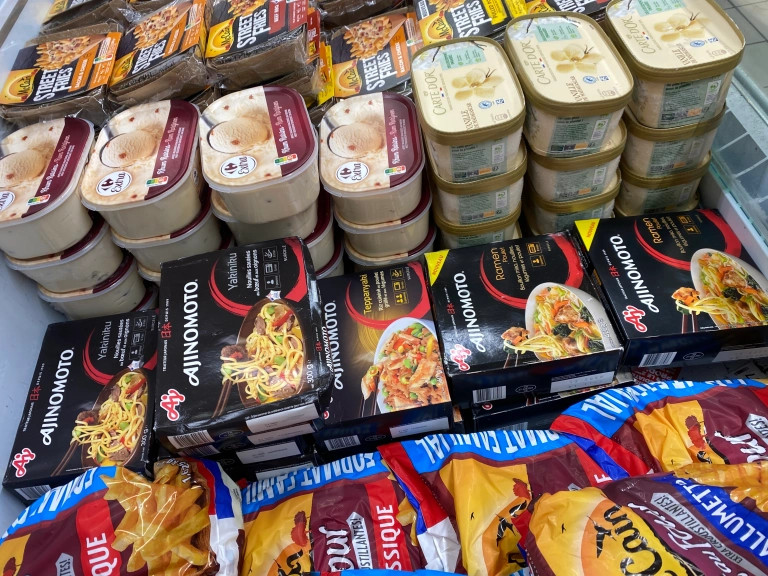
Expectations were not met–in many ways.
Ajinomoto is a top brand of frozen food in Japan, and it’s also sold in various countries across Europe. Our Japanese-language reporter and world traveler Ikuna Kamezawa has frequently seen their gyoza while traveling, but she’s also found a selection of Ajinomoto foods that came in stylish black boxes, including “Yakiniku” and “Teppanyaki.” Ikuna says these weren’t very hard to find; if you check in a large supermarket or an Asian market, you’d probably be able to find them throughout Europe. She found hers in France.
But there was something funny about these frozen meals. Though they had Japanese names of real Japanese foods, the pictures didn’t match the names at all. The “Yakiniku” box–which should have shown slices of flame-grilled meat, with maybe some rice on the side–clearly had a picture of yakisoba, or stir-fried noodles, and the “Teppanyaki” box–which should have looked like flat-grilled meat and vegetables, looked like fried rice.
What was that about? Ikuna couldn’t help but wonder, so she bought a box each of three different varieties to see what they actually looked like and tasted like on the inside.
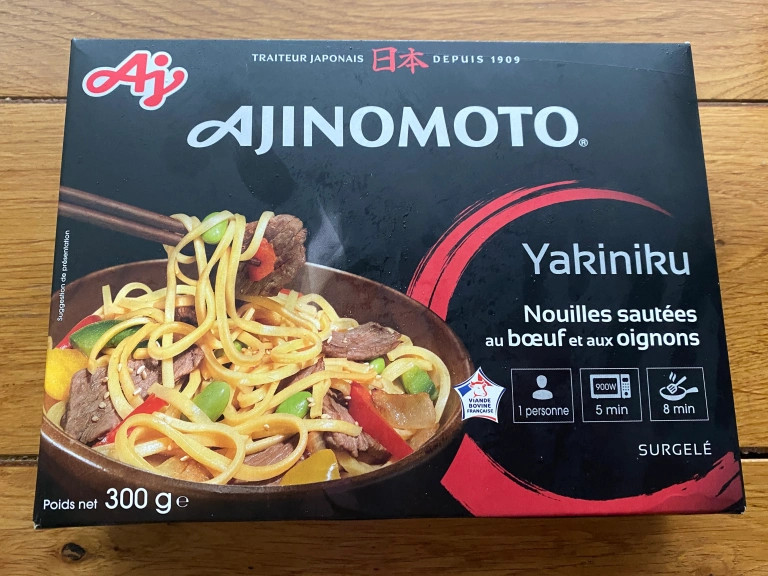
She started with “Yakiniku”, which cost 4.25 euros (613 yen/US$4.47). Inside was a billowing plastic bag filled with what looked like noodles and vegetables.
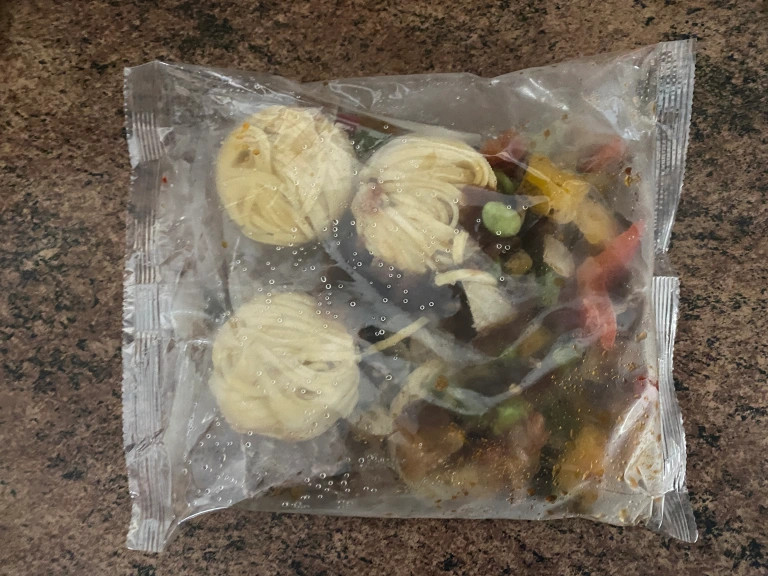
Ikuna poured the contents into a bowl…
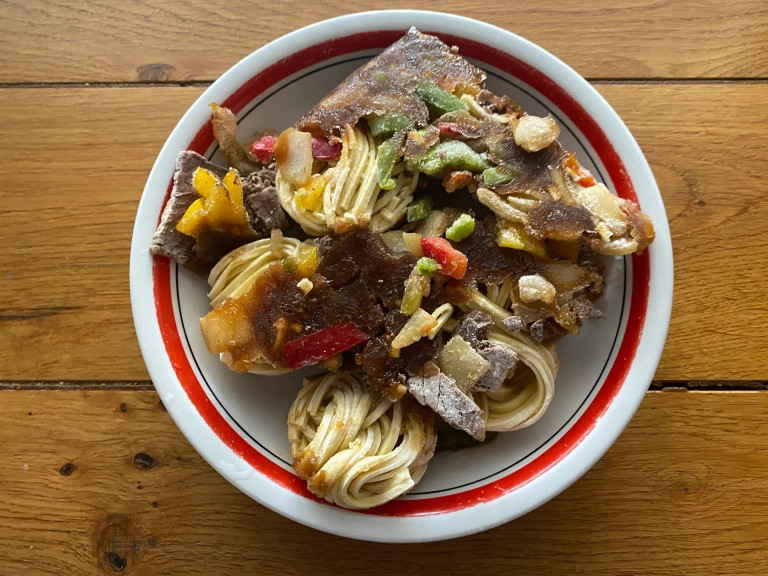
Then put it in the microwave for five minutes.
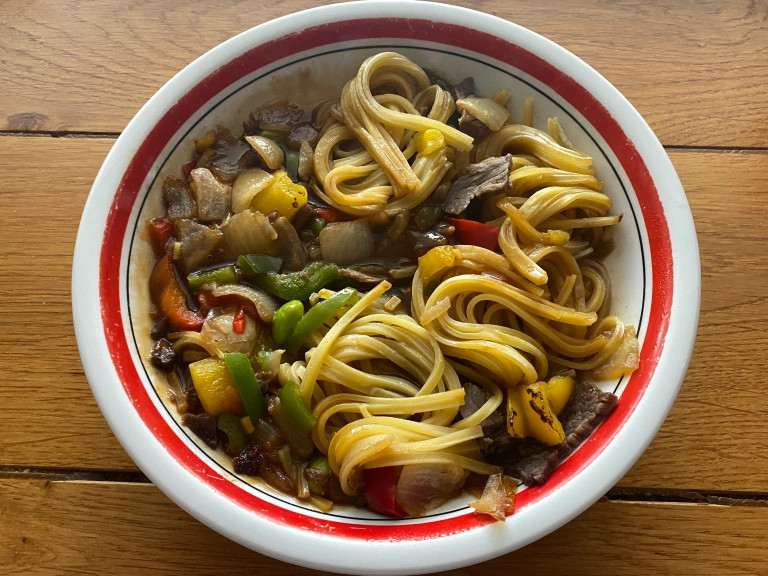
The finished product looked nothing like yakiniku, despite the slices of beef it contained. Any way you looked at it, it was a noodle dish, and perhaps not even a Japanese-style noodle dish, based on the ingredients.
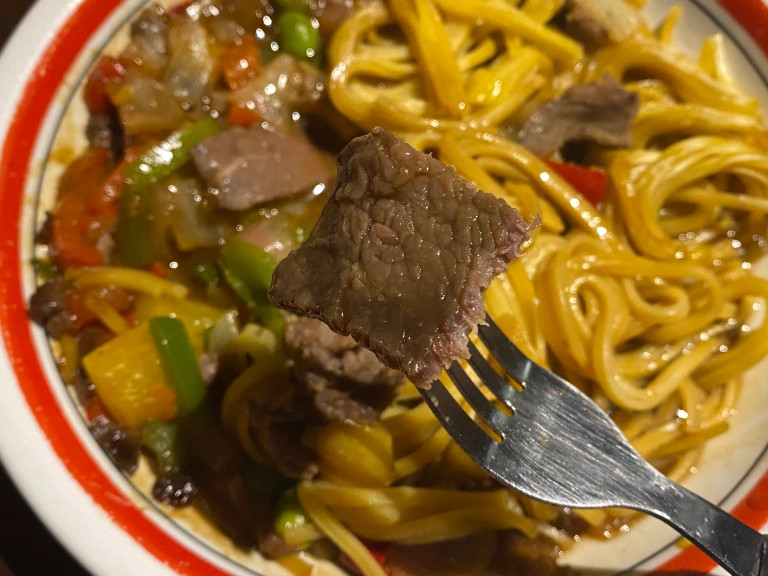
Maybe they chose to call it yakiniku because of the beef slices? The beef wasn’t as tender or delicious as yakiniku and felt more like cheap cuts grilled over low heat for far too long (they were dry as bone). Besides that, the dish included slices of three kinds of bell peppers and onions.
If it had been labeled something less specific like “Chinese-style saucy noodles”, Ikuna probably wouldn’t have minded it so much. But since it was calling itself “Yakiniku”, Ikuna couldn’t help but feel it was just all wrong. Why did Ajinomoto decide to give it that name? Instead of answering her questions, this frozen meal only deepened the mystery.
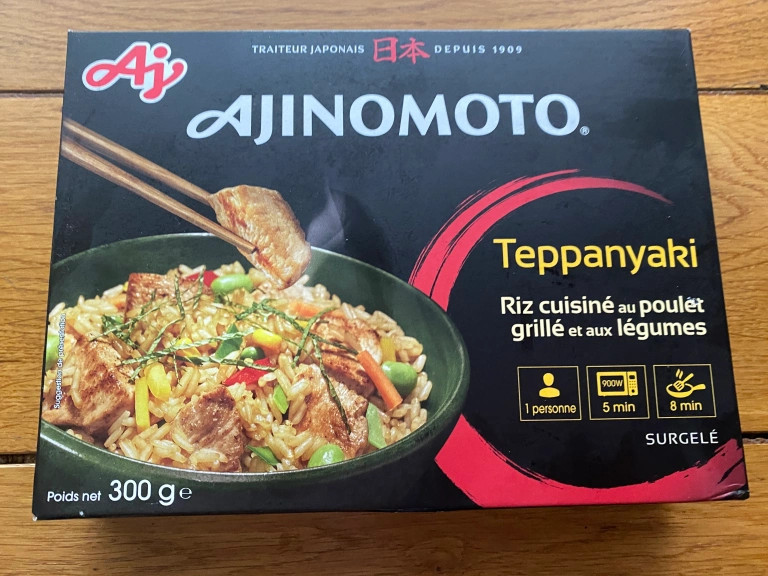
The “Teppanyaki” dish was the same price of 4.35 euros, and like the “Yakiniku”, the picture on the package did not match the name. It was clearly fried rice.
The dish contained plenty of ingredients, including chicken, two kinds of bell peppers, edamame, green peas, carrots, onions, and corn. The rice looked like the kind of rice popular in Southeast Asian countries like Thailand: long and thin, as opposed to the short-grain rice common in Japan.
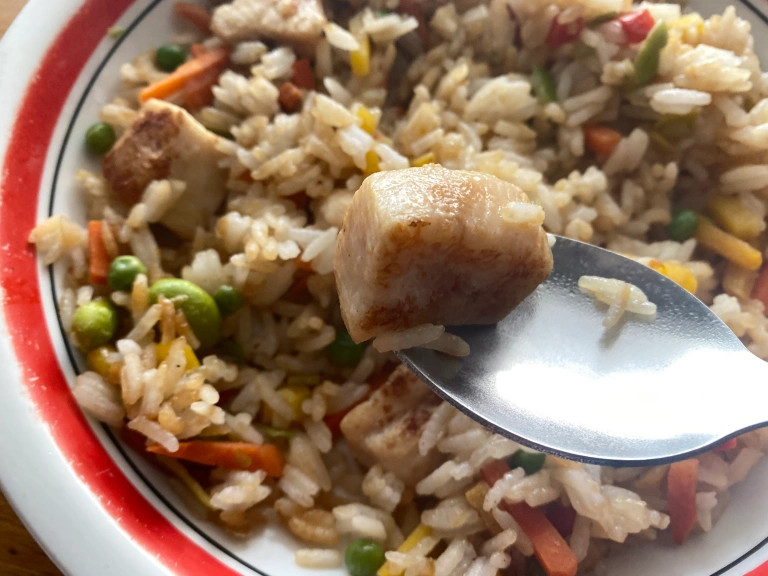
While it looked pretty good, the flavor was so weak, almost as if they had entirely forgotten to salt it. The chunky chicken was tasty, but Ikuna couldn’t help but think that basing the name of “teppanyaki” on this chicken alone was a bit of a stretch.
On the other hand, it is possible to cook fried rice on a teppan, or a Japanese griddle, and perhaps this is a common image of Japanese cooking based on the types of Japanese restaurants that are popular overseas. However, to Japan-native Ikuna, the foods that most come to mind with the word “teppanyaki” are meat and fish. She couldn’t help but feel sad that this is what Europeans might believe is Japanese teppanyaki.
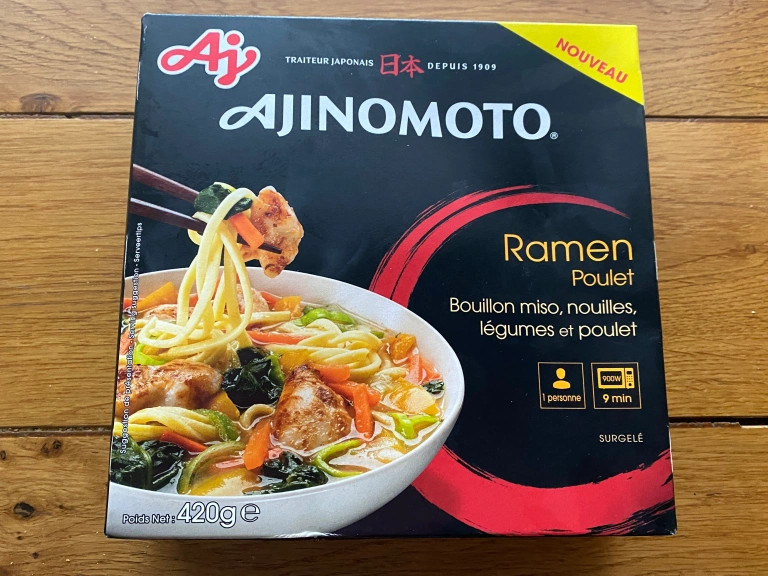
The last one that Ikuna tried was “Ramen Poulet” (chicken ramen), which was 3.5 euros (or 505 yen.) In this case, the packaging did actually look like ramen, which was a relief.
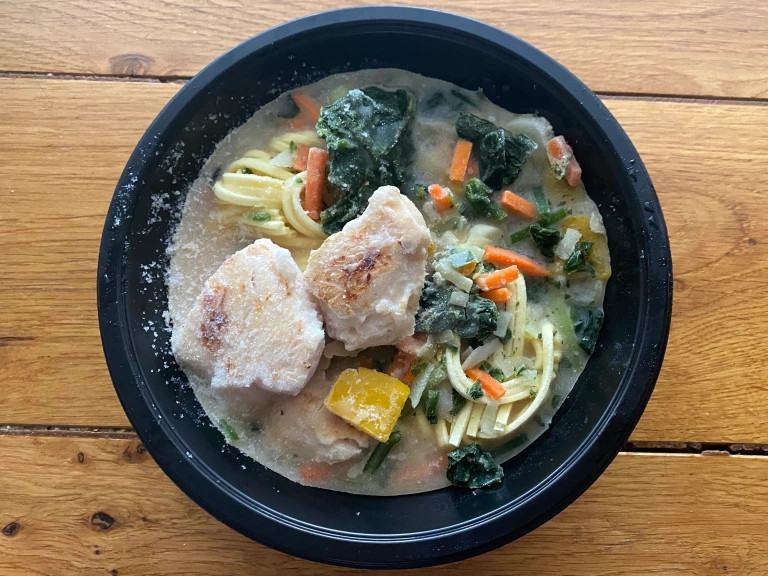
This one also had bell peppers in it. Ikuna had to wonder, do Europeans really like bell peppers that much? Japanese cuisine, for reference, rarely uses bell peppers, though you might sometimes find them in western-style dishes served in Japan.
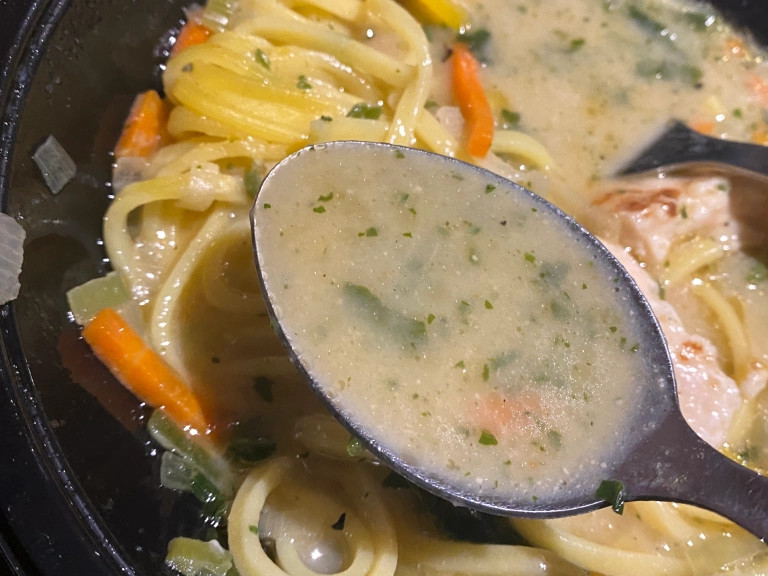
The broth was…unique. It tasted a bit like Japanese tonkotsu, or pork bone broth, but it also felt a bit like a thick and creamy soup, or a miso soup with potatoes. Ikuna is used to ramen tasting differently in other countries, but in most cases, the ramen she tried tasted good, just in an unexpected way. The flavor of this soup, sadly, was too weak for her; if she hadn’t been really hungry, she probably would never want to eat this.
This further served to perplex Ikuna, who had to assume that Ajinomoto, originally a Japanese company, should have the know-how to make a really good frozen ramen, and instead they produced this.
Ikuna could only assume that these dishes were made more to suit European tastes, which was perfectly fine, as she was in Europe. Despite the mysterious nature of the packaging not matching the name of the product, and the flavors not quite meeting her expectations, Ikuna had to say she had an interesting time taste-testing them. She’ll always continue to try Japanese food overseas because it’s fun, and sometimes even educational.
Images © SoraNews24
● Want to hear about SoraNews24’s latest articles as soon as they’re published? Follow us on Facebook and Twitter!
 Three remarkable ramen shops in Spain, according our traveling Japanese reporter
 Egyptian restaurant Sumo Sushi offers our Japanese reporter a delightful yet quirky lunch
 How do European Cup Noodles taste to a Japanese palate?
 We try chain restaurant miso ramen in Paris and find a slice of home overseas【Pics】
 We visit a restaurant called ‘Otaku’ in France, eat some otaku sushi
 Japanese onsen egg maker from 100-yen store Daiso needs to be on your shopping list
 Cherry blossoms begin blooming in Japan with record-early starts for sakura season
 Universal Studios’ Sailor Moon theme park attraction is finally coming to America
 Expo 2025 mascot Myaku-Myaku to release tastefully erotic photo book
 Starbucks Japan releases new My Fruit³ Frappuccino at only 34 stores around the country
 Virtual idol Hatsune Miku redesigned with look that adds new elements and brings back old ones
 Umamusume food and drinks dash into real world at Family Mart convenience stores[Taste test]
 The next time you’re feeling stressed out, you could relax on a Pokémon Psyduck chair from Japan
 Starbucks Japan’s rarest Frappuccino can only be purchased at 15 stores around the country
 We mixed all 31 flavors of Baskin Robbins ice cream and created a Frankenstein dessert【Video】
 Train station platform ramen store closes its doors on half a century of history in Tokyo
 Studio Ghibli releases Catbus pullback keychain that runs like the anime character
 Studio Ghibli adds new Mother’s Day gift sets to its anime collection in Japan
 Komachi Shokudo: Japanese mum’s-style cooking for breakfast, lunch and dinner in Tokyo
 Starbucks Japan opens new cafe and art gallery in top Tokyo tourist neighbourhood
 The top 10 graduation songs in Japan as chosen by current Japanese high school students
 7-Eleven Japan’s giant fried chicken skewer would be too big to eat, so it’s really for cuddling
 Starbucks Japan unveils new sakura cherry blossom collection for hanami season 2026
 The 10 most annoying things foreign tourists do on Japanese trains, according to locals
 Starbucks Japan releases new sakura goods and drinkware for cherry blossom season 2026
 Nine great places to see spring flowers in Japan, as chosen by travelers (with almost no sakura)
 Naruto and Converse team up for new line of shinobi sneakers[Photos]
 Starbucks Japan releases first-ever Hinamatsuri Girls’ Day Frappuccino
 Japan’s cherry blossom season predicted to start earlier than we’d thought, especially in Tokyo
 Starbucks Japan releases a new Cream Puff Frappuccino for a limited time
 Survey asks foreign tourists what bothered them in Japan, more than half gave same answer
 Japan’s human washing machines will go on sale to general public, demos to be held in Tokyo
 Starbucks Japan releases new drinkware and goods for Valentine’s Day
 We deeply regret going into this tunnel on our walk in the mountains of Japan
 Studio Ghibli releases Kodama forest spirits from Princess Mononoke to light up your home
 Japan’s newest Shinkansen has no seats…or passengers [Video]
 Major Japanese hotel chain says reservations via overseas booking sites may not be valid
 Put sesame oil in your coffee? Japanese maker says it’s the best way to start your day【Taste test】
 No more using real katana for tourism activities, Japan’s National Police Agency says
 We try Ajinomoto’s European Chicken Katsu Curry Style frozen gyoza that has no katsu in it
 We visit a ramen bar in Croatia, meet a whole new version of ramen we can’t wait to make at home
 Have you tried Tokushima ramen? No? You should (says our obsessed Japanese-language reporter)
 Is this London branch of Marugame Udon as good as the ones in Japan?
 Japanese confectionery store Toraya serves up a surprising meal in Paris
 We try European Cup Noodle Soba flavors to see which ones come out on top 【Taste test】
 We visit the Paris branch of Japanese ramen chain Ippudo and eat the most unusual ramen
 Our reporters try a yakiniku sauce called “Even Women Garlic” to figure out what that means
 How do McDonald’s fries taste in the frite nation of Belgium? We find out【Taste test】
 Onigiri in Paris – Crazy expensive with crazy fillings, but are they also crazy good?【Taste test】
 “Hey, Japanese taxi driver! Take us to the best restaurant in Sendai!”
 Hey, Croatian taxi driver! Take us to the restaurant with the best štrukli in Zagreb
 Our reporter orders food from Uber Eats, falls in love, learns that fate works in mysterious ways
 “More Japanese than Japan” – Kodawari Ramen Tsukiji in Paris lives up to every part of its name
 Discount super market’s super cheap bento wows us with its looks, confuses us with its taste
 Our reporter dishes on the differences between sushi from Ginza Kyubey and Sushiro【Taste test】