
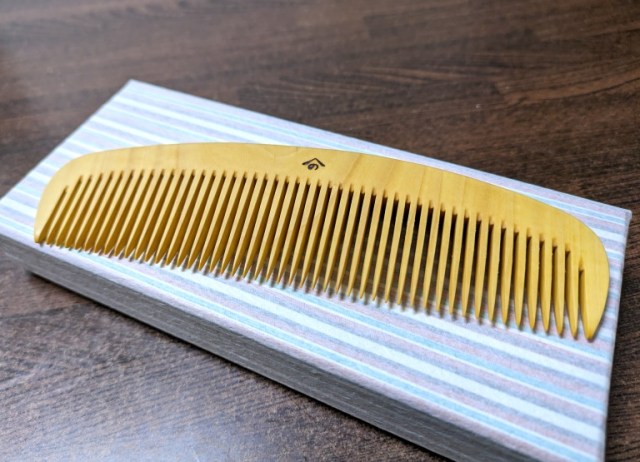
And if you’d rather have a 60,000-yen comb, this Asakusa shop has some of those too.
Asakusa is considered to be Tokyo’s most culturally significant neighborhood, largely due to the presence of the Sensoji Buddhist temple. However, there’re are other historical sites all around Asakusa.
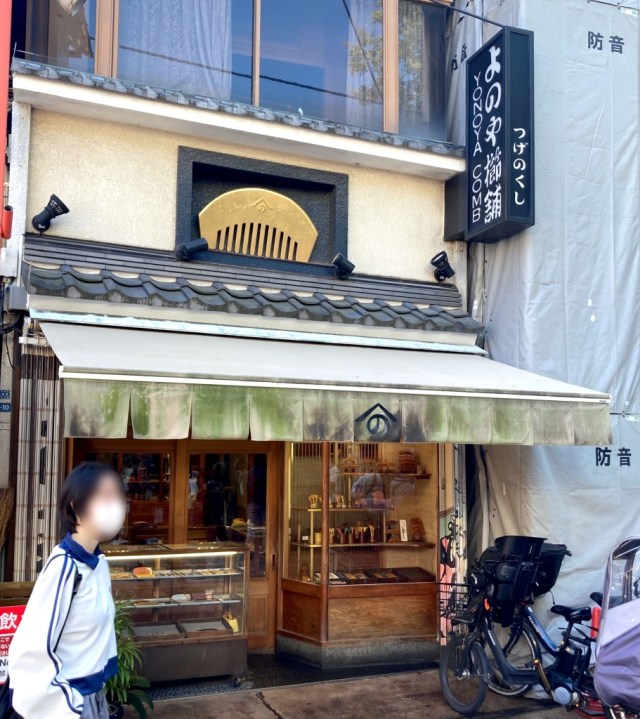
For example, walking past Yonoya, from the store’s classical Japanese architecture you can tell that the company has been making combs for a long time. What you might not guess, though, is just how long: more than 300 years.
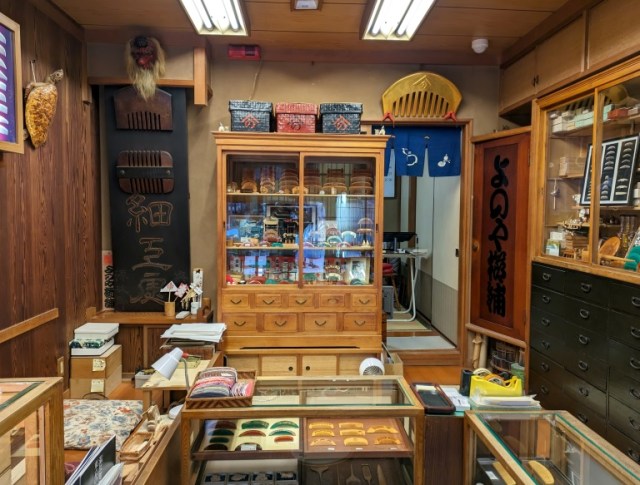
Yonoya was founded in 1717, during the reign of Tokugawa Yoshimune, the eighth Tokugawa shogun, and so for their first 150 years of selling combs Japan was still under feudal rule and sealed off from the rest of the world. The company opened its first shop in what’s now Tokyo’s Bunkyo Ward, then moved to their current location not far from Sensoji in the 1910s. So yes, they’ve now got over a century of history even at their “new” location.
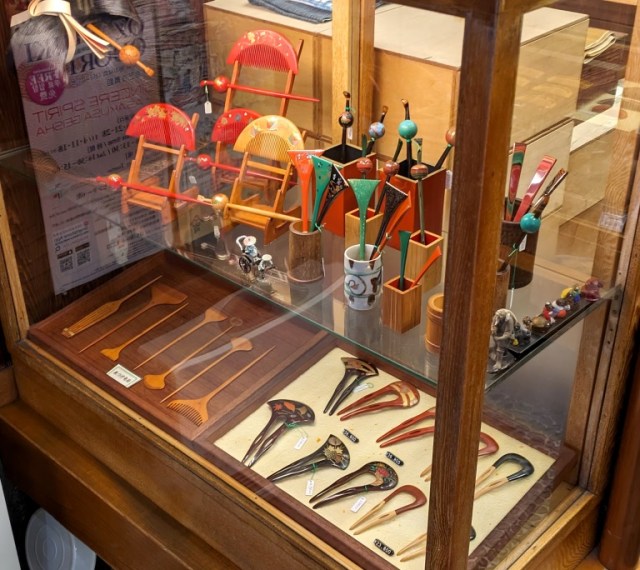
While Yonoya also sells kanzashi (ornamental hairpins), their main focus is on boxwood combs, which are called tsugegushi if you’re asking for them in Japanese. As you can tell from the shop’s interior, Yonoya is a quality-over-quantity kind of company, and an immense amount of care and craftsmanship goes into every one of the pieces they offer, starting with the choice of material.
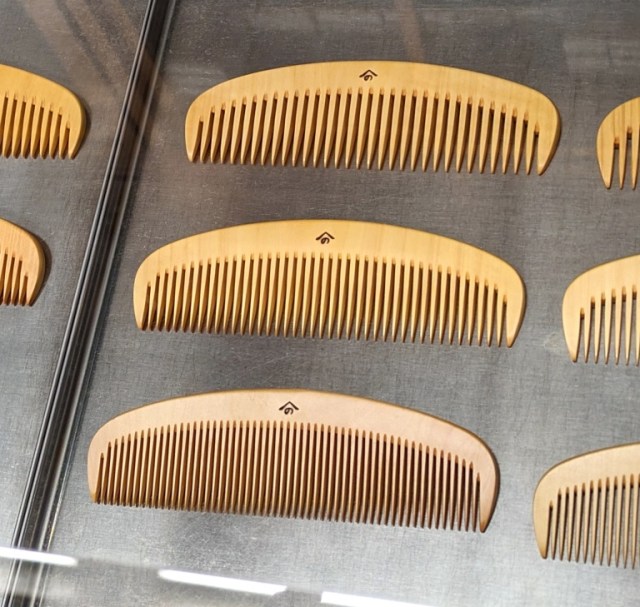
Yonoya uses boxwood because it’s a dense, hard wood. That makes it resistant to bending or warping, and the structural rigidity that boxwood provides is critical. Incidentally, boxwood is also used by Japanese artisans for high-quality abacus beads and pieces for shogi, Japan’s traditional chess-like board game.
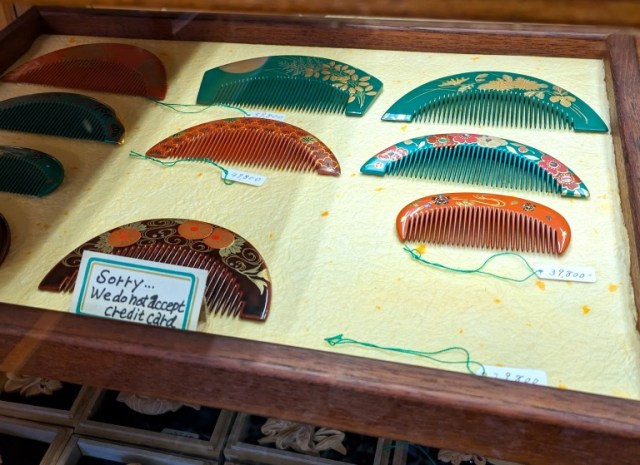
Not just any boxwood will do, either. Yonoya sources its materials from Ibusuki, a town in Kagoshima Prefecture, on the opposite side of the country from Tokyo. Before being shipped out of Ibusuki, the boxwood is dried and fumigated over the course of 30 years to strengthen the material. It’s then shipped to the castle town of Kishiwada, Osaka Prefecture, for initial processing by a local company that’s been in the business for generations as well. Then, finally, it arrives at Yonoya, whose craftsmen apply the finishing touches to the combs so that they meet their exacting standards.
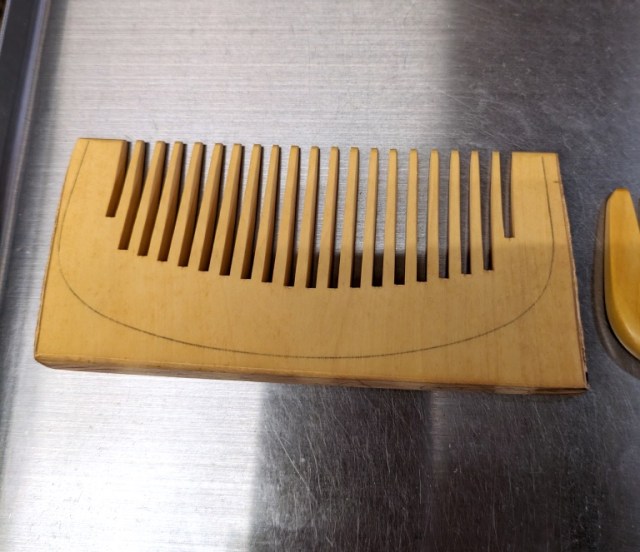
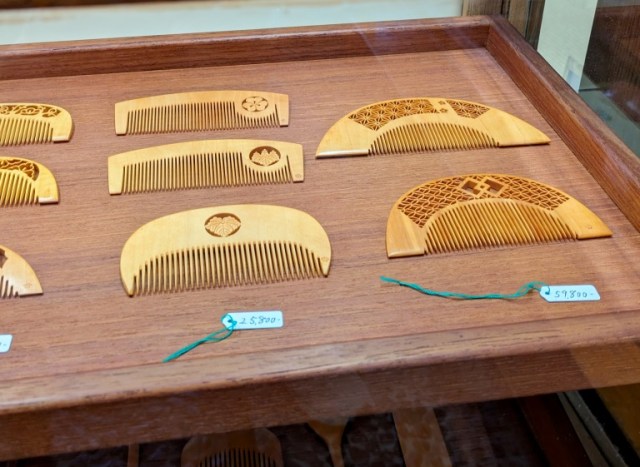
In other words, making a Yonoya comb requires a lot of work by a lot of highly specialized artisans, and so their combs don’t come cheap. Even for Yonoya’s non-lacquered combs, you could wind up paying close to 60,000 yen (US$400), depending on how fancy you want to get with the detailing.
Eye-popping as the prices may be, on our Japanese-language reporter Mr. Sato’s visit, he couldn’t help wondering how it would feel to use such a luxurious comb. Recently he’s been growing his hair out, but the longer it gets, the messier it gets, and no amount of effort with his run-of-the-mill plastic comb is doing much to smooth it out.
▼ Sometimes the comb just gets stuck, and he says the heck with it.

So Mr. Sato asked Yonoya’s staff if they could help him pick out a comb, and preferably one that wouldn’t hurt his wallet too much. The first thing to consider, they told him, is the amount of spacing between the combs teeth. Yonoya’s come in three different styles, fine, medium, and coarse, with the general rule being the longer your hair, the coarser spacing you should choose.
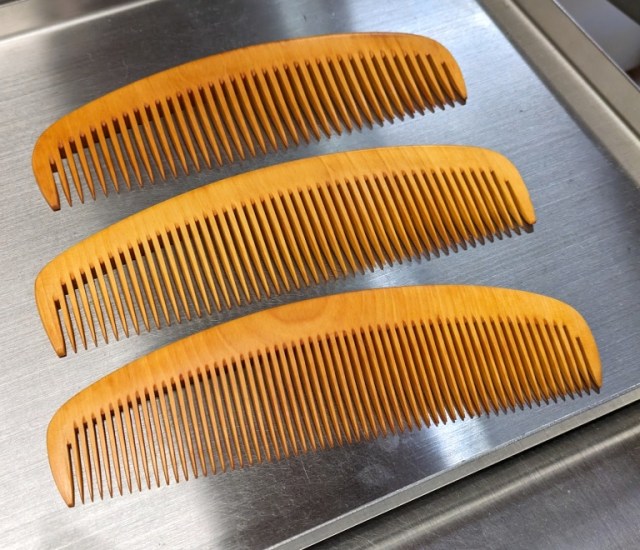
Given Mr. Sato’s shoulder-length locks, they recommended a medium-toothed comb. Next, you’ll need to suggest the length of the spine. Here, your options are 3 sun 8 bun, 4 sun 2 bun, 4 sun 5 bun, and an even 5 sun.
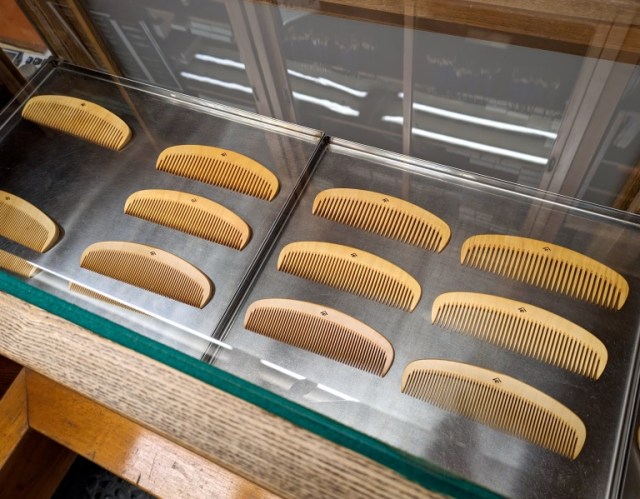
Yes, Yonoya is so old-school that they still make their combs to the specifications of traditional pre-metric system Japanese measurement units. Mercifully, they also provide their approximate equivalents of 11.5, 13, 14, and 15 centimeters (4.5, 5.1, 5.5, and 5.9 inches). The longer the spine, the easier it usually is to pass the teeth through your hair, they explained, and since ease of use is what Mr. Sato was looking for, he opted for a 15-centimeter.
Total price, after tax? 29,700 yen (US$198).
▼ But they did throw in a case for free.
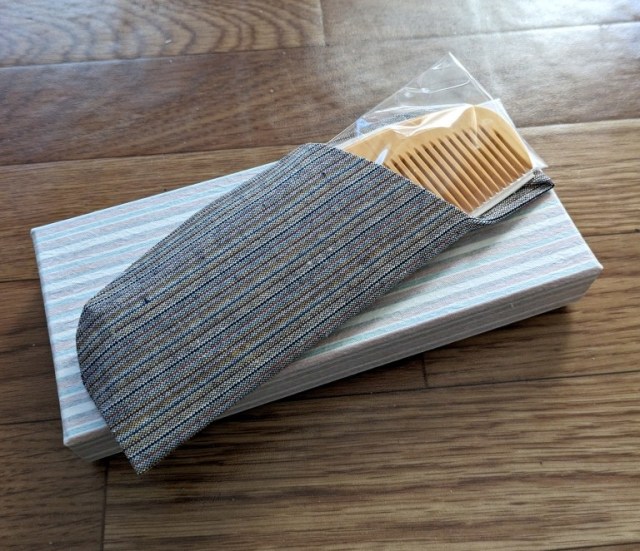
This was, by far, the most money Mr. Sato has ever spent on a comb. As soon as he held it in his hand, though, he could tell this was a quality piece, with the wood smooth and light yet obviously sturdy.
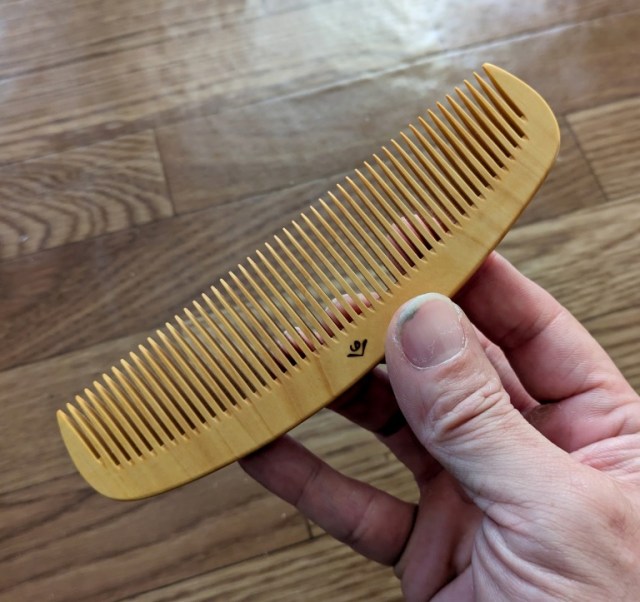
But more importantly, it felt amazingly good to use, passing cleanly through his unruly hair and greatly smoothing out unwanted kinks. While it didn’t get his naturally wavy hair completely straight, the results were far more neat and orderly than what he could do with his old plastic comb.
▼ Left: plastic comb
Right: Yonoya comb
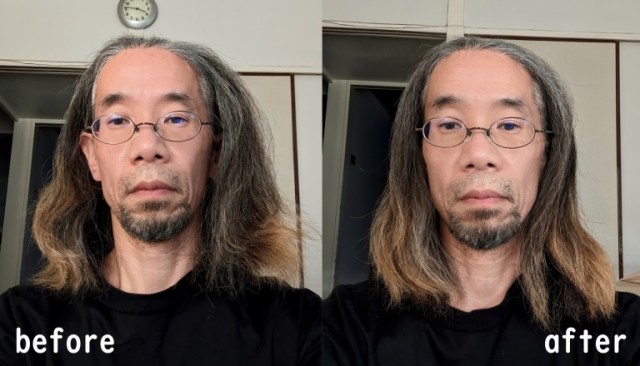
Yonoya’s combs are a lot of money, but they also provide a lot of quality. And remember what we said about how the wood is carefully selected to retain its shape? If you take care of a Yonoya comb, it’ll last you for decades, the company says, so if you think of the price in terms of your total comb cost for the next 20 years or so, on an annual basis it suddenly doesn’t seem as expensive.
On the other hand, there’s no denying that nearly 30,000 yen is a lot of money to pay for a comb, so ultimately the question of “Is it worth it?” is probably going to come down to how serious you are about your haircare. In Mr. Sato’s case, at least, he’s feeling good about his purchase, and looking good too.
Shop information
Yonoya / よのや
Address: Tokyo-to, Taito-ku, Asakusa 1-37-10
東京都台東区浅草1-37-10
Open 10:30 a.m.-5 p.m.
Closed every Wednesday, irregularly on Tuesdays and Thursdays
Website
Photos ©SoraNews24
● Want to hear about SoraNews24’s latest articles as soon as they’re published? Follow us on Facebook and Twitter!
 100-year-old brush shop in Tokyo sells a Japanese body brush that’s painfully good
 Expensive Japanese nail clippers: Are they worth it?
 Mr. Sato attempts to battle his butt forest with Japan’s affordable Osu! Ass Hair Trimmer
 Mr. Sato gets his bush trimmed at a fancy Tokyo hair salon【Photos】
 Can a Tokyo hair salon give us the hair of the city’s most handsome ramen chef?【Photos】
 7-Eleven Japan releases a crazy new viral sandwich: Chocolate Sprinkles and Whipped Cream
 Create a tiny Ghibli anime world on your bookshelf with new miniature papercraft art kits
 Public restrooms in Osaka to get in-stall video screens with ads
 Starbucks Japan adds exclusive limited-edition Frappuccino drinks to the menu for spring
 Culture clash: 10 insider tips for visiting Japan
 Japanese mom physically subdues man who groped her schoolgirl daughter
 Secret Starbucks sausage customization sparks sweet joy in Japan[Taste test]
 Studio Ghibli releases the My Neighbour Totoro tea caddy, with a magical self-closing lid
 Tokyo government organizes food truck event to clear out delinquent/homeless teen gathering area
 Love Ghibli? Here’s our pick of 10 souvenir items you should buy when you visit the Ghibli Museum
 Starbucks Japan releases new My Fruit³ Frappuccino at only 34 stores around the country
 Japanese onsen egg maker from 100-yen store Daiso needs to be on your shopping list
 Cherry blossoms begin blooming in Japan with record-early starts for sakura season
 Nine amazing off-the-beaten-path cherry blossom spots in Japan for yaezakura and shidarezakura
 Stunning central Japan wisteria festival is like a purple fantasy straight out of a Ghibli movie
 When will the cherry blossoms reach full bloom in Japan this year?[Forecast]
 Studio Ghibli unveils new Rollbahn notebook in honour of Howl’s Moving Castle
 Studio Ghibli adds new anime tumblers to its cool streetwear brand in Japan
 Universal Studios’ Sailor Moon theme park attraction is finally coming to America
 Starbucks Japan unveils new sakura cherry blossom collection for hanami season 2026
 Train station platform ramen store closes its doors on half a century of history in Tokyo
 Studio Ghibli releases Catbus pullback keychain that runs like the anime character
 Nine great places to see spring flowers in Japan, as chosen by travelers (with almost no sakura)
 Starbucks Japan releases first-ever Hinamatsuri Girls’ Day Frappuccino
 Studio Ghibli adds new Mother’s Day gift sets to its anime collection in Japan
 Virtual idol Hatsune Miku redesigned with look that adds new elements and brings back old ones
 Survey asks foreign tourists what bothered them in Japan, more than half gave same answer
 Japan’s human washing machines will go on sale to general public, demos to be held in Tokyo
 Starbucks Japan releases new drinkware and goods for Valentine’s Day
 We deeply regret going into this tunnel on our walk in the mountains of Japan
 Studio Ghibli releases Kodama forest spirits from Princess Mononoke to light up your home
 Starbucks Japan releases new sakura goods and drinkware for cherry blossom season 2026
 Japan’s newest Shinkansen has no seats…or passengers [Video]
 Major Japanese hotel chain says reservations via overseas booking sites may not be valid
 Put sesame oil in your coffee? Japanese maker says it’s the best way to start your day【Taste test】
 No more using real katana for tourism activities, Japan’s National Police Agency says
 How far away from Tokyo can you get with 5,000 yen? Let’s find out!
 Can a Japanese person look good in one of those for-foreigner souvenir kimono? Mr. Sato finds out
 Japan Extreme Budget Travel! A trip from Tokyo to Izumo for just 30,000 yen [Part 1]
 This ridiculously expensive Tokyo sandwich was worth every one of the 8,650 yen it cost us
 Hidden history, retro cafes, and a shoe shrine on Asakusa bus loop【Tokyo Loop Buses】
 Kubipan neck pants, the hot new Tokyo style that we just made up and hurts our butt cracks【Pics】
 Mr. Sato makes senpafe 1,000-yen parfait, and things get oddly violent【Japan’s Best Home Senpafe】
 Tokyo’s host club photo studio will have you looking like the coolest Kabukicho club king
 Eating a 6,000-yen (US$55) sandwich on the Tokyo sidewalk: The best way to wait for a new iPhone
 2,500 yen for Tokyo ramen? High-end noodles in the high-rent Ginza district are totally worth it
 This is what Tokyo’s ultra-premium 12,960-yen (US$117) seaweed looks like
 Will we win a 75,000-yen tub of caviar from this Japanese vending machine?
 Mr. Sato dons full pilgrim fashion to escape the summer heat
 How to dress for summer in Japan: Tips from a rickshaw driver in Asakusa
 Did Mr. Sato just discover Japan’s longest bread?