Fashion advice on how to dress for a Japanese summer leads us to some historic stores.
Summers in Japan are brutal, and on a day like 29 July, when temperatures of 40 degrees Celsius (104 degrees Fahrenheit) were recorded in Tochigi, Gunma, Saitama, Ibaraki, and Shizuoka prefectures, it can actually be dangerous to spend a lot of time outside without taking proper precautions.
Even locals find it difficult to cope in the heat, and our own reporter Mr Sato is always looking for new ideas and advice on how to keep cool in summer. So as he sweltered in the stifling heat on his way to work, he couldn’t help but wonder: how do people who work outside all day cope in the unrelenting humidity?
His thoughts immediately turned to the rickshaw drivers in Asakusa, who aren’t only outside all day but running on the steaming hot asphalt roads as they take visitors on tours around Sensoji temple. They would surely have some tips and tricks up their sleeves, or non-sleeves, that Mr Sato could learn from, and so he headed out to take a tour, and enjoy a chat, with one of them.
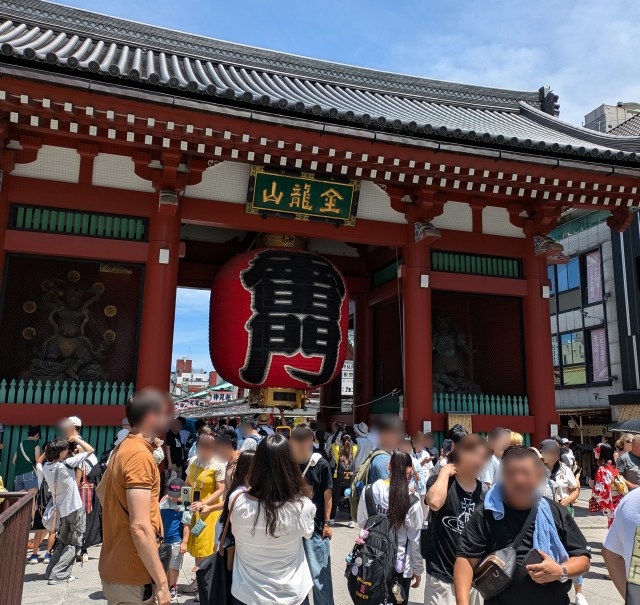
▼ The main gate at Sensoji Temple, Kaminarimon, is where you’ll find a lot of tourists, and a lot of rickshaw drivers.
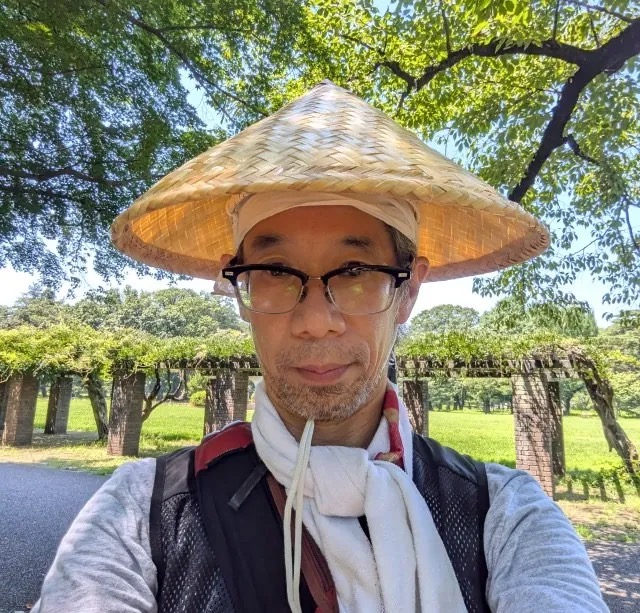
Mr Sato had never ridden a rickshaw before, so he felt a bit nervous about approaching the drivers, but after walking past them a couple of times to see which one he might bond with, he walked boldly up to a driver who was wearing a traditional bamboo hat, which looked similar to one he owns himself.
▼ If Mr Sato had worn his ajirogasa that day, they could’ve been hat twins.
Before gleaning fashion tips from the driver, Mr Sato was given a lesson in rickshaws, because the driver he approached told him he works as a private driver for a company called Miyabi. He asked Mr Sato to wait three or four minutes while he went to retrieve the rickshaw, because each company has to keep their rickshaws in a separate location as they can’t park on the street here.
When the driver returned with the rickshaw, Mr Sato learned more details about it, including the fact that it was from the Nagasaki Rickshaw Shop, a specialist manufacturer who’s been in business since 1976, and it cost about 2 million yen (US$12,924).
▼ Stopping to take a closer look at it, it truly was a magnificent vehicle.
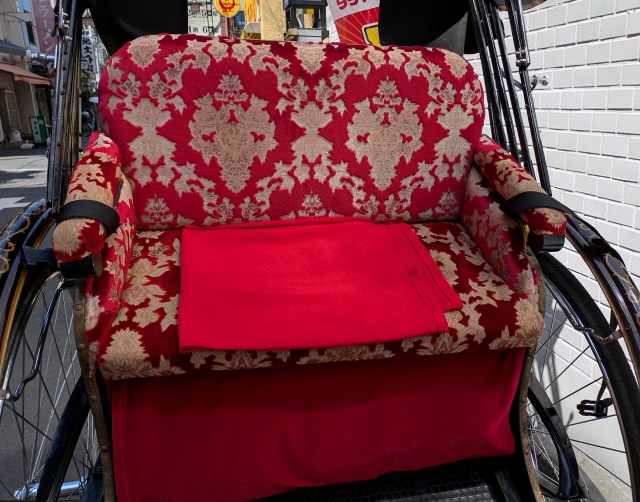
▼ Mr Sato particularly liked the phoenix image on the back, which looked really cool.
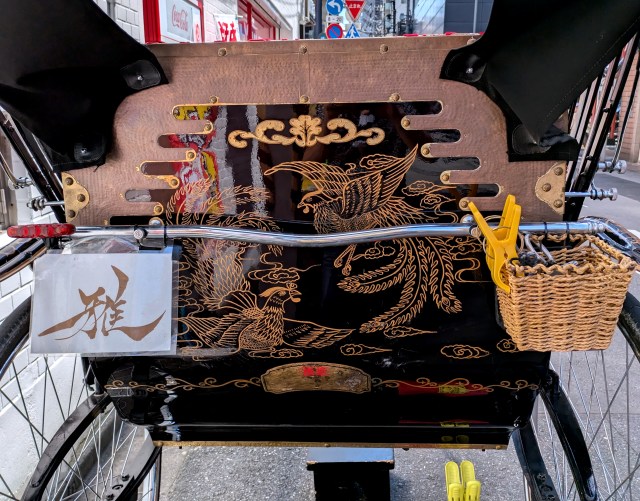
The tires also display individual characteristics, with many placing importance on width, but these ones were very cushioned, making the ride comfortable, although they’re more prone to punctures.

The charge for a 20-minute ride was 5,000 yen (US$32.31), and the driver was happy to take Mr Sato on a set route or to requested places in the vicinity, as long as it was within the agreed time limit.
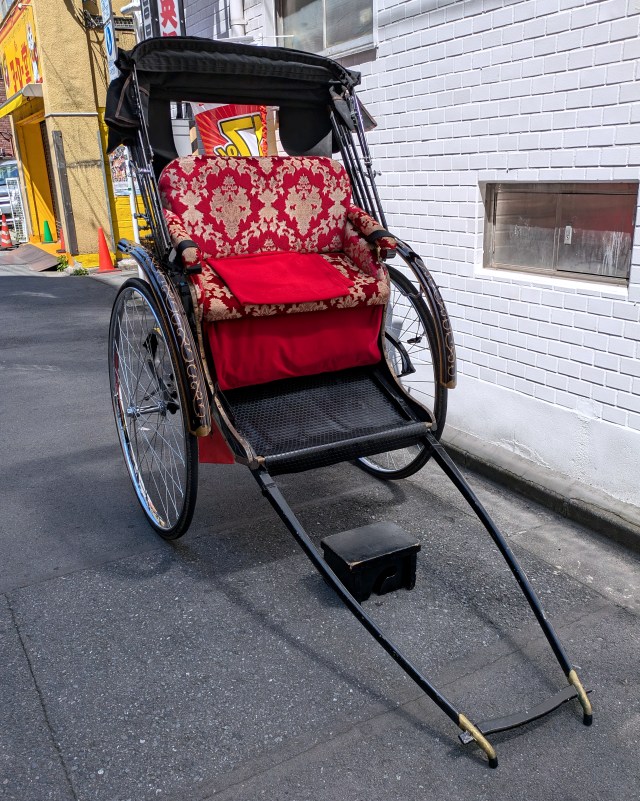
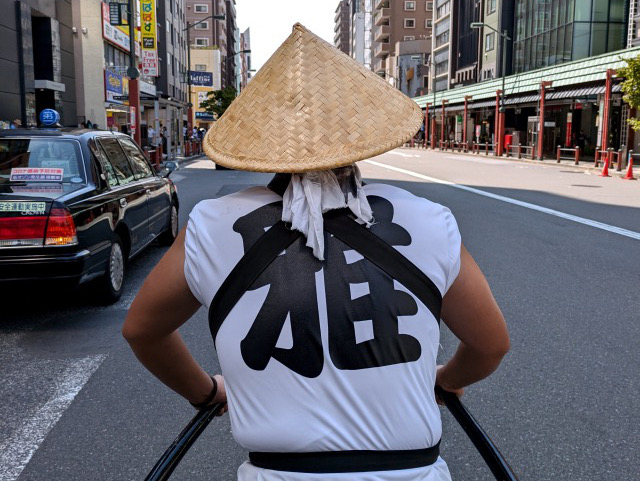
Hopping into the rickshaw, Mr Sato asked the driver if he could photograph him for this story, but he politely declined, preferring to stay anonymous due to his nature as a private driver. He was happy for Mr Sato to take photos of him from behind, though, and with “雅” (“Miyabi“), the kanji for “elegance” or “grace” on the back of the driver’s shirt, it was an elegant view.
Mr Sato requested to be taken to a traditional store that sold festival clothes, and on the way, he struck up a conversation with the driver.
Mr Sato: “So…what are you wearing? I saw most drivers wearing koiguchi shirts — are they cool to wear?”
Rickshaw Driver: “I don’t wear them. The tight sleeves make me sweat so they don’t suit me.”
Mr Sato: “Well, that wouldn’t be good for me either then. What would you recommend?”
Rickshaw Driver: “The Miyabi T-shirt I’m wearing, because it dries quickly. It’s made of a material that’s similar to what’s used in Uniqlo’s Airism range.”
Mr Sato: “But cotton koiguchi shirts also dry quickly, don’t they?”
Rickshaw Driver: “Yeah, but there are other activities that are more suited for koiguchi shirts. Really, it’s just a matter of preference.”
If you don’t know what koiguchi shirts are, don’t worry — all will become clear towards the end of this article.
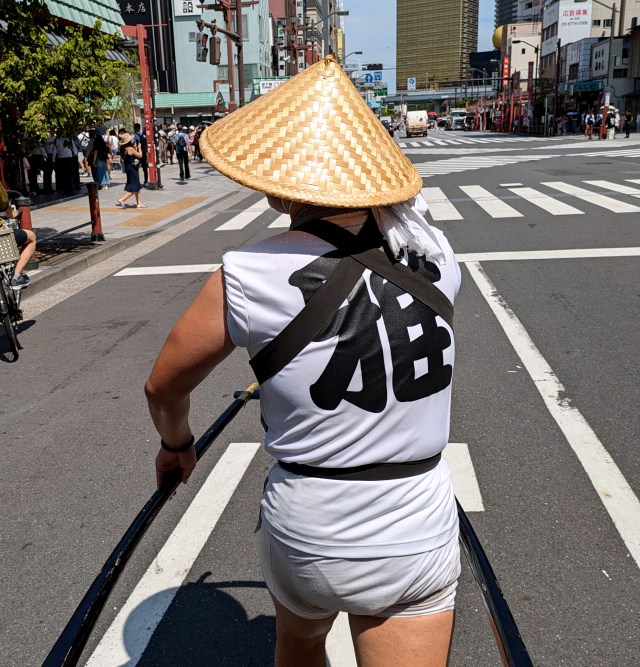
Mr Sato: “Then what about what you’re wearing on your lower body? They’re just shorts, right?”
Rickshaw Driver: “These are called ‘handako’. The hem is above the knee.”
Mr Sato: “Short lengths are cooler, aren’t they?”
Rickshaw Driver: “Well, short is better than long, but to be honest…”
Mr Sato: “Yes?”
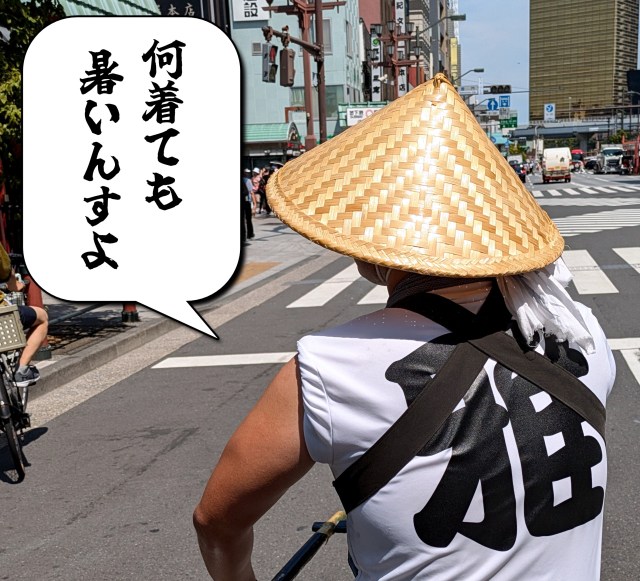
Rickshaw Driver: “No matter what you wear, it’s hot.”
▼ “何着ても暑いんすよ” (“Nani kitemo atsuinsuyo”) means “No matter what you wear, it’s hot.”
Mr Sato: “I guess that’s true! As long as you’re outside, you can’t avoid the heat.”
Mr Sato: “Ah, what about the haragake?” [haragake are traditional aprons worn at festivals]
Rickshaw Driver: “It’s hot to wear.”
Mr Sato: “Then why don’t you take it off?”
Rickshaw Driver: “I can’t. We have to wear it. That’s the rule.”
Mr Sato: “So, what do you recommend as a countermeasure against the heat?”
Rickshaw Driver: “I can’t recommend anything!”
Well, that wasn’t what Mr Sato was expecting. He’d hoped that the rickshaw drivers of Tokyo may have come up with a neat hack to beat the summer heat, but alas, it appears that they too can do little more than grin and bear it. You may have noticed too, that Mr Sato was angling for the driver to recommend items of traditional clothing like haragake, handako and koiguchi shirts as a way to keep cool, because, if he’s being honest, after being incredibly impressed with his traditional bamboo hat, he was hoping an entire traditional outfit might have an extra cooling effect.
If you know Mr Sato like we do, you’ll know he doesn’t give up on his dreams easily, so although the rickshaw driver didn’t rave about traditional attire in his line of work, Mr Sato was still determined to try it out.
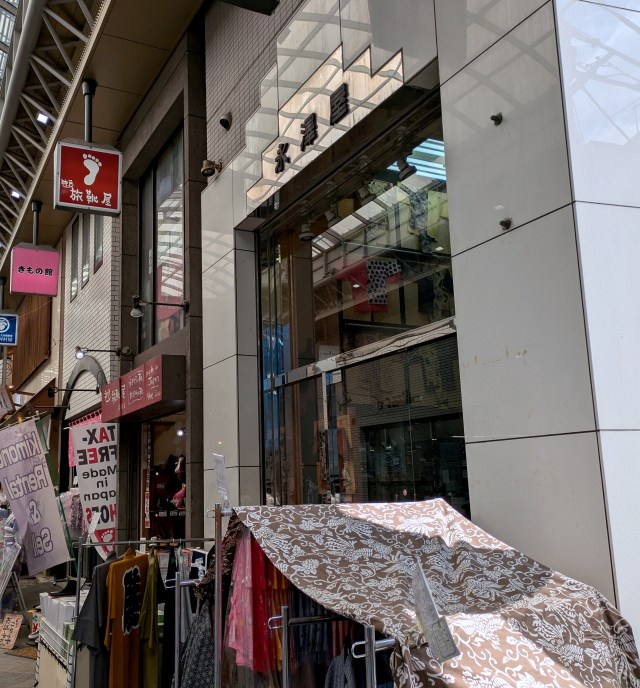
Thankfully, the rickshaw driver knew everything there was to know about stores selling traditional goods, so he was able to point out some recommendations to Mr Sato.
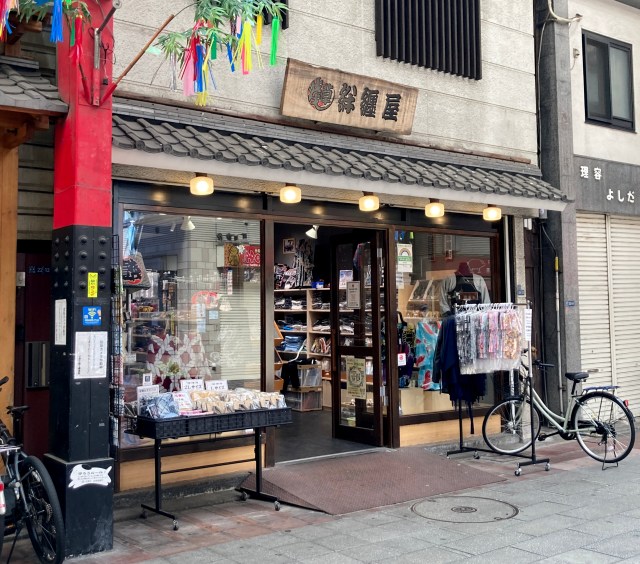
Rickshaw Driver: “Nagasawaya in Shin-Nakamise [pictured above] is a long-established store that has a wide variety of products from the ‘Edoichi’ festival clothing manufacturer. Tabi and tenugui too.”
▼ “On this street (Okuyama Omairimachi), you can buy stage costumes as an alternative to festival goods. It’s also close to the Toyokan comedy venue.”
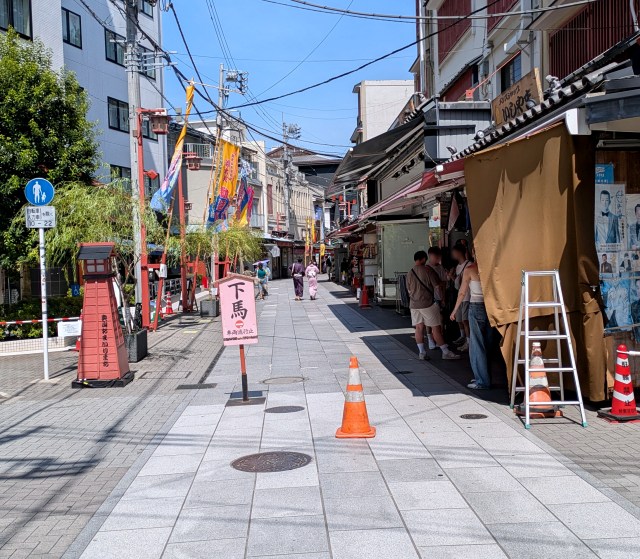
Rickshaw Driver: “Adachiya and Hantenya are well-known for their festival costumes — they’re at the end of Hisago Dori. I bought this hat at a hat shop just down the street. You can get anything you want here, including headgear.”
▼ Hisago Dori
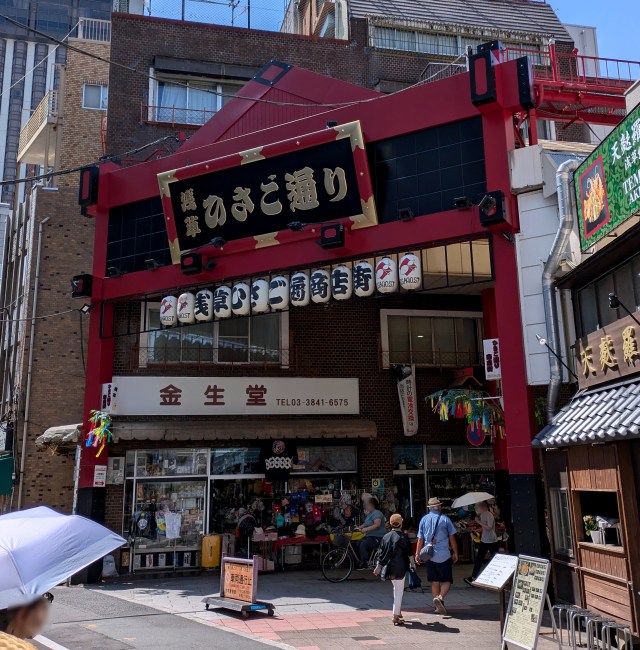
▼ Adachiya
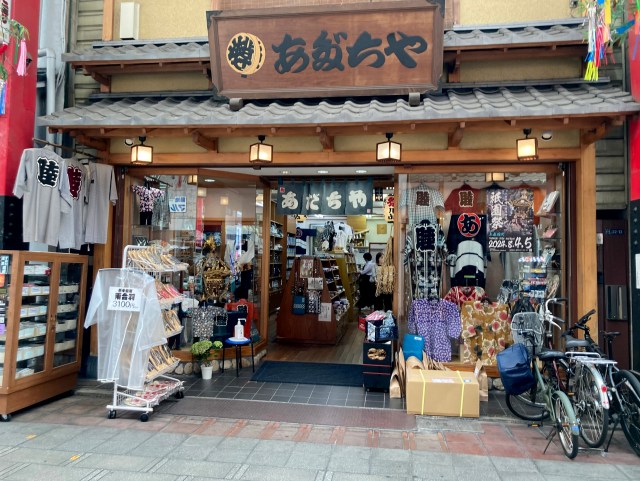
▼ Right next door to Adachiya is Hantenya.
Now that Mr Sato’s rickshaw ride was over, it was time to shop, but not before a commemorative photo.
Mr Sato: “Thank you for teaching me a lot! Your advice was very helpful!”

Behind the smile was a shadow of guilt, because deep in his heart Mr Sato knew he was about to ignore the rickshaw driver’s comments about the koiguchi shirt.
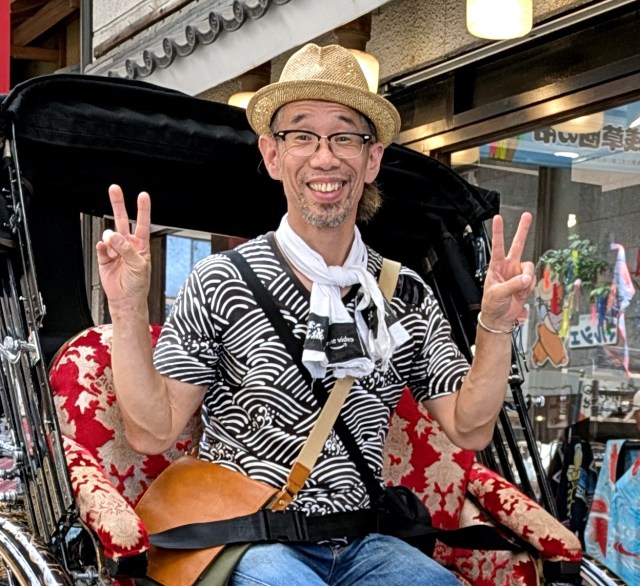
Yes, that’s right friends — Mr Sato went right into Adachiya and Hantenya and walked out with these.
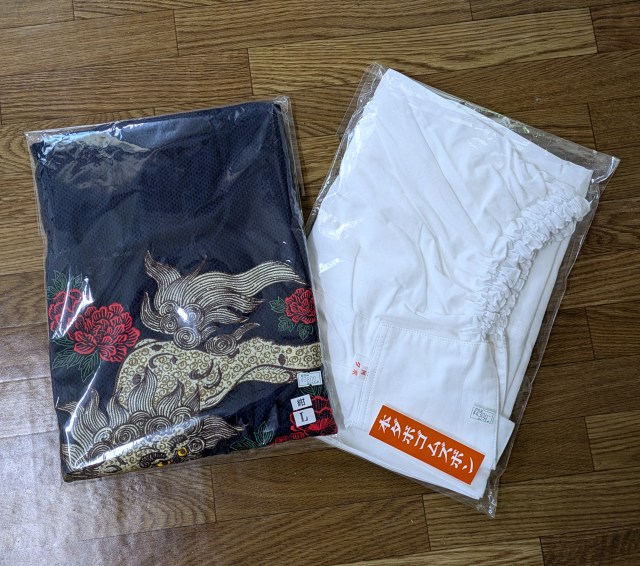
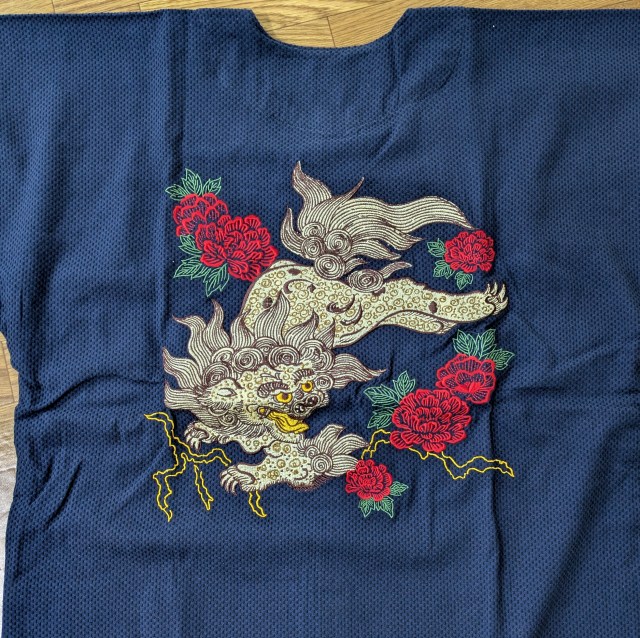
Mr Sato just couldn’t resist the urge to buy traditional festival gear to see if it would stand up better than modern wear in terms of keeping the body cool. So he went home with a koiguchi shirt, so named as the sleeves are said to resemble the mouth (“kuchi or “guchi”) of a carp (“koi”).
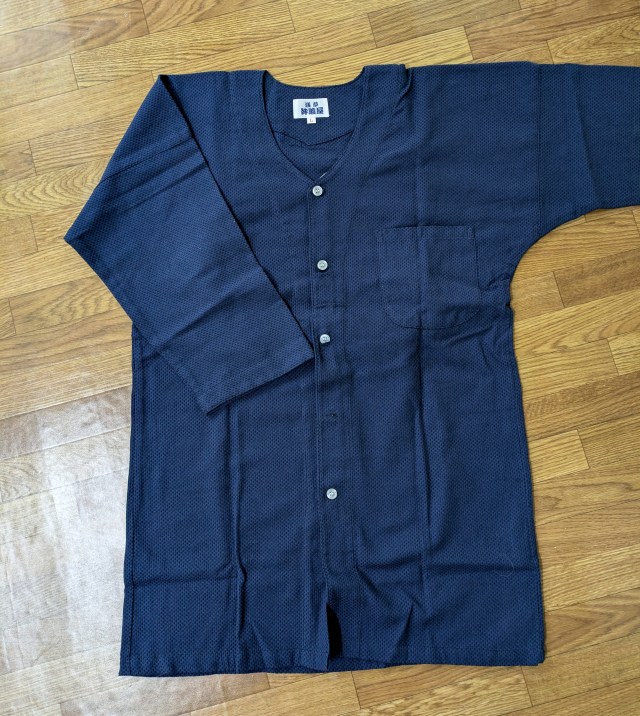
Priced at 9,800 yen, this beautifully made garment won Mr Sato’s affections with its cool-looking ‘Chinese lion and peony’ design on the back. Many koiguchi have bright, all-over patterns of dragons or tigers, but that seemed to be a bit too yakuza-esque for everyday wear, so this seemed like a better option.
While the rickshaw driver did seem happy with wearing the short ‘handako’ pants, they seemed a bit too extreme for Mr Sato, so he purchased a pair of loose-fitting trousers called ‘dabo-gi‘ for 4,300 yen.

Inside the pants are a ‘belly pad’, and a pocket that seems perfect for holding a smartphone.

While he may not have been outside in the blazing sun, when he tried on the outfit, he felt cool, and what’s more, he thought he looked cool too.

Both the top and pants are made from natural materials so they were nice and light, and they seemed to absorb sweat well. When people participate in festivals, they’re often hot and sweaty, so in Mr Sato’s opinion, festival gear like this might not be great for rickshaw drivers, but they’ll be great for everyday outdoor activities.
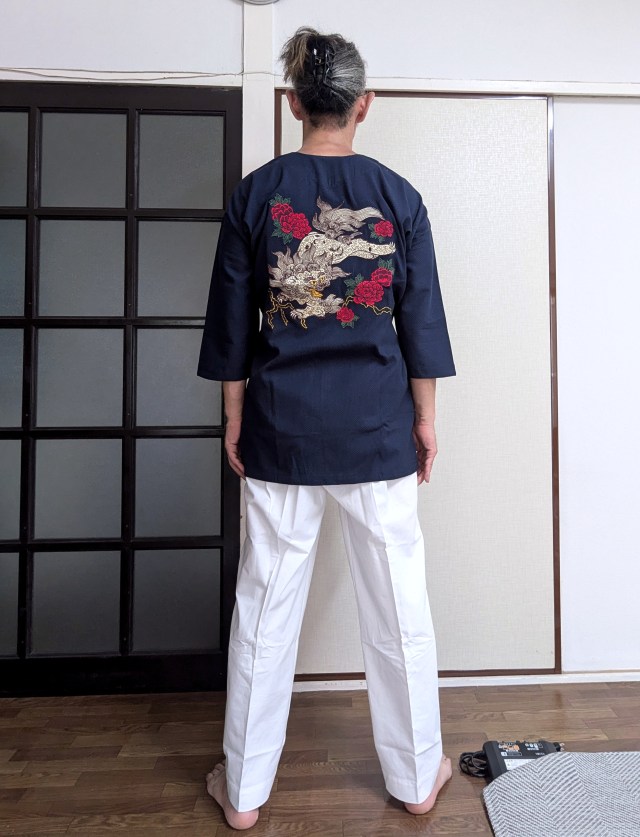
Now that he has the outfit, the next thing he has to do is take it out on the streets of Tokyo to see how it fares against the heat. For now, though, it’s serving him well as cool loungewear, and as a memento of his first rickshaw ride…and the driver who tried to steer him away from living his festival dream.
Related: Nagasawaya, Adachiya, Kizukiya
Photos ©SoraNews24
● Want to hear about SoraNews24’s latest articles as soon as they’re published? Follow us on Facebook and Twitter!
[ Read in Japanese ]