

Our Tottori-born reporter buys some “sand eggs” cooked at insanely high temperatures to determine just how egg-citing they are.
Our Japanese-language reporter Ikuna Kamezawa now lives in Tokyo, but she actually spent the first 19 years of her life in Tottori, Japan’s least populated prefecture. When she recently went home to see her parents for the Obon holiday, she paid a visit to a local tourist attraction that she hadn’t been to in a while–the Tottori Sand Dunes, which are also Japan’s biggest.
It took about an hour by car from her parents’ house to get there. While locals don’t usually frequent them, she goes occasionally because they’re free and there’s so much open space. Unfortunately, on this particular day, the day was scorching hot. She couldn’t last long outside and ducked into one of the numerous retro-looking souvenir shops before long.
▼ She understood why there were signs everywhere telling people not to underestimate the temperature of the dunes in summer.
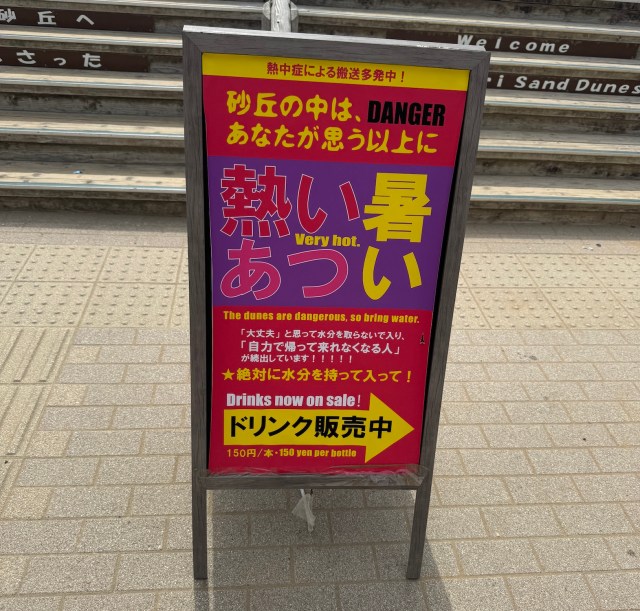
Ikuna wasn’t planning on buying anything, especially since all of the local products were familiar to her. However, at that moment, she spotted something that looked like it had been around for a while but she had never seen before in her life: “sand eggs.”
▼ One egg for 140 yen (US$0.95) or three eggs for 400 yen
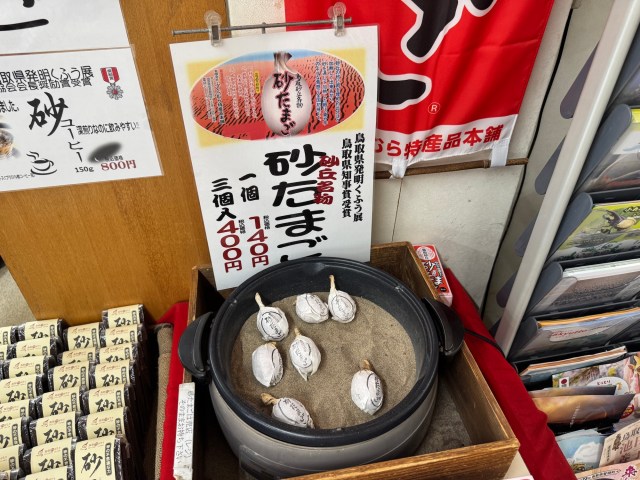
Essentially, they were eggs that were cooked by being buried in the hot sand dunes, a concept that didn’t sound that far off from hot spring eggs. The packaging of the three-packs certainly made it seem like they were a long-time souvenir staple of the dunes as it proclaimed things like “the mysterious power of the sand” and “Japan’s first sand eggs.” Its font and other design elements also had a decidedly old-timey feel that appeared unchanged for decades. When Ikuna subsequently interviewed 11 residents of central and western Tottori, including her parents, they all responded that they’d never heard of sand eggs before. Were they something that only people in the eastern part of the prefecture, where the sand dunes are located, knew about?
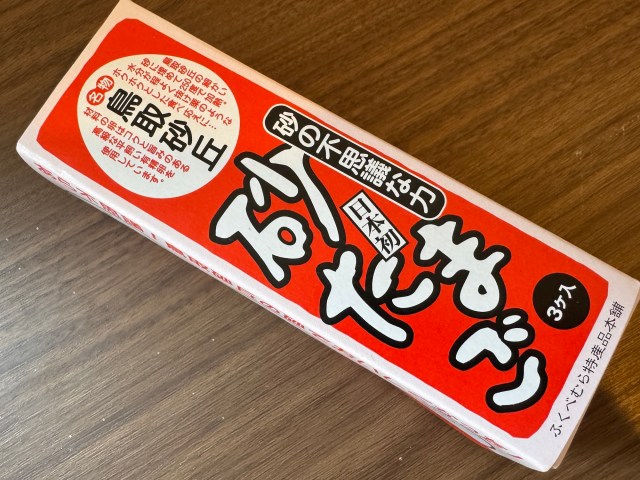
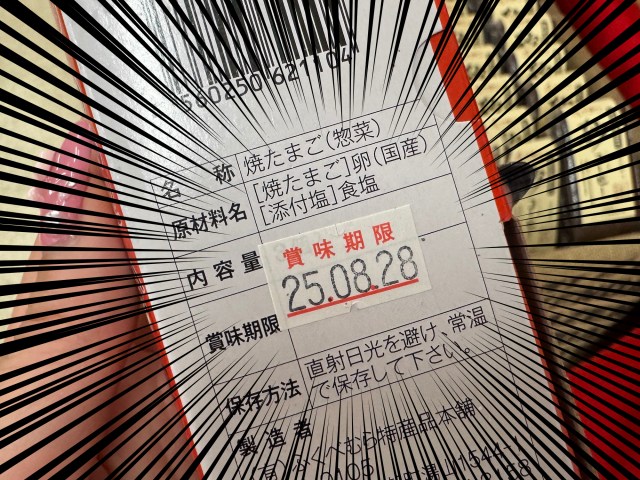
Something else then made her even more surprised. Even though this particular day was August 17, the expiration date of the eggs wasn’t until August 28–and they could be kept at room temperature until then. A bit doubtful, Ikuna confirmed that this was OK with a worker and was told that it was. Welp, there was no way around it–she needed to try them for herself, so she purchased two three-packs.
▼ The sand eggs have a high potential for being souvenirs since they don’t need refrigeration and have a long shelf-life.
She wanted to get a photo while holding an egg against the sand, but since the heat was nothing short of homicidal at the time, she settled for taking a quick snapshot in the parking lot adjacent to the dunes before heading home with her prizes.

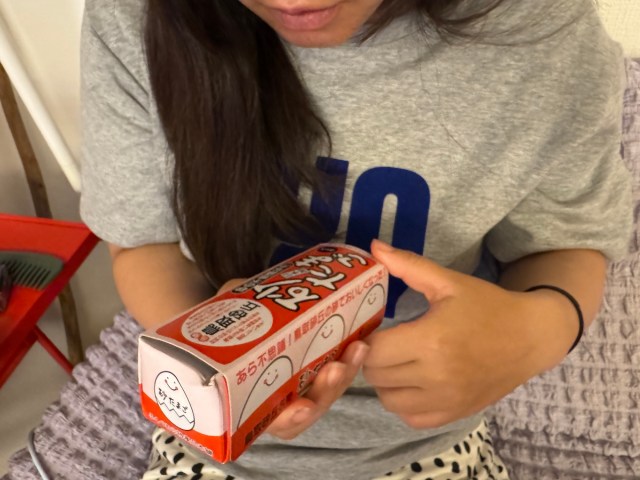
At home, she unboxed the eggs and noticed that the tips of the paper wrapping on all of them were brown. Could that mean that they were all slightly burnt in the scorching sand…?
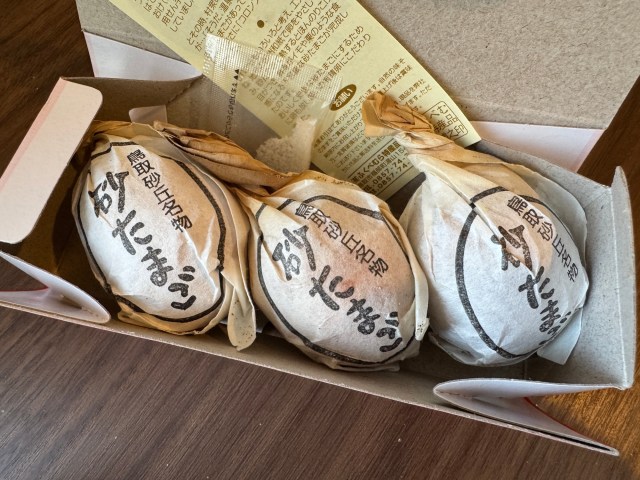
She also read a little more about the eggs in the paper insert. They were produced in the Fukube area of Tottori City right next to the dunes from the fertilized eggs of free-range chickens. After being heated to a temperature of 250 degrees Celsius (482 degrees Fahrenheit) very quickly in fine sand, they’re supposed to take on a soft, chewy texture like that of a chestnut.
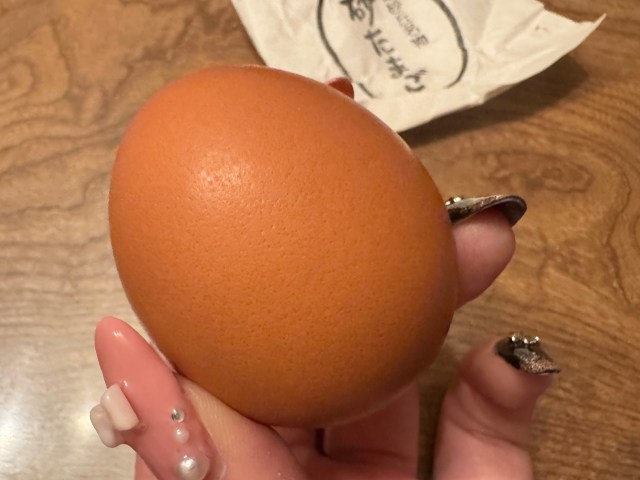
Ikuna peeled off the shell on one and was met with a strange smell–not in the sense of being rotten, but it was definitely different than that of a regular boiled egg. As someone who likes eggs in general, her expectations were rising as she took a bite.
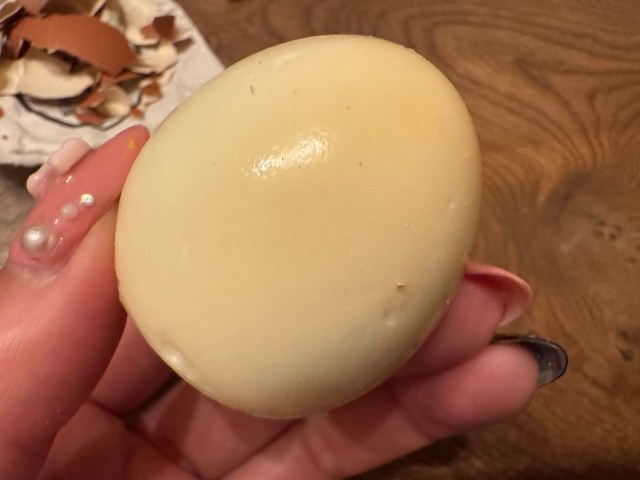
It was a super hard-boiled egg! In fact, it was the most hard-boiled egg she had ever eaten in her life. Other than that, she didn’t really have any strong feelings about it.
▼ Can we use the term “hard-boiled” for an egg that was cooked in sand?
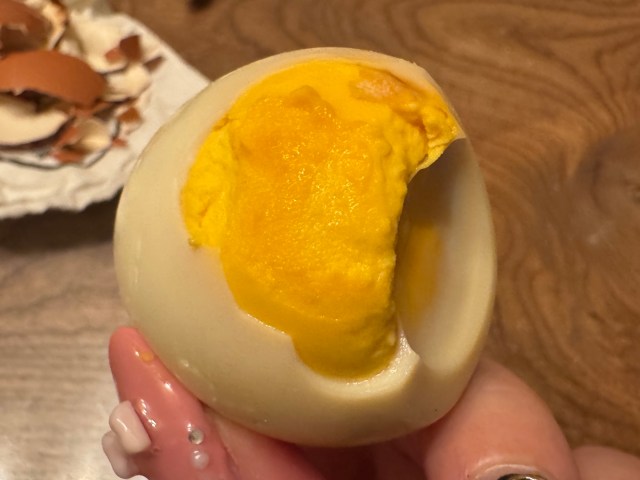
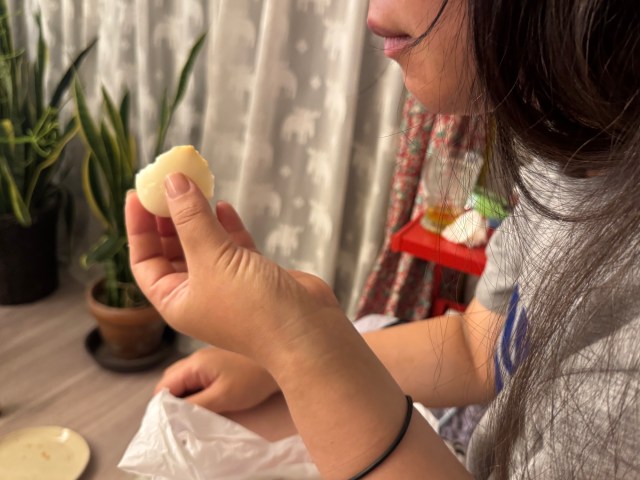
She decided to feed one to her friend, J, who’s also from Tottori and usually eats three boiled eggs per day. She had also never heard of sand eggs before this.
J wasn’t really a fan of the super hard-boiled nature of the sand eggs, but she could see how some people would be. She was so fixated on the texture that she also couldn’t tell if the eggs were high quality or not. In any case, she asked Ikuna to pass her the tea to help her wash down the egg.
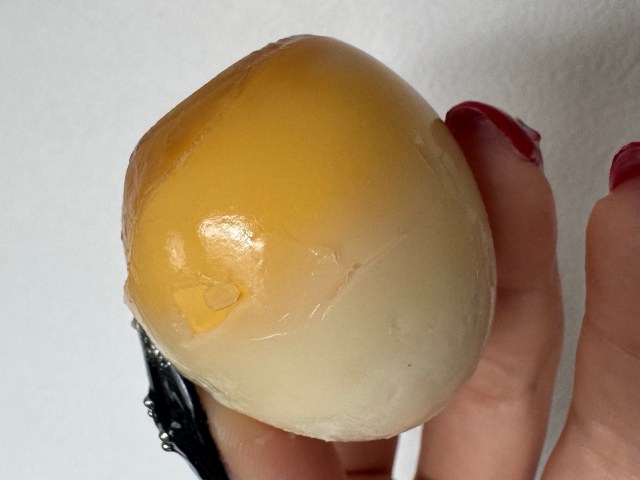
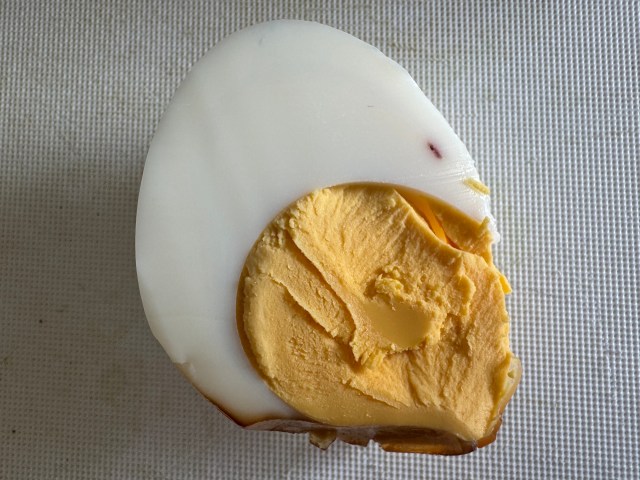
Something interesting that Ikuna noticed was that in all six of the eggs, the yolk was heavily concentrated at one end. It must be some kind of result of the heating process.
She again marveled at how similar, but different, the sand eggs were from regular boiled eggs. She encourages any readers who buy them to keep an open mind when taste-testing and don’t expect them to be exactly like boiled eggs.
On a last note, Ikuna learned that the sand eggs began to be sold about 12 years ago, which is why longtime Tottori residents may never have heard of them. While she enjoyed her experience discovering and trying out the eggs, the next time she goes near the sand dunes, she might just chill at the local Starbucks instead.
All images © SoraNews24
● Want to hear about SoraNews24’s latest articles as soon as they’re published? Follow us on Facebook and Twitter!
[ Read in Japanese ]
 We try Starbucks Japan’s new sand dunes Frappuccino in Tottori
 Have plans to visit Tottori’s sand dunes this summer? Catch some Pokémon while you’re at it!
 Star Wars is going back to its sand roots in Tottori Prefecture with massive sand sculpture
 Does Tottori really have the most delicious-tasting tap water in all of Japan?【Taste test】
 Two days to hunt down all of Tottori’s 20 Pokémon manhole covers [Part One]
 Japan reportedly adding Japanese language skill requirement to most common foreigner work visa
 Peanuts and Coke becomes a viral hit in Japan, but is it a trend worth joining?
 Man bites woman at cherry blossom park in Japan, dies shortly after
 New 7-Eleven sandwich goes viral in Japan, but is it everything it’s cracked up to be?
 How to take your home ramen to the next level by making your own chashu pork in a frying pan
 Huge life-size Eevee Eeveelution Pokémon plushies will steal hearts, conquer living rooms【Photos】
 Step back in time to the Edo period at this unusual highway rest stop in Japan
 Start saving room now – Japanese grocery store’s biggest sushi roll yet is coming for Setsubun
 Japan’s new difficult-to-drink-from beer glass protects your liver, but it’s a brutal experience
 What exactly is the treat known as a “kougnané” that’s sold outside Tokyo’s Yurakucho Station?
 Pokémon and Ikea Japan cross over into each other’s worlds with collaboration events
 Starbucks Japan closing only Shinkansen platform branch for popularity-triggered renovations
 Two food hacks take Japan’s convenience store fried chicken to amazing new sandwich heights
 You can assemble a well-balanced team of Pokémon, them eat them, thanks to Japanese cake chain
 Fading Tokyo – Searching for signs of the Showa era as local neighborhoods evolve[Photos]
 Pokémon lacquerware series expands for Year of the Horse with new handcrafted design[Video]
 Tokyo turns its phone booths into free Wi-Fi hotspots, and here’s how to use them
 Tokyo teahouse serves up a sakura matcha dessert you won’t find anywhere else
 Totoro Fund line of beautiful artwork and apparel lets you help the real-world Totoro Forest
 Japan now has a special desk for people who work at home with a pet cat[Photos]
 Famous Tokyo cherry blossom spot installs view-blocking screens to fight overcrowding[Video]
 Uniqlo announces new T-shirts for One Piece, Naruto and more for manga publisher’s 100th birthday
 Train station platform ramen store closes its doors on half a century of history in Tokyo
 Starbucks Japan releases new My Fruit³ Frappuccino at only 34 stores around the country
 Studio Ghibli releases Catbus pullback keychain that runs like the anime character
 Krispy Kreme releases Super Mario doughnuts in Japan for a limited time
 Japanese onsen egg maker from 100-yen store Daiso needs to be on your shopping list
 Survey asks foreign tourists what bothered them in Japan, more than half gave same answer
 Japan’s human washing machines will go on sale to general public, demos to be held in Tokyo
 Starbucks Japan releases new drinkware and goods for Valentine’s Day
 We deeply regret going into this tunnel on our walk in the mountains of Japan
 Studio Ghibli releases Kodama forest spirits from Princess Mononoke to light up your home
 Starbucks Japan releases new sakura goods and drinkware for cherry blossom season 2026
 Japan’s newest Shinkansen has no seats…or passengers [Video]
 Major Japanese hotel chain says reservations via overseas booking sites may not be valid
 Put sesame oil in your coffee? Japanese maker says it’s the best way to start your day【Taste test】
 No more using real katana for tourism activities, Japan’s National Police Agency says
 Woman asks for eight-hour taxi ride in Japan, arrested when she doesn’t pay gigantic fare
 Searching for Japan’s “river of the dead” in Tottori Prefecture【Photos】
 Day 2 of our quest to visit all the Pokémon manhole covers in Tottori【Photos】
 Making igisu, a traditional Japanese food even most Japanese people don’t know about【SoraKitchen】
 The story behind “the most hopeful ramen bar in the world”
 Getting tired of Pokémon Go? Maybe visiting the Pokémon manhole covers will reignite your passion
 This foxy Tokyo gyaru look from 20 years ago is having a mini revival right now【Photos】
 Cook up an easy campsite feast inside your home with the “Ramen Cooker”
 Could this island actually be the real setting of the legend of Urashima Taro?
 We try roasted horseshoe crab in Thailand, regret our choice yet strangely long for more
 What’s the deal with akebi, the perfectly purple, alien-like fruit that’s in season now in Japan?
 We try a rotating sushi restaurant in New Delhi, are surprised to find no rotating sushi
 Is there demand for merch of our stylish reporter? Let’s find out with the Ikuna Acrylic Standee
 “Sipping meat,” the semi-secret Osaka food that sounds like a joke, is seriously tasty
 Japan’s lap-pillow ear-cleaning salons aren’t just for pervy guys, we find out
 Does the maxixe live up to its promise of being a whole new flavor for our Japanese reporter?