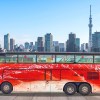

Travel off the beaten path and enjoy exquisite meals on this very special Japanese train.
Kyoto is known for drawing crowds of tourists, who descend on the ancient capital in large numbers to soak up the scenery and taste the local specialties. But did you know there’s a hidden way to do all this without the crowds?
It’s called the Tango Kuromatsu-go, a restaurant train that lets you savour some of Kyoto’s hidden charms, and our reporter Mari Morimoto was able to experience everything the train has to offer firsthand when she joined a ride with an autumn and winter food course, served on board from the beginning of October.
The journey begins when you step aboard the sleek black Tango Kuromatsu-go, which is centred around the theme of “kuromatsu” or “black pine”, evoking the pine trees that stand out against the white sands of Kyoto’s Amanohashidate, one of Japan’s three top scenic views.
▼ Tango is the historic name of the scenic coastal region while “go” (号) is the suffix for a series of train.

Words failed our reporter when she saw the train’s luxurious interior. Made with natural wood, the vibe was elegant yet nostalgic and sophisticated, reminiscent of the alluring blend of aesthetic beauty and functional design that you would encounter at an expensive Japanese inn.

The interior design was created by Eiji Mitooka, an award-winning design consultant who previously helped to create ultra-luxurious trains like the Fujisan Express and the Red Star and Blue Star.

The Tango Kuromatsu-go, or Tango Kuromatsu as it’s commonly known, runs through stunning mountain valleys and along the Wakasa Bay coastline, making stops at scenic spots along the way while serving gorgeous meals that showcase local ingredients.

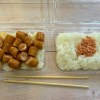
The food is exceptional, with three courses offered during the autumn and winter months. Mari tried the Morning Course and Lunch Course, opting to try the third option, the “Japan Maritime Self-Defense Force Maizuru District Collaboration Course“, inspired by meals commonly served on Japan Maritime Self-Defense Force (JMSDF) ships, on a different occasion.
The Morning Course, served on the Fukuchiyama to Amanohashidate route, features a special “Oeyama Shuten Taiji Plate” (“Oeyama Demon-Slaying Plate“), which references the famous Japanese legend of Shuten-doji, the demon of Mt Oe in Kyoto folklore. Produced by Patisserie Cafe Katashima, a local cafe established in 1970 that uses ingredients from the region, the demon-slaying plate includes items like “Demon’s Club Pie Cornet”, a pastry shaped like the spiked club traditionally held by demons, and “Demon Hag and Jerusalem Artichoke Potage”.
▼ The cornet is deliciously crispy, with a moreish filling that includes smoked salmon, potato, ham, cheese and onion.

The second dish, the “Oeyama Dessert Plate“, continues the local demon-slaying theme with a plate of exquisite sweets. The standout is the Kintaro Premium Roll Cake (Kintaro, literally “Golden Boy” is a heroic demon slayer in Japanese folklore) which contains Akaoni Hojicha (Red Demon Roasted Green Tea). Roasted by Yamashiroya Chaho, a long-standing local teashop, the hojicha has an outstanding flavour and aroma.
▼ Beside Kintaro is the mountain-shaped Oeyama BonBon, made with chestnuts, cream, and chocolate.

After learning about the local mythology behind these sweets, it’s time to experience it firsthand with a stop at Oeyama Station. Here, passengers can walk through the local area and see curious sites such as the first torii gate of Motoise Naiku Kotai Jinja, an important local Shinto shrine considered to be a predecessor to Ise Grand Shrine.
▼ The mountainous scenery and rice paddies reveal a different side of Kyoto that not many visitors get to see.

After boarding the train for the Amanohashidate to Nishi-Maizuru route, Mari got to taste the Lunch Course, which evokes the ancient legend of Hagoromo Tennyo (Celestial Maiden of the Feathered Robe), a mythical figure tied to local legends in the Tango region.
The set consists of five dishes, each beautifully produced by the chef at Centrale Hotel Kyotango, with the highlight being “Tennyo no Sato de Tsukutta Konnyaku no Umani” (“Simmered Konjac Made in the Celestial Maiden Village”). The appetiser includes a seasonal three-piece sashimi assortment with accompaniments, and during Mari’s journey, she was able to enjoy great amberjack, Spanish mackerel and sea bass, with special hotel-made “foamed” soy sauce to resemble the feathered robe of the celestial maiden.

Other dishes included Yuan-yaki (a style of grilled or broiled fish marinated in a yuzu-citrus soy sauce), Toji-mushi (steamed dishes using yuba [tofu skin], named after Toji, a famous temple in Kyoto connected with yuba production), and a high-quality local wagyu steak. Every dish is prepared and presented with attention to detail and carefully plated with exquisite tableware to honour the beauty of Kyoto-style cuisine.

Even the final dessert had distinct and pronounced flavours, reflecting the chef’s passion and commitment to ensuring guests enjoy Kyoto’s delicious cuisine in the best possible way.

The attention to detail extended to the waitstaff, whose kind explanations, care with customers, and impeccable timing for serving dishes, were all exceptional. Everything came together seamlessly to create an experience that was surprisingly moving, both literally and figuratively, and another emotional moment came when the train crossed the Yura River Bridge.
▼ Recognised as a civil engineering heritage site, this was a breathtaking experience.

The main departure and arrival point for the restaurant train is Amanohashidate Station, where a short walk leads you to stunning scenic views of the Sea of Kyoto region. One of the most famous sights is viewed from an elevated area where the sandbar and the pine forest of Amanohashidate resemble a dragon ascending to the sky, a famous natural symbol of the area.
▼ This spot is well known for its connection to the dragon legend.

▼ Riding the Tango Kuromatsu-go lets you experience the charms of local legends firsthand.

Though Amanohashidate is further out from central Kyoto, the beautiful train and stunning scenery make it a site that’s well worth visiting. The restaurant train runs on Fridays, Saturdays, Sundays and public holidays, with each leg taking roughly 100 minutes, and prices start at 4,500 yen (US$30.57) for the JMSDF menu, through to 7,000 yen for the Morning Course and 15,000 yen for the Lunch Course.
You can check out all the details at the official site, but if you’d like to experience a different type of train restaurant in the heart of central Kyoto, then the stationary, bright-pink Future Train is ready to welcome you.
Related: Tango Kuromatsu
Photos ©SoraNews24
● Want to hear about SoraNews24’s latest articles as soon as they’re published? Follow us on Facebook and Twitter!
[ Read in Japanese ]