
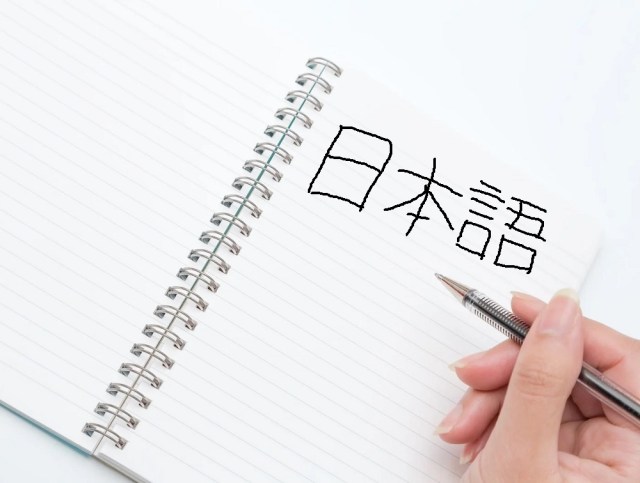
Students studying Japanese as a second language in-country hits historic high, majority of teachers are unpaid volunteers.
Global interest in Japan and its culture, both modern and traditional, has never been higher. This is occurring, however, at the same time as another trend in which many are claiming that technology has turned a corner and we can now leave all sorts of previously human-intelligence functions to machines. AI can even communicate for us now, some claim, pushing automated translations as a solution to language barriers.
However, the important thing to remember about artificial intelligence is that it’s different from genuine intelligence. Especially when it comes to translating to or from a language as context-heavy as Japanese. Even when dealing with simple phrases, AI translation can get things wildly, and sometimes even violently, wrong.
So it’s very encouraging to know that more foreigners than ever are studying Japanese in Japan.

The Ministry of Education, Culture, Sports, Science and Technology recently released the latest iteration of its annual Survey on the State of Japanese Language Education, compiled from data collected in November of 2024 (which explains why “Speediness” isn’t part of the ministry’s lengthy name). The study found 294,198 foreign nationals enrolled in Japanese-as-a-second-language classes in Japan, the highest number ever and an increase of 31,028 over the previous year.
The number accounts for both foreigners on student visas in Japan as well as other classifications of residents, such as work, spousal, or refugee visas. The previous high, 277,857, came in 2019, followed by a severe dip during the pandemic, dropping down to 123,408 in 2021 through a combination of fewer new learners being able to enter Japan and foreign residents returning to their home countries during the economic instability of the period. Zooming out to a wider view of historic trends, the 294,198 learners of Japanese in Japan are nearly five times the 60,601 people who made up that demographic in 1990.
Number of Japanese language students in Japan
● 1990: 60,601
● 2017: 239,597
● 2018: 259,711
● 2019: 277.857
● 2020: 160,291
● 2021: 123,408
● 2022: 219,808
● 2023: 263,170
● 2024: 294,198
The study also found that there are a total of 2,669 institutions and facilities providing Japanese language instruction to foreigners, consisting of universities, junior colleges, high schools, accredited language schools, local governments and boards of education, international friendship societies, and volunteer organizations. This number is also significantly larger than it was a decade ago, but slightly down from its high in 2022.
Number of institutions and organizations offering Japan language instruction to foreigners in Japan
● 1990: 821
● 2017: 2,109
● 2018: 2,290
● 2019: 2.542
● 2020: 2,516
● 2021: 2,541
● 2022: 2,764
● 2023: 2,727
● 2024: 2,669
Crunching those numbers a little more, the number of university programs has gone down a bit, from 516 in 2017 to 481 in 2024, with rises in the number of language schools (from 466 to 648) and volunteer organizations (from 281 to 695) during the same period.

Foreigners on student visas accounted for roughly two thirds of the Japanese learners, with the others residents of other categories, the largest, 6.6 percent, being those working in Japan or accompanying a family member doing so. In terms of nationality, China was by far the largest source of learners, with 78,821, or 26.8 percent of the total. Nepal and Vietnam came next, with the U.S. being the highest western country on the list at 10th.
Country of origin of Japanese learners in Japan
1. China: 78,821
2. Nepal: 45,821
3. Vietnam: 33,547
4. Myanmar: 18,181
5. Sri Lanka: 10,230
6. Philippines: 9,389
7. Indonesia: 9,280
8. Korea: 7,929
9. Taiwan: 7,786
10. U.S.A.: 6,607
Also hitting a record high in the study is the number of Japanese teachers within the country providing instruction to foreigners, which has grown by roughly the same proportion, about 25 percent, as the number of students since 2017.
Number of Japanese-as-second-language teachers in Japan
● 1990: 8.329
● 2017: 39,588
● 2018: 41,606
● 2019: 46.411
● 2020: 41,755
● 2021: 39.241
● 2022: 44,030
● 2023: 46.257
● 2024: 50,309
However, this doesn’t necessarily mean that Japan will have enough teachers, should current trends continue. A key issue is that in the most recent survey, more than half of teachers of Japanese as a second language were in the 50s or older, with at least one in six 70 or older.
Age of Japanese-as-second-language teachers in Japan
● Under 20: 0.9 percent
● 20-29: 5.8 percent
● 30-39: 7.1 percent
● 40-49: 13.3 percent
● 50-59: 19.3 percent
● 60-69: 21.7 percent
● 70-79: 14/7 percent
● Unspecified: 17.3 percent
Not to discount the wisdom, experience, and vigor of older instructors, the heavy balance towards teachers over the age of 50 could be a sign that the industry is having trouble attracting younger applicants, which could create a problem in coming years if the talent pool isn’t restocked as older teachers eventually leave the workforce.
▼ “No, Mr. Tanaka, you need to rest!”
“But…my students…if I don’t go, who will save them from the terrors of the ‘so’ and ‘n’ katakana?”
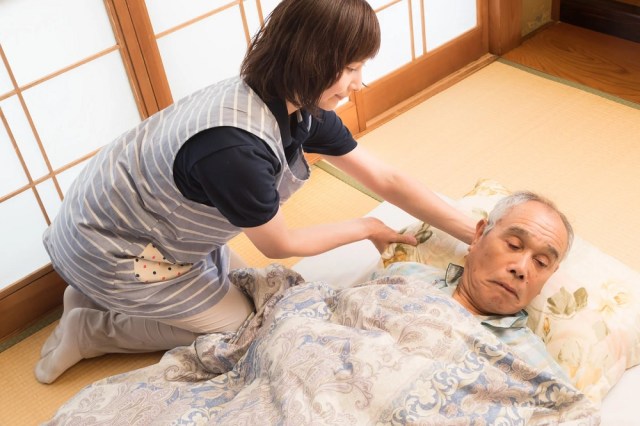
However, that in turn raises the question of just how much of an “industry” teaching Japanese as a second language is in Japan. Out of the 50,309 teachers identified in the most recent study, the majority receive no salary at all, with 51.1 percent saying they teach on a volunteer basis. Only 13.6 percent said that teaching Japanese was their regular job, with the remaining 33.3 percent saying they teach on a supplementary or irregular basis.
That might sound like shameless labor exploitation, but it’s important to remember that the study included local community center and international friendship organization programs, many of which are free for students and take a relaxed approach that focuses more on grass roots cultural exchange and community outreach than serious scholarly pursuit. Less than 3.3 percent of instructors for university, junior college, or high school programs said they teach on a volunteer basis, and out of the 14.424 language school teachers, only 13, far below 0.1 percent, were volunteers. Conversely, it was local government and international friendship societies that had the highest proportions of volunteers, at 87.5 and 90.3 percent, respectively. Whether full and part-time compensated teachers are getting paid enough for their services is a question for another day, but at the very least it’s safe to say most, if not all, volunteer instructors aren’t really looking to make money off teaching in the first place. Volunteers making up a large proportion of the total number of teachers could also explain why so many are in their 50s or older, as many people become more active in local community programs in their post-retirement years.
▼ Mr. Tanaka isn’t in it for the money, he just likes meeting new people and being helpful.
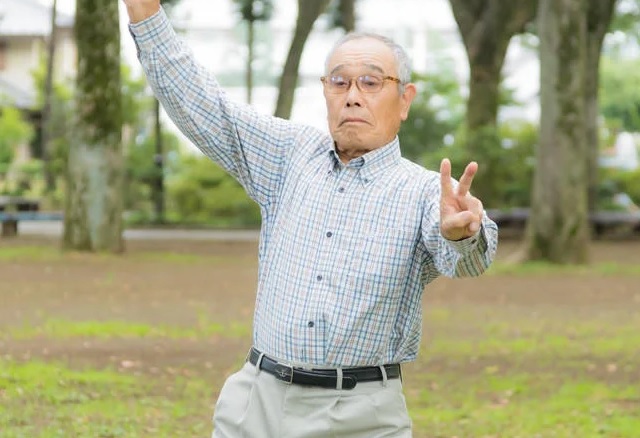
That does still leave the potential problem of making sure enough new teachers are coming into the field, though, and also ensuring that the types of courses offered (relaxed community center lessons, intense university curriculums, and everything in between) are being made available proportionate to the needs of the student base.
Finally, we can’t discount the effect that exchange rates must be having on the situation. Coming to Japan on a student visa becomes much more viable when a weak yen means the savings you’ve built up in your home country will go much farther while you’re out of the full-time workforce, and should the yen rise up again, studying in the country will suddenly become much less viable for many people considering making the move.
For now, though, it’s great to see the international community showing such a strong interest in not only learning Japanese, but in immersing themselves in both the language and the culture by studying it in Japan.
Source: Ministry of Education, Culture, Sports, Science and Technology via Yahoo! Japan News/Kyodo
Top image: Pakutaso (edited by SoraNews24)
Insert images: Pakutaso (1, 2, 3, 4)
● Want to hear about SoraNews24’s latest articles as soon as they’re published? Follow us on Facebook and Twitter!
Follow Casey on Twitter, where studying Japanese in Japan turned out to be a pretty good decision for him.
 Number of foreign students in Japan hits record high, one country accounts for over 35 percent
 Record number of foreign children in Japan need help understanding Japanese in school
 Japanese prime minster wants to increase the number of foreigners studying in Japan
 Foreign English teachers in Japan pick their favorite Japanese-language phrases【Survey】
 Japan reportedly adding Japanese language skill requirement to most common foreigner work visa
 Japan reportedly adding Japanese language skill requirement to most common foreigner work visa
 7-Eleven Japan’s new baked-in-store sweet treat is only available in three parts of the country
 You can assemble a well-balanced team of Pokémon, them eat them, thanks to Japanese cake chain
 Japan named most sleep-deprived country for fourth year in a row, according to survey
 Starbucks Japan closing only Shinkansen platform branch for popularity-triggered renovations
 New cafe in trendy Tokyo neighborhood is staffed by grannies and grandpas with average age of 73
 Huge life-size Eevee Eeveelution Pokémon plushies will steal hearts, conquer living rooms【Photos】
 Japan’s new difficult-to-drink-from beer glass protects your liver, but it’s a brutal experience
 A visit to the back-alley Tokyo ramen restaurant listed in the Michelin dining guide
 McDonald’s Japan adds new Hello Kitty and Pompompurin drinks to the menu for a limited time
 Pokémon and Ikea Japan cross over into each other’s worlds with collaboration events
 Pokémon lacquerware series expands for Year of the Horse with new handcrafted design[Video]
 Two food hacks take Japan’s convenience store fried chicken to amazing new sandwich heights
 Tokyo’s best museum for foreign travelers finally reopens after being closed for four years
 Totoro Fund line of beautiful artwork and apparel lets you help the real-world Totoro Forest
 Fading Tokyo – Searching for signs of the Showa era as local neighborhoods evolve[Photos]
 Tokyo turns its phone booths into free Wi-Fi hotspots, and here’s how to use them
 Japan now has a special desk for people who work at home with a pet cat[Photos]
 Famous Tokyo cherry blossom spot installs view-blocking screens to fight overcrowding[Video]
 Uniqlo announces new T-shirts for One Piece, Naruto and more for manga publisher’s 100th birthday
 Train station platform ramen store closes its doors on half a century of history in Tokyo
 Starbucks Japan releases new My Fruit³ Frappuccino at only 34 stores around the country
 Studio Ghibli releases Catbus pullback keychain that runs like the anime character
 Krispy Kreme releases Super Mario doughnuts in Japan for a limited time
 Japanese onsen egg maker from 100-yen store Daiso needs to be on your shopping list
 Nine great places to see spring flowers in Japan, as chosen by travelers (with almost no sakura)
 Survey asks foreign tourists what bothered them in Japan, more than half gave same answer
 Japan’s human washing machines will go on sale to general public, demos to be held in Tokyo
 Starbucks Japan releases new drinkware and goods for Valentine’s Day
 We deeply regret going into this tunnel on our walk in the mountains of Japan
 Studio Ghibli releases Kodama forest spirits from Princess Mononoke to light up your home
 Starbucks Japan releases new sakura goods and drinkware for cherry blossom season 2026
 Japan’s newest Shinkansen has no seats…or passengers [Video]
 Major Japanese hotel chain says reservations via overseas booking sites may not be valid
 Put sesame oil in your coffee? Japanese maker says it’s the best way to start your day【Taste test】
 No more using real katana for tourism activities, Japan’s National Police Agency says
 Number of foreigners working in Japan hits all-time high, 25 percent come from same country
 Number of foreigners living in Japan has grown 50 percent in four years, hits historic high
 The Japanese you learn at school vs the Japanese used in Japan【Video】
 Where’s the happiest place for foreigners to live in Japan? Study investigates
 English teachers in Japan apologize for having low-proficiency kids say “poison” in assigned video
 Japanese government announces stricter requirements for foreigner student visas
 Foreign population in Japan hits record high as Japanese population falls to record low
 Foreign English teacher in Japan calls student’s ability garbage, says it was an “American joke”
 Laugh and learn! Japanese language school for foreigners teaches real Japanese with manzai comedy
 Kyoto study finds nearly 500 translation errors for foreign tourists, new guidelines released
 Japanese expat remembers the words that changed his life when he started working in Australia
 Under 35 percent of middle school English teachers in Japan meet government proficiency benchmark
 Japanese politicians want to make it easier for foreigners to get anime assistant work visas
 How to respond to Japanese people saying “I don’t speak English” when you’re speaking Japanese?
 Non-Japanese babies make up more than 3 percent of births in Japan, a record high
 Japanese Twitter user embarrassed to learn why American friend is studying Japanese, not Chinese