
As Japan’s foreign population grows, its foreign kid count is getting bigger too, and educational systems might not be keeping up with the country’s changing demographics.
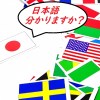
As Japan’s foreign population continues to grow, the number of foreign-nationality kids living in the country is rising too. Unfortunately, the number of kids living in Japan who aren’t proficient in communicating in Japanese is growing too.
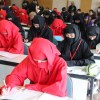
According to Japan’s Ministry of Education, Culture, Sports, Science and Technology, which publishes such data roughly every other year, in 2008 there were 28,757 foreign-nationality children enrolled in public elementary and middle schools in Japan who required additional instruction in order to become proficient in speaking Japanese, relative to other children of their age. This number stayed more or less consistent for the next several years, but jumped noticeably in 2016, and has been rising at an accelerating rate ever since, almost doubling between 2014 and 2023.
● Number of foreign-nationality children in public elementary and middle schools requiring additional interaction to learn Japanese
2008: 28,575
2010: 28,511
2012: 27,013
2014: 29,198
2016: 34,.335
2018: 40,755
2021: 47,619
2023: 57,718
Statistics for 2025 aren’t available yet, but considering recent inbound immigration trends, it’s a pretty safe bet that’ll it’ll be a new record high, and an absolute certainty that it’ll be a very large number.
When it’s determined that a child is insufficiently proficient in Japanese for their age, they’re given supplementary Japanese-as-a-second-language (JSL) lessons, up to 280 hours’ worth for a school year, under a framework called the “special curriculum for Japanese language guidance at the compulsory-education level.” Lessons in this system are supposed to be taught by an instructor with certified teaching credentials, but according to a JSL instructor interviewed by magazine Toyo Keizai, schools often lack staff with the recommended credentials who are capable of teaching such classes. As a compromise, many then turn to outside educational services, contracting for JSL teachers to come to the school and teach the special classes, even if the instructor does not have a full-fledged teaching license.

The lack of specialized JSL staff at many schools reflects a challenging part of the situation, which is that while Japan’s foreign population is growing, the concentration of non-Japanese children at any one particular school usually isn’t high enough to warrant a full-time dedicated JSL instructor. Because of that, JSL teachers often have to make the rounds to multiple schools, sometimes in a single day. This, in turn though, puts a great strain on the teachers, and it’s not like the difficulties end once they do complete their journey to their next classroom.
For students with the lowest level of Japanese proficiency, and thus the ones who need the most help, a common plan is to start by instructing the child in their native language, then transitioning to more and more Japanese as they build vocabulary and grammar skills. However, with Japan’s foreign population growing more diverse and hailing from an increasing number of different countries, the pool of native languages for foreign-nationality children has become larger, meaning there’s less chance of a teacher speaking any given child’s mother tongue. This is also an issue when the JSL teacher needs to talk with the child’s parents to discuss their development and coordinate with moms and dads regarding homework, drills, and other practice and retention work that needs to be done outside of class. Sometimes the parents themselves are also less than proficient in Japanese, meaning that in addition to teaching the children during class, the JSL teacher has to take on the role of interpreter in order to keep moms and dads in the loop.
Foreign-nationality kids needing JSL instruction isn’t something Japan has seen as an especially pressing social issue. For many years, a lot of Japan’s adult foreign residents were fairly young, and early in their careers to boot. Many were single or married recently enough that they weren’t ready to start families yet, and by the time they were, many were also ready to move back to their home countries. Out of those who stayed, a large proportion were married to a Japanese national, meaning their kids had at least one parent speaking Japanese at home and exposing them to the language on a daily basis before they entered elementary school. Among long-term resident families where both parents were foreigners, oftentimes the family was in Japan for government or high-level executive work, with salaries or lifestyle assistance packages that allowed them to send their children to private or international schools where Japanese proficiency wasn’t so important because classes were taught in a different language.

The foreign resident lifestyle in Japan has become much more diverse nowadays, though. Following relaxations of restrictions on work and student visas in the mid 2010s, as well as increased internationalism in hiring by Japanese companies, Japan now has a much larger number of long-term, family-starting-age foreign residents who aren’t in the upper income brackets than it used to, and also more married-couple households in which neither spouse is a native Japanese-speaker. This is a relatively new societal development, and one that educational and government systems haven’t fully caught up with yet, as illustrated by the reliance on the existing pool of JSL teachers to bear heavy workloads.
If not properly addressed, foreign-nationality children struggling with the Japanese language is only going to become a bigger problem in years to come. Inability to fully understand and effectively communicate not only makes it harder for children to keep up in all of their subjects, it can also create disciplinary problems. A child who’s unable to follow along and engage with the material during class time is likely to become bored, restless, and disruptive, which can in turn affect their social development in areas such as making friends and working as part of a team.
Unfortunately, as in many countries, teaching classes in public schools isn’t exactly a path to riches in Japan, and between low pay, the difficulties discussed above, and the necessary specialized teaching skills, there’s not likely to be a spike in the number of JSL teachers without some sort of change in the current pipeline. The teacher who spoke with Toyo Keizai says one bottleneck that needs addressing is the current system of staffing and administering JSL instruction is being handled mainly at a very local level that stretches resources thin as a small number of teachers have to scramble to meet all of their area’s diverse needs. A more centralized system of administration could alleviate those issues, the teacher theorizes, by doing things such as bringing foreign-nationality children with similar needs from different schools into the same JSL classes, allowing teachers to tailor their lessons for them and in the process increase both efficiency and effectiveness.
There’s also a ticking-clock factor, since in Japan only elementary and middle school are compulsory education. While there are public high schools, they’re similar to public universities in countries such as the U.S., in that they receive government funds, but parents still have to pay tuition and applicants have to meet entrance requirements, such as sufficient test scores or grades, and with teens not being legally required to attend high school, there’s less pressure to relax standards to let in someone who didn’t perform well academically in middle school.
However, it’s very difficult to earn a living in Japan with just a middle school education, so falling behind at the elementary and middle school levels creates a risk of economic hardship later in life if those early struggles make it more difficult for a child to attend high school and possibly continue on to higher education. Looking at the situation through an even longer-term lens, Japan doesn’t have a system of birthright citizenship, which could make it more difficult for those foreign-nationality children to obtain certain forms of government assistance should they reach adulthood and find themselves facing economic hardship exacerbated by the ripple effects of language and educational difficulties they faced as kids, so the sooner the situation can be improved, the better.
Source: Ministry of Education, Culture, Sports, Science and Technology, Toyo Keizai via Itai News
Top image: Pakutaso
Insert images: Pakutaso (1, 2)
● Want to hear about SoraNews24’s latest articles as soon as they’re published? Follow us on Facebook and Twitter!