Pain of heartbreakingly clueless ethics lesson continues years later.
youth (Page 6)
Infographic argues that today’s youth really isn’t so different from the pre-smartphone generation.

Internet users offer counterpoints that suggest disgruntled high school student may, in fact, not know everything.
Organizations don’t want bare-all periodicals to have to hide under obscuring plastic covers.

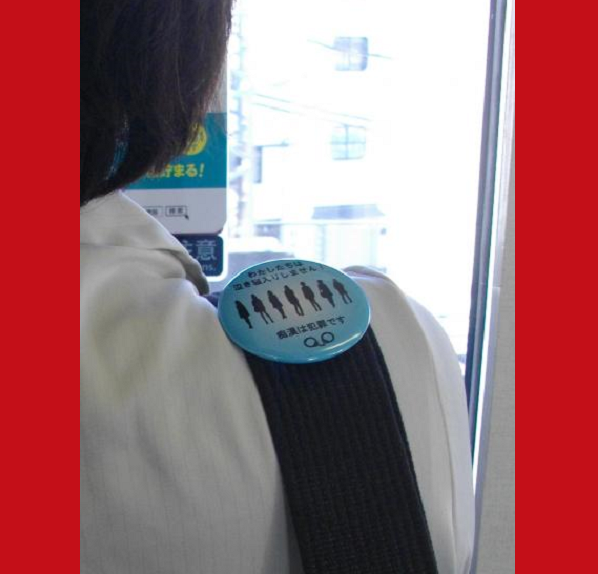
Japan’s public transportation network gets high marks for its punctuality and cleanliness. Not every ride on the rails is a pleasant one, though, because some lowlifes called chikan use the crowded conditions on commuter trains as cover to grope unsuspecting women.
Now, one high schooler and her mother have had enough, so they’ve started a crowdfunding campaign to design and distribute what ae essentially “Don’t touch!” signs for women to wear while taking the train.
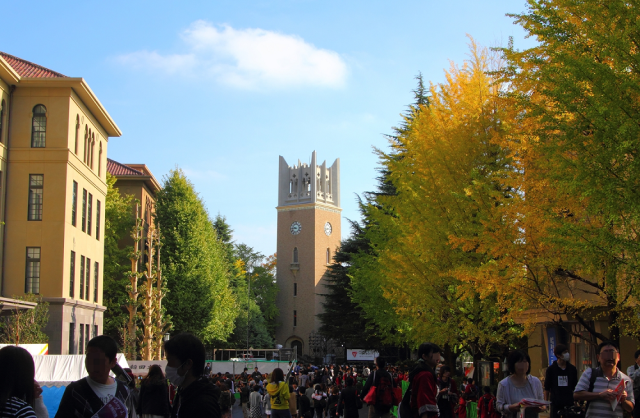
Japan places a tremendous importance on education. Many would even argue that studiousness is part of Japan’s national character, and diligent students are seen as source of pride and an object of respect in Japanese society.
Nevertheless, a lecturer at one of Japan’s renowned universities is calling out the lazy Japanese youths he says he encounters in his classes, while praising his hard-working Chinese and Southeast Asian pupils.

While Japan is famous for its animation, food, pop-culture, it’s also infamous for its extremely high suicide rates. Many Japanese students and salarymen succumb to the pressures of school and work by taking their own lives. There is little knowledge about what factors increase the risk of suicide, but recent research has found that people, namely adolescents, born between January 1 and April 1, are 30 percent more likely to commit suicide.

Over the past few weeks, the Japanese organization SEALDs, which stands for Students Emergency Action for Liberal Democracy, has been staging large-scale protests in opposition of those politicians who’ve proposed expanding the role of the Japan Self-Defense Forces. The gatherings have become regular features on news programs, with footage showing large groups of impassioned youths chanting for Prime Minister Shinzo Abe to step down.
So after such a show of conviction, it must have been surprising for followers of SEALDs’ English Twitter account to see a tweet that suddenly announced the group is calling it quits.
After coming back to school from summer vacation, it’s customary for teachers in Japan to ask their students to write a short essay about what they did during their break. Many of the youngsters no doubt spent their extra leisure time watching TV and movies, and rather than upbraid his students for wasting their time on such idle activities, one Japanese educator even asks his students for their impressions of what they watched.
At first, this teacher sounds refreshingly flexible and in-touch with contemporary youth lifestyles…at least until he singles out one anime series he expressly forbids students from writing about.
Spend enough time teaching a foreign language, and eventually you’ll find yourself in a situation where you have to stop and ask yourself whether your job, which ordinarily involves correcting how your students speak, also includes correcting what they’re saying. For example, I once had a teen pupil declare that “Being good looking is the only thing that’s important.” After a moment of consideration, I decided that trying to fix that shallow philosophy was above my pay grade, so I told her, “OK, nice grammar” and left it at that.
Still, when working with kids, it’s nice to impart a useful life lesson when the opportunity to do so relatively gently presents itself, as it did for one expat in Japan who reminded his young English-learning student of the difference between anime and real life.
Though summer vacation is a lot shorter in Japan than it is in the U.S., most tudents here aren’t exactly itching to go back to school once it’s done. Even worse, since it falls in the middle of the Japanese school year, the end of summer break is also the start of the second, and more demanding, semester.
Needless to say, a lot of kids would rather blow off school and kick back with a good manga, which is exactly what one library in Japan is encouraging them to do. The reason, however, is far more important than just finding out what happens to their favorite fictional characters .

One of the things you may notice when you come to Japan is how much drinking seems to be going on. Certain Japanese societal circles (the workplace, university clubs, etc) run more smoothly with the help of alcoholic lubrication in the form of after-hours “drinking parties” to facilitate team-building and bonding—it’s called nomication (or nominication), a portmanteau of “nomu” (to drink) and “communication”.
So we were quite surprised to discover recently that Japan’s level of alcoholic beverage consumption is actually way, way down. But why?
Any good athlete obviously needs some measure of speed, strength, and stamina, but the list of necessities starts getting much longer if we’re talking about good student athletes. Youth sports are supposed to be as much about developing character as physical skills, so any proper high school athletic program should want its players to be just as dedicated to sportsmanship and integrity as they are to on-the-field performance.
That’s why we think Fukuoka Prefecture’s Kyushu International University Senior High School (called Kyukoku for short) is doing a fine job with its baseball team, since after a heartbreaking loss on the road, players from Kyukoku immediately started cleaning the stadium.
In Japanese high schools, it’s customary for the band to accompany the baseball team to important games. Saitama’s Namegawa Sogo High even mixes in some modern musical stylings, as Queen’s “We Will Rock You” showed up on their set list for a recent contest in the prefectural championship tournament.
Of course, such a bombastic tune coming from the stands requires equal flamboyance from the players, and one student athlete responded with the craziest batter’s box warmup we’ve ever seen.
Two manga high school students, one boy and one girl, stand face to face in a deserted hallway. The guy pounds his fist into the wall behind the girl, executing a perfect kabe-don as he stares into her eyes with a serious look on his face and asks her an earnest, possibly life-changing question. After pausing for a second, the girl gives him her answer: yes.
Is this the birth of another girls’ manga couple? Nope, not this time, as the question the boy just asked isn’t as romantic as “Will you be my girlfriend,” but is no less important.
Going out to see cherry blossoms, regardless of the weather, is by far Japan’s favorite springtime activity. But there’s another tradition that’s almost as enthusiastically followed: veteran employees complaining about the new hires at their company.
The business year starts in April in Japan, which means that right now at companies across Japan older employees are grumbling about how the younger generation just doesn’t get it. But with Japanese homes not having lawns for their upset elders to yell at them to get off of, just what are young professionals in Japan doing that’s rubbing their coworkers the wrong way?

A Taiwanese college student tragically chose to set himself on fire recently after an apparently pretty harsh argument with his father over video games.
Xue Zhenjun, a student of Taiwan’s Chienkuo University of Technology, reportedly chose to end his own life in one of the more horrific ways imaginable because his father told him to get some sleep instead of staying up all night playing an online game.
MOST POPULAR
Today
 One simple unexpected recipe swap will make your Japanese-style omelets extra fluffy and juicy
 Starbucks Japan unveils new Christmas goods for 2026, with exclusive holiday surprises
 Japan getting a brand-new batch of Pokémon manhole covers in eastern prefecture this fall
 This curry restaurant might have the worst location in Tokyo…or maybe the best
 10 of the nicest celebrities we’ve met in Japan over the years
 Beloved, 100-year-old Tokyo public bathhouse Sengenyu is about to get a second life this December
 Baum vending machine in a Yokohama station lets us eat cake served on a luxury cruise ship
 This Tokyo snack shop can send your taste buds on a trip around Japan for just 1,000 yen
 Visiting the “world’s most precarious temple” in China, where getting there is half the battle
 Chainsaw robots helping keep trains running safely in east Japan [Video]
Weekly
 Pokémon Company announces first-ever permanent Pokémon store to open outside Asia
 New Studio Ghibli anime gets extended run at the only cinema in Japan where it’s being shown
- Chainsaw robots helping keep trains running safely in east Japan [Video]
 Family Mart enters the soft serve game with giga-sized cones of milk or matcha goodness
 Family Mart releases 47 convenience store socks and stickers, one for every prefecture in Japan
 One of Tokyo’s most beautiful soft serve ice creams is also one of its trickiest to find [Photos]
 Japanese sushi etiquette: You may have been ordering sushi wrong this whole time
 Trial of terminally ill cancer patient who found 22 million yen on the street and kept it ends
 There are goats spending every day in downtown Tokyo, but why? [Photos]
 Japanese scientists developing cute, autonomously swarming robo dogs for anti-bear patrols [Video]
Monthly
 Japan announces new permanent residency guidelines, foreigners must earn more than average Japanese person
- Pokémon Company announces first-ever permanent Pokémon store to open outside Asia
 Studio Ghibli’s Calcifer is ready to light up your home as a magical-looking candle lamp [Photos]
- Family Mart releases 47 convenience store socks and stickers, one for every prefecture in Japan
 What’s it like to stay in a Japanese container hotel?
- New Studio Ghibli anime gets extended run at the only cinema in Japan where it’s being shown
- Chainsaw robots helping keep trains running safely in east Japan [Video]
 Tokyo train station will play Godzilla theme song as new departure melody
 Studio Ghibli creates illustrated Kyoto sightseeing map, available at any 7-Eleven Japan store
 Osaka’s famous Glico Running Man will be removed and replaced with a new-look sign
Yearly
 Japan announces sudden 400-percent increase in visa fees for foreigners entering the country
 Japan’s human washing machines will go on sale to general public, demos to be held in Tokyo
 Studio Ghibli has a new anime out, and there’s only one place in the world where you can see it
 Starbucks Japan releases new drinkware and goods for Valentine’s Day
 Starbucks Japan releases new sakura goods and drinkware for cherry blossom season 2026
 Japan’s newest Shinkansen has no seats…or passengers [Video]
 Tokyo subway installing new ticket gates that don’t accept payment through Suica or other IC cards
 Japanese ninja certification exam attracts 131 candidates from Japan and abroad
 Salomon releases Japan-exclusive Mt. Fuji hiking gear that doubles as an amazing souvenir
 Japan reportedly adding Japanese language skill requirement to most common foreigner work visa
RECOMMENDED STORIES
 Beloved, 100-year-old Tokyo public bathhouse Sengenyu is about to get a second life this December
 Baum vending machine in a Yokohama station lets us eat cake served on a luxury cruise ship
 This Tokyo snack shop can send your taste buds on a trip around Japan for just 1,000 yen
 Visiting the “world’s most precarious temple” in China, where getting there is half the battle
 Chainsaw robots helping keep trains running safely in east Japan [Video]
 Fishing information website for Susaki, Japan, hit by data leak, all 3 users affected
 Trial of terminally ill cancer patient who found 22 million yen on the street and kept it ends
 Family Mart releases 47 convenience store socks and stickers, one for every prefecture in Japan
 93-year-old Japanese grannie helps set trap for scam artist half her age
 One of Tokyo’s most beautiful soft serve ice creams is also one of its trickiest to find [Photos]
 Osaka’s famous Glico Running Man will be removed and replaced with a new-look sign
 Is this crazy-looking home sauna just what our busy daddy reporter needs in his life?
 Mochido donuts make a squishy return to Lawson stores across Japan
 Pikachu Shortcake Sandwich set to be Tokyo’s newest photogenic treat for Pokémon Trainers
-
