
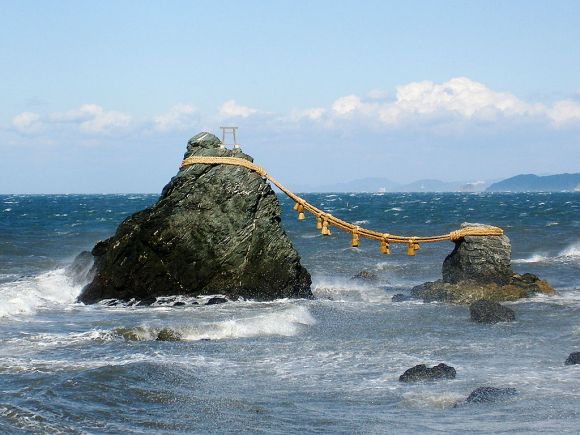
The Japanese have long had a fascination with rocks. In fact, rock worship is an integral part of Shinto, Japan’s original religion. Iwakura (sacred rocks) can be found all over Japan. Rocks can be found in any Japanese garden, whether as stepping stones or objects of admiration themselves in dry landscape gardens or Zen rock gardens. One thing is for sure: Rocks are an integral part of the Japanese psyche.
So it’s no wonder that sacred rocks are popular among the Japanese as power spots. By harnessing the energy of these rocks, the Japanese are rediscovering their roots and the power of nature. But before we tell you about the three top rock power spots in Japan, we investigate how these monoliths and boulders gained their rock star status. Our rockin’ reporter uncovers the history and folklore of iwakura in Japan and gives suggestions on how to access the power of these rocks!
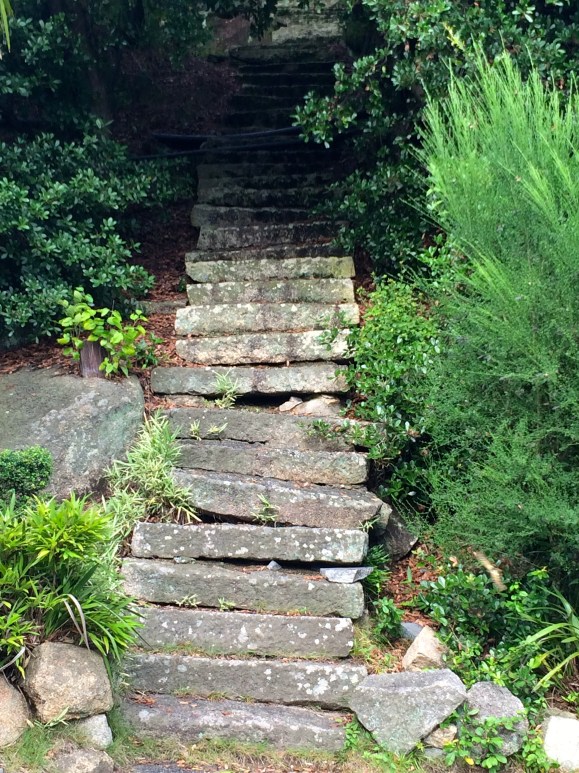
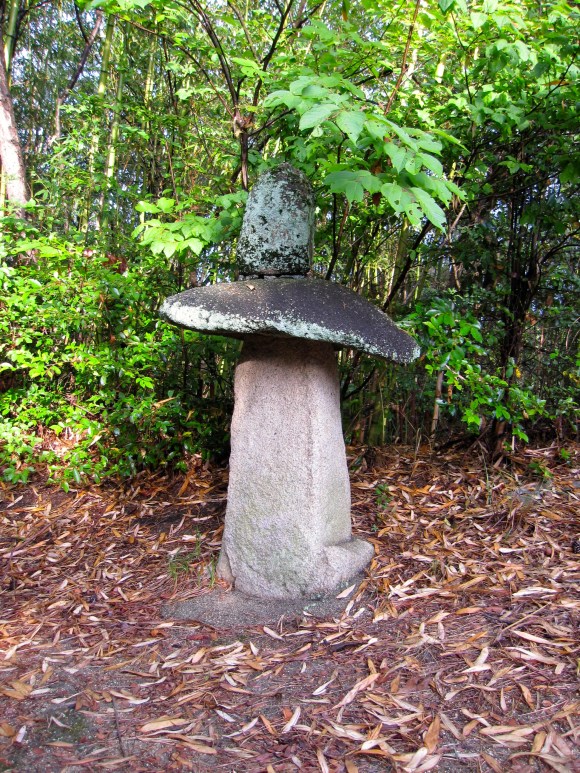
Rocks have always had a place in the everyday lives of the Japanese. Look around anywhere in Japan and you’ll see:
stone steps leading up to shrines,
stone lanterns,
and stone deities,
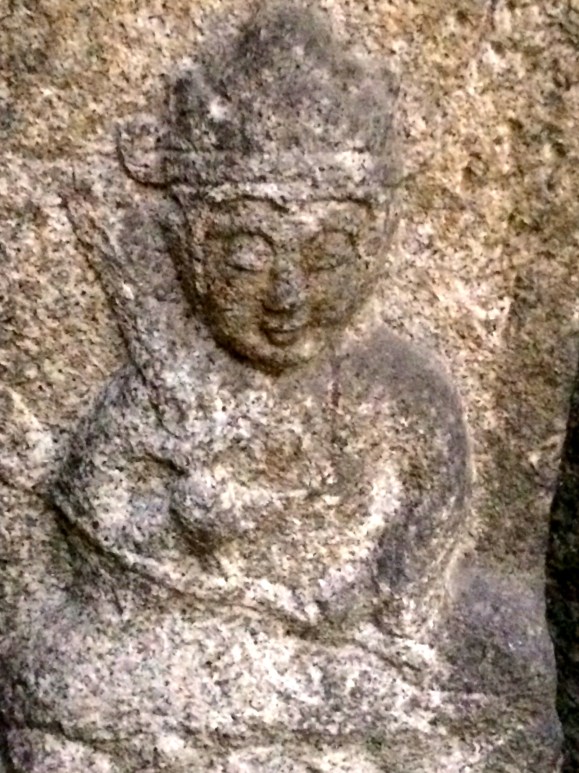
many of which are hundreds of years old.
The Seto Inland Sea area is known for its rock, both natural and mined. Where I live, on Shiraishi Island, the name shiraishi means “white rock,” and refers to its huge granite reserves, some of which manifests itself in some pretty frightening ways:
▼Below this rock is, believe it or not, a road.

As a result of the ubiquitous outcroppings, and perhaps as a way to tame it, rock mining has been a part of the fabric of this small Seto Inland Sea community for over 100 years.
You can find many relics of Japan’s past here:
▼A grinding stone for grinding buckwheat to make soba noodles.
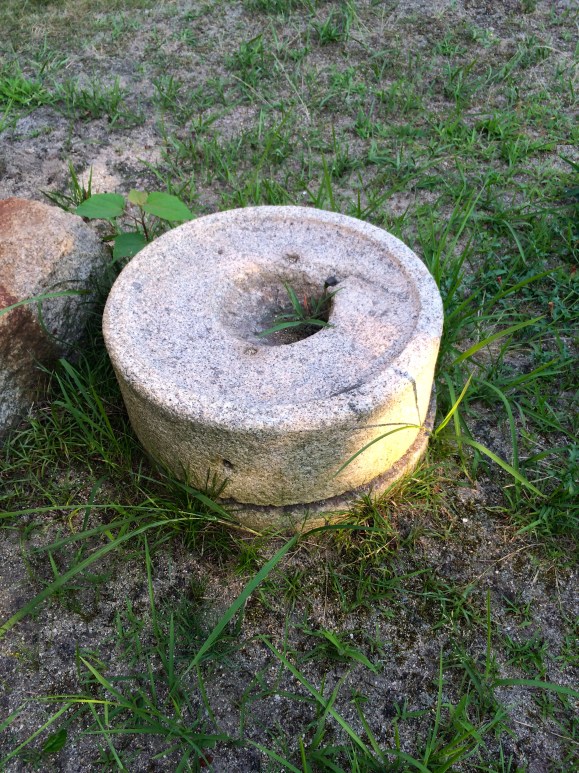
▼Every house on the island still has a mochi-pounding rice vessel, called an usu, for hammering out rice cakes
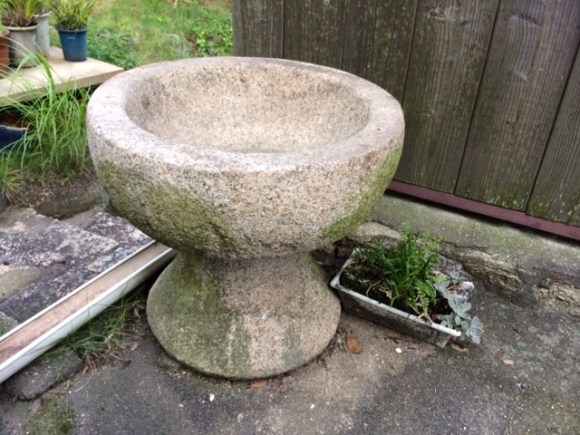
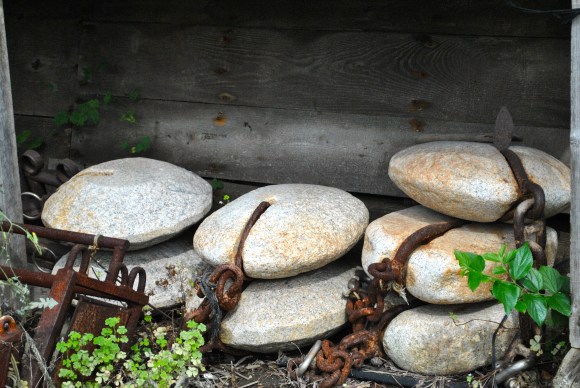
People continue to use many rock implements even today.
▼These rocks were used as weights for fishing nets
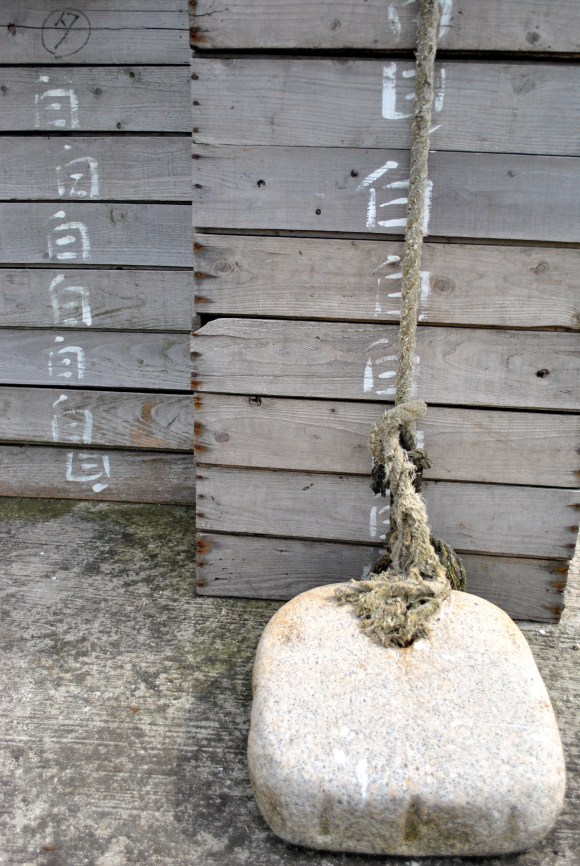
▼They’re still used to hold things down.
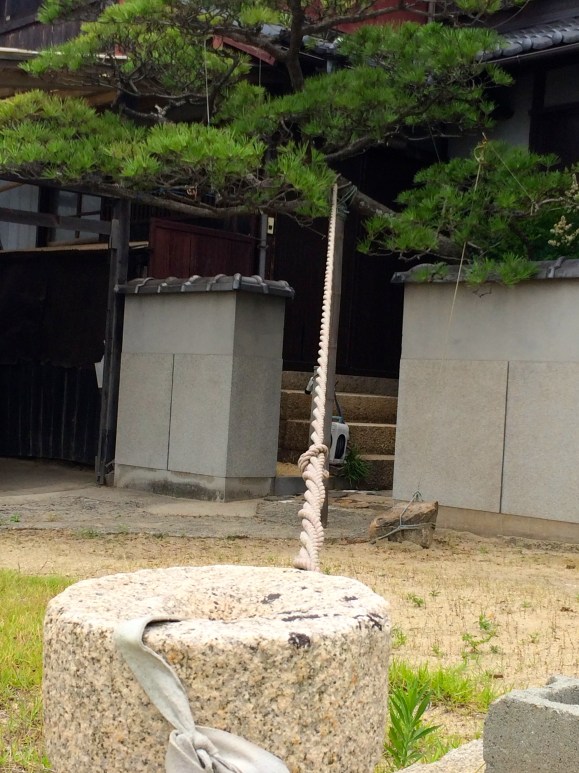
▼That old grinding wheel is used these days to coax bonsai to grow in favored directions.
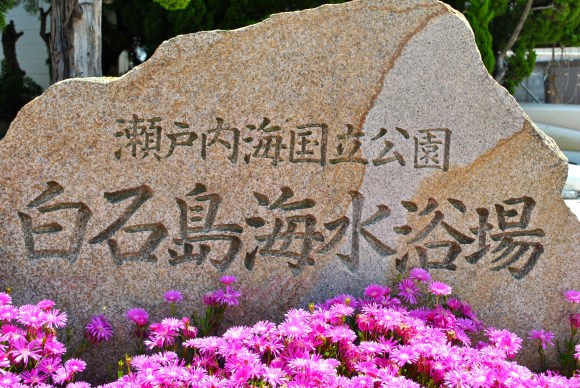
And mined rock is still used for more modern applications. Polished rock surfaces, for example, make great maintenance-free signs–as long as you never want to move them.
▼This one says Seto Inland Sea National Park, Shiraishi Island Beach
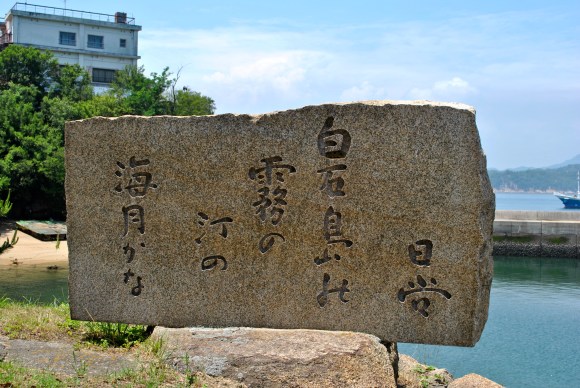
▼They also make great tablets for displaying tanka poems
▼Monoliths fit the Japanese vertical writing system perfectly.
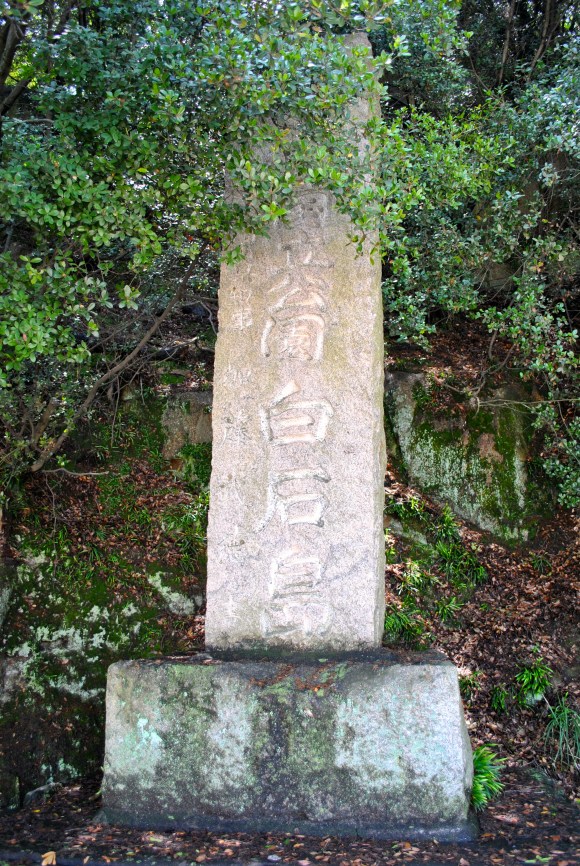
Large rocks make impressive weather-proof information boards for national heritage sites. This one explains the Shiraishi Bon Dance, a national intangible cultural property.
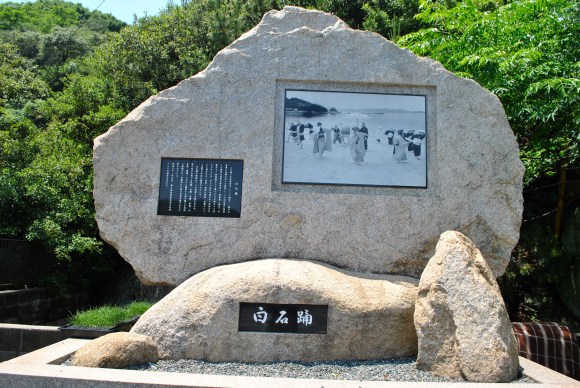
But why stop there?
▼Granite picnic tables have been installed along the hiking course on the island
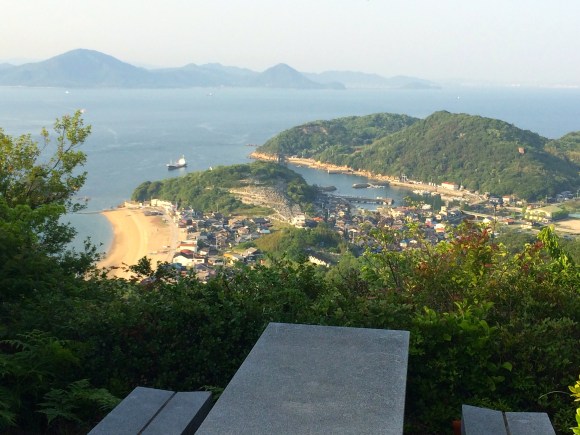
This is what happens when you live among stone masons!

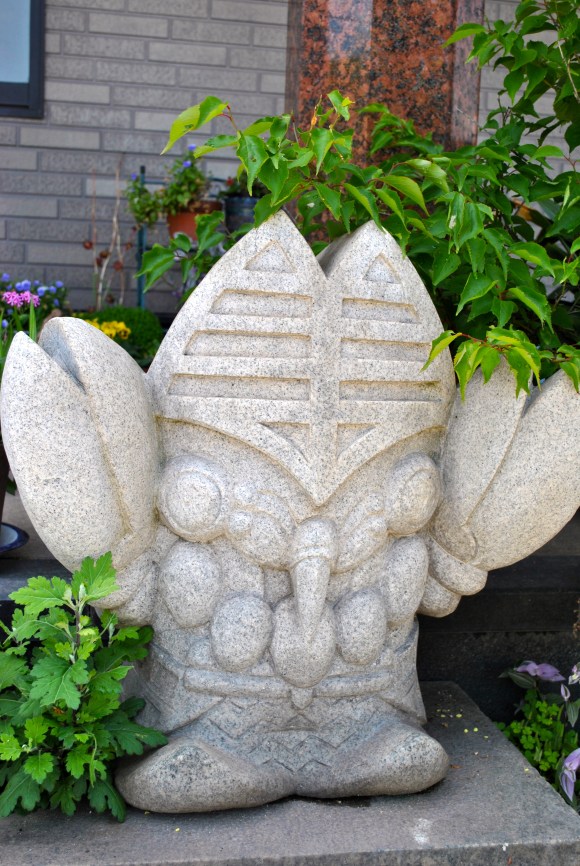
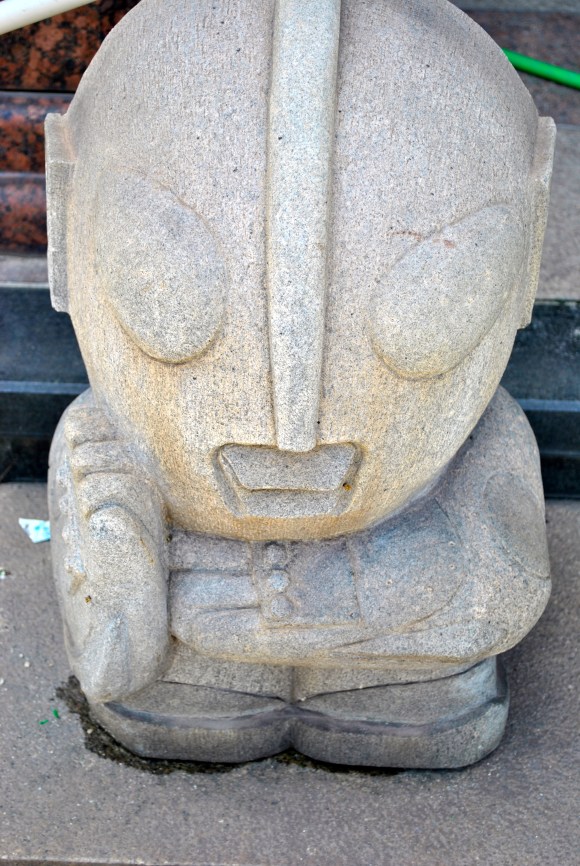

While wood has traditionally been used for Japanese housing, stone has been the material of choice for more permanent structures such as ports and some modern shrines.
▼Kompira Shrine for fishermen
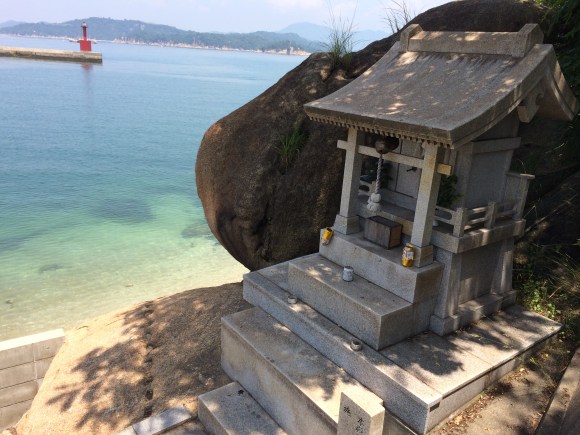
The original Shiraishi Port was constructed with rock in the Edo Period (1603 -1868) and is over 400 years old. But this newer pier was built in the Meiji Era (1868 – 1912).
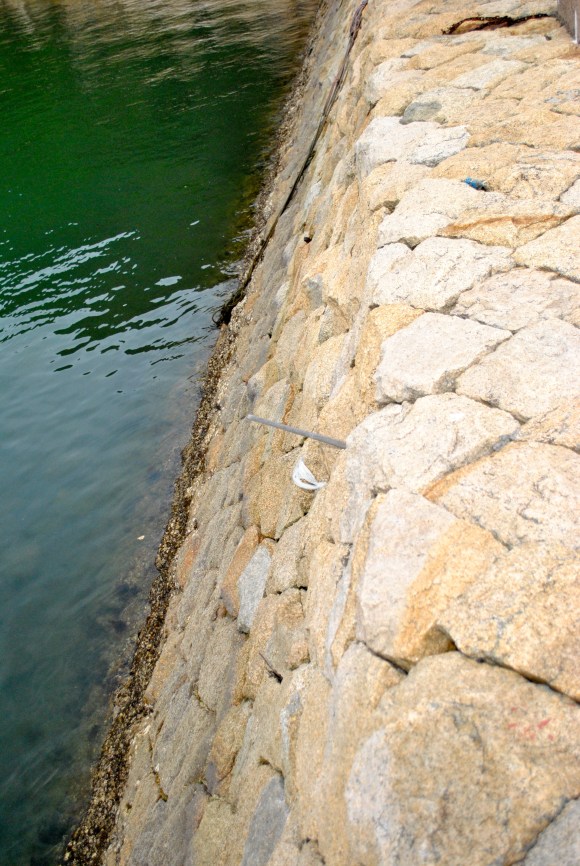
▼The stone still looks new

▼The fishermen tied up their boats to the pier and climbed up these stone stairs.
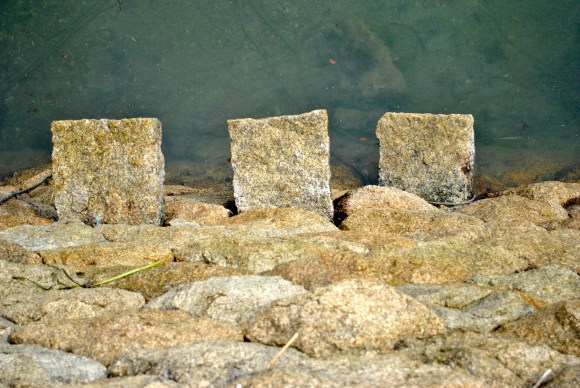
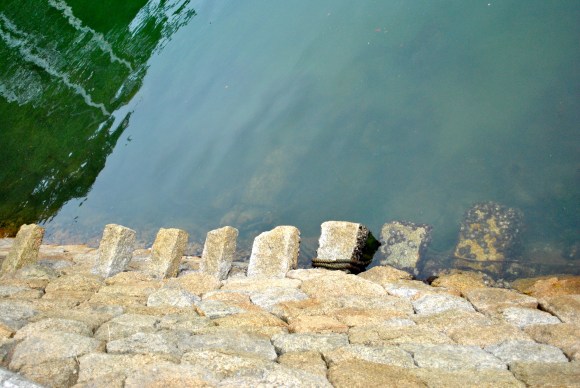
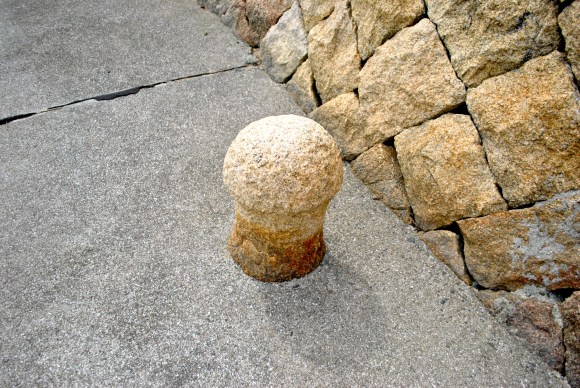
▼They even used rock bollards to tie their boats up to.
Rock has always been important in the lives of the communities living in the Seto Inland Sea. Before they started mining the natural resource, they used it for worship. Such evidence can be found everywhere on the island.
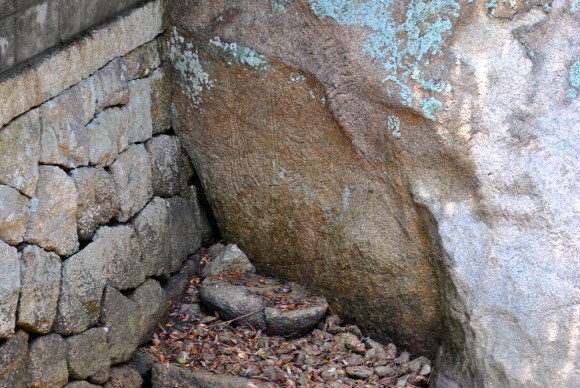
▼In the lower left area of this rock is an 800-year-old magaibutsu stone carving of the deity Fudo-myo-o which is believed to protect the port.
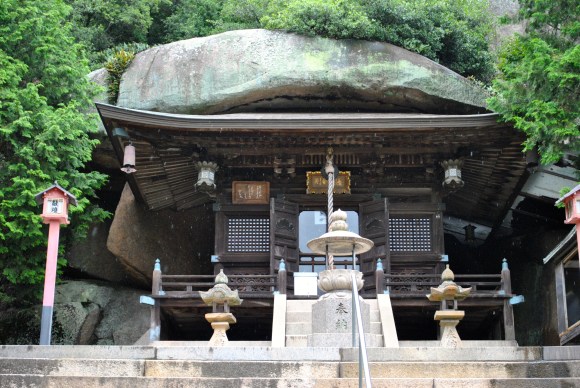
▼ The okuno-in of Kairyuji Temple is located under a huge overhanging rock.
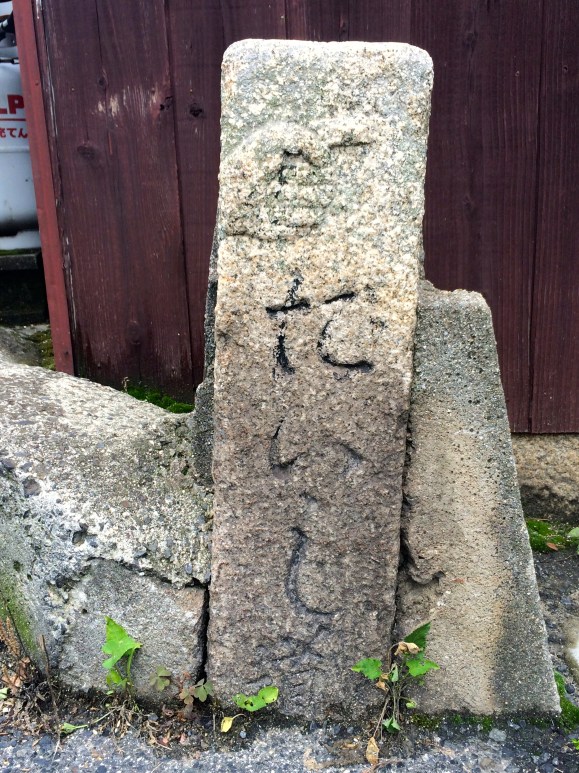
If you don’t know how to get to the temple, no problem. Ancient stone markers will show you the way from the port all the way up to the temple.
▼A hand with an index finger pointing in the proper direction to the temple.
Shiraishi Island is full of large boulders. And everywhere there is a rock, there is sure to be a stone deity to worship nearby…
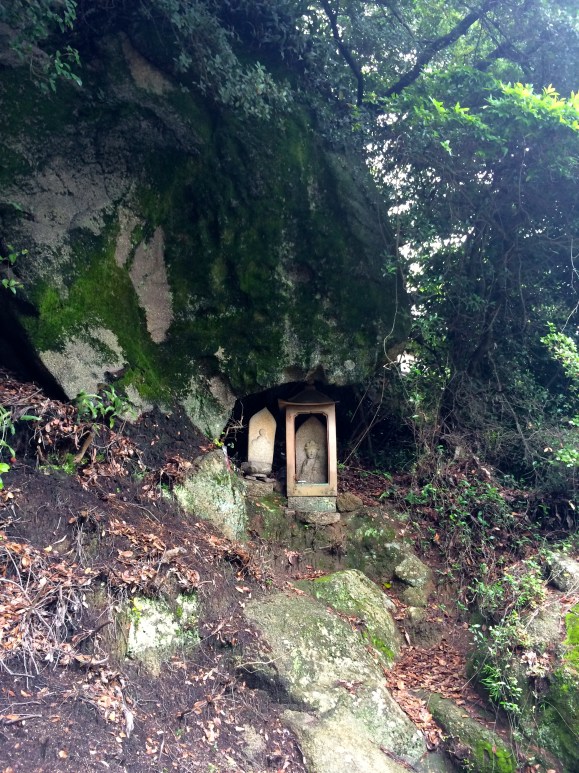
either underneath the rock…
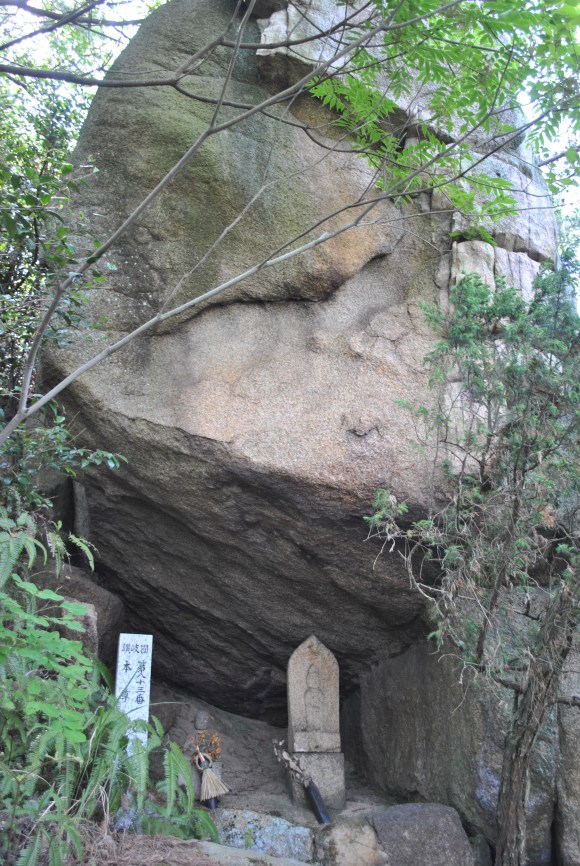
…or sometimes on top of it.
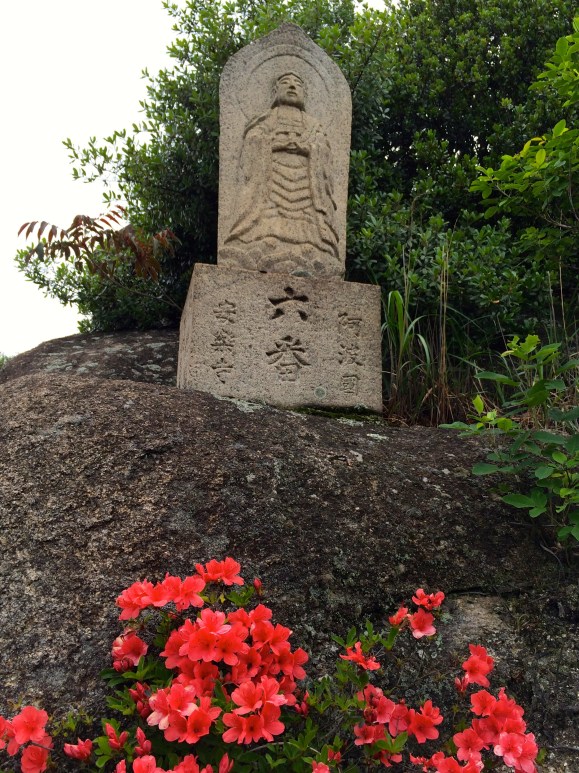
No rock is left unworshipped.
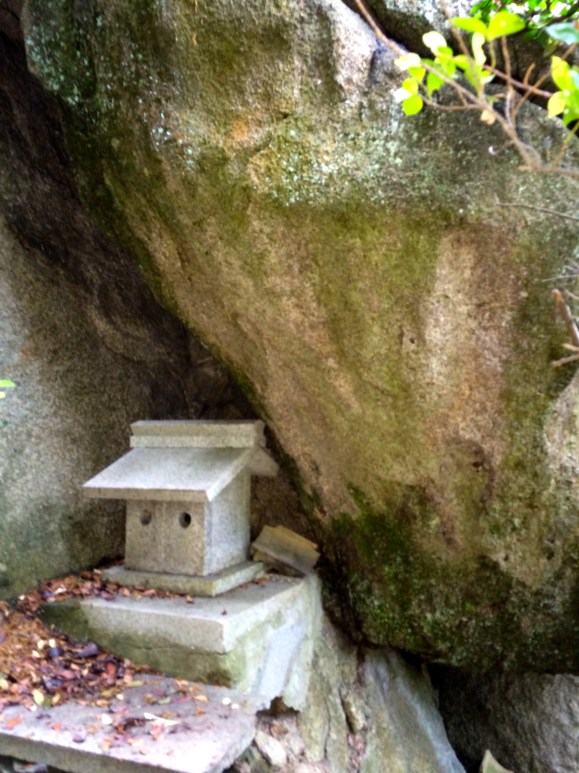
Most major rocks have names. Rocks that are exposed to the rays of both the rising and setting sun are said to hold a special spiritual energy. Their power can last forever, as long as the area is well preserved and clean.
▼This boulder is named “Bikuni”
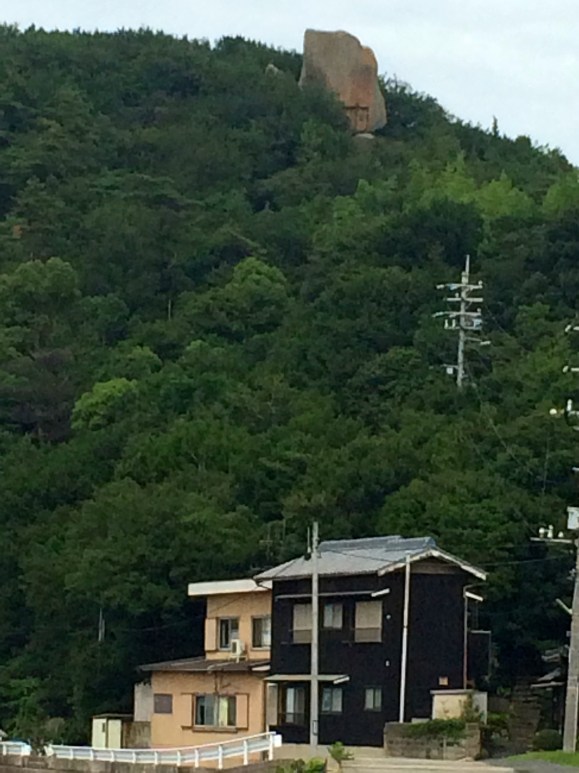
▼The boulder sticking up out of the top of the small island to the right is “Mei-ishi.” But it only gets the rays of the setting sun.

Having such a close relationship with nature, it’s not surprising that the Japanese people felt rocks were sacred.
Originally, people offered prayers to the rock which acted as a vehicle of communication between the people and the kami (gods). These days, however, Shrine buildings have been erected to designate Shinto shrines. In his book, “The Essence of Shinto: Japan’s Spiritual Heart,” Motohisa Yamakage says the purpose of a shrine is “to create a pervasive sense of reverence and awe and so enable us to access the spiritual dimension.”
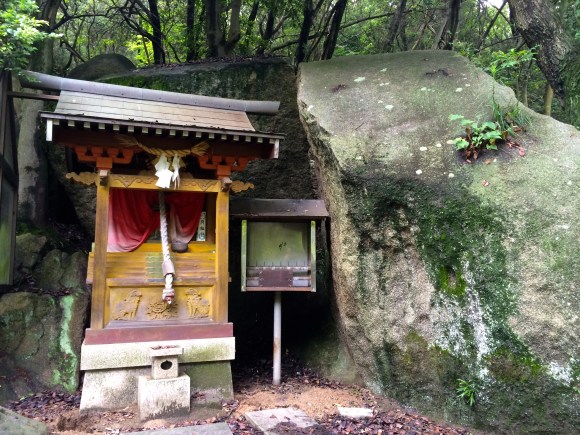
▼This shrine wouldn’t have been built here had it not been for the presence of these sacred rocks.
And surely this well would not have been considered sacred had it not been located under a large rock:
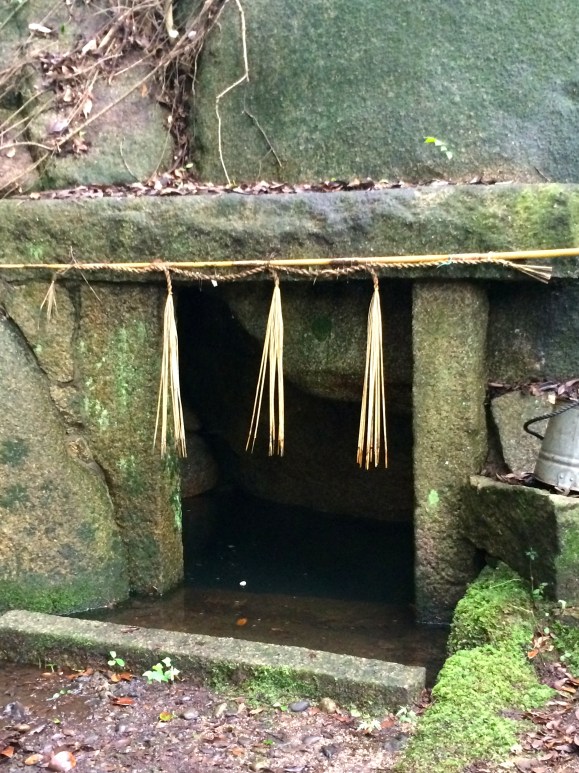
You can see how large the rock is by watching this 6-second video.
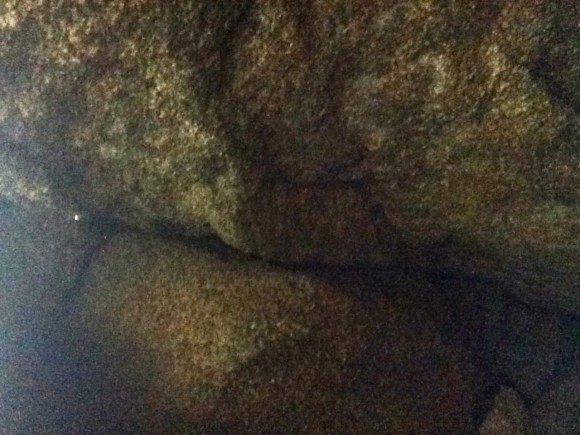
It is said that if you look up at the ceiling of the rock from inside the well, you will see a vagina. Okaaaaaaaay. And no, we’re not going to look!
Well, okay, if you insist….
▼Hmm. I don’t know about yours, but mine doesn’t look like that.
Don’t be shy, many of Japan’s sacred rocks have connections to fertility, but we’ll leave that for another article.
▼The Meotoiwa rocks, connected by a shimenawa rope, celebrate the union in marriage of man and woman. The male rock is on the left.
Shinto priests are especially adept at telling if a kami is present in a rock. You can make a judgement yourself by touching a rock to see if you can feel its energy. You will find there are some rocks where almost everyone can feel its energy, and others where only some people can feel it. Women are said to be especially sensitive to feeling the power of rocks. Rock on ladies!
I wondered what the top rock power spots in Japan were. To find out, I interviewed Shinto expert John Dougill, who lives in Kyoto, a veritable kingdom of power spots. He writes a blog called Green Shinto and has written several books on Japan. John also traveled the length of Japan visiting sacred sites from Okinawa to Hokkaido to write his book “Japan’s World Heritage Sites.”
I asked if John would share with RocketNews24 readers what he considers the top three rock power spots in Japan. It didn’t take him long to come up with this list! Drum roll please…
1) Kamikura Shrine at Shingu, Wakayama
Kamikura Jinja is part of Kumano Hayatama Taisha Grand Shrine in Shingu (Wakayama Prefecture), a World Heritage Site. People come here to worship the Kamikura rock as a god. As you can see, this shrine is located under a large boulder onto which the kami are believed to have descended from Heaven.
The shrine now guards and protects the town of Shingu below it.
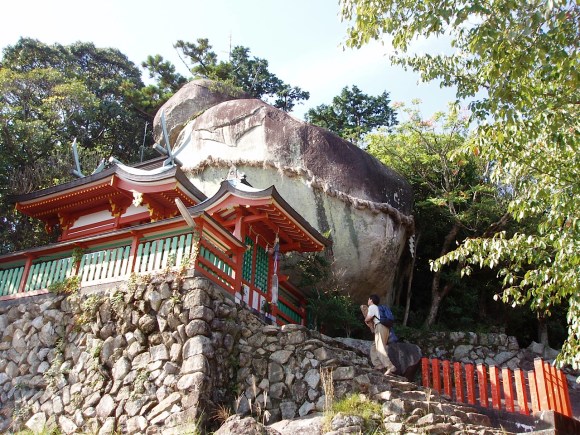
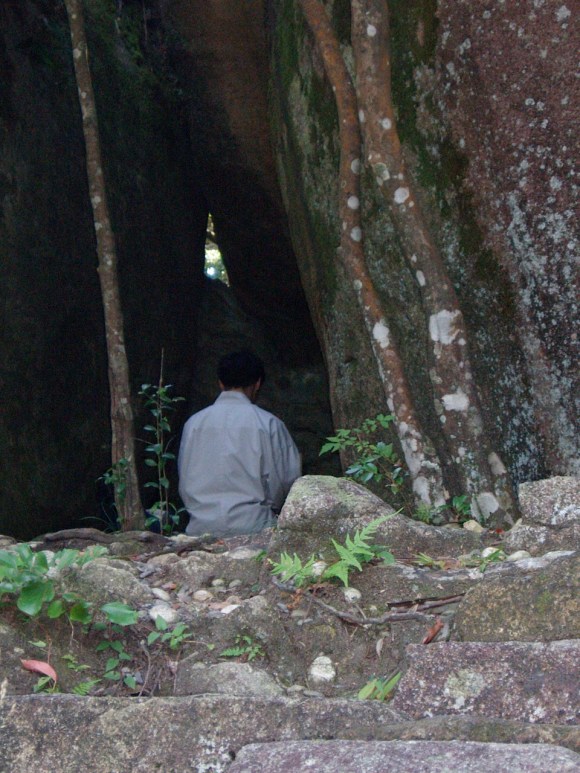
The best way to feel the energy of this rock is to enter it.
▼A power spot practitioner meditates and plays a flute inside the Kamikura rock
2) Seifa Utaki, Okinawan Nature Shrine (World Heritage Site)
▼The rock altar at Seifa Utaki
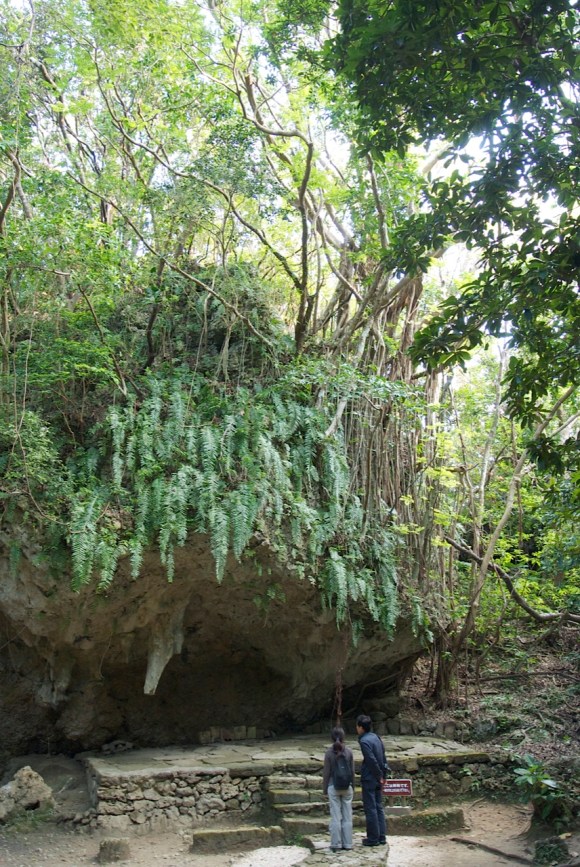
▼This sacred rock opening leads into the most holy area of Seifa Utaki. Offerings are prepared here.
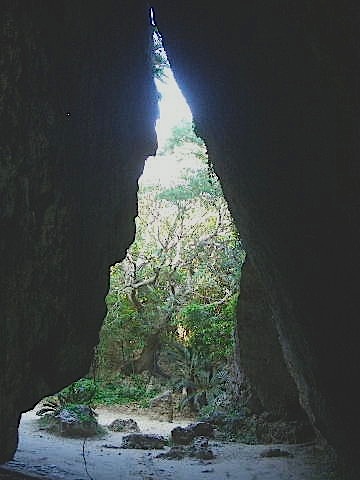
▼This triangular opening leads to the place where prayers are made.

3) Koshikiiwa Shrine in Nishinomiya (Hyogo Prefecture)
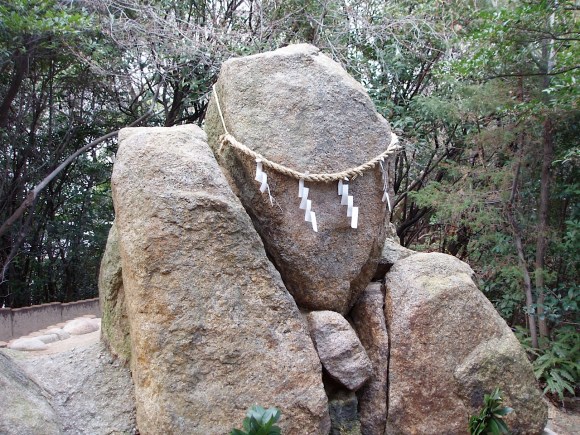
▼ This megalith is 10 meters tall with a circumference of 40 meters.
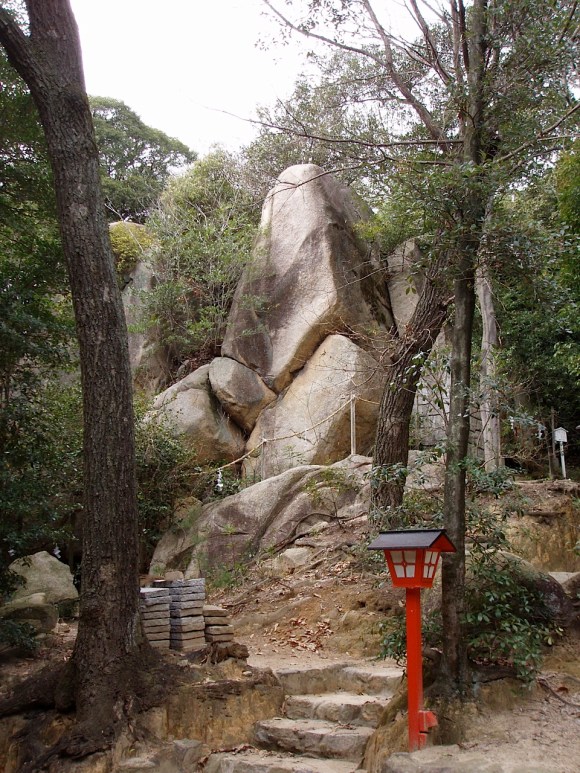
The Koshikiiwa rock promotes pregnancy and protects childbirth, so many couples visit the rock to pray to it and feel its energy. The tradition is to walk around the rock in a clockwise direction.
So now you have all the tools you need to go out and start harnessing the power of sacred rocks. You’ll be in good company too, as the Japanese power-spot craze has taken the country by storm. I can’t think of a better excuse to go out and commune with nature. So get out there and enjoy all the rocks Japan has to offer. And remember, you heard it first on RocketNews24!
Photos: RocketNews24 (unless otherwise noted)
 We travel to a mysterious power spot in Okinawa, where a “heart rock” floats in the sea
 We bicycle around Kitagi, island of goats, pizza and the Vagina Rock【Photos】
 All about the Kumano Kodo, the World Heritage Sites of the Kii Peninsula【Pics & Video】
 A trip to the other side of Matsushima, a mysterious power spot with an otherworldly atmosphere
 Japan’s “killing stone” splits in two, possibly unleashing evil nine-tailed fox spirit
 A real-world Pokémon Poké Ball hotel is opening in Japan at a still-secret location [Video]
 Tamagotchi evolves into a ring for its 30th anniversary, preorders now open
 Family Mart releases Famima convenience store products nationwide, but which ones are worth buying?
 Japan’s most popular curry rice restaurant chain, Coco Ichibanya, might be for sale
 Finally! Japan’s big three convenience store chains announce rice ball price reductions
 One Piece Day 2026 brings new art, music, and new cast announcements
 Solo travel in Japan: Hidden beer garden in Tokyo is a haven for single visitors
 Studio Ghibli unveils new anime calendars and diary planners for 2027
 Onsen Egg Bukkake Udon Ice Cream makes us rethink everything we thought we knew about sweets
 Hobonichi unveils new 2027 planners, diaries and stationery with One Piece, Suica Penguin, Hello Kitty and a must-buy Mini Techo
 Japan’s final Penguin Suica train cards have already shipped, and when they’re gone, they’re gone
 Japan approves foreign resident visa renewal fee increases of up to 967 percent, starts soon
 Japan tripled its departure tax to fund tourism but is using the money on cherry blossoms and bears
 Farewell Final Ceremony announced for Tokyo’s life-size Gundam statue, will stream live
 Family Mart releases new Human Made Cup Noodle in Japan, with freebies for Nigo fans
 Hikaru Utada sings new song in Shinkansen commercial for Japan’s Supreme Class cabins
 Nike x One Piece collection brings Devil Fruits to sneakers and streetwear in Japan
 12-year-old British girl who went missing in Tokyo found safe after visiting anime sites around Yokohama
 7-year-old boy left behind on Mt. Fuji by his own dad
 Sushi Bus: Japan’s first conveyor-belt bus lets you eat sushi while sightseeing around Tokyo
 Pokémon Center Online designates first Pokémon items that will require Japanese ID card to buy
 Japanese toilet aims to attract foreign tourists but not everybody is happy about it
 New Japanese vending machine at Shinkansen station sells cups of ice on platform
 Study finds hundreds of people in Indonesia legally named after Naruto, Inuyasha, other anime stars
 Japan announces sudden 400-percent increase in visa fees for foreigners entering the country
 Japan’s human washing machines will go on sale to general public, demos to be held in Tokyo
 Studio Ghibli has a new anime out, and there’s only one place in the world where you can see it
 Starbucks Japan releases new drinkware and goods for Valentine’s Day
 Starbucks Japan releases new sakura goods and drinkware for cherry blossom season 2026
 Japan’s newest Shinkansen has no seats…or passengers [Video]
 Tokyo subway installing new ticket gates that don’t accept payment through Suica or other IC cards
 Japanese ninja certification exam attracts 131 candidates from Japan and abroad
 Salomon releases Japan-exclusive Mt. Fuji hiking gear that doubles as an amazing souvenir
 Put sesame oil in your coffee? Japanese maker says it’s the best way to start your day【Taste test】
 Mist descends upon Japan’s “Killing Stone” after ceremony to appease nine-tailed fox spirit
 This “power spot” in Kumamoto, Japan looks straight out of a Ghibli movie, is pure magic 【Photos】
 We visit the “Island of the Great Gods” in Okinawa, soak in spectacularly stunning scenery
 Testing our luck – Can visiting Japan’s power spots improve the omikuji temple fortune you draw?
 Mystery Tourist Spot: Merlions in Japan?
 Mysterious salt cauldrons predict disasters at one of the “Three Great Miracles of Japan”
 Cat in Japan finds the perfect shrine to take shelter from the rain at
 Here are all of the reasons why you should go to Kumano, Mie Prefecture, for summer sightseeing
 Japan Bucket List II: 8 places you need to visit to really understand Japan
 How many have you seen? 18 must-visit sites in Japan 【World Heritage】
 Japan travel bucket list: top places to visit in each prefecture before you die【Part II】
 Top 30 tourist sites in Japan: the most popular sightseeing spots for overseas visitors
 Coca-Cola “Slim Bottle” City Designs range showcases top tourist spots in Japan
 The best of Japan’s “top 3” tourist hotspots【poll】
 Japan’s UFO village, where the magnetic field is said to attract visitors from outer space