
It’s time once again for an episode of Why Does Engrish Happen in Japan? If you missed the first installment (which we really should have given a clever name like Why Does Engrish Happen in Japan? ~Unexpected Opening to the Truth~) you can check it out here.
Today, we’re taking a look at a hotel in Japan that seems to be clamping down on solo peeing, with a sign posted in its lobby that requests visitors “Please refrain from using the bathroom alone.”
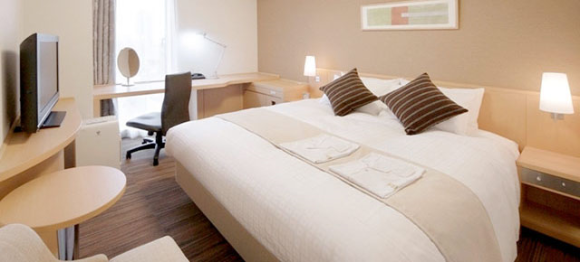
At first glance, this might seem like the sort of announcement you’d come across in a love hotel that specializes in a very specific kind of clientele. That’s not the case, though, as the very bottom of the sign identifies the location as a branch of the Richmond Hotel, which offers mid-range accommodations for both business and leisure travelers.
▼ The atmosphere is more “comfortable” than “kinky.”
While Richmond has properties all over Japan, none are in any neighborhoods so rough that you need to have a friend watch your back while you take a leak (honestly, Japan is so safe that taking a dump without backup is never something to worry about). And while many Japanese hotel chains have become more conscious of the environment over the last decade, their eco-friendly policies are usually along the lines of not replacing the guestroom toilet paper roll until it’s completely used up or only providing a new set of towels during a two-night stay if the customer specifically requests it. In other words, the Richmond Hotel isn’t asking that guests maintain a ratio of at least two deposits in the bowl for each flush.
So now that we’ve eliminated those possible explanations, let’s move on to the real culprit, mistranslation, and break it down like a bunch of bilingual DJs who’re overly fond of shouting “Word!” in multiple languages to try to amp up the crowd.
▼ Even if he’s in it, M.C. Linguistics is too dedicated to his field to ever use the word “hizouse.”
First, let’s take the original Japanese and write it out using the English alphabet.
Otearai nomi no goriyou ha goenryo itadaite orimasu.
The o in otearai and go in both goriyou and goenryo are just prefixes tacked on to make those words more polite. It’s a common practice in the service industry, but they’re not really critical to understanding the phrase, so let’s chop them off.
While we’re at it, itadaite orimasu is a more refined way of saying itadaku, so once we’ve scrubbed all the polish off this refined way of speaking, we’re left with:
Tearai nomi no riyou ha enryo itadaku.
Tearai, while literally meaning “hand washing,” is a common way of saying “bathroom” in Japanese. Riyou is the noun “use,” making tearai no riyou “use of the bathroom.”
We’re going to skip past nomi for right now, but ha (or wa, if you’re spelling it phonetically), simply marks “use of the bathroom” as the subject of the sentence. Enryo means “refrain,” as in “refrain from doing something,” and while itadaku is often used to mean “receive,” it can also mean “have (someone do something).” So the direct translation from Tearai no riyou ha enryo itadaku would be “We will have you refrain from using the bathroom,” or, phrased more naturally, “Please refrain from using the bathroom.”
Whoever translated the sign into English stumbled over nomi, though. Nomi means “only,” or “just.” For example, if you go to the hair salon and just want a cut, with no shampoo or coloring or perm, you’d ask for katto nomi.
Nomi can also be used in talking about people, though. For example, a special offer that only students are eligible for could be described as gakusei nomi, or “only for students.” And while it might be wordier way to phrase it, you could also describe that gakusei nomi offer as “for students alone” and still be grammatically correct, in the sense of “for students alone, and not anyone else.”
Unfortunately for the Richmond Hotel, “only” and “alone” aren’t perfectly interchangeable in English, and it ended up with “Please refrain from using the bathroom alone.” Really, the sign’s Japanese text says “Please refrain from only using the bathroom.”
In other words, the hotel is asking that people not stop in just to use the lobby restrooms without also being guests of the hotel or its attached restaurant. Why is this an issue? Because this particular Richmond Hotel is located in Asakusa, one of Tokyo’s most popular tourist destinations. The neighborhood receives huge crowds of travelers, both foreign and domestic, who flock to the area to see its famous Sensoji Temple, and apparently a lot of them also have been making use of the Richmond’s restrooms regardless of whether or not they’re staying at the hotel. The Japanese text at the very bottom of the sign directs those looking for a restroom to instead use the public ones located between the hotel and Sensoji. Kanji safari fans can also spot the characters for goriyou again.
So don’t worry, while Japan is totally down with communal bathing in its hot springs, peeing and pooping are both still private matters.
Source: Reddit via Byokan Sunday, Imgur
Insert images: Richmond Hotel, Wikipedia/Mbdortmund
 Tokyo hotel asks guests to take their used toilet paper with them【Why Does Engrish Happen?】
 Why Does Engrish Happen in Japan? – Breakfast buffet edition
 Why does Engrish happen in Japan?
 Pizza Hut Japan asks customers “Don’t you hungry?” 【Why does Engrish happen in Japan?】
 New Transforming Business Card case brings anime mecha to Japanese work meetings
 Studio Ghibli adds new finger puppets to its anime merchandise collection in Japan
 Kyoto temple bans visitors from wearing kimono
 Go to hell! …at a limited time historical art exhibit coming to Osaka
 Lego PlayStation recreates Sony’s original console, makes unusual choice for games to salute
 New Pokémon anniversary song is 22 minutes long, features all 1,025 Pokémon species [Video]
 Starbucks Japan releases new coffee table book featuring 18 of the most unique stores around the country
 7-Eleven Japan releases new Tsukimi Moon-Viewing range for autumn, with a must-try daifuku and teriyaki burger
 Starbucks Japan reveals new Tsukimi Moon-Viewing drinkware and gifts for autumn 2026
 New Japanese convenience store rice balls taste like instant noodles [Taste test]
 Solo travel in Japan: Hidden beer garden in Tokyo is a haven for single visitors
 A real-world Pokémon Poké Ball hotel is opening in Japan at a still-secret location [Video]
 Japan’s first fall color forecast for 2026 is here!
 Studio Ghibli unveils new anime calendars and diary planners for 2027
 One Piece Day 2026 brings new art, music, and new cast announcements
 Tamagotchi evolves into a ring for its 30th anniversary, preorders now open
 Family Mart releases Famima convenience store products nationwide, but which ones are worth buying?
 12-year-old British girl who went missing in Tokyo found safe after visiting anime sites around Yokohama
 7-year-old boy left behind on Mt. Fuji by his own dad
 Japan’s final Penguin Suica train cards have already shipped, and when they’re gone, they’re gone
 Sushi Bus: Japan’s first conveyor-belt bus lets you eat sushi while sightseeing around Tokyo
 Japanese toilet aims to attract foreign tourists but not everybody is happy about it
 New Japanese vending machine at Shinkansen station sells cups of ice on platform
 Study finds hundreds of people in Indonesia legally named after Naruto, Inuyasha, other anime stars
 Japan approves foreign resident visa renewal fee increases of up to 967 percent, starts soon
 Japan tripled its departure tax to fund tourism but is using the money on cherry blossoms and bears
 Japan announces sudden 400-percent increase in visa fees for foreigners entering the country
 Japan’s human washing machines will go on sale to general public, demos to be held in Tokyo
 Studio Ghibli has a new anime out, and there’s only one place in the world where you can see it
 Starbucks Japan releases new drinkware and goods for Valentine’s Day
 Starbucks Japan releases new sakura goods and drinkware for cherry blossom season 2026
 Japan’s newest Shinkansen has no seats…or passengers [Video]
 Tokyo subway installing new ticket gates that don’t accept payment through Suica or other IC cards
 Japanese ninja certification exam attracts 131 candidates from Japan and abroad
 Salomon releases Japan-exclusive Mt. Fuji hiking gear that doubles as an amazing souvenir
 Put sesame oil in your coffee? Japanese maker says it’s the best way to start your day【Taste test】
 Why Does Engrish Happen in Japan? 30-year-old fart-related signage mistake edition
 Kyoto accidentally calls all old people “terrible drivers”【Why Does Engrish Happen in Japan?】
 Japanese park’s English dog turd warning minces no words【Why does Engrish happen?】