

Sometimes it’s not that the food isn’t delicious, it’s just you don’t have enough life experience to enjoy it yet.
For many Japanese people, domestic travel revolves around food. If you mention a visit to Fukui, you’re likely to be asked, “Did you try snow crab?”, instead of “What did you see?” or “Where did you go?”. However, for our Japanese-language reporter Saya Togashi, local cuisine often turned out to be a disappointment. When she was younger, she’d hear fantastic stories about how delicious they are, only to try them and be let down. This tragedy born from overblown expectations resulted in her internalizing the idea that “there’s nothing tasty about local cuisine.”
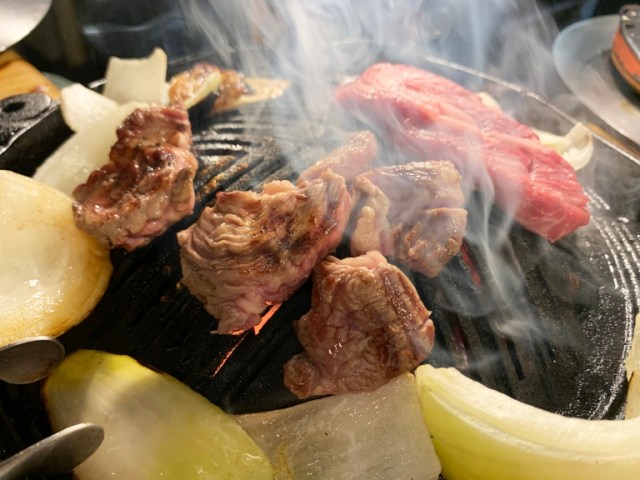
▼ Although, I know a few fans of Hokkaido’s Genghis Khan (grilled mutton and onion) that would rise up in indignance at that statement.
For example, twenty years ago Saya had the impression that Okinawan food was “generally brown,” “an acquired taste rather than something suitable for mass consumption,” and “had fame but wasn’t something [she] particularly liked.”
Coming back to Okinawan food after a quarter of a century of life and experiences, she found herself feeling incredulous at how delicious she found the food to be. She’s convinced that there must have been something wrong with her tongue when she was younger. With her newfound appreciation for Okinawan food, she has decided to rank her top five personal favorites.
● 5th Place: Hamburgers

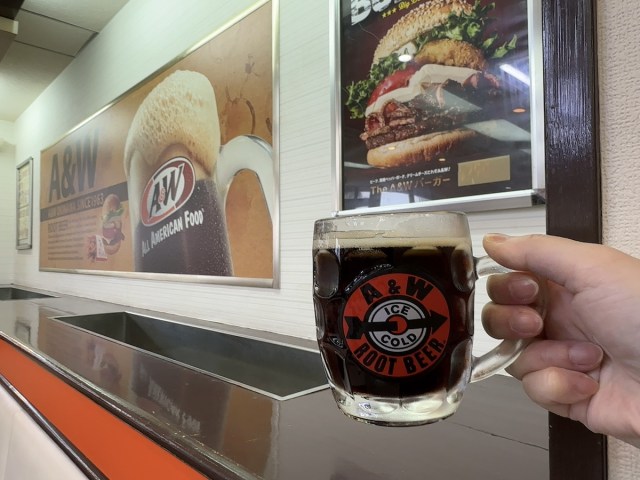
Being so heavily influenced by American culture, in part due to the military base located there, it shouldn’t come as much of a surprise to discover that there are many restaurants and cafes that serve American food. There are many local hamburger chains, as well as independently run burger joints, but the one that really grabbed her fancy was A&W, known locally as “endaa”. A&W also happens to be the first-ever fast food restaurant that opened in Japan, beating other American chains by several years.
To Saya, the interior that was reminiscent of a traditional American diner had an ambiance that conjured up images of an American TV drama, however it was the food that truly left her blown away. The burger had a deep flavor that seemed to retain the taste of the original ingredients. Perhaps it was the addition of cream cheese that added depth, but the sauce had the complex taste of homemade food, rather than an over-processed, uniform flavor. It completely lacked the “junk food” flavor that large chains seem to have.
Their specialty root beer also gained a new fan, with Saya having now become addicted. Root beer isn’t widely drunk in Japan, but the word “beer” is very common, which can lead some Japanese people to have the misconception that it’s an alcoholic drink. However, when she tasted it, the distinct herbal flavor knocked her socks off with its deliciousness. With the store also having free refills, she may have drunk a lot more than she initially intended to, so it’s probably a good thing that it’s not alcoholic.
● 4th Place: Steak

Similarly, there are also a lot of steakhouses. Most tourists tend to gather around well known restaurants that offer performances, such as the chefs tossing pepper mills into the air. Saya gets kind of nervous around hidden gems only known by the locals, so she’s quite happy to enjoy her meals in the more touristy restaurants. Even though it feels like the stores are trying to gather more customers by offering unique shows, they still serve incredibly good meat. She thinks there’s a special thrill in having steak grilled right before your eyes, and they’re so juicy and tender that it feels like the meat could just melt in your mouth. She reckons you could have steak every other day of your Okinawan holiday and even then you still wouldn’t be tired of it.
● 3rd Place: Island cuisine
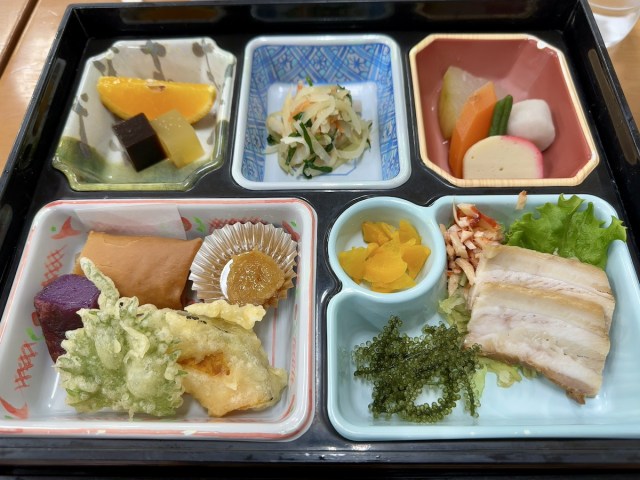
Okinawa has a lot of specialities that are lauded as delicacies throughout the country: mimigaa (pig’s ear), goya chanpuru (bitter melon stir-fry), irichii (food stir-fried then boiled in sauce), sea grapes, kamaboko (fish cake), and yushi tofu (tofu that hasn’t been pressed or molded). However, for Saya’s previous childish palate that once believed that “roast beef, potatoes, and corn soup” make the ultimate meal, she couldn’t appreciate the simmered, vinegared, and marinated dishes that make up most of the traditional cuisine.
Tasting them once again as an adult, she felt like she had her world overturned. The subtle richness of the ingredients seeps through, and the cooking methods themselves feel like products born from nature.
Using bitter melon as an example, when Saya tried to cook it herself, the result may as well have been called “essence of bitter.” However, when prepared by a local chef along with some egg, it made for an exquisite dish. The bitterness instead became an accent, which transformed the food into something she could eat endlessly.
● 2nd Place: Sata Andagi
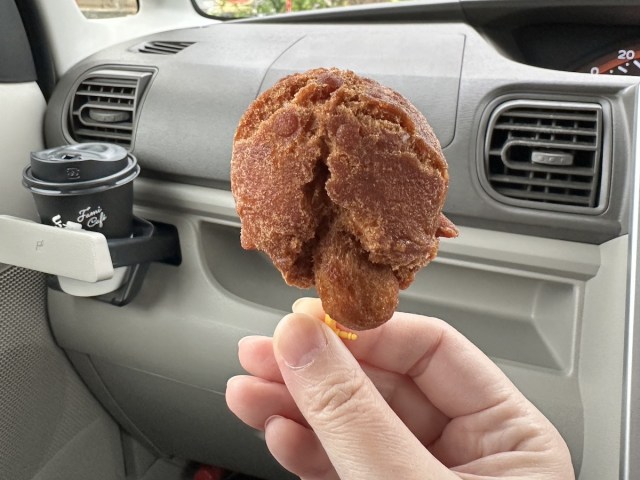
Nowadays, it’s pretty easy to find both Hokkaido and Okinawa specialties on the mainland. Quite often there are shops or exhibitions in shopping malls or department stores with an assortment of food available to purchase. Even sata andagi (deep-fried dough, similar to donuts) has become something that isn’t too hard to find, being sold in some supermarkets and bakeries.
However, eating them freshly made is another experience altogether. In fact, it’s quite possible that when you first eat a fresh sata andagi made in Okinawa, you will come to treat all the ones on the mainland as imposters, heralding the Okinawan sata andagi as its one true form.
The crispy outside has a sugar-glaze-like crunch, but the inside is beautifully fluffy. Finished off with the mellow sweetness of the brown sugar, sata andagi are without a doubt a glorious snack. Some shops can sell other flavors, like pumpkin or salty sesame, but the best ones are still the surprisingly plain-looking ones.
● 1st Place: Soki Soba

Probably the poster-child of Okinawan cuisine—the one that everyone is likely to ask if you have tried it or not—is soki soba. Although saying this, there are still quite a few people who don’t like it, and even Saya herself didn’t enjoy it when she first tried it all those years ago.
Eating them again now puts a completely different set of eyes on the food. Unlike the soba (buckwheat noodles) found elsewhere in the country, which could be said to be roughly similar to spaghetti in size, these thick, sturdy noodles are somewhere between udon (very thick noodles) and ramen noodles, and are quite chewy.
The sweet and salty soup, infused with the taste of the pork, is rich and flavorful. That being said, it’s also quite fatty, making it difficult to eat a lot at once. However, it packs a punch that lingers in your mind, leading you to crave it again the following day.
● Honorable mention: Blue Seal ice cream

Blue Seal ice cream can be found with little difficulty on the mainland, being sold in some supermarkets and train station convenience stores. However, Saya had never experienced walking into a store and having them serve it up in a cone, despite the fact that there are stores that do exactly that in the three big cities of Tokyo, Osaka, and Nagoya, and their surrounding prefectures. If you want interesting Okinawan-flavored ice cream like Okinawan salt cookies or pineapple and coconut, it might be worth hitting up your nearest store.
Everything that Saya ate on her recent trip was something she’d absolutely be willing to try again. Not once did she find herself saying, “I tried it once, and that’s enough.” There were even some surprises, like sea grapes, which she had thought would be kind of crunchy, but instead were juicy when they popped in your mouth, much like salmon roe.

While Okinawa has many attractions, beautiful nature, a unique culture, and resort life, just the cuisine alone is reason enough for a visit. So start planning your trip now.
Photos ©SoraNews24
● Want to hear about SoraNews24’s latest articles as soon as they’re published? Follow us on Facebook and Twitter!
[ Read in Japanese ]
 Taco Rice: Yummy Tex-Mex cuisine, Okinawan style!
 Okinawa soul food: We try the most epic pork and egg onigiri rice balls in Japan
 Making minudaru, Okinawa’s super simple jet-black pork【SoraKitchen】
 Kandaba, moui, and sakuna: We have fun taste-testing Okinawan fruits and vegetables
 Will our reporter’s wish to find the secret Dragon Ball sweets be granted?
 30 Pikachus want to share a Tokyo hotel room with you that has separate Grass, Water, Fire spaces
 Mt. Fuji decorated with a 500,000-flower pink carpet is Japan’s ultimate spring view
 Howl’s Moving Castle’s scene-stealing dog is here to clean your home as a plushie mop
 New interactive Pokémon attraction coming to Universal Studios Japan
 10 crazy pizzas from Japan
 Pringles Chocolate, but with a Japanese twist, is the snack hack you should be trying right now
 Who is this mysterious large man who’s suddenly showing up on giant signs in Japan?
 Holy noodles! Japanese restaurant serves up some very unusual udon
 Turn a persimmon into a pudding with one simple ingredient
 Japan now sells…sake made with moth poop?!?
 Japan reportedly adding Japanese language skill requirement to most common foreigner work visa
 Pokémon and Ikea Japan cross over into each other’s worlds with collaboration events
 Starbucks Japan closing only Shinkansen platform branch for popularity-triggered renovations
 You can assemble a well-balanced team of Pokémon, them eat them, thanks to Japanese cake chain
 Two food hacks take Japan’s convenience store fried chicken to amazing new sandwich heights
 7-Eleven Japan’s new baked-in-store sweet treat is only available in three parts of the country
 Man bites woman at cherry blossom park in Japan, dies shortly after
 Peanuts and Coke becomes a viral hit in Japan, but is it a trend worth joining?
 Can a downtown Tokyo super sento bathhouse beat a hotel for a one-night stay?
 New Japanese KitKats come in sakura flavour, with poetic symbolism for success
 Japan now has a special desk for people who work at home with a pet cat[Photos]
 Famous Tokyo cherry blossom spot installs view-blocking screens to fight overcrowding[Video]
 Uniqlo announces new T-shirts for One Piece, Naruto and more for manga publisher’s 100th birthday
 Train station platform ramen store closes its doors on half a century of history in Tokyo
 Starbucks Japan releases new My Fruit³ Frappuccino at only 34 stores around the country
 Krispy Kreme releases Super Mario doughnuts in Japan for a limited time
 Studio Ghibli releases Catbus pullback keychain that runs like the anime character
 Japanese onsen egg maker from 100-yen store Daiso needs to be on your shopping list
 Survey asks foreign tourists what bothered them in Japan, more than half gave same answer
 Japan’s human washing machines will go on sale to general public, demos to be held in Tokyo
 Starbucks Japan releases new drinkware and goods for Valentine’s Day
 We deeply regret going into this tunnel on our walk in the mountains of Japan
 Starbucks Japan releases new sakura goods and drinkware for cherry blossom season 2026
 Studio Ghibli releases Kodama forest spirits from Princess Mononoke to light up your home
 Japan’s newest Shinkansen has no seats…or passengers [Video]
 Major Japanese hotel chain says reservations via overseas booking sites may not be valid
 Put sesame oil in your coffee? Japanese maker says it’s the best way to start your day【Taste test】
 No more using real katana for tourism activities, Japan’s National Police Agency says
 Can Kyoto supermarket takeout let you enjoy the local cuisine without fancy restaurant prices?
 Our Japanese reporter gets a heaping helping of American Denny’s