The Shinkansen is already a pretty cool way to get around Japan, as it whisks travelers from the country’s cosmopolitan urban centers to its more traditional rural locales.
But what if you want to experience a bit of authentic Japanese culture while you’re zipping across Japan at 200 miles per hour? Fear not, Japan Railway has just the thing: a bullet train with tatami reed flooring and a Japanese-style foot bath.
Tokyo’s astronomical rent costs mean people will go to great lengths to find a cheaper deal. For many, this means living up to a 30-minute walk from their apartment’s nearest train station. Others might choose to live in extremely small or narrow rooms or may opt for what amounts to a cardboard box on an apartment building’s roof.
There is, however, another option that almost seems too good to be true: So-called “Accident Site” apartments. These are rooms in which a previous tenant has died inside, usually from non-natural causes. Some rental agencies specifically advertise rooms as “accident site,” while some agencies just list a room that’s mysteriously low-priced and let people figure it out for themselves.
Certain bargain hunting types with extreme mental fortitude and who don’t mind the occasional bleeding wall or mysterious, warm puff of breath on their cheek while they sleep, actually seek out these deals, but the large majority of Japan avoid them.
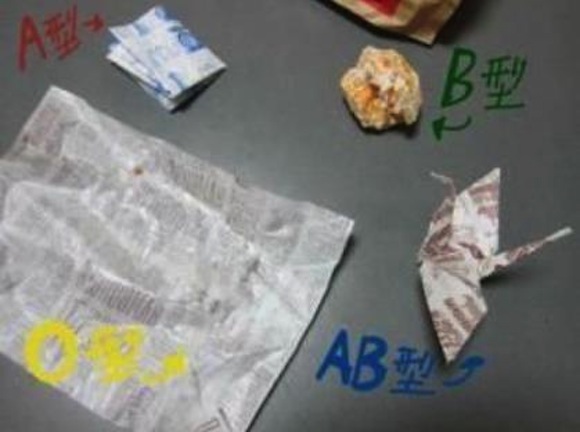
In a number of East Asian countries, but perhaps most strongly in Japan, it is believed that one’s blood type, or ketsuekigata (血液型), determines a lot about one’s character and how we relate to others and the world around us. Although comparatively few Westerners who have never donated blood or had the misfortune of being seriously ill know their blood type, it is rare to meet a Japanese person who does not know theirs, and it’s considered perfectly normal for people to try to guess someone’s blood type when first getting to know them or working together closely.
It’s easy for non-Japanese to forget the character traits that blood types supposedly denote, however, so here’s a handy image – which is currently doing the rounds online in Japan and being suitably nodded at and chuckled over – to save on your computer or smartphone for the next time someone says, “Oh, that’s typical A-gata behaviour!” when you fold up your napkin or straighten a crooked picture frame.
Brace yourselves, Republicans and Libertarians: it turns out Japan’s social safety net provides free healthcare to people that need medical attention but have no money or insurance. It’s like Obamacare’s angry, ‘roided-up samurai cousin.
That’s because there’s a somewhat vaguely-worded provision in Japanese law that states the government is obligated to provide care for those with “troubled livelihoods,” at low or no cost, regardless of insurance coverage. “Troubled livelihood” is kind of a broad definition, which ensures that those without the means to pay for medical treatment – even if they aren’t necessarily poor, homeless or unable to work – can still see a doctor.
Back when I was an irksome, irritable teenager, I used to take issue with the fact that my mother would talk about “the girls at work” when in fact most of them were approaching 50. To me, a 14-year-old with copies of FHM stashed under his bed and enough testosterone and sexual frustration to make his eyes water, a “girl” was either someone my friends and I would whisper about at school or whichever scantily clad celebrity happened to be on the cover of said cheeky magazine each month.
Thankfully, now 31 and my hormones having settled down a bit, I’m able to appreciate that whether or not we label someone a “girl” really depends on the person in question, and dare I say it some of my mother’s (slightly younger) colleagues would no doubt get the nod of approval from both me and my old school friends if we had the pleasure of meeting them. But a recent question posted on Japan’s Oshiete! goo, a Q&A site not unlike Yahoo! Answers, asking where we draw the line between “girl” and “woman”, or rather “joshi” and “josei” in Japanese, has sparked quite the debate online, with some proposing that age 40 is the cut-off point while others believe “joshi” ends at 20.
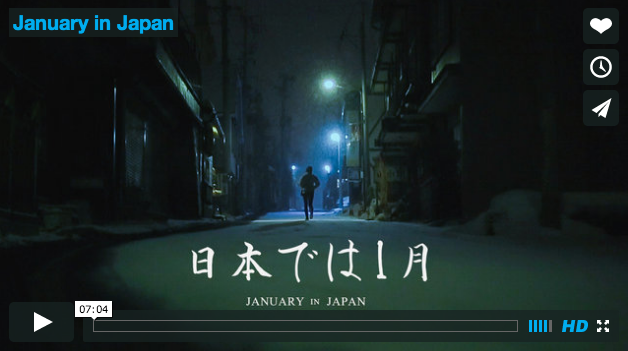
Having lived here for around eight years now, I sometimes forget how uniquely beautifully Japan can be. This stunning video, simply titled “January in Japan” from director and photographer Scott Gold, however, has just given me a wonderful reminder. If you have any interest in Japan whatsoever, be sure not to miss this one.
Japanese society prides itself on its high level of tact in dealing with delicate matters, and indeed, quite often in communication not offending the other party is given priority well above getting your point across. That said, when the system discretion breaks down, it really breaks down, and sometimes you’re faced with the linguistic paradox of candor that’s so cutting because the choice of words is so blunt.
Recently, a bit of a firestorm was set off in Japan by a male-oriented magazine spitting straight talk on what makes the ideal girl in extremely intricate detail.
One of the trickier aspects of adapting to life in Japan is getting the hang of the numerous seasonal customs. While your acquaintances aren’t likely to get that bent out of shape if you miss a day or two, completely adhering to proper etiquette involves managing a year-round schedule of sending gifts and written salutations to friends, family, and business associates.
The sentiment is definitely admirable, but don’t Japanese people don’t find this all to be a huge hassle? Actually, it turns out some of them do, as shown in a poll of the top five seasonal traditions people in Japan would like to do away with.
Final Fantasy and Dragon Quest may be video game developer Square Enix’s two biggest series, but the Saga franchise could make a solid case for the company’s third-most important intellectual property. While the initial title in the series was the Game Boy’s Makai Toshi Saga, or Devil World Tower Saga, the more eloquently named Super NES follow-up, Romancing Saga, is where the series really took off, and 10 games are now counted as part of the Saga saga.
2014 marks the 25th anniversary of the Saga franchise, and in celebration Square Enix is collaborating with a partner that’s at once completely unexpected and totally obvious: Saga Prefecture.
Wedding planning is a big deal in Japan, where it often involves a ceremony, formal reception with coworkers (including your boss, who’s expected to make a speech), an informal after-party after the reception winds down, and in many cases a second after-party that may stretch on until the next morning when the trains start running. Putting the whole thing together can be costly and require a lot of work, but it’s all worth it when everything goes smoothly. And besides, getting married is a once-in-a-lifetime event, right?
Well, actually, that’s not always the case. As in many modern, economically prosperous societies, the divorce rate has been rising in Japan, and along with it the potential number of remarriage candidates. In an attempt to keep up with these changing cultural norms and values, one of Japan’s largest wedding planners has gone so far as to coin a new term for those who remarry: maru ni.
With Yuzuru Hanyu taking home Japan’s first-ever gold medal in men’s figure skating, there’s a chance the country’s rabid sports fans will back off on the intense pressure they’ve been placing on the nation’s Olympic team. That’s sure to be a weight off the shoulders of the athletes themselves, as well as former Olympiad Dai Tamesue, who recently took so-called fans of the Japanese team to task for calling athletes who fail to reach the podium parasites.
Most socializing in Japan is done in groups, and while there’s definitely something to be said for the “the more the merrier” philosophy behind it, that same social norm can sometimes work against a person’s love life. Sure, a guy might have a thing for a girl who he’s in the same school club with, but it can be hard to take the relationship to the next level if they never have any time alone together. On the opposite side of the scale, if there’s no one who strikes a man’s fancy in his immediate social circle, expanding his network of acquaintances, and with it his dating pool, can be a tricky endeavor to pull off.
The end result is a number of men in Japan who don’t enter into a serious romantic relationship until they’re well into adulthood. Luckily, this isn’t a complete deal breaker for them, but that lack of experience does change the playing field, as shown in a survey of 206 Japanese women in their teens, twenties, and thirties who shared their hopes and concerns about being a guy’s very first girlfriend.
Japan takes customer service very seriously, something that’s easy to see when even convenience store clerks are so dedicated to their job they’ll ask if you want your hot and cold purchases bagged separately, or else build a protective barrier between them. Hospitality standards are no joke, either, as illustrated by the tasks traditional innkeepers are expected to perform, such as carrying the dishes and utensils for full-course meals into and out of guests’ rooms.
It’s no surprise, then, that travelers in Japan have plenty of stories to tell about attentive inns and hotels, such as the 12 below from an online survey by web portal My Navi Woman in Japan.
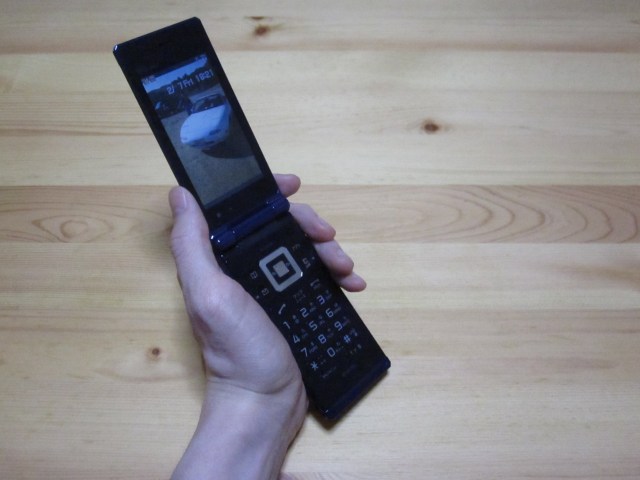
Despite my work address being “The Internet,” my personal use cell phone actually isn’t a smartphone. Maybe it’s a result of spending several hours a day looking at websites, but to me there’s still just something that feels right about a compact phone that folds shut with an oddly satisfying snap, even if the sound provokes a Pavlovian response of laughter from any technophiles in earshot.
But like skinny ties and 8-bit video game graphics, it seems like flip phones aren’t quite ready to fade away entirely. As a matter of fact, busting out an old school flip phone in Japan just might make a man more attractive to women.
Not so long ago, a friend of mine from the UK came to visit me here in Japan. After showing him around town and making sure to take him to all of the most popular tourist spots, he remarked that quite a few of the subtle behaviours Japanese people exhibit seemed, while in no way offensive, remarkably different to those of our own countrymen. As we worked through a couple of the more unusual customs and behaviours that my friend had noticed, it struck me that at some point during my eight years of living here I had come to accept the everyday quirks of the people around me as entirely normal and not in the slightest bit odd.
Last year, we discussed the 10 things that we love and the 10 things we just can’t stomach about Japan, but today we at RocketNews24 felt it was time to present you with a list of random but genuine observations, from the peculiar to the downright endearing, about the Japanese people themselves. Enjoy!
Japan is big on seasonality. As you might deduce about a society that has preferred points of the calendar for eating specific snacks and sushi, this extends to romantic relationships as well. Like the blossoming of the cherry trees, each year sees certain repeating situations for which popular opinion holds the best way to spend is “with your boyfriend.”
However, not every woman in Japan has a special guy in her life, which can be all the more of a downer when you keep hearing about how romantic those particular times of year are.
When you really think about them, even the traditions and practices that we each grew up with and seem perfectly normal are kind of odd. Easter, once solely the Christian celebration of the resurrection of Jesus, now sees us telling children that a benevolent rabbit came in the night to leave them chocolate eggs. Christmas takes us even further into the world of fantasy as kids grow up thinking that a magical man who lives in the North Pole works a team of elves all year round to make presents for them, delivering said gifts across the world in a single night via flying woodland beasts, despite the man himself likely having respiratory problems owing to his XXL frame.
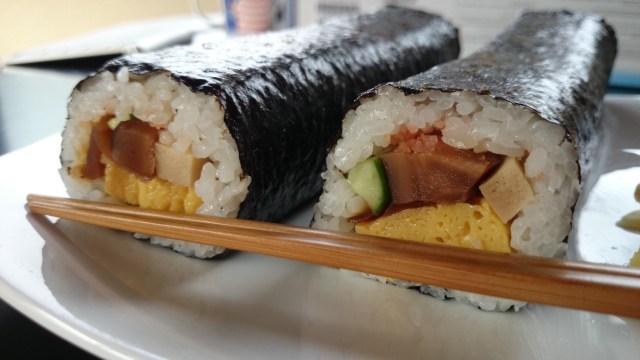
Although Japan doesn’t really do Christmas, it does have a plenty of its own traditions and yearly celebrations, and it just so happens that today is one of them. Setsubun, or the spring bean-throwing festival, seeschildren yelling at and peppering fictional demons with handfuls of roasted beans, and families sitting down to eat enormous pieces of maki, or roll, sushi, often adhering to peculiar local traditions as they do.
There seems to be a bit of a debate these days centered around whether or not being an otaku, the term used in Japan to describe people who obsess over a variety of hobbies, is a socially healthy one. In extreme cases, the otaku lifestyle can limit romantic opportunities, and even renowned anime director Hayao Miyazaki has grumbled about their effects on the industry he earned his fame in.
With all the negativity and marginalizing, you’d think the number of people the label could be applied to would be small, and the number of individuals who’d choose it for themselves to be smaller still. Surprisingly enough, though, in a recent survey of college students, nearly four in ten identified themselves as an otaku.
Expats in Japan, you know the feeling: After years of working towards your goal of somehow, someday living in Japan, you finally made it to the land of mochi and Harajuku. But you’re not really living in Japan, no, you’re drowning in it. It wasn’t what you expected it to be (how dare your years of research, whether in school or from anime, deceive you!). And you cry and you curse your naivety for ever thinking you could just pick up and move to such a strange land.
But then one day, you have a clear, identifiable moment when everything seems to come together and you just have to stop and smile to yourself, thinking, “I’m doing it. I’m really doing it.” It’s these little moments that eventually trickle together and without realizing it, you’re walking on water, swapping oyaji-gyagu with the best of them and craving sashimi for dinner. Let’s take a look at what 20 foreigners on Japanese website, Niconico News, identified as a time they really felt like they had gotten the hang of living in Japan.
What exactly is romance? It’s a seemingly simple term, and one undeniably connected to a set of strong feelings, but does one have to act on them, or can romance exist entirely in the heart of an individual, without any sort of necessary manifestation in words or deeds? Is the word applicable only exclusively to happy relationships, or does that sort of stability preclude the sudden rush of emotion needed for something to be called romantic?
People have been struggling with these questions for years, and today we take a look at three less than poetic attempts at defining the word romance in publisher Sanseido’s Japanese dictionary.





 Japan’s final Penguin Suica train cards have already shipped, and when they’re gone, they’re gone
 Farewell Final Ceremony announced for Tokyo’s life-size Gundam statue, will stream live
 Japan approves foreign resident visa renewal fee increases of up to 967 percent, starts soon
 Hobonichi unveils new 2027 planners, diaries and stationery with One Piece, Suica Penguin, Hello Kitty and a must-buy Mini Techo
 Nonstop flights from U.S. to Okinawa return after 54 years, making travel faster than before
 Starbucks Japan adds a gooey sweet potato Frappuccino to its menu this autumn
 Anime and Hollywood movies cross over in new Universal Studios Japan merch collection
 Starting this fall, you’ll be able to take a Pokémon Jet flight to Japan
 Godiva Japan hops into tsukimi season with bunny and moon-themed chocolate assortments
 McDonald’s Japan reveals exclusive new Tsukimi moon viewing collection for 2026
 7-year-old boy left behind on Mt. Fuji by his own dad
 Sushi Bus: Japan’s first conveyor-belt bus lets you eat sushi while sightseeing around Tokyo
 Japan tripled its departure tax to fund tourism but is using the money on cherry blossoms and bears
 Nike x One Piece collection brings Devil Fruits to sneakers and streetwear in Japan
 Anime fans can now wear a Seiko watch inspired by Japan’s One Piece Shinkansen
 Foreign hiker on Mt. Fuji loses consciousness and dies, becoming climbing season’s second fatality
 We recommend not buying one pack of Japan’s new convenience store corn soup-flavor fried chicken
 Police in Japan looking for who’s responsible for dumping 80 loaves of bread on side of road [Video]
 Japan’s double-decker portable rice cooker/bento maker is better than ever with new version
 12-year-old British girl who went missing in Tokyo found safe after visiting anime sites around Yokohama
 Air-conditioned dress shirts arrive in Japan to save working professionals from sweltering heat
 Pokémon Center Online designates first Pokémon items that will require Japanese ID card to buy
 Japanese toilet aims to attract foreign tourists but not everybody is happy about it
 Tokyo’s newest viral dessert is like a Japanese parfait inside a bread bun [Taste test]
 New Japanese vending machine at Shinkansen station sells cups of ice on platform
 Study finds hundreds of people in Indonesia legally named after Naruto, Inuyasha, other anime stars
 Japan announces sudden 400-percent increase in visa fees for foreigners entering the country
 Japan’s human washing machines will go on sale to general public, demos to be held in Tokyo
 Studio Ghibli has a new anime out, and there’s only one place in the world where you can see it
 Starbucks Japan releases new drinkware and goods for Valentine’s Day
 Starbucks Japan releases new sakura goods and drinkware for cherry blossom season 2026
 Japan’s newest Shinkansen has no seats…or passengers [Video]
 Tokyo subway installing new ticket gates that don’t accept payment through Suica or other IC cards
 Japanese ninja certification exam attracts 131 candidates from Japan and abroad
 Salomon releases Japan-exclusive Mt. Fuji hiking gear that doubles as an amazing souvenir
 Put sesame oil in your coffee? Japanese maker says it’s the best way to start your day【Taste test】
 Starbucks Japan adds a gooey sweet potato Frappuccino to its menu this autumn
 Anime and Hollywood movies cross over in new Universal Studios Japan merch collection
 Starting this fall, you’ll be able to take a Pokémon Jet flight to Japan
 Godiva Japan hops into tsukimi season with bunny and moon-themed chocolate assortments
 McDonald’s Japan reveals exclusive new Tsukimi moon viewing collection for 2026
 Tokaido Lumière Express: Stay overnight inside the Shinkansen from Osaka to Tokyo
 No, Japan’s prime minster did not make friends with a cockroach, despite what you may have heard
 Japan tripled its departure tax to fund tourism but is using the money on cherry blossoms and bears
 Family Mart reveals new T-shirt uniforms, relaxes hair colour rules for staff… but is it all too casual?
 Amid foreign sex tourist rise, Japanese government considering outlawing paying for prostitution
 Ministop brings bulked up Okinawan-style rice balls to mainland Japan for one week only
 Nike x One Piece collection brings Devil Fruits to sneakers and streetwear in Japan
 Pizza Hut Japan creates moon-viewing sukiyaki chrysanthemum pizza for tsukimi season
 Tokyo subway installing new ticket gates that don’t accept payment through Suica or other IC cards