
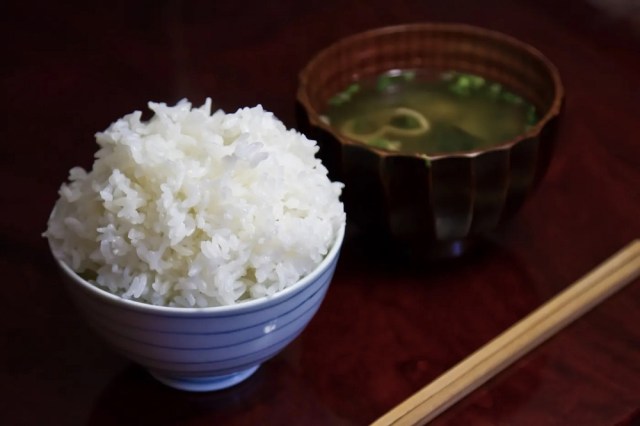
Katakana is usually for foreign words, but there’s a whole class of Japanese-grown rice that has katakana names.
Japan, obviously, eats a lot of rice, but the country also eats a lot of rices. Head to the rice aisle in a Japanese grocery store and you’ll find a large variety of domestic rice breeds for sale, like “Koshihikari” or “Akitakomachi.”
Each type has its own subtle differences in flavor and texture which collectively make a big difference to connoisseurs, so for regular rice shoppers checking the label to see what kind of rice is in the bag is a matter of course. But while you’re checking the packaging, you might notice that different types of Japanese rice have their names written in completely different writing systems.
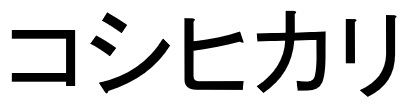
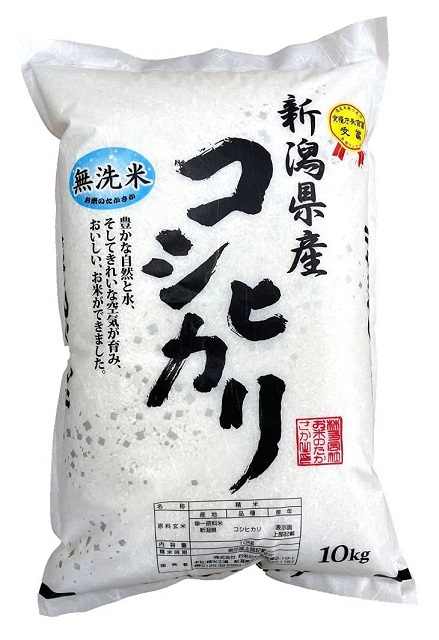
Using the two breeds mentioned above as example, Koshihikari, Japan’s best-selling rice variety which commands a roughly one-third market share, is usually written in katakana, the blockier of Japan’s two types of phonetic script.
▼ Koshihikari, written in katakana
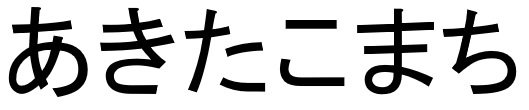
Katakana isn’t used for Akitakomachi, though. Instead, it’s usually written in hiragana, the more rounded set of Japanese phonetic characters.
▼ Akitakomachi, written in hiragana
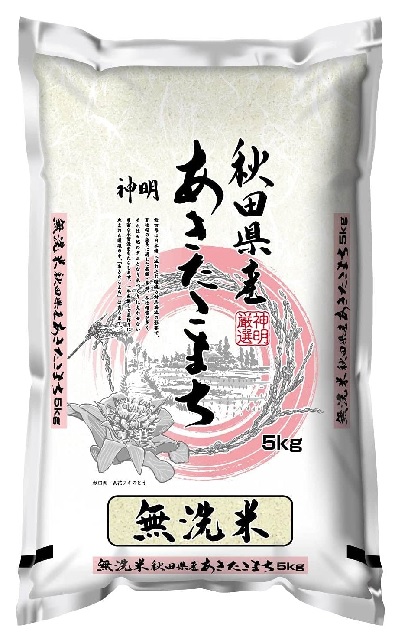
It turns out there’s a reason why certain types of rice are traditionally written with katakana and others with hiragana, and the “Akita” part of Akitakomachi is actually a hint.
When Japan ended its centuries of enforced isolation at the start of the Meiji period, a flood of new scientific knowledge became available to Japanese botanists and agriculturalists. The national government began administering research programs to breed higher-yield varieties of rice to better feed the nation’s people, and initially the new varieties were called “Norin” (Department of Agriculture and Forestry) followed by the number of their specific research program. So, for example, first came Norin 1, followed by Norin 2, then Norin 3, and so on.
With the importance of rice in the Japanese diet, though, the Norin numbers rose at a rapid rate, and after Norin 52, the national government enacted a new policy. Instead of their Norin number, nationally directed new rice varieties would have actual names, but they had to be written in katakana, with the name being six characters or less. Why the name had to be katakana isn’t exactly clear, but it may have had something to do with katakana having a modern, scientific feel to it (which is itself one side effect of katakana being primarily used for foreign loanwords, thus imparting a global feeling). So instead of becoming “Norin 100,” the 100th new rice variety from nationally directed research programs became Koshihikari, written all in katakana, upon its creation in 1956. In the same way, in 1963 what would have been “Norin 150” became Sasanishiki.
▼ Sasanishiki, written in katakana as ササニシキ
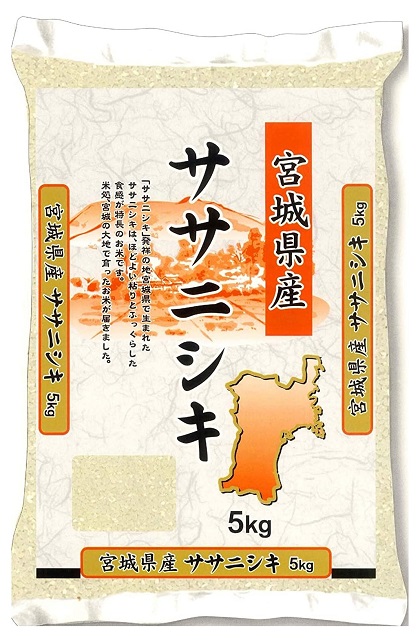
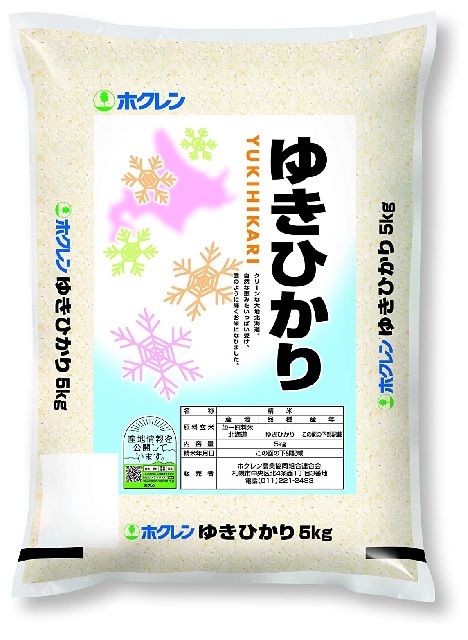
In the latter half of the 20th century, though, rice research began getting increased efforts on a more localized level. Prefectural agricultural organizations began developing their own rice breeds. Since katakana names were already being used to express that a type of rice had been developed under supervision from the national government, it was decided that rice breeds developed at the prefectural or smaller level should instead use names written in hiragana. So in the early ‘80s, when Akita Prefecture developed its own type of rice and brought it to market, it was dubbed Akitakomachi and written in hiragana, as was Hokkaido Prefecture’s Yukihikari rice.
▼ Yukihikari (ゆきひかり in hiragana) means “snow light,” referencing the snowy winters Hokkaido has as Japan’s northernmost prefecture.
Adding another wrinkle of complexity to the situation, however, is that in 1991, the Japanese government said “Go nuts — You can write your rice’s name with whatever set of characters you want.” As a result, types of rice developed after 1991 don’t necessarily follow the katakana-national/hiragana-prefectural naming convention. Even the types of rice that were developed under the old system are no longer legally required to adhere to it. Nowadays you’ll sometimes see Koshihikari, originally a katakana-name rice, marketed by some growers/sellers with its name written in hiragana, especially if they’re trying to appeal to a sense of home-country pride, since hiragana has a more classically Japanese feel to it.
▼ A sack of written-in-hiragana Koshihikari (こしひかり)
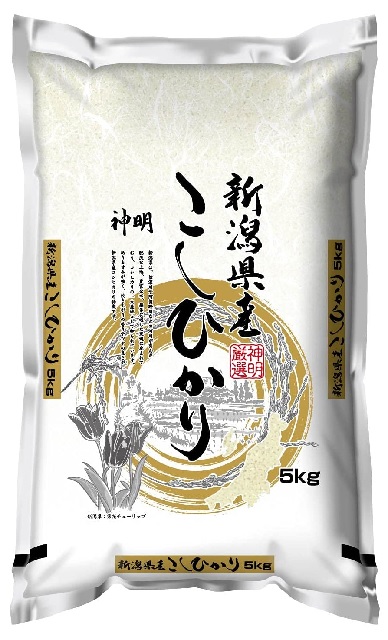
But after decades of being written only in katakana or hiragana, the visuals have stuck in the minds of people in Japan, and the styles often continue today as a form of linguistic and gastronomic tradition.
Sources: Japaaan, Okome no Kuni no Monogatari, J-Wave News
Top image: Pakutaso
Insert images: SoraNews24, Amazon/お米のたかさかのストア, Amazon (1, 2, 3, 4)
● Want to hear about SoraNews24’s latest articles as soon as they’re published? Follow us on Facebook and Twitter!
Follow Casey on Twitter for more of his unabashed love of Japanese food and Japanese linguistics.
 Why does Japanese writing need three different sets of characters? (Part 2)
 Why does Japanese writing need three different sets of characters? (Part 1)
 Japanese writing system gets turned into handsome anime men with Hiragana Boys video game
 How to tell Japanese’s two most confusing, nearly identical characters apart from each other
 Brain Gymnastics Quiz: Move one matchstick to create the name of a Japanese Prefecture
 Mt. Fuji decorated with a 500,000-flower pink carpet is Japan’s ultimate spring view
 New Travelling Bento pouches turn your luggage into a Japanese lunch box
 30 Pikachus want to share a Tokyo hotel room with you that has separate Grass, Water, Fire spaces
 Japanese politician arrested on charges of accepting bribes to reduce number of monkeys in park
 You can assemble a well-balanced team of Pokémon, them eat them, thanks to Japanese cake chain
 McDonald’s and Gundam team up for customized anime mecha and fried chicken sandwiches[Video]
 Bear attack shelters going on sale in Japan as country experiences record-high number of incidents
 Japanese curry chain in Thailand has a surprisingly Japanese dish not found in Japan
 Buddhist monks in Japan preparing to hold funeral service for thousands of stuffed animals, dolls
 Expensive Japanese nail clippers: Are they worth it?
 Japan reportedly adding Japanese language skill requirement to most common foreigner work visa
 Pokémon and Ikea Japan cross over into each other’s worlds with collaboration events
 Starbucks Japan closing only Shinkansen platform branch for popularity-triggered renovations
 Two food hacks take Japan’s convenience store fried chicken to amazing new sandwich heights
 7-Eleven Japan’s new baked-in-store sweet treat is only available in three parts of the country
 Man bites woman at cherry blossom park in Japan, dies shortly after
 Peanuts and Coke becomes a viral hit in Japan, but is it a trend worth joining?
 Can a downtown Tokyo super sento bathhouse beat a hotel for a one-night stay?
 New Japanese KitKats come in sakura flavour, with poetic symbolism for success
 Japan now has a special desk for people who work at home with a pet cat[Photos]
 Famous Tokyo cherry blossom spot installs view-blocking screens to fight overcrowding[Video]
 Uniqlo announces new T-shirts for One Piece, Naruto and more for manga publisher’s 100th birthday
 Train station platform ramen store closes its doors on half a century of history in Tokyo
 Starbucks Japan releases new My Fruit³ Frappuccino at only 34 stores around the country
 Krispy Kreme releases Super Mario doughnuts in Japan for a limited time
 Studio Ghibli releases Catbus pullback keychain that runs like the anime character
 Japanese onsen egg maker from 100-yen store Daiso needs to be on your shopping list
 Survey asks foreign tourists what bothered them in Japan, more than half gave same answer
 Japan’s human washing machines will go on sale to general public, demos to be held in Tokyo
 Starbucks Japan releases new drinkware and goods for Valentine’s Day
 We deeply regret going into this tunnel on our walk in the mountains of Japan
 Starbucks Japan releases new sakura goods and drinkware for cherry blossom season 2026
 Studio Ghibli releases Kodama forest spirits from Princess Mononoke to light up your home
 Japan’s newest Shinkansen has no seats…or passengers [Video]
 Major Japanese hotel chain says reservations via overseas booking sites may not be valid
 Put sesame oil in your coffee? Japanese maker says it’s the best way to start your day【Taste test】
 No more using real katana for tourism activities, Japan’s National Police Agency says
 Yahoo! Japan finds most alphabetic and katakana words Japanese people want to find out about
 German linguist living in Japan says kanji characters used for Germany are discriminatory
 Video of each Japanese hiragana getting “measured up” is oddly cute and satisfying【Video】
 Pokémon Center apologizes for writing model Nicole Fujita’s name as Nicole Fujita
 The 10 best types of onigiri rice balls to try in Japan【Survey】
 Japanese mom at seaside hospital with no visiting hours gets a beautiful get-well message
 What does a kanji with 12 “kuchi” radicals mean? A look at weird, forgotten Japanese characters
 Four ways Japanese isn’t the hardest language to learn
 How to write “sakura” in Japanese (and why it’s written that way)
 Why is the Japanese kanji for “four” so frustratingly weird?
 Giant misspelling in rice field art warms Japan’s heart, so farmers decide to roll with it【Video】
 Japanese park’s English dog turd warning minces no words【Why does Engrish happen?】
 Wagyu vs. kokusangyu – The difference between the two types of “Japanese beef”
 Five different ways to say “children” in Japanese
 Twitter users say Japanese Prime Minister’s name is hiding in the kanji for Japan’s new era name
 TV audiences in Japan surprised to see “Pikachu,” “Raichu” as members of U.S. Olympic team