
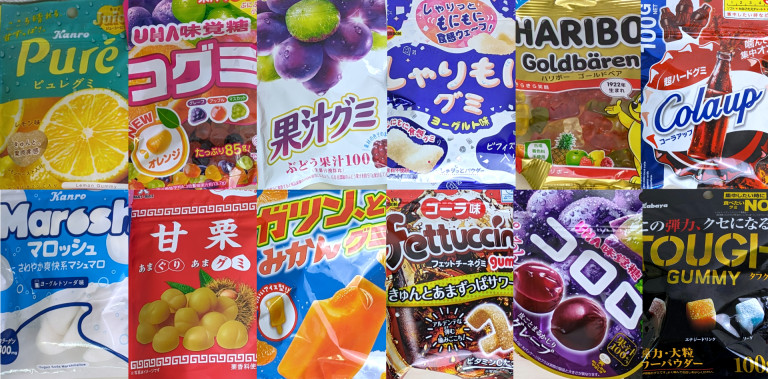
There’s stiff (but sometimes chewy) competition for gummies out there, but one came out on top in this taste test.
Did you know that Haribo was the first company to ever make gummy candies? Their original gummies came out in 1922, and in their 100 years of existence, they’ve established factories in 10 countries and sell their gummies in over 100. Of course, their gummies are available in Japan, but they aren’t the only ones. If you go to a Japanese supermarket or convenience store, you might be overwhelmed with the choices! With so many out there, it’s hard to think they ever didn’t exist.
We bet you’d be shocked to know that our Japanese-language reporter Mr. Sato hardly ever eats gummies. Yes, that Mr. Sato, our foodie of foodies, who will eat just about everything under the sun, can hardly remember the last time he tried one. As such, he decided to use his unique position as a gummy newbie to try out 12 different brands of gummy candies and decide, in his own inexperienced opinion, which one is the most delicious.
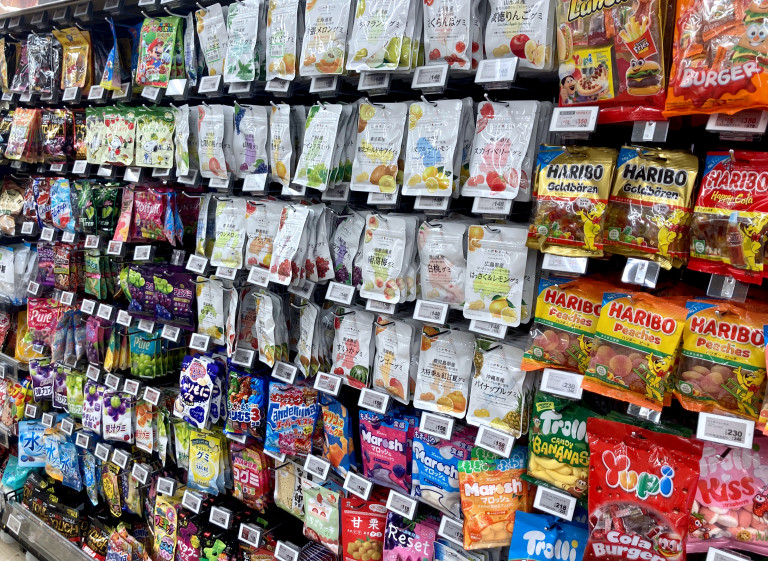
When Mr. Sato went to his local supermarket to begin his gummy experience, he was blown away by the extensive variety.
Japan’s first gummy candy was Colaup, which was released by Meiji Foods in 1980. Mr. Sato remembers buying it at a candy shop when he was in elementary school. Colaup is still available today, though they changed the recipe in 2010 to a firmer type and altered the package design.
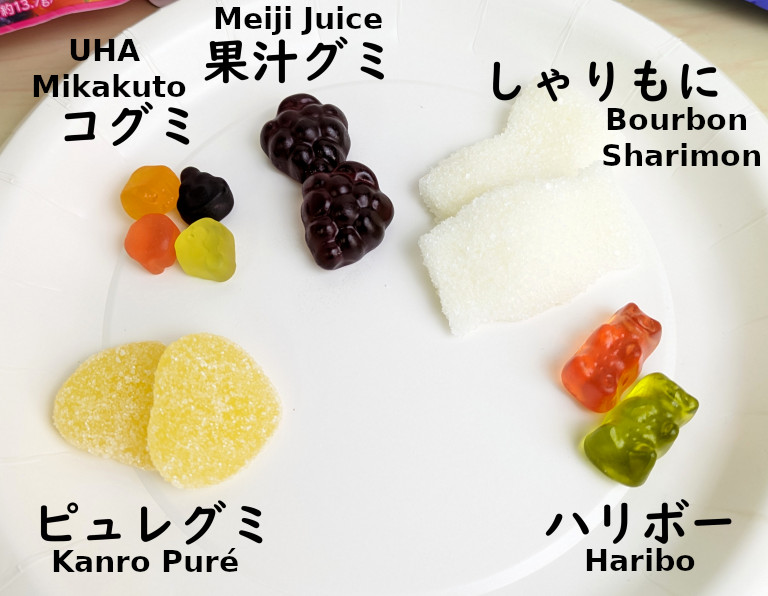
With no frame of reference to go off of, Mr. Sato decided to pick whatever brands looked interesting and ended up with 12 selections. The first five were:

Haribo Goldbears (192 yen [US$1.28])
Bourbon Sharimon Gummies (138 yen)
Meiji Juice Gummies (Grape-flavored) (127 yen)
UHA Mikakuto Small Gummies (159 yen)
Kanro Puré Gummies (Lemon-flavored) (149 yen)
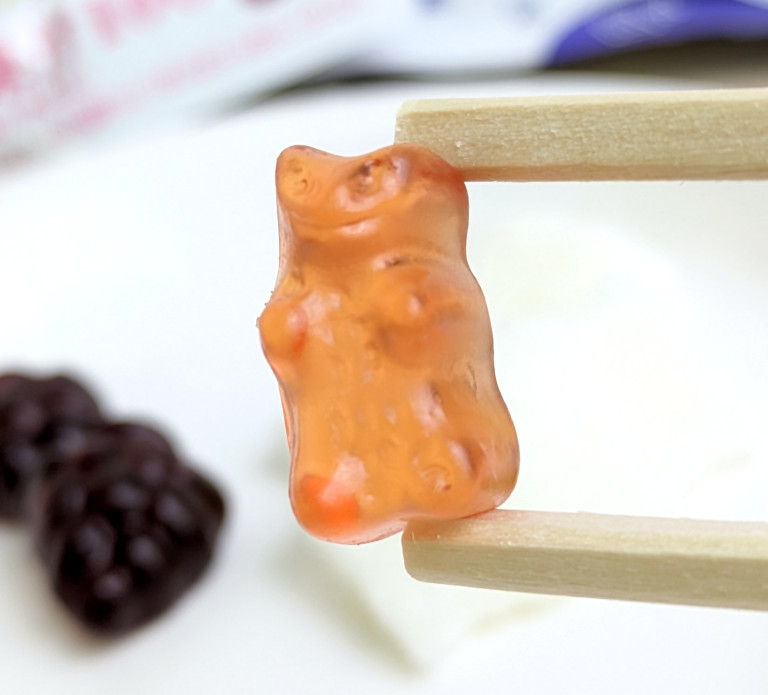
Mr. Sato started with the classic, world-famous Haribo Goldbears. They came in unsettling neon colors that made them look full of chemicals, but in fact the packaging advertises that no artificial colors are used. They had a very fruity flavor, and they were much firmer than they looked. Their solidness really surprised Mr. Sato.
Next up were the Sharimon Gummies, which, according to the packaging, have a “crunchy, squirmy texture.” The name on its own is pretty distinctive. Mr. Sato had no idea that Bourbon, which mostly makes chocolate and cookie-type snacks, makes gummies too. This one tasted like a dairy-free kind of yogurt.
As for texture, he supposed he would say that it feels a bit like eating mochi. It did have a sort of “wagashi”, or Japanese confectionary, appeal. The powder coating gave it a crunch, while the gummy itself had a very soft texture. The contrast was interesting.

After that, Mr. Sato tried the Meiji Grape-flavored Juice Gummy, which Meiji recently advertised as a great ingredient in roast beef gravy. It’s a hit product from Meiji, which also makes Colaup. The texture of this one was closest to what Mr. Sato, in his limited experience, expected of a gummy. It was both chewy and soft, which made for a very pleasant munch. It also had the advantage of having a very strong fruity flavor, owing to the concentrated juice used in its recipe.
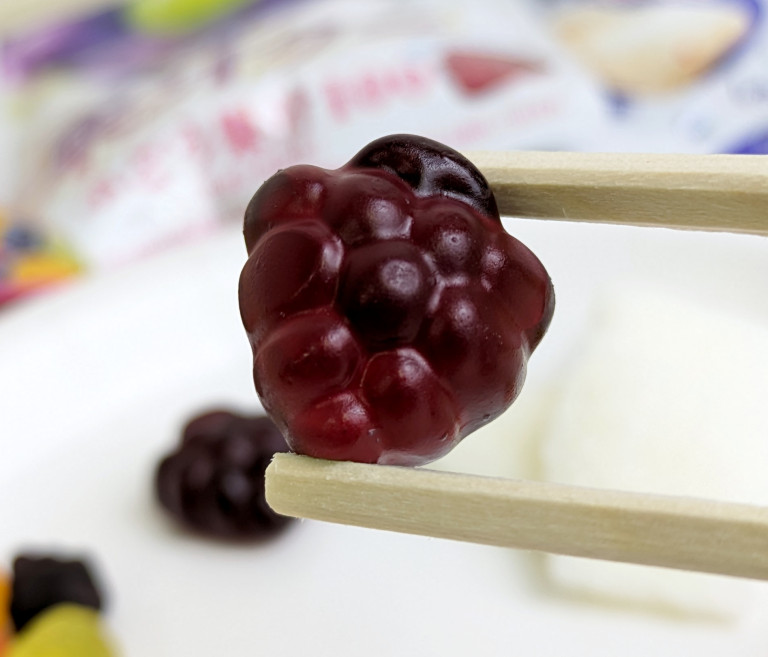
UHA Mikakuto Small Gummies were, as you might expect, the smallest of all the gummies Mr. Sato purchased. Nevertheless, they still had a very fruity, juicy flavor. Apparently, 100-percent juice is part of the recipe, so that checks out. They were nice and soft, so they were the perfect texture for casually snacking.
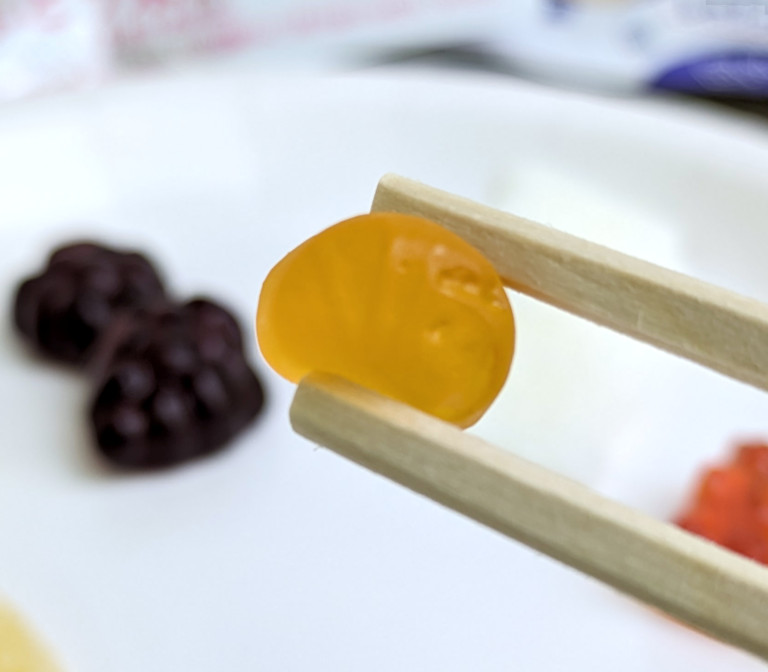
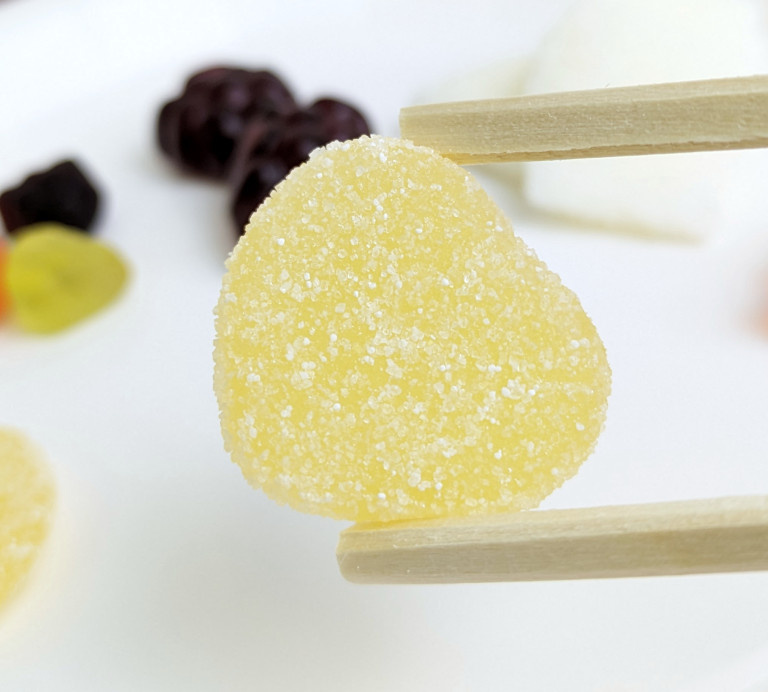
The last of this batch was Kanro’s lemon-flavored Puré Gummies, which are apparently pretty popular for their sweet and sour flavor. A different flavor of these were made in the shape of Pikachu in 2020, so you know they’ve gotta be a top brand of gummy. These are characterized by the sour powder they’re dusted in. The gummies are made with concentrated lemon juice and lemon paste, so they’re super sour. Mr. Sato thought this would be a great snack to turn to if you follow the Japanese tradition of eating sour foods when the summer heat’s got you down.
Here are the next five products:
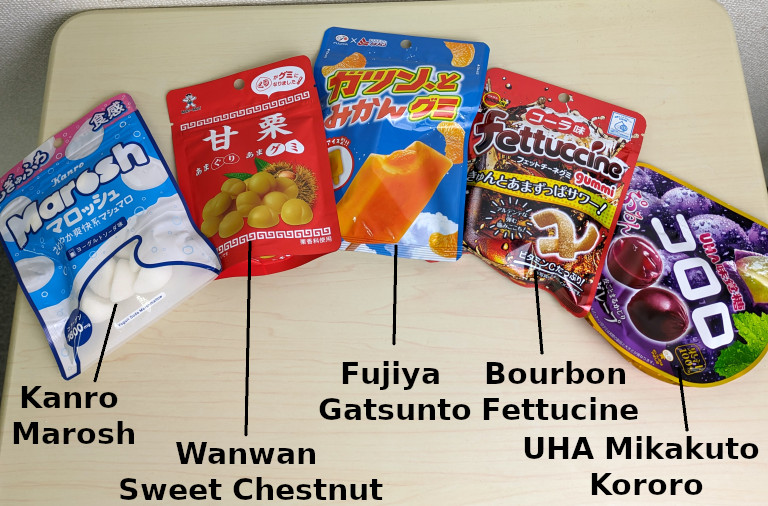
UHA Mikakuto Kororo Grape (138 yen)
Bourbon Fettucine Cola (105 yen)
Fujiya Gatsunto Tangerine Gummies (159 yen)
Wanwan Japan Sweet Chestnut Gummies (159 yen)
Kanro Marosh Marshmallows (Yogurt Soda flavored) (170 yen)
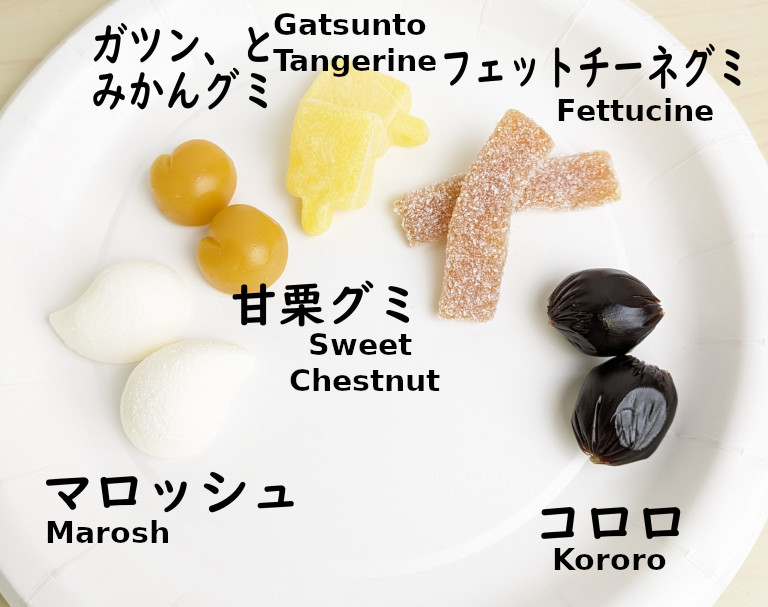
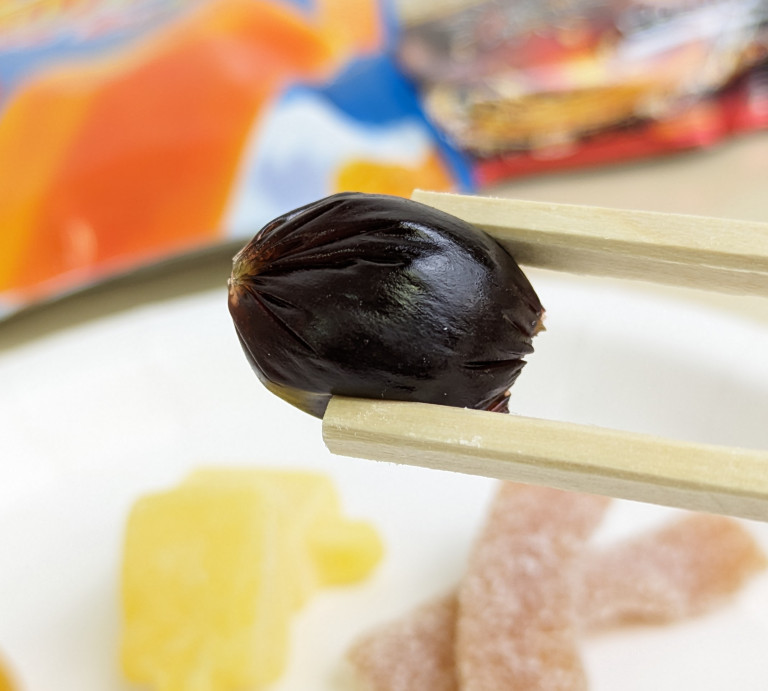
Mr. Sato started with the UHA Mikakuto Kororo Grape gummies. As soon as he opened the pack, he was practically punched in the face with the powerful scent of grapes. Each one came with something that’s supposed to be like a real grape skin! “What the heck?!” thought Mr. Sato as he bit into it. It was almost as good as eating a grape–at least just as juicy. He might not have even realized it was candy if he’d eaten it with his eyes closed.
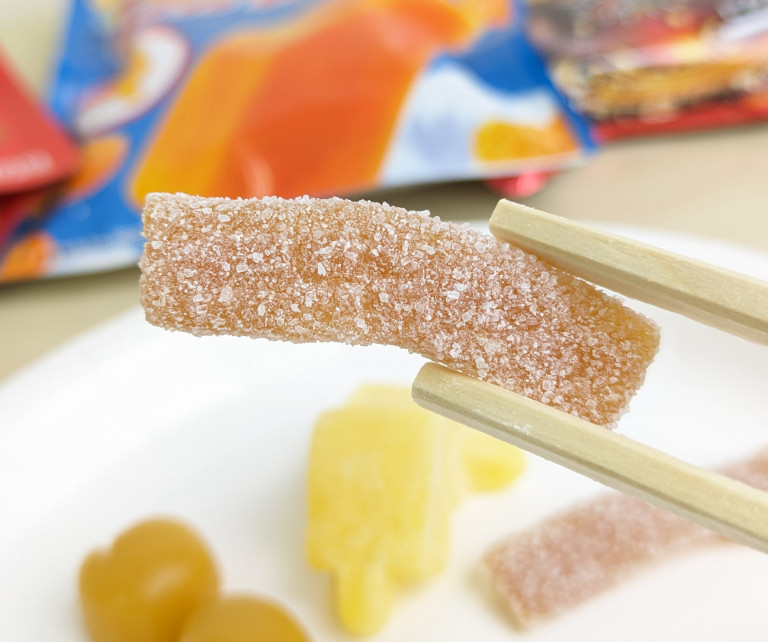
Bourbon’s Fettucine Gummies were the cheapest out of all the brands he purchased. Named after the flat and wide pasta of the same name, they had a pretty distinctive shape. The package advertised their texture as “al dente”, but Mr. Sato found them to be slightly too soft for that. With a nice combination of lemon, lime, ginger, and cinnamon flavors, it really did taste like cola, though.
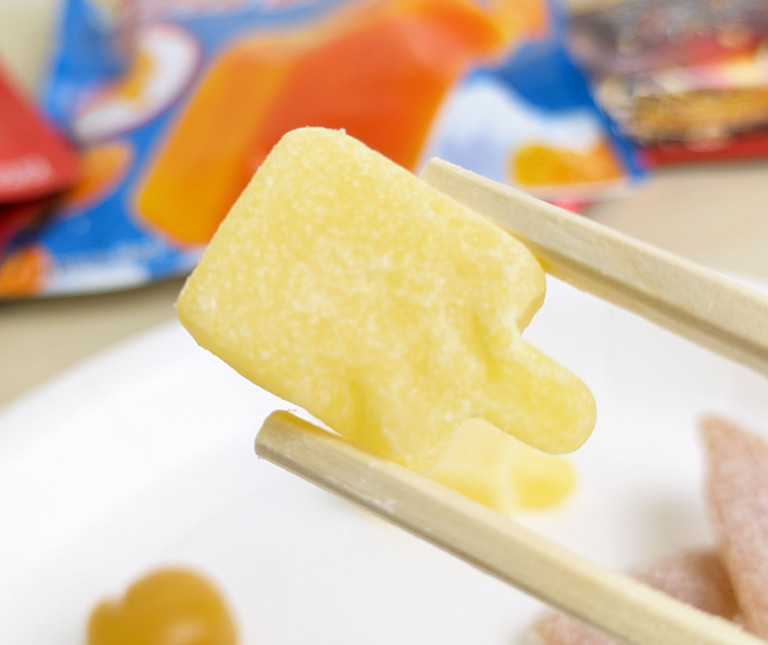
Mr. Sato also had no idea that Fujiya also made gummies, though it made sense since they specialize in sweets, cakes, and candies. The Gatsun to Tangerine Gummies both looked and tasted like the popsicle of the same name (made by Akagi), with a refreshing, citrusy aftertaste. When Mr. Sato picked one up with his chopsticks, it felt firm, but it was actually pretty soft once he tried it. It wasn’t the sticky kind and actually felt pretty dry.
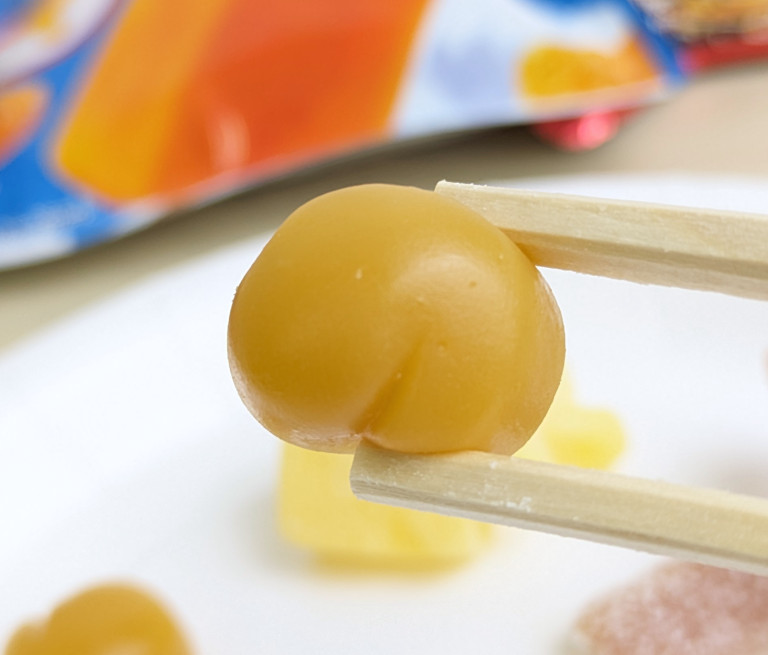
Based on the packaging Mr. Sato had thought the Wanwan Japan Sweet Chestnut Gummies were made in Japan, but upon doing research he learned that it’s actually a product imported from China. It was shaped like a chestnut and even gave off a very chestnutty aroma. It was a much firmer gummy, and in fact the texture was very similar to a real roasted chestnut. It was a really well-made product.
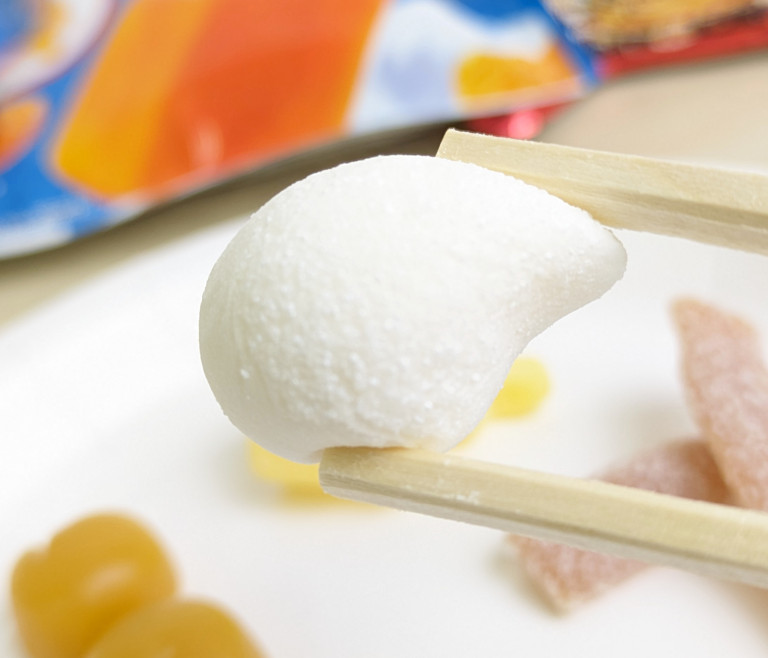
Since the Kanro Marosh Marshmallows Yogurt Soda gummies were firmly ensconced among the gummies on the shelf, Mr. Sato had genuinely thought these were gummies, but on a taste test, they’re definitely marshmallows. Even though they look like marshmallows, Mr. Sato had no idea they weren’t gummies until he ate one. It came as rather a shock.
The last two Mr. Sato tried were two hard-type gummies:
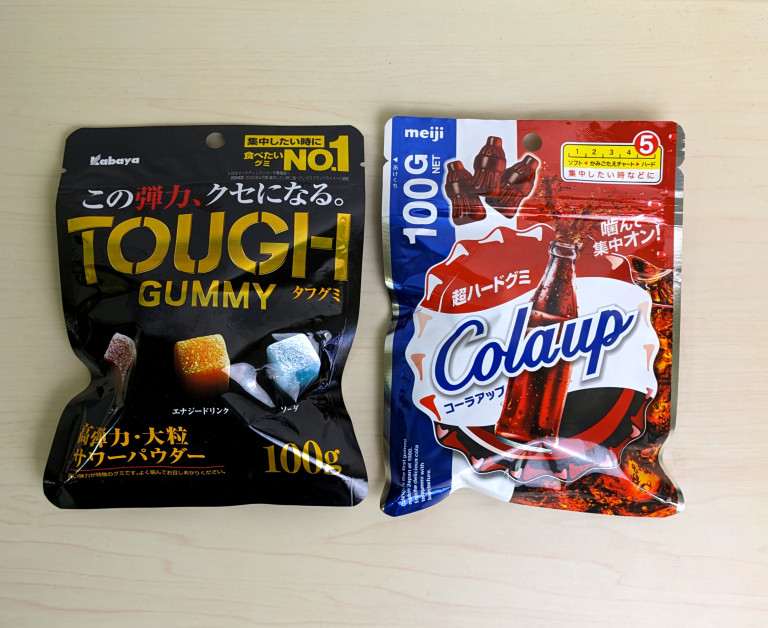
Meiji Colaup (231 yen)
Kabaya Tough Gummies (213 yen)
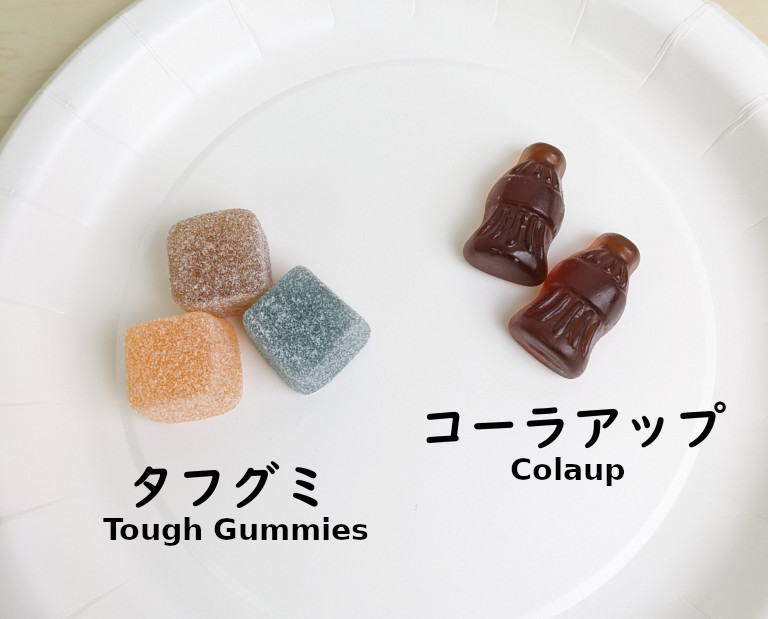
As mentioned before, Mr. Sato used to eat the original version of Colaup, but he’d never tried the new, harder version. It smelled just like it did back in the day; as soon as he opened the bag, memories of his childhood came flooding out along with the cola aroma. However, the flavor felt like it was different, but maybe that was owing to the new texture. Nevertheless, he couldn’t help but allot it the respect it deserves as one of Japan’s longest-selling gummy brands.
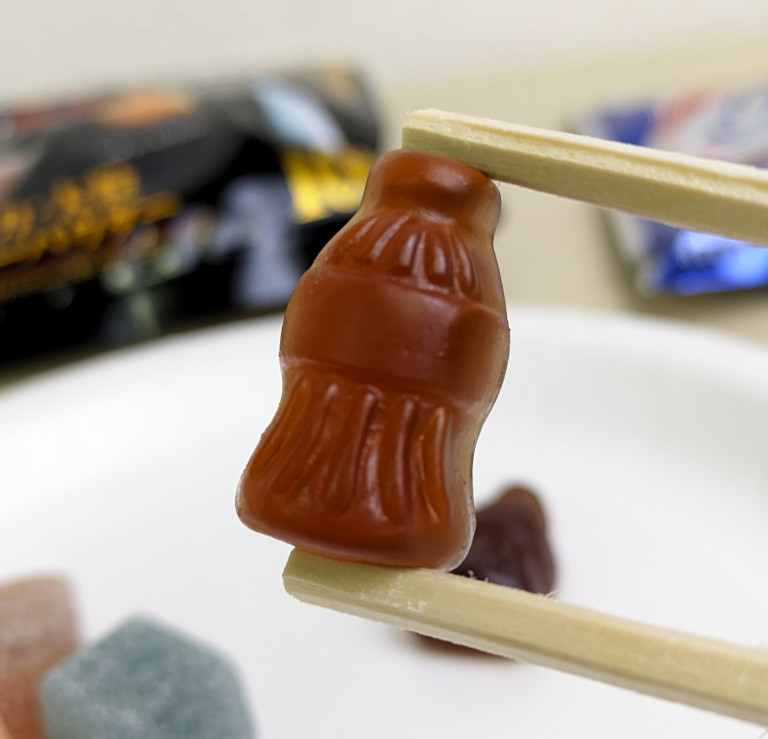
The one and only gummy product from Kabaya, a candy and sweets company, that Mr. Sato picked up, the Kabaya Tough Gummies certainly lived up to their “highly chewy” advertising. The texture was no joke! It’s a gummy for hardcore gummy eaters. There were three flavors in the bag: cola, energy drink, and soda, but Mr. Sato wished they sold bags of only cola flavor. He really liked the firm texture of these gummies.
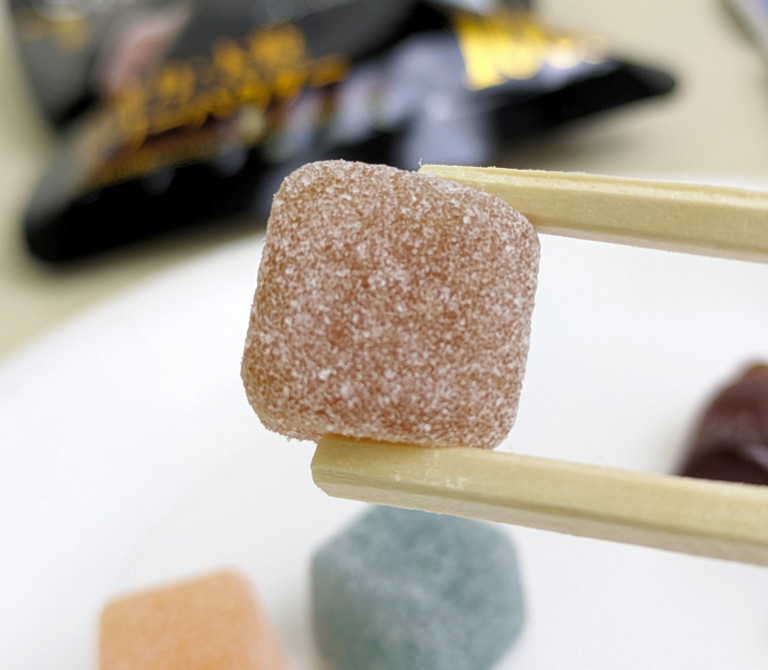
So after trying 12 different gummy brands available at a Japanese supermarket, which one would gummy layman Mr. Sato choose as his favorite? That would be…The UHA Mikakuto Kororo Grape gummies! He’d heard about their ridiculous juiciness before, but only in tasting it did he come to truly appreciate it. He’s heard of people putting them in white wine or yogurt, and now that he’s tried them, he can understand why.
Of course, these were just a small sampling of the vast and expansive gummy industry in Japan, so undoubtedly others will have strong opinions on which are the best. Plus, you can also make your own gummies, including some that even glow in the dark, so there are way more to choose from than we could ever dream!
Images © SoraNews24
● Want to hear about SoraNews24’s latest articles as soon as they’re published? Follow us on Facebook and Twitter!
[ Read in Japanese ]
 Mos Burger releases new gummi candies in Japan
 Kyoto’s most famous confectionary in a chewy form – we try Yatsuhashi gummy candy
 7-Eleven Japan’s most popular product with foreign tourists is…a unique chocolate gummy
 What is a Butter Manju? We try one from this mega popular Tokyo dessert shop
 We try buying a giant Costco Japan purin that’s not purin and not at Costco【Taste test】
 Mt. Fuji decorated with a 500,000-flower pink carpet is Japan’s ultimate spring view
 Lawson convenience store at popular tourist site is one of the most unusual in Japan
 30 Pikachus want to share a Tokyo hotel room with you that has separate Grass, Water, Fire spaces
 Pokémon store character meet-and-greet events to resume in May
 Burger King Japan’s Great King Yeti is the latest evolution of One Pounders
 And now, we eat a bear paw we bought in Japan’s Chiba Prefecture【Taste test】
 W.T.F. Japan: Top 5 most ridiculous kanji handwriting shortcuts【Weird Top Five】
 Drink vending machines disappearing in Japan as number drops to lowest in 30 years
 Hey, 2020s kids! The ’90s have a sticker picture message waiting for you in Tokyo
 Japanese politician arrested on charges of accepting bribes to reduce number of monkeys in park
 Japan reportedly adding Japanese language skill requirement to most common foreigner work visa
 Pokémon and Ikea Japan cross over into each other’s worlds with collaboration events
 Starbucks Japan closing only Shinkansen platform branch for popularity-triggered renovations
 You can assemble a well-balanced team of Pokémon, them eat them, thanks to Japanese cake chain
 Two food hacks take Japan’s convenience store fried chicken to amazing new sandwich heights
 7-Eleven Japan’s new baked-in-store sweet treat is only available in three parts of the country
 Man bites woman at cherry blossom park in Japan, dies shortly after
 Peanuts and Coke becomes a viral hit in Japan, but is it a trend worth joining?
 Japan now has a special desk for people who work at home with a pet cat[Photos]
 Famous Tokyo cherry blossom spot installs view-blocking screens to fight overcrowding[Video]
 Uniqlo announces new T-shirts for One Piece, Naruto and more for manga publisher’s 100th birthday
 Train station platform ramen store closes its doors on half a century of history in Tokyo
 Starbucks Japan releases new My Fruit³ Frappuccino at only 34 stores around the country
 Krispy Kreme releases Super Mario doughnuts in Japan for a limited time
 Japanese onsen egg maker from 100-yen store Daiso needs to be on your shopping list
 Studio Ghibli releases Catbus pullback keychain that runs like the anime character
 Survey asks foreign tourists what bothered them in Japan, more than half gave same answer
 Japan’s human washing machines will go on sale to general public, demos to be held in Tokyo
 Starbucks Japan releases new drinkware and goods for Valentine’s Day
 We deeply regret going into this tunnel on our walk in the mountains of Japan
 Starbucks Japan releases new sakura goods and drinkware for cherry blossom season 2026
 Studio Ghibli releases Kodama forest spirits from Princess Mononoke to light up your home
 Japan’s newest Shinkansen has no seats…or passengers [Video]
 Major Japanese hotel chain says reservations via overseas booking sites may not be valid
 Put sesame oil in your coffee? Japanese maker says it’s the best way to start your day【Taste test】
 No more using real katana for tourism activities, Japan’s National Police Agency says
 Nerunerunerune for Adults: Japanese candy tugs at our reporter’s nostalgia…and taste buds
 We found traditional pudding perfection in a brand new Tokyo cafe
 Choux pastry mania: Mr. Sato tries Beard Papa’s new Japanese-style cream puffs 【Taste Test】
 The most expensive fish sausage we could find in Tokyo divides our opinions, empties our wallet
 Nerunerunerune for Adults: Japanese candy tugs at our reporter’s nostalgia…and taste buds
 We try a delicious pancake burger from Eggs ‘n Things in Tokyo
 We tried takoyaki-flavored toothpaste with surprising results【Taste test】
 We go to a 7-Eleven in Aomori and find a surprising “one per family” item on the shelf
 Diet donuts? Japan’s most popular donut chain releases new low-fat line, and we try them all
 Mr. Sato tried an unbranded lunchbox meal courtesy of Muji, found it to be just plain delicious
 It looks like a block of wood, but that’s one of Japanese cooking’s most important ingredients
 Gunma’s yaki manju, unknown to most Japanese people, are the best manju we’ve ever had
 We tried Japan’s peach-flavored potato chips, and they do not disappoint in their peachiness
 Testing 23 different yakiniku dipping sauces from the Japanese supermarket to find the top three
 Japanese shiitake mushroom snacks from Don Quijote, created for people who don’t like mushrooms