
There are two main types of okonomiyaki, but people in Hiroshima don’t like one of the names the rest of the country has for theirs.
Okonomiyaki isn’t just one of Japan’s most delicious foods, it’s also one of its most linguistically complex. The –yaki suffix can be used for all sorts of different types of cooking, but in this case it’s referring to flat-grilling. And the okonomi part? That translates to “what you like,” and it’s there because while okonomiyaki is a sort of round, savory crepe, aside from cabbage the fillings are pretty much whatever you want to put in there. All sorts of meat, seafood, and vegetables, as well as things like mochi, mentaiko (spicy cod roe), and cheese, are all fair game if they’re what you like.
But the other linguistic quirk about okonomiyaki is that different parts of Japan make it in different ways, and different parts of the country call those styles different things. Basically, the two centers of okonomiyaki power are Hiroshima and Osaka, with the latter also representing Japan’s central Kansai region as a whole.
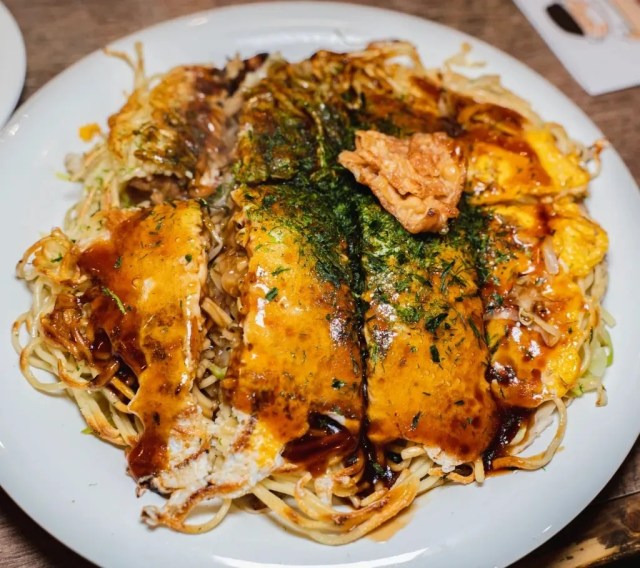
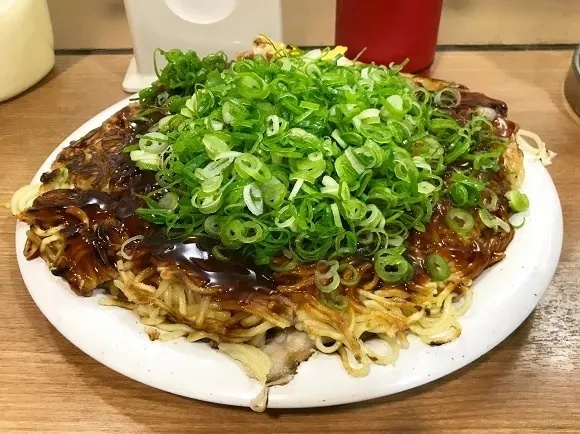
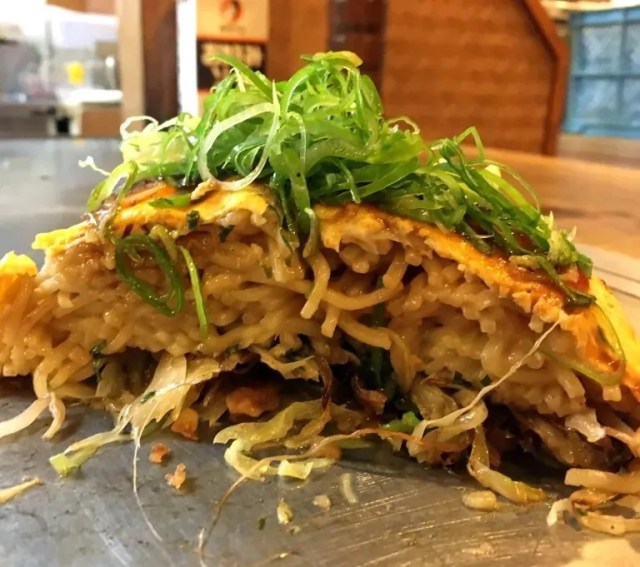
In Hiroshima, okonomiyaki is cooked in layers. You have the crepe on the bottom, shredded cabbage and bean sprouts on top of that, then the fillings, and as a topping a fried egg. Yakisoba noodles are also a common okonomiyaki ingredient in Hiroshima, but it’s the layered structure, not the noodles, that’s the defining point.
▼ Hiroshima okonomiyaki
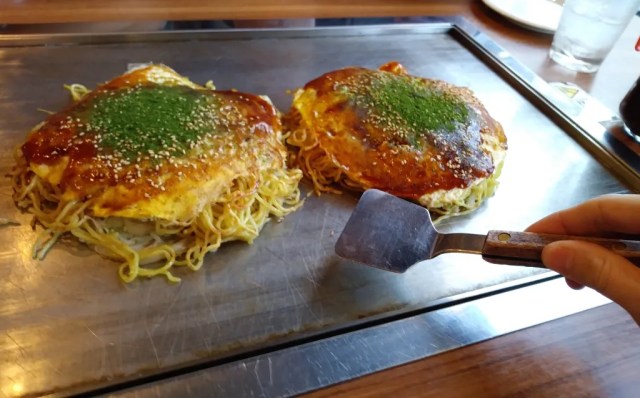
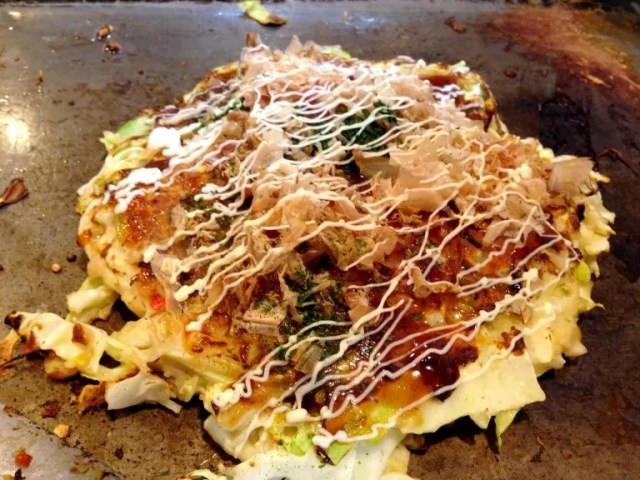
Meanwhile, over in Osaka/Kansai, the first step in making okonomiyaki is to put all of the ingredients, including the crepe batter, into a bowl and mix them together. It’s also common to add in grated yamaimo, a type of yam, to help the different ingredients stick together. Then you pour the bowl’s contents onto a flat grill, hot plate, or frying pan and cook them all together at once.
▼ Osaka okonomiyaki
While the contents are often largely the same, the different cooking styles make for very different textures, and their different ingredient ratios (okonomiyaki in Hiroshima tends to use a greater quantity of vegetables) make for two distinct flavors too. While you’re not likely to find too many people who love one and hate the other, okonomiyaki makes for a rather different eating experience depending on which type you’re eating, and this is where we get back to the linguistics.
Osaka is Japan’s third most populous city, and when you factor in the other major metropolitan centers in Kansai, such as Kobe and Kyoto, there are a lot more people living in the Osaka okonomiyaki sphere than the Hiroshima one. Osaka-style okonomiyaki is also easier to make at home, since, as mentioned above, you can cook it in a frying pan. Since the Hiroshima version calls for cooking the layers separately, but at the same time, it usually requires a larger counter-sized teppan flat grill, which is fine if you’re running a restaurant, but too big for most home kitchens. Because of that, the Osaka-style okonomiyaki is also the more prevalent version in Tokyo, east Japan, and northern Japan, even if okonomiyaki restaurants aren’t as common in those regions as they are in Hiroshima or Kansai.
So when they hear the word “okonomiyaki,” many people in central, eastern, and northern Japan will first think of the Kansai style. That means that they often feel like they need to use a different word to specify the kind of okonomiyaki made in Hiroshima and west Japan, and one of the words that came into use is “Hiroshimayaki.” To the people who use it, it probably seems like an easy solution. It’s the style of (okonomi)yaki made in Hiroshima, right?
Here’s the thing, though: People in Hiroshima don’t like the word “Hiroshimayaki.”
Our Japanese-language reporter P.K. Sanjun became aware of this through a series of awkward interactions with friends he’s made who grew up in the Hiroshima area. Every time he’s slipped up and said “Hiroshimayaki” when talking with them, they make it a point to correct him. It’s happened enough that P.K. decided to ask them, directly, if they get upset or irritated when people say “Hiroshimayaki,” and here’s what they had to say.
“It’s not irritating, but it’s confusing.”
“I wouldn’t say it irritates me. But it’s a clear sign that the person who’s talking isn’t from Hiroshima.”
“Yep, ticks me off. It’s called okonomiyaki.”
“Irritating. How irritating? So much that I wanna pour a bottle of Otafuku sauce [Hiroshima’s favorite brand of okonomiyaki sauce] on whoever said it. And it’s even more irritating if someone from Osaka says it.”
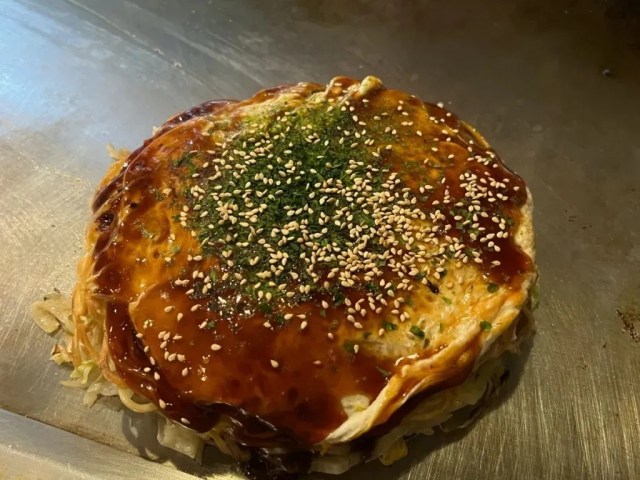
P.K.’s friend’s comment about “Hiroshimayaki” being an immediate giveaway that the person isn’t from Hiroshima is spot-on, by the way. Personally, I’m a borderline fanatical supporter of the Hiroshima version of okonomiyaki, and pretty much every time I’ve ordered it in a restaurant that calls it “Hiroshimayaki,” it’s been really poorly made.
Still, for someone like P.K., whose first mental image of okonomiyaki is the Kansai version, it feels unintuitive to say just “okonomiyaki” when he means the Hiroshima version. So next he asked the same four people how they feel about the term “Hiroshima-fu okonomiyaki” (fu being a suffix that means “style,” though an unskilled translator might mistake it for something else). This time, their answers were:
“I can allow it. It distinguishes it from Kansai-fu okonomiyaki, so it avoids any confusion.”
“Sure, it’s fine. I call the other kind Kansai-fu okonomiyaki, so it’s fair.”
“Dude, we already went over this. It’s called ‘okonomiyaki.’”
“I’m OK with it, as long as they don’t shorten it down to just ‘Hiroshima-fu.’ It still feels like a deviation from the normal usage, but as long as they keep ‘okonomiyaki’ in there, it’s fine.”
The point about “Hiroshima-fu okonomiyaki” being fair because people in Hiroshima say “Kansai-fu okonomiyaki” or “Osaka-fu okonomiyaki” brings up an interesting point. While people outside Hiroshima sometimes call Hiroshima-style okonomiyaki “Hiroshimayaki,” no one, including people in Hiroshima, call Kansai/Osaka-style okonomiyaki “Kansaiyaki” or “Osakayaki.” It’s possible that part of the reason some people in Hiroshima bristle at the word “Hiroshimayaki” is because it sounds like it’s reducing all of Hiroshima’s food culture down to just one dish, or that it carries a subtle but condescending connotation that the thing they make in Hiroshima isn’t actually okonomiyaki.
And much like how the separate strata are the defining feature of Hiroshima-style okonomiyaki, there’s another layer at play too for some people, as one of P.K.’s friends added a bit of historical context. Hiroshima-style okonomiyaki became the city’s representative dish following the end of World War II. Having been hit by an atomic bomb in the closing days of the war, the city was devastated, and while okonomiyaki might translate to “grill what you like,” in those early years of reconstruction the reality of the dish was closer to “grill what you’ve got.” At first, that meant whatever meager amounts of shredded cabbage and bean sprouts the people of Hiroshima could scrape together, but as time went on and things got better both agriculturally and economically, gradually more and more fortifying, hearty ingredients could be added to Hiroshima-style okonomiyaki.
“Okonomiyaki, in some ways, is a symbol of Hiroshima’s recovery,” one of P.K. friends told him. “It got better and better as the years went on, just like the city itself did. For that reason a lot of people in the Hiroshima area take pride in their okonomiyaki. We grew up hearing it called ‘okonomiyaki,’ so we don’t want other people to take that out of the name they call it by.”
So to conclude, you’re probably not going to cause outright offense to people from Hiroshima if you say the word “Hiroshimayaki,” and it’s probably not going to require you to make a public apology (unless you’re a prominent politician anyway). People from Hiroshima definitely will notice your choice of words, though, and they’re not going to be particularly happy about it, so if you want to make a linguistic tip of your hat to the local food culture, at least remembering the term “Hiroshima-fu okonomiyaki” is the nice thing to do.
And hey, it’s still less complicated than the Japanese dessert that has six different names.
Photos ©SoraNews24
● Want to hear about SoraNews24’s latest articles as soon as they’re published? Follow us on Facebook and Twitter!
[ Read in Japanese ]
 Japanese politician apologizes to prime minister for calling wife’s cooking “Hiroshima-yaki”
 Hey, Japanese taxi driver! Take us to a good non-Hiroshima-y restaurant in Hiroshima
 Japan’s longest-running okonomiyaki joint and the birthplace of Hiroshima style — We visit both
 Pizza Hut campaigns to become an Osakan konamon food
 Okonomiyaki you can eat with one hand? We try a revolutionary new frozen food【Taste test】
 Foreign man arrested for walking on Shinkansen tracks, claims he was on the run from yakuza
 Mt. Fuji decorated with a 500,000-flower pink carpet is Japan’s ultimate spring view
 New Travelling Bento pouches turn your luggage into a Japanese lunch box
 Schoolkids learn life skills through shopping field trips at street markets in Kochi Prefecture
 McDonald’s and Gundam team up for customized anime mecha and fried chicken sandwiches[Video]
 Which Gundam is the favorite for fans in different countries? Gundam election announces results
 Studio Ghibli unveils Mother’s Day gift set that captures the love in My Neighbour Totoro
 Disney young adult novels get new beautiful shojo anime-style covers for Japan
 All Japanese customers banned from restaurant…in Japan?!?
 The young girl starring in this cool retro-style McDonald’s Japan video is actually 62 years old!
 Japan reportedly adding Japanese language skill requirement to most common foreigner work visa
 Pokémon and Ikea Japan cross over into each other’s worlds with collaboration events
 Starbucks Japan closing only Shinkansen platform branch for popularity-triggered renovations
 Two food hacks take Japan’s convenience store fried chicken to amazing new sandwich heights
 You can assemble a well-balanced team of Pokémon, them eat them, thanks to Japanese cake chain
 Tokyo turns its phone booths into free Wi-Fi hotspots, and here’s how to use them
 Fading Tokyo – Searching for signs of the Showa era as local neighborhoods evolve[Photos]
 Tokyo teahouse serves up a sakura matcha dessert you won’t find anywhere else
 7-Eleven Japan’s new baked-in-store sweet treat is only available in three parts of the country
 Man bites woman at cherry blossom park in Japan, dies shortly after
 Japan now has a special desk for people who work at home with a pet cat[Photos]
 Famous Tokyo cherry blossom spot installs view-blocking screens to fight overcrowding[Video]
 Uniqlo announces new T-shirts for One Piece, Naruto and more for manga publisher’s 100th birthday
 Train station platform ramen store closes its doors on half a century of history in Tokyo
 Starbucks Japan releases new My Fruit³ Frappuccino at only 34 stores around the country
 Studio Ghibli releases Catbus pullback keychain that runs like the anime character
 Krispy Kreme releases Super Mario doughnuts in Japan for a limited time
 Japanese onsen egg maker from 100-yen store Daiso needs to be on your shopping list
 Survey asks foreign tourists what bothered them in Japan, more than half gave same answer
 Japan’s human washing machines will go on sale to general public, demos to be held in Tokyo
 Starbucks Japan releases new drinkware and goods for Valentine’s Day
 We deeply regret going into this tunnel on our walk in the mountains of Japan
 Starbucks Japan releases new sakura goods and drinkware for cherry blossom season 2026
 Studio Ghibli releases Kodama forest spirits from Princess Mononoke to light up your home
 Japan’s newest Shinkansen has no seats…or passengers [Video]
 Major Japanese hotel chain says reservations via overseas booking sites may not be valid
 Put sesame oil in your coffee? Japanese maker says it’s the best way to start your day【Taste test】
 No more using real katana for tourism activities, Japan’s National Police Agency says
 Microwavable okonomiyaki that you can eat with one hand? Yes, please!
 Hokkaido, Osaka, and Fukuoka: Taste-testing McDonald’s oddly named Adult Regional Teriyaki burgers
 McDonald’s Japan adds the flavour of okonomiyaki to its menu for a limited time
 Four words that mean something very different in east Japan and Kyoto
 Is roughly half of Japan preconditioned to hate mint chocolate sweets?
 The best Osaka souvenir is Okonomiyaki Senbei, and here’s why
 Iketara iku: A simple Japanese phrase that people in Tokyo and Osaka take completely differently
 “Flat Takoyaki” at Nanpuu reimagines Japanese street food
 How to respond to Japanese people saying “I don’t speak English” when you’re speaking Japanese?
 Why do seats at some Japanese station platforms face away from the trains?
 Be Mr. Sato’s online friend, and he might take you to dinner, like he did with these foreign fans
 Why hayashi rice should be your last meal before leaving Japan
 “Sipping meat,” the semi-secret Osaka food that sounds like a joke, is seriously tasty
 This type of conveyor belt sushi tastes different in Tokyo than it does in Osaka, but why?
 Viral Japanese cheesecake from Osaka has a lesser known rival called Aunt Wanda