The Oricon Style website reported on changes that the Doraemon television anime is undergoing before its American television premiere this July. The Disney XD channel will run 26 episodes of the quintessential Japanese anime about a robot cat. The anime has been adapted for American culture and customs, as well its strict guidelines on violence, depictions of discrimination, and depictions of sexual content.
2014 marks the 1,200th year since Buddhist monk Kukai made his holy journey to 88 temples on the southern Japanese island of Shikoku. The Shikoku Pilgrimage now attracts people from all over Japan as well as the world to visit the same temples along the 1,200 km-route.
Now, a new TV series, Ohenro, is out to appeal to a new generation of religious travelers and features three female pilgrims stylized in the ever popular moe fashion of super-cute anime characters.
But Japanese netizens, eager to soak up all things moe, are wondering if they will have to make their own “holy trip” since only four broadcasters are airing the show!
Anyone who’s watched more than a smidgen of Japanese TV will tell you that the line between “appropriately heartwarming” and “so cheesy you want to tear your eyeballs out” is drawn in a different place in this country. It can seem like every exchange in a Japanese drama is overly emotionally charged. Why are the actor’s reactions so exaggerated? Does it really have to rain every time someone is sad? And why is there someone running through the streets frantically in every single episode? I have grown to love J-drama’s clichés and warm heart, but still occasionally regard Japanese acting as perplexingly over-done.
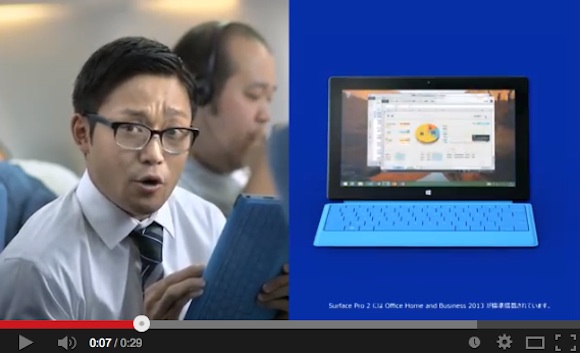
It’s heartening to discover, then, that a series of spectacularly cringe-inducing ads for Microsoft’s Surface tablets have been widely panned in Japan, as the nation screams, “Stop! You’re hurting my ears!” in one voice. Let’s take a look at this awkward new advertisement in all its glory.
Adult Swim, the American television network paired with Cartoon Network, announced on Saturday that it will runAttack on Titan in its Toonami programming block. The anime series will premiere on the network on Saturday, May 3 at 11:30 pm ET.
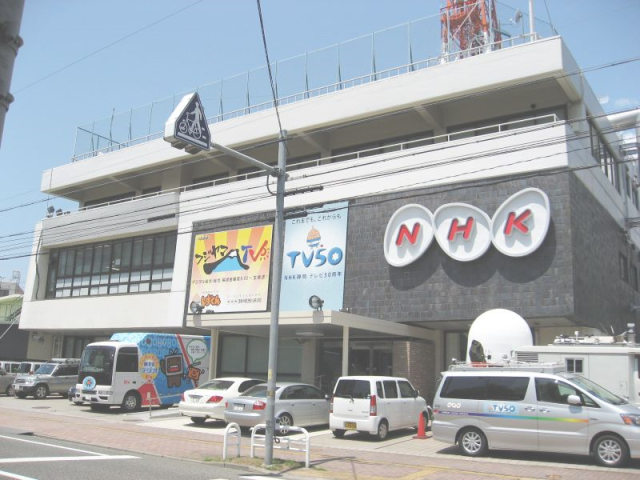
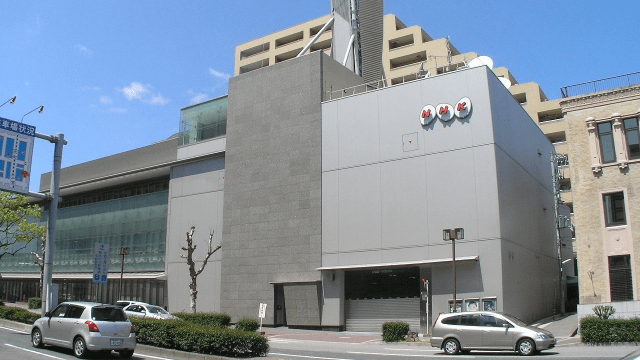
We’ve talked before about the oddities of how Japan’s public broadcaster, NHK, goes about collecting its fees from ordinary citizens. Rather than sending you an official bill in the mail, collectors will come to your door and ask you for a stack of cash to cover the 13,600 yen (US$133) Japanese residents are technically supposed to pay.
However, many people refuse to pony up the money, since there’s no official penalty for nonpayment, and many feel that NHK’s programming is sub-par and rarely watch it. However, should you make one particular NHK collector walk away empty-handed, he just might mark your house for all to see, as he apparently did to one person we talked to.
As we’ve seen before, Hollywood stars who ordinarily wouldn’t be seen dead in a commercial in their homeland for fear of damaging their reputation as a serious actor aren’t quite so shy when it comes to commercials in Japan. With Japanese companies eager to push stacks of cash stars’ way in exchange for endorsing their products, occasionally a big-name actor will pop up on billboards over the famous Shibuya scramble intersection and on primetime TV.
This week, smirking silver foxGeorge Clooney follows in Leonardo DiCaprio‘s footsteps by lending his face to a Japanese commercial, in this case one for Kirin Brewery Company’s Green Label brand of beer. Clooney is no stranger to ads even at home, but Kirin’s commercial – which sees the actor painting a house and communicating with a small bird – is kind of an odd one, partly because it doesn’t have an awful lot to do with beer, and partly because, to our ears at least, Clooney appears to bechanneling Christian Bale’s Batman for his single word of Japanese dialogue.
Well, that’s a much-loved part of my childhood ruined forever…
I have fond memories of rushing home as quickly possible every Monday afternoon circa 1986, pulling my mother along behind me after she had kindly come to meet me from school, and constantly asking her what time it was, fretting that I might miss even a snippet of the opening credits of kids’ TV show Thomas and Friends.
Had I known that there was just some creepy nude guy inside that little blue tank engine, though, I might have instead dragged my feet as much as possible so as not to give my four-year-old self, already with a highly active imagination and a fear of anything that wasn’t my cat or jam sandwiches, any additional nightmare fuel.
The only thing we love more than videos about our favourite forms of entertainment are crossover videos that bring them together in one place. Doing precisely that, a talented British animator has just made our Monday that bit more bearable by posting a video titled “Ryu VS Jesse” to YouTube, which combines the worlds of much-loved video game Street Fighter and smash TV show Breaking Bad. And the result is simply awesome.
It’s hard to think of an anime franchise that’s had a bigger impact thanMacross. Aside from being a huge hit in its native Japan, the military sci-fi saga has provided no fewer than three gigantic boosts to anime’s international popularity. The original Macross, repackaged internationally as Robotech in 1985, provided many English speakers with their first taste of Japanese animation, a feat repeated by its 1994 direct-to-video follow-up, Macross Plus. Macross’ first theatrical feature, 1984’s Do You Remember Love?, is even largely credited with kick-starting the practice of fan-produced anime translations.
Now, the franchise is poised to bring in yet another crop of new fans, with the announcement that a new Macross TV series is on its way.
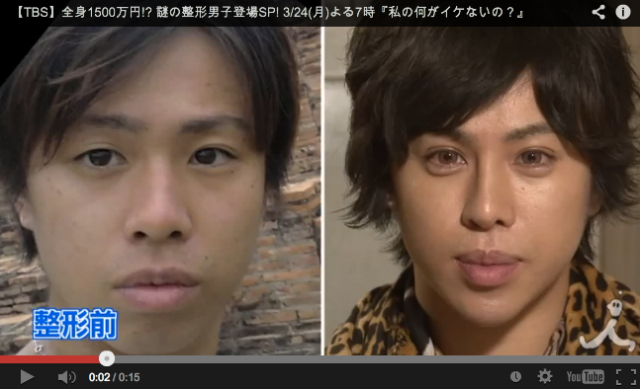
Imagine dropping vast sums of cash on plastic surgery in an effort to make yourself appear more attractive, only to be told by a host of female celebs on national television that they wouldn’t touch you with a barge pole.
In classic Japanese variety show fashion, that’s precisely what TBS’s Watashi no Nani ga Ikenai no!? has in store for viewers next week, according to a recently released teaser trailer.
With its crude animation and humour, South Park shocked audiences when it first aired back in 1997, with viewers unsure of its place in the schedules and target audience. Since then, Matt Stone and Trey Parker’s animated comedy has grown to become arguably one of the most entertaining, risqué and cutting-edge shows on TV today, with episodes pumped out at breakneck speeds so as to ensure that their content is always as topical as it is amusing.
With endless spoofs, homages and no-holds-barred social commentary, South Park has entertained audiences in dozens of countries for almost 17 years now, but there’s one theme in particular that just keeps cropping up season after season: Japan.
So come with us today as we take a look at seven of South Park’s most memorable and outrageous “Japan” moments. Trust us when we say that this isn’t one for the easily offended.
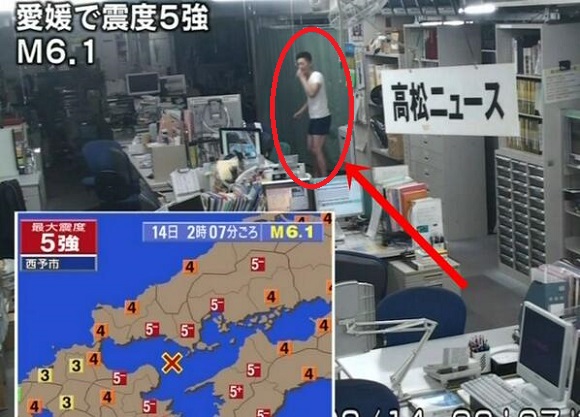
As you already know, the third anniversary of the 3/11 Tohoku disaster was remembered this week through a variety of activities, including a fundraiser by Yahoo! Japan which saw the company donating roughly $250,000 to charity. The anniversary was also marked by a powerful earthquake off the coast of Kyushu at around 2 am on March 12, injuring about 14 people and wrecking havoc on innocent anime figures.
It also brought grins to all of the NHK viewers and Twitter users who happened to catch the public broadcaster’s footage of a confused-looking man running around an office in his underwear!
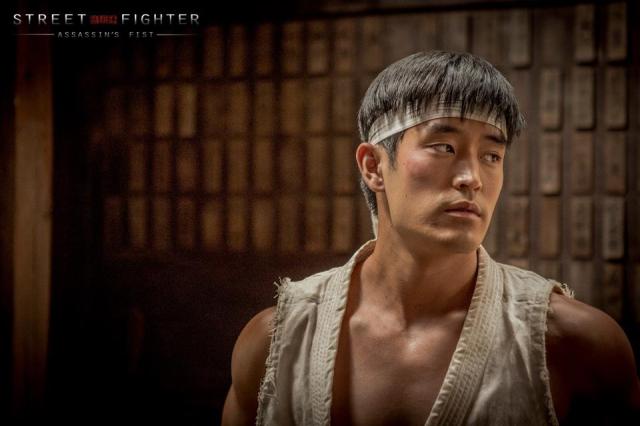
Based on Capcom’s hugely popular Street Fighter fighting games, upcoming TV series Street Fighter: Assassin’s Fist began life back in 2010 as a mere seed of an idea. Three years later, fans of the video games went nuts when the project surfaced on Kickstarter asking for funding, only for it to suddenly disappear again when it was snapped up by a private production company.
Since then there has been so little news about Assassin’s Fist that we were starting to wonder if it would ever see the light of day, but recently released photos and one website’s extremely positive first impressions have our hands tingling with hadouken power more than ever.
Chinese dating company Baihe.com has taken the unusual step of producing an ad that attempts to guilt-trip young women into marriage. In it, an elderly woman who is steadily inching closer to death pesters her granddaughter to find a man and tie the knot, constantly asking, “Are you married yet?”
Eventually – and we swear we’re not making this up – the troubled young woman resolves that she should stop “being picky” and decides to marry right away.
It’s a tough time for anime studios. The boom days of direct-to-video productions, when consumers would happily plunk down 5,000 yen (US$48) or more for 30-minutes of animation, sight-unseen, are long gone. At the same time, TV ad revenue is hard to come by, and in some cases, non-existent for anime programs. So in order to produce a hit these days, you’ve got to put your product on television first, and then find a way to leverage its broadcast popularity into subsequent DVD and Blu-ray sales.
The real tricky part is striking a balance between showing enough for free to keep people watching and interested, yet offering the prospect of something they can’t see on TV in order to drive home-video purchases later. An easy choice for this is sexual content, and the closer a show treads to the censorship line, the more wondrous the delights awaiting viewers in the unrated DVDs are assumed to be.
Recently, one anime may have aimed a little too high in appealing to the lowest common denominator, and is now the subject of a broadcast decency investigation.
There’s a common phenomenon where people born and raised in Japan appear younger than their actual age to people who grew up in the West. On a trip to Los Angeles, for example, my wife and I wanted to shoot pool at a local bar, but were turned away at the entrance. She had forgotten to take her passport with her when we went out, and the doorman wouldn’t let us in without proof she wasn’t a minor, despite the fact that we were both in our 30s at the time.
The effect is amplified when the person in question looks young even by domestic Japanese perceptions, such as with actress and TV personality Maiko Ito, whose age we’d never have guessed by looking at her.
There are certain things almost everyone who moves to Japan seems to like. The food? Tasty and healthy. Public transportation? Clean and punctual. But Japanese TV? Let’s just say there’s a reason Internet access is one of the first things new arrivals in the country look to outfit their apartments with.
It turns out this lukewarm reaction to the country’s programming isn’t just a foreigner thing, either, as some 75 percent of Japanese citizens polled by the Asashi Shimbun newspaper also said that TV has become boring. Today we look at why.
As if today being a Monday wasn’t depressing enough, media outlets are reporting that the air quality and visibility in China’s capital city has become so bad that the state has begun televising live footage of sunrises on enormous screens ordinarily used for advertising. That’s right: with the real thing now almost completely hidden behind a thick layer of smog, people are actually watching nature on TV.
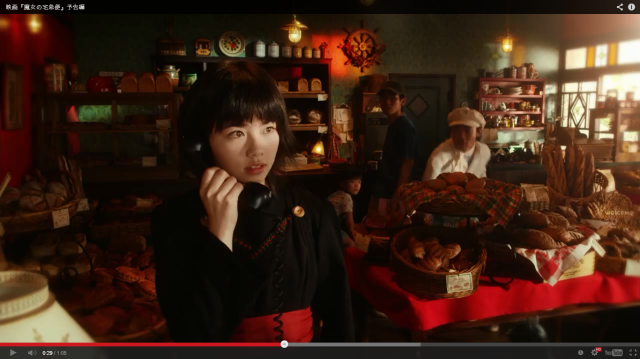
Last month, we saw a brief teaser trailer for the upcoming live-action theatrical version ofKiki’s Delivery Service. Happy as we are for another chance to see our favorite magical parcel carrier on the big screen, our first look at the film’s flying effects didn’t do much to excite us, especially when compared against the lovingly crafted visuals of the story’s 1989 animated adaptation by Studio Ghibli.
Now, the producers of the live-action Kiki are back with a full-lengthtrailer. Being the open-minded cinemaphiles/Kiki fanboys that we are, we decided to give the plucky witch one more chance to impress us, while also getting an earful of the film’s new theme song.
Paying taxes works a little differently in Japan. Often, large companies will simply deduct the required income tax from employees’ paychecks, and even file the necessary paperwork for them. On the other hand, workers have their earnings taxed twice, with residency taxes which are based on their income from the previous year and must be paid quarterly. Like most things in Japan, resident taxes can be paid with a fat wad of cash at the convenience store.
But perhaps the weirdest of all are government fees for public television in Japan. Not only do the bill collectors go door to door soliciting payment, but some administrators are looking to make people pay the fees whether they own a TV or not.










![Air quality in Beijing now so poor that sunrises are being broadcast on giant TV screens [UPDATED]](https://soranews24.com/wp-content/uploads/sites/3/2014/01/screen-shot-2014-01-20-at-12-07-28-pm.png?w=640 "Air quality in Beijing now so poor that sunrises are being broadcast on giant TV screens [UPDATED]")
 Silicone testicle covers banned from Japanese sauna following cups being left behind and on shelves
 Mister Donut unveils new sakura doughnuts for cherry blossom season 2026
 Starbucks Japan unveils new sakura cherry blossom collection for hanami season 2026
 Which of Japan’s main coffee shop chains is best for a caffeine-free life?
 Studio Ghibli now sells Ursula’s backpack from Kiki’s Delivery Service at its anime shop in Japan
 Japan’s cherry blossom season predicted to start earlier than we’d thought, especially in Tokyo
 You can buy, and eat, a grilled sparrow on the streets of Kyoto, so we did【Taste test】
 Free drinks, curry, fried rice, saunas, and more at Tokyo Shinbashi capsule hotel
 Are you Team Taiyaki or Team Takoyaki? – Weighty Food Debate, Street Food Snack Edition
 Typhoon destroys real Ghost of Tsushima island shrine torii gate, crowdfunding campaign launched
 Is Tokyo Station’s startlingly expensive wagyu bento boxed lunch worth its high price?[Taste test]
 One Piece creator has hidden secret of anime treasure’s identity in chest at bottom of real-world ocean
 Starbucks Japan releases first-ever Hinamatsuri Girls’ Day Frappuccino
 Japanese restaurant chain serves Dragon Ball donuts and Senzu Beans this spring
 Live-action One Piece’s Luffy teaches Sesame Street’s Elmo a Japanese word for friendship[Video]
 Sakura Festival in Chiyoda mixes illuminations, boats, music, and Rilakkuma in the heart of Tokyo
 Japan’s craziest burger chain takes menchi katsu to new extreme levels
 Viral Japanese cheesecake from Osaka has a lesser known rival called Aunt Wanda
 Japan’s newest Shinkansen has no seats…or passengers [Video]
 Starbucks Japan releases new sakura goods and drinkware for cherry blossom season 2026
 Foreigners accounting for over 80 percent of off-course skiers needing rescue in Japan’s Hokkaido
 Super-salty pizza sends six kids to the hospital in Japan, linguistics blamed
 Starbucks Japan unveils new sakura Frappuccino for cherry blossom season 2026
 Foreign tourists in Japan will get free Shinkansen tickets to promote regional tourism
 The 10 most annoying things foreign tourists do on Japanese trains, according to locals
 Take a trip to Japan’s Dododo Land, the most irritating place on Earth
 Naruto and Converse team up for new line of shinobi sneakers[Photos]
 Survey asks foreign tourists what bothered them in Japan, more than half gave same answer
 Japan’s human washing machines will go on sale to general public, demos to be held in Tokyo
 Starbucks Japan releases new drinkware and goods for Valentine’s Day
 We deeply regret going into this tunnel on our walk in the mountains of Japan
 Studio Ghibli releases Kodama forest spirits from Princess Mononoke to light up your home
 Major Japanese hotel chain says reservations via overseas booking sites may not be valid
 Put sesame oil in your coffee? Japanese maker says it’s the best way to start your day【Taste test】
 No more using real katana for tourism activities, Japan’s National Police Agency says
 Japan’s cherry blossom season predicted to start earlier than we’d thought, especially in Tokyo
 You can buy, and eat, a grilled sparrow on the streets of Kyoto, so we did【Taste test】
 Free drinks, curry, fried rice, saunas, and more at Tokyo Shinbashi capsule hotel
 Are you Team Taiyaki or Team Takoyaki? – Weighty Food Debate, Street Food Snack Edition
 Typhoon destroys real Ghost of Tsushima island shrine torii gate, crowdfunding campaign launched
 7-Eleven Japan gets into the sort-of-freshly baked pizza home delivery business【Video】
 Japanese bikini model bursts fan’s nude hot spring video fantasy bubble
 New Kura Sushi revolving sushi bar in Ginza is the chain’s most beautiful restaurant in Tokyo
 One Piece creator has hidden secret of anime treasure’s identity in chest at bottom of real-world ocean
 Tokyo street sweets: The must-snack treats of Nakano’s Refutei
 Studio Ghibli releases Kiki’s Delivery Service bag modelled on the one from the film
 Starbucks Japan reveals new sakura drinkware collection, inspired by evening cherry blossoms
 Starbucks Japan releases first-ever Hinamatsuri Girls’ Day Frappuccino