
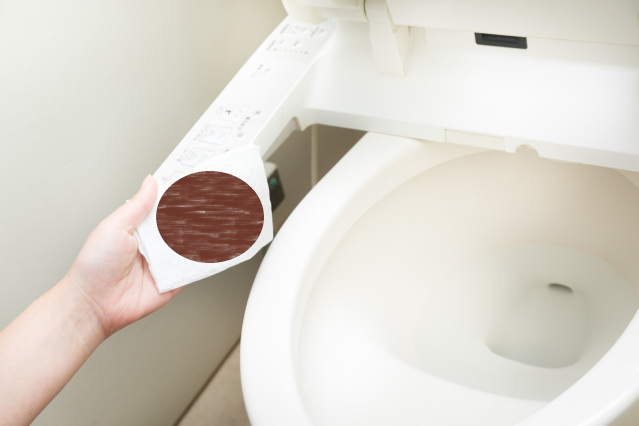
Translation trouble strikes as hotel ends up making a very awkward request.
In many ways, Japanese restrooms are a charming snapshot of the country’s highly developed concept of hospitality. Between their bidet functions, heated seats, and other clever design elements, the joy of pooping in Japan is on par with that of consuming the country’s delicious food that starts the digestive process.
So it’s probably a little startling when travelers from English-speaking countries see the signage in this Tokyo hotel that seems to imply that once you’re done wiping your butt, you’re supposed to carry the wad of used paper to another restroom entirely.
驚いてはいけない!これが2018年東京のド真ん中の安くはないホテルの言語レベルです。幸いおいらは英語でなく日本語で読めたので正しくトイレを使うことが出来ました。多分。 pic.twitter.com/td9kkcQDAn
— ono hiroshi (@hiroshimilano) August 18, 2018
Japanese Twitter user @hiroshimilano snapped the above photo in a hotel “right in the middle of Tokyo,” and one that he says isn’t cheap either. Located next to the guest-use laundry facility is a restroom with diagrams accompanied by instructions in five languages, and the English is as shaky as a pair of butt cheeks expulsing the end result of a bowl of extra-spicy ramen.
So let’s take another opportunity to laugh and learn as we examine the three swings-and-misses, starting with the biggest one, which goes with the middle illustration in @hiroshimilano’s photo.
● 1. Japanese: “Toiretto peepaa ha gomiire ni irezu ni toire ni nagashite kudasai.”
English: “Please carry away the toilet paper to the restroom without putting it in a garbage can.”

Starting with something the translation gets right, “Toiretto peepaa ha gomiire ni irezu ni” really does mean “without putting the toilet paper in a garbage can,” which the staff likely wanted to include as a gentle reminder for guests from countries with sewage systems that aren’t designed with a capacity for paper waste (which aren’t uncommon in many other parts of Asia).
Things get weird, though, with “Please carry away the toiler paper to the restroom,” since it means, if anything, that you’re supposed to take the clump of turd-enriched paper with you to some other restroom, where you can hopefully dispose of it once and for all. Part of the problem here is the Japanese word toire, which does double-duty as a term for both “restroom” and “toilet.” In this case, toire should have been translated as “toilet,” since, as the illustration shows, the sentence is talking about the porcelain poop pot.
But what about “please carry away?” This looks to be a flubbed translation of nagasu, a verb which literally translates as “flow.” However, nagasu is always used with an object. For example, if a river is just flowing by itself, the word is nagareru. If the flowing of the river is causing something else to move, however, like when the current is carrying a leaf or a raft downstream, that’s nagasu, and the same concept is applicable to what happens when water flows down the toilet drain, taking used toilet paper with it. Unfortunately, the hotel’s translation doesn’t account for the fact that in English we use “flush” to talk about initiating toilet draining, which is how the sign ended up with “carry away the toilet paper,” which has a very different meaning from the original Japanese, which should have been translated as “Please flush the toilet paper down the toilet without putting it in a garbage can.”
● 2. Japanese: “Toire ha suwatte goriyou kudasai.”
English: “The restroom sits down, and please use it.”

Moving back up to the top illustration in the photo, once again we’ve got a case where toire should have been translated as “toilet” instead of “restroom.” Even if we fixed that, though, we’d have “The toilet sits down, and please use it,” which begs the question of how can a toilet, which doesn’t have legs, sit down?
This time, the trouble stems from ha (written は and pronounced “wa”), which is used in Japanese to mark the topic of a sentence. For example, if you wanted to say “Kaori laughed” in Japanese, you’d say “Kaori ha waratta,” since we’re talking about Kaori.
In the vast majority of situations, a sentence’s topic is the same as its grammatical subject, and there’s no need to translate ha into any sort of clunky English equivalent. There are exceptions, though, and in this case the toilet, being an inanimate object, isn’t the subject for the verb “sit” (since it’s you, the reader/toilet user, who’s supposed to sit). For this instance, ha should be translated as something like “as for,” which would give the English sentence the same meaning as the Japanese original: “As for the toilet, please sit down and use it,” or, in smoother-sounding English, “Please sit down while using the toilet.”
Once again, this notice is aimed at guests from parts of Asia (rural Japan included) where squat toilets are the predominant style, and so some people may not be familiar with the operating procedure for a Western-style toilet.
● 3. Japanese: “Botan wo osu to mizu ga nagaremasu.”
English: “Water flows when I push the button.”

Here we see another appearance by nagareru/nagasu, this time with the subject mizu (“water”) attached. Again, this would be smoother if the translation accounted for the fact that when talking about toilets in English, the flowing of the water is called “flushing,” and there’s no need to specify the water, since that’s understood from the toilet context.
But having “I” here makes it sound like the author of the sign, or perhaps some other member of the hotel staff, has to come by and personally flush for you each time, which is going to be a problem for even modest-sized dookie deposits, let alone multi-flush follow-ups to particularly oily meals. This time, the problem is a result of spoken Japanese often omitting the subject when it can be understood from context. However, that generally can’t be done in English, and online Japanese-to-English translation programs (which the hotel likely used in creating the sign) often account for this by simply assuming the user is talking about himself and slapping “I” at the start of the clause.
Of course, unless you’re sharing the bathroom stall with other people, it’s obvious that “you” are the one pressing the button, which is why it’s not explicitly specified in the Japanese text, but that lack of information caused the translation program to drop the ball. After one last polishing of “the button” into “this button” (to account for the illustration showing multiple buttons), we finally get to what the Japanese text is actually saying: “The toilet flushes when you push this button.”
It’s a little disappointing to see a non-budget hotel (at least by @hiroshimilano’s standards) be so lax in their translation standards. Still, it’s nice to see an effort being made, however slight, even as we shudder to think of how baffling the sign’s Chinese, Korean, and Thai explanations may be. In the end, it’s a good thing the sign has pictures too, and that it didn’t have to delve into such complicated public restroom terminology as “middle-aged man indirect dick kissing.”
Source: Twitter/@hiroshimilano via Hachima Kiko
Top image: Pakutaso (edited by SoraNews24)
Insert images: Pakutaso (1, 2, 3)
Follow Casey on Twitter for more things to read in/about bathrooms.
 Why Does Engrish Happen in Japan? Part 2: Please refrain from using the bathroom alone
 Why Does Engrish Happen in Japan? – Breakfast buffet edition
 Why does Engrish happen in Japan?
 You can assemble a well-balanced team of Pokémon, them eat them, thanks to Japanese cake chain
 Starbucks Japan closing only Shinkansen platform branch for popularity-triggered renovations
 Licca-chan dolls released in North America for first time in nearly 60 years
 Pokémon and Ikea Japan cross over into each other’s worlds with collaboration events
 Japan’s full-facemask Ninja Parka still lets you eat ice cream[Photos]
 Can a downtown Tokyo super sento bathhouse beat a hotel for a one-night stay?
 Tokyo teahouse serves up a sakura matcha dessert you won’t find anywhere else
 Japan named most sleep-deprived country for fourth year in a row, according to survey
 These apartments are crazy-small even by Tokyo standards, and super-popular with young people
 Japan’s cherry blossom season predicted to start earlier than we’d thought, especially in Tokyo
 Tokyo’s best museum for foreign travelers finally reopens after being closed for four years
 Pokémon lacquerware series expands for Year of the Horse with new handcrafted design[Video]
 Two food hacks take Japan’s convenience store fried chicken to amazing new sandwich heights
 Tokyo subway and almost all Tokyo train lines now accepting credit card tap payments
 Totoro Fund line of beautiful artwork and apparel lets you help the real-world Totoro Forest
 Fading Tokyo – Searching for signs of the Showa era as local neighborhoods evolve[Photos]
 Famous Tokyo cherry blossom spot installs view-blocking screens to fight overcrowding[Video]
 Tokyo turns its phone booths into free Wi-Fi hotspots, and here’s how to use them
 Studio Ghibli adds new My Neighbour Totoro 2026 Corn Gift to its anime store for Mother’s Day
 Japan now has a special desk for people who work at home with a pet cat[Photos]
 Uniqlo announces new T-shirts for One Piece, Naruto and more for manga publisher’s 100th birthday
 Train station platform ramen store closes its doors on half a century of history in Tokyo
 Starbucks Japan releases new My Fruit³ Frappuccino at only 34 stores around the country
 Studio Ghibli releases Catbus pullback keychain that runs like the anime character
 Krispy Kreme releases Super Mario doughnuts in Japan for a limited time
 Japanese onsen egg maker from 100-yen store Daiso needs to be on your shopping list
 Nine great places to see spring flowers in Japan, as chosen by travelers (with almost no sakura)
 Survey asks foreign tourists what bothered them in Japan, more than half gave same answer
 Japan’s human washing machines will go on sale to general public, demos to be held in Tokyo
 Starbucks Japan releases new drinkware and goods for Valentine’s Day
 We deeply regret going into this tunnel on our walk in the mountains of Japan
 Studio Ghibli releases Kodama forest spirits from Princess Mononoke to light up your home
 Starbucks Japan releases new sakura goods and drinkware for cherry blossom season 2026
 Japan’s newest Shinkansen has no seats…or passengers [Video]
 Major Japanese hotel chain says reservations via overseas booking sites may not be valid
 Put sesame oil in your coffee? Japanese maker says it’s the best way to start your day【Taste test】
 No more using real katana for tourism activities, Japan’s National Police Agency says
 Why Does Engrish Happen in Japan? 30-year-old fart-related signage mistake edition
 Kyoto accidentally calls all old people “terrible drivers”【Why Does Engrish Happen in Japan?】
 Japanese park’s English dog turd warning minces no words【Why does Engrish happen?】
 Reactions to video showing how awesome Japanese toilet paper holders are leave us laughing 【Vid】