

A taste of the Edo-period past, and a new encounter.
There’s a whole neighborhood of restaurants in the Asakusa area of Tokyo that specialize in loach cuisine. What is a loach? If you’ve been playing the new Animal Crossing game, or have ever played any Animal Crossing game ever, then you’ve probably caught a loach or two, and know that it’s a type of fish (who looks at you with reproach).
Actually, loach, or “dojou” in Japanese, is a delicacy whose popularity dates back to the Edo period (1603-1868), so it’s no surprise that it would be a popular food in Asakusa, which is a mecca for traditional Japanese food. Our Japanese-language reporter Seiji Nakazawa has always told himself that he should try it at least once. He’s never done it because, well, their menus tend to be a little on the expensive side, but heck, you only live once.
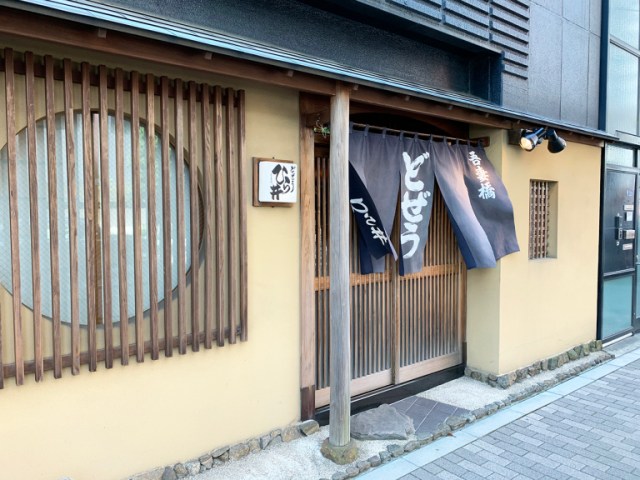
The particular restaurant that Seiji chose is called Hirai and is near Honjo-Azumabashi Station, which is on the Toei Asakusa subway line. The exterior of the place looks classy, like an expensive Japanese restaurant that serves multiple courses. Seiji was actually a bit nervous to go inside, but the interior is totally different. With just the owner and two waitresses working, it feels like a restaurant for the common people.
The menu has items like “dojou nabe” (loach hotpot, 2,240 yen [US$20]) and “yanagawa-nabe,” loach stewed in soy sauce with eggs and burdock root (2,350 yen). As expected, it was a little pricey, but Seiji was here for the experience, not a cheap meal. If he wanted a cheap meal he’d just go to Burger King.
After some deliberation, Seiji ordered the Edo classic, dojou nabe, which comes in a shallow single-serving pot.
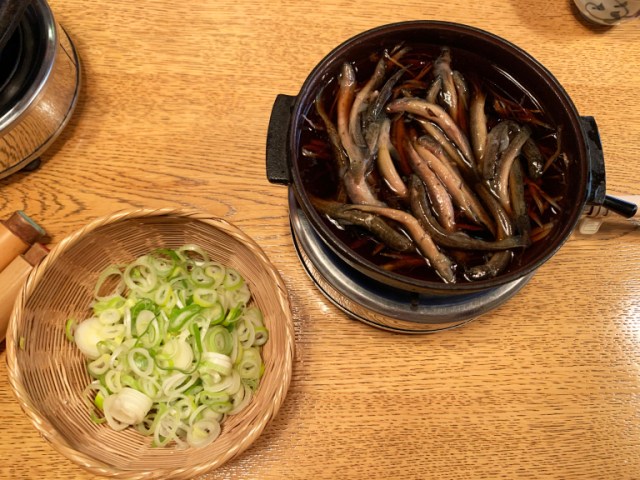
The pot was filled with about 20 little fish, but to Seiji, they looked more like little eels. “Are these really fish?” he thought, peering at them closely.
And that’s when Seiji realized he had never actually seen loach before.
It was kind of a shock. Seiji had assumed that he had encountered loach in some capacity in all of his 37 years on this earth, but in fact, he had not. The little stewed fish that sat in front of him were his first encounter.
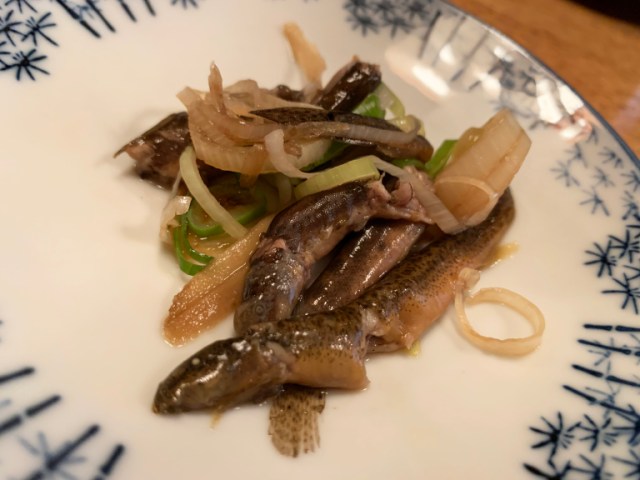
This led Seiji to reflect back on his life to find the real reason why he had never seen a loach before. He wasn’t a city kid; he grew up the countryside. When he was a child, he could bike to the mountains in ten minutes, and on his way to school he would pass rice fields and cow sheds, so he’d spent his formative years exploring the wilds of his hometown.
So how, in the twenty-something years he had lived there, had he never seen loach in the rice paddies or little rivers? It was immensely shocking to realize that his first meeting with a loach was in a hot pot.
Well, anyway, he was here for lunch, so he dug right in. His first impression of the loach: its bones are really substantial. In fact it felt as if the fish was primarily made of bone, with a little bit of soft meat around it that reminded him of anago eel meat.
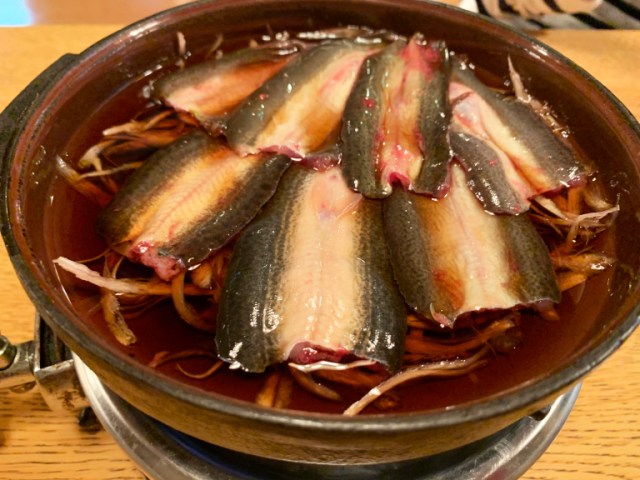
Luckily, the restaurant also serves “nuki nabe” (2,350 yen), which contains loach without the bones and innards. In this stew, the meat of the fish is flayed and looks far more substantial than the fish whole. After giving this new hotpot a taste, Seiji got a much better feel for the flavor of loach.
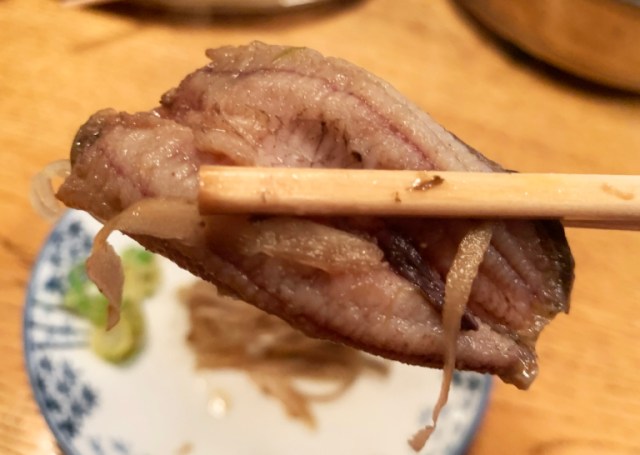
The meat is fluffy and soft, but not as oily as eel meat. It feels like a cross between white fish and anago eel, and has a slightly bitter flavor. When combined with a sweet and spicy sauce or flavoring, loach is most definitely a mature flavor. Was this the taste of Edo cuisine? He thought perhaps, yes. The harmony of the bitterness reminded him of sushi served with wasabi, another Edo delicacy.
Though it was Seiji’s first time ever seeing a loach, he couldn’t say it was a bad encounter. The flavor reminded him of the country roads of his home town, and gave him a sense of traveling back in time to the Edo period. He learned much from his first meeting with loaches. They provided a flavor that tied the past to the present, a symbol of culture in and of itself.
Restaurant Information
Dojou Hirai / どぜう ひら井
Tokyo-to Sumida-ku Azumabashi 1-7-8
東京都墨田区吾妻橋1-7-8
Open 11:30 a.m.-2 p.m., 5 p.m.-9:30 p.m.
Closed: Sundays
Photos © SoraNews24
● Want to hear about SoraNews24’s latest articles as soon as they’re published? Follow us on Facebook and Twitter!
[ Read in Japanese ]
 And now, we eat a bear paw we bought in Japan’s Chiba Prefecture【Taste test】
 We encountered the most frightening fried chicken in Ameyokocho in Tokyo, and ate it anyway
 Beat the winter blues with an insect hotpot filled with crickets, worms, and giant water bugs
 Mystery of modama: What is this sashimi we found for the first time on Yakushima?【Taste test】
 We serve a hot dish of the five best stand-and-eat soba restaurants in one area of Tokyo
 Pokémon and Ikea Japan cross over into each other’s worlds with collaboration events
 Tokyo turns its phone booths into free Wi-Fi hotspots, and here’s how to use them
 A Kyoto factory vending machine sells gourmet mystery meals at bargain prices
 Tokyo teahouse serves up a sakura matcha dessert you won’t find anywhere else
 Fading Tokyo – Searching for signs of the Showa era as local neighborhoods evolve[Photos]
 Which Gundam is the favorite for fans in different countries? Gundam election announces results
 The best cosplayers from Day 1 of Summer Comiket 2023【Photos】
 Haunted hospital near Mt Fuji re-opens after renovation at Fuji-Q Highland, and it’s terrifying
 Here’s what happens when you mix all 53 kinds of Muji curry into one crazy super curry【Taste test】
 Studio Ghibli releases new free-to-use anime images to “use within the bounds of common sense”
 Famous Tokyo cherry blossom spot installs view-blocking screens to fight overcrowding[Video]
 Tokyo’s best museum for foreign travelers finally reopens after being closed for four years
 Pokémon lacquerware series expands for Year of the Horse with new handcrafted design[Video]
 Japan now has a special desk for people who work at home with a pet cat[Photos]
 Uniqlo announces new T-shirts for One Piece, Naruto and more for manga publisher’s 100th birthday
 Picturesque Tokyo park plays host to millions of flowers and soap bubbles this spring
 Tokyo subway and almost all Tokyo train lines now accepting credit card tap payments
 Totoro and Calcifer become little light-up lanterns for Ghibli-style excursions or at-home decor
 Train station platform ramen store closes its doors on half a century of history in Tokyo
 Starbucks Japan releases new My Fruit³ Frappuccino at only 34 stores around the country
 Studio Ghibli releases Catbus pullback keychain that runs like the anime character
 Krispy Kreme releases Super Mario doughnuts in Japan for a limited time
 Japanese onsen egg maker from 100-yen store Daiso needs to be on your shopping list
 Starbucks Japan unveils new sakura cherry blossom collection for hanami season 2026
 Survey asks foreign tourists what bothered them in Japan, more than half gave same answer
 Japan’s human washing machines will go on sale to general public, demos to be held in Tokyo
 Starbucks Japan releases new drinkware and goods for Valentine’s Day
 We deeply regret going into this tunnel on our walk in the mountains of Japan
 Studio Ghibli releases Kodama forest spirits from Princess Mononoke to light up your home
 Starbucks Japan releases new sakura goods and drinkware for cherry blossom season 2026
 Japan’s newest Shinkansen has no seats…or passengers [Video]
 Major Japanese hotel chain says reservations via overseas booking sites may not be valid
 Put sesame oil in your coffee? Japanese maker says it’s the best way to start your day【Taste test】
 No more using real katana for tourism activities, Japan’s National Police Agency says
 We try cooking yakisoba with real Japanese buckwheat soba【SoraKitchen】
 We eat fugu pufferfish semen at a Japanese restaurant in Tokyo
 “Hey, Japanese taxi driver, take us to the best seafood restaurant in Noboribetsu!”
 “Hey, Japanese taxi driver, take us to the best Sapporo ramen place!” – Things don’t go as planned
 Our Japanese language reporter visits a U.K. sushi chain, is blown away by its original “sushi”
 Matsuya beef bowl fukubukuro lucky bag should be purchased with caution
 We sample the deep sea fish and more at this delectable sushi restaurant in Shizuoka Prefecture