Tokyo store teaches customers how to “listen” to scents instead of smelling them.
Ever since incense first arrived in Japan in the sixth century, around the same time as Buddhism, the “way of incense“, or “kodo” has become increasingly refined. It’s a fascinating aspect of local culture that often gets overlooked by foreign visitors, but now there’s a store in Tokyo that’s opening up the secrets behind the craft for more people to enjoy, with a hands-on experience that allows you to make your very own incense in just one hour.
▼ The store is called “Juttoku.” (yes, with the full-stop at the end), and it’s located in Kagurazaka.
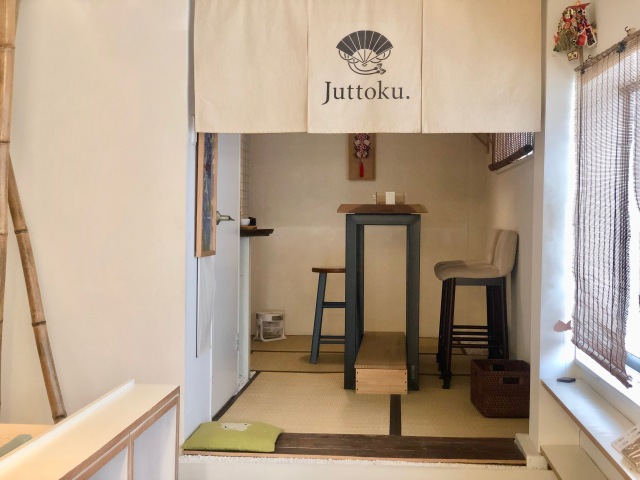
The store is beautifully sleek and modern, but the incense-making experience will transport you back to the Heian period (794-1185), as participants are taught how to make “inko“, a moulded incense made by kneading raw materials together.
The store says on its website:
“As the nobles in the Heian period enjoyed blending their own incense, the moment of working on creating a scent that cannot be seen can also be a moment of pure relaxation.
Please take this time to discover your inner-self by blending your own incense.”
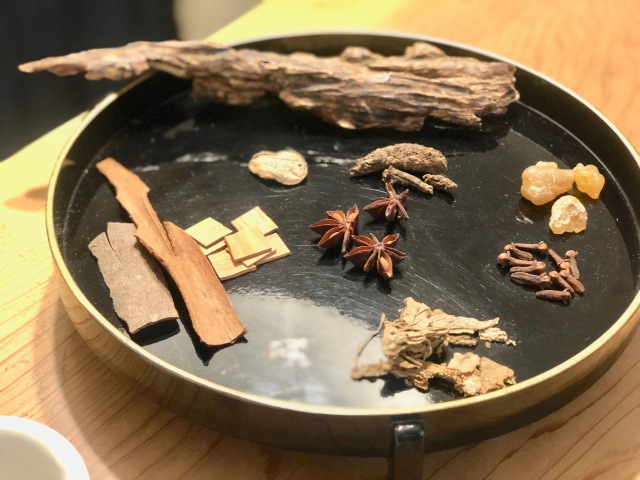
The experience begins with a short introduction to the history of incense and the ingredients used, which are all made from natural materials such as tree leaves, roots, and resin. Staff will then guide you on bringing a mindful approach to smelling the ingredients, or to be more accurate, “hearing” the ingredients, as the verb “kiku” (“to listen”) is used instead of “kagu“(“smell”) as a more elegant term in the incense world.
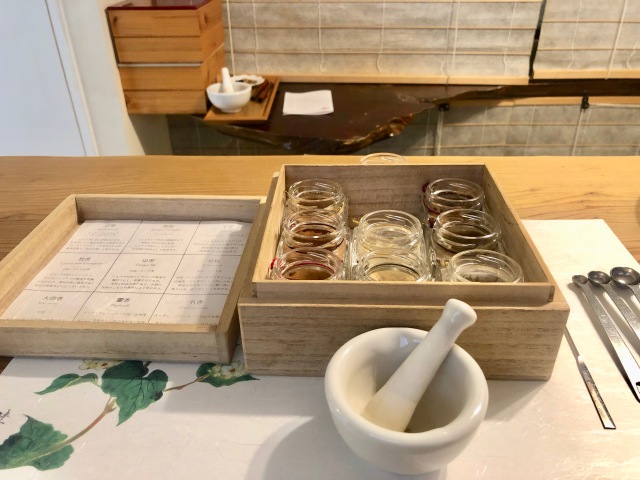
▼ Nine types of aromatic ingredients, including sandalwood, cinnamon, star anise and cloves are the centrepiece of the experience.
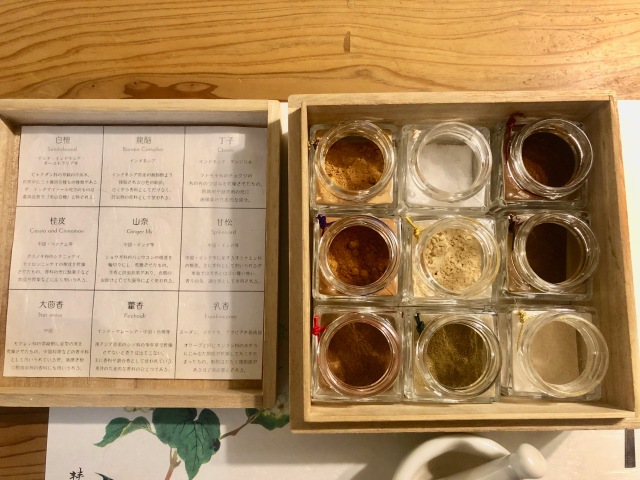
These finely ground powers are too strong when used on their own, but by mixing them, you can create a harmonious scent perfectly suited to your liking. A record sheet and spoons of three different sizes are prepared for each participant, so you can adjust the balance according to your preferences.
▼ Ingredients listed on top and measurements on the side.

The act of thoughtfully considering each scent before blending them together in different measures really does become “a moment of pure relaxation”, and it’s exciting to see your creation begin to take shape.
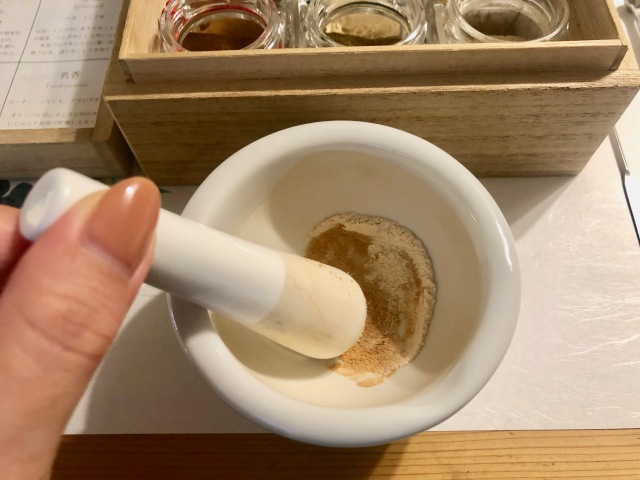
Once you’ve blended your ingredients and bound them together with water and binding powder, it’s time to place the mixture into moulds to really give it more shape.
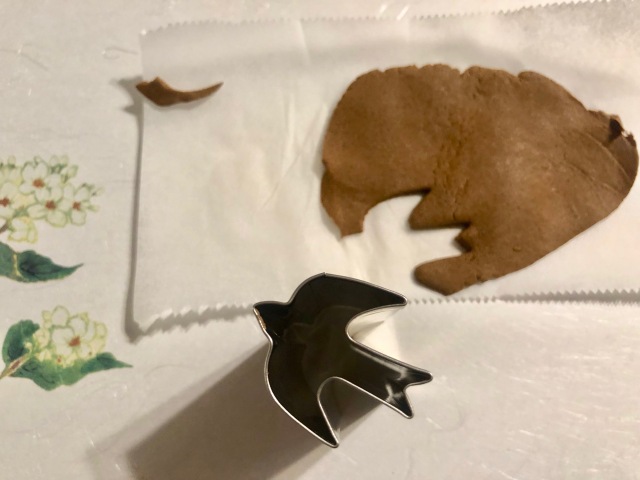
There are a variety of moulds to choose from, including gourds, turtles, and goldfish, so you can create a whole tray of beautifully shaped incense. The final requirement to complete the experience is to name your handmade incense, and we named ours “Inori no Kaori” (“Prayer Fragrance”).
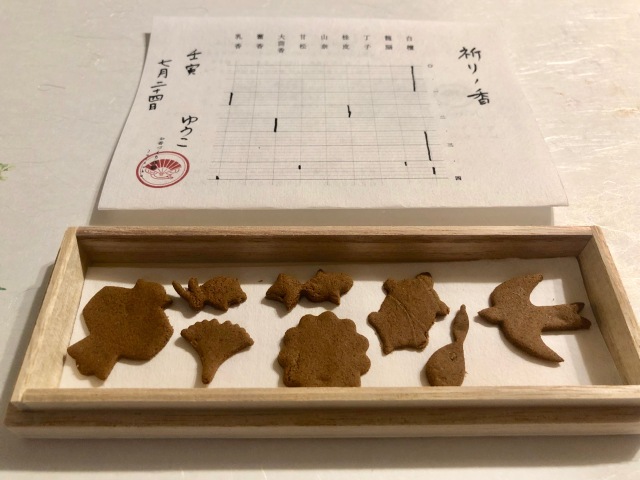
Participants get to take the incense home in the paulownia wood tray, and after a few days of drying at home, the incense can be used.
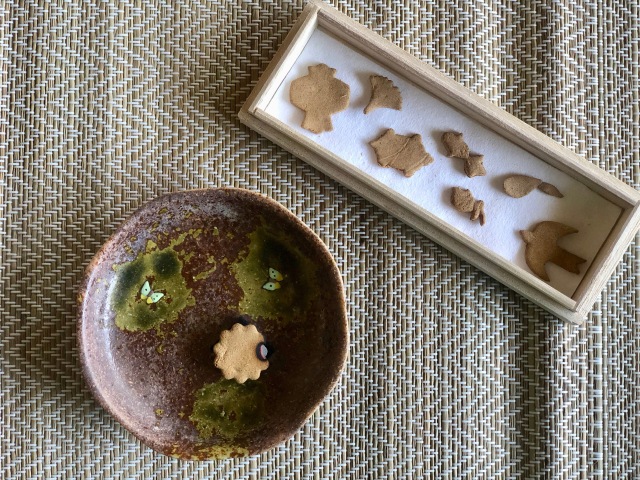
Burning incense that you’ve made on your own from raw materials is a unique and rewarding experience everyone should try, and it’s much easier than you’d expect. The incense making class costs 3,000 yen (US$22.51) per person and class sizes are limited to two to four people at a time, making it a fun and intimate way to learn about the way of incense in the heart of Tokyo.
Reference source: Juttoku.
Images © SoraNews24
● Want to hear about SoraNews24’s latest articles as soon as they’re published? Follow us on Facebook and Twitter!
[ Read in Japanese ]