

The answer might depend on what kind of drink you reach for after a long day at the office.
Last month East Japan Railway Company/JR East introduced Green Cars on its Chuo Rapid and Ome Line trains that connect downtown Tokyo with residential clusters to the west of the city center. Essentially first-class cars with comfier chairs, extra legroom, and amenities such as fold-down seatback trays, Green Cars are usually found on longer-haul trains like the Shinkansen, so adding them to two line primarily used for daily commuting is an unexpected bit of luxury and comfort for those willing to pay the additional charge for Green Car seats.
However, JR East also operates special limited express trains on the Chuo Line, where all seats are reserved and nicer than what you’ll find in standard-class commuter train carriages. So now with two different premium-style train travel options, which is better?
To find out, we sent out Japanese-language reporter Ahiruneko to ride both a regular Chuo Line train’s Green Car and the Chuo Line special limited express called the Kaiji. To eliminate as many other variables as possible, he started both trips at Shinjuku Station and took trains headed out of downtown to the west, riding until Tachikawa Station. He even matched the departure times as closely as he could, starting his Green Car ride at 4:16 p.m. one day, and taking the 4:30 Kaiji the next day.
▼ Green Cars can be identified by their clover-like emblem near the door.
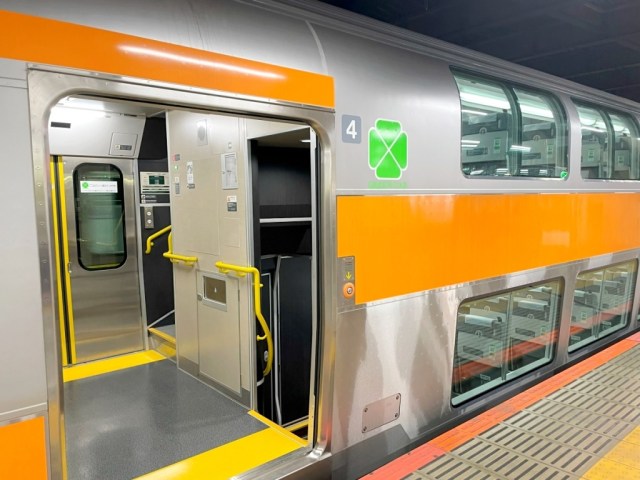
Starting with the Green Car, this actually isn’t Ahiruneko’s first time to check one out on the Chuo Line, but for the sake of making the most direct comparison possible, a repeat ride was in order. Ordinarily there’s an additional 1,010-yen (US$6.90) surcharge on top of the base ticket price for Green Car rides of 50 kilometers 31 miles) or less, but by using JR East’s Suica mobile ticketing app you can cut the extra fee down to 750 yen, which is what Ahiruneko did.
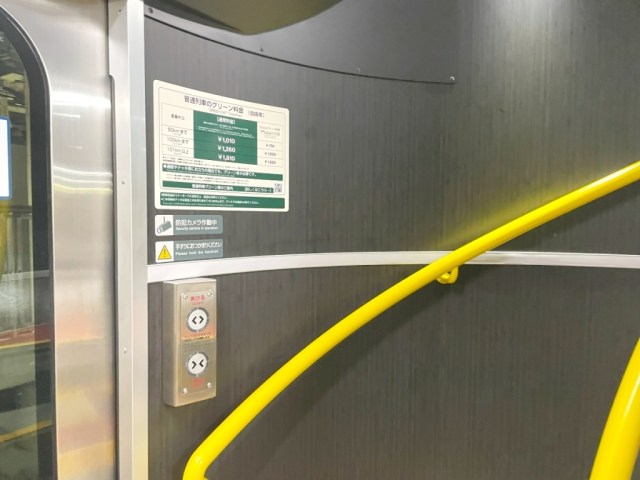
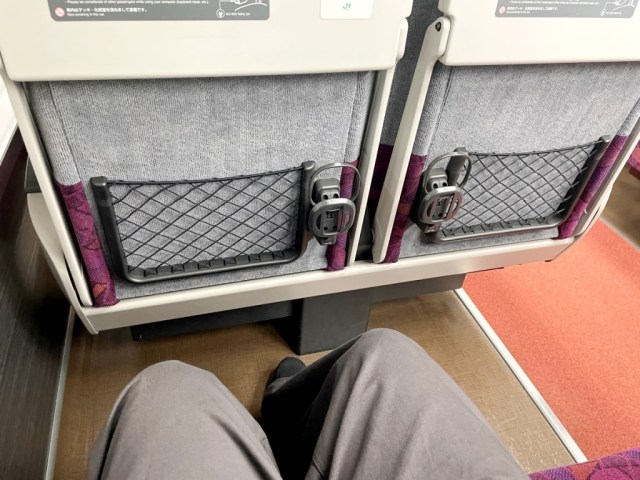
The Chuo Line Green Cars have a double-decker layout. Exact seats aren’t reserved, so Ahiruneko was free to step on up to the top level…
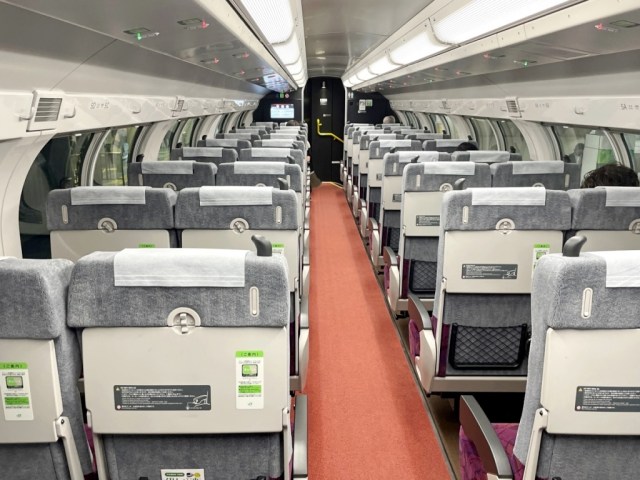
…which was almost completely empty.
This wasn’t a shock for him, though, it’s pretty much the same situation as he encountered on his first Chuo Line Green Car ride about a week earlier than this one. Chuo line commuters haven’t exactly been falling over one another to shell out for Green Car seats, and so the carriage wasn’t just quiet, it was practically silent.
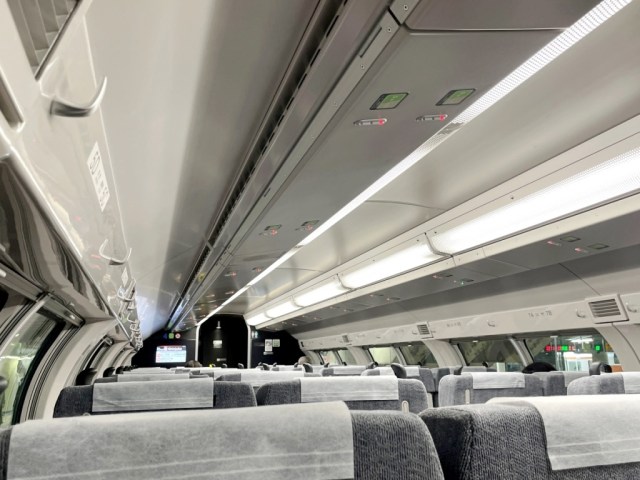
As a matter of fact, it almost felt a little lonely to Ahiruneko as he sat there with such copious amounts of personal space.

That said, this does make the Green Car a great option if you want peace and quiet. There’s also free Wi-Fi, and without any aural distractions you could probably work pretty productively while you ride.
Now let’s move on to Day 2, when Ahiruenko got on the Kaiji special limited express.
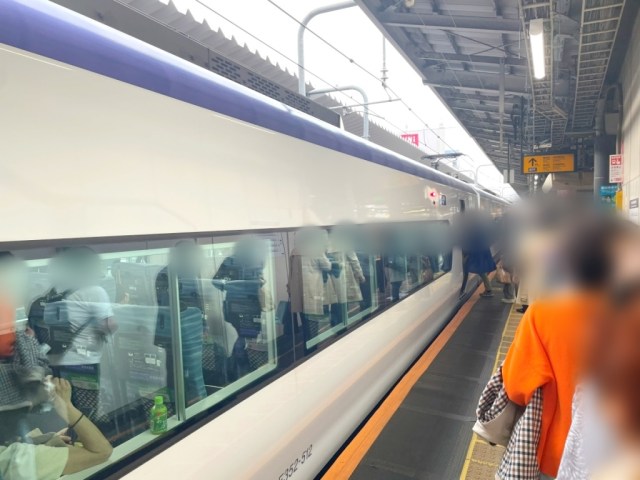

Though he was leaving from the exact same station at almost the same time of day, things were otherwise very different. For starters, there was a huge line of people waiting to board when the train pulled up.
As with the Green Car, there’s a supplementary fee above the base rate for Kaiji tickets. Once again, the lowest-priced tier is for rides of 50 kilometers or less, which is usually an additional 760 yen. Once again there’ a discount available, though, and if you reserve your seat using the Eki Net online ticket service, it’s just 660 yen, 90 yen less than the Green Car surcharge.
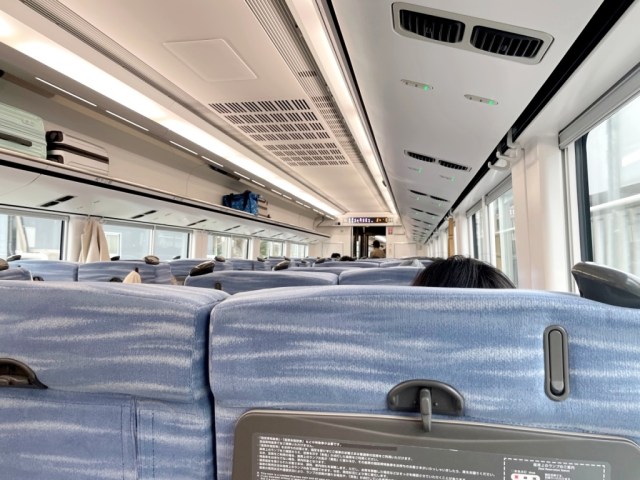
Lots of people waiting on the platform of course resulted in lots of people onboard, so Ahiruneko was happy that you do get a specific assigned seat with your Kaiji ticket. In sharp contrast to the solemn quiet of the Green Car, the Kaiji carriage had plenty of audible chatter amongst the passengers.
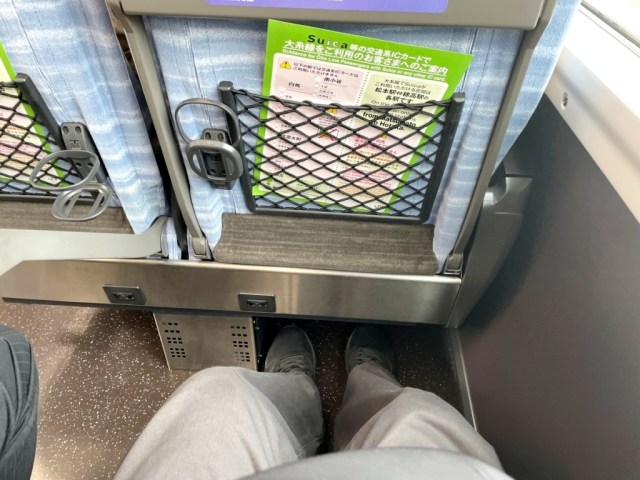
A lot of that probably has to do with where the two trains stop. Starting at Shinjuku and heading to Tachikawa Station, one of the outer layers of the Tokyo suburbs, Chuo Rapid Line trains can make as many as 14 stops, depending on the exact train, many of which are also busy commuter rail hubs. On the other hand, once the Kaiji leaves Shinjuku, it runs all the way to Tachikawa non-stop, and makes only one more stop after that in Tokyo, at Hachioji Station, before leaving the capital entirely, with its remaining route consisting of Otsuki and Kofu Stations in Yamanashi Prefecture. So while there are some people with long commutes who ride the Kaiji, for a lot of people it’s more of a leisure travel train, and while it’s not an official railway regulation, the unspoken understanding is that it’s OK to be a little more talkative and festive on “travel” trains as opposed to commuter ones.
Being by himself. Ahiruneko didn’t have anyone to talk to, but there was another aspect of this “travel” atmosphere that he was very thankful for…
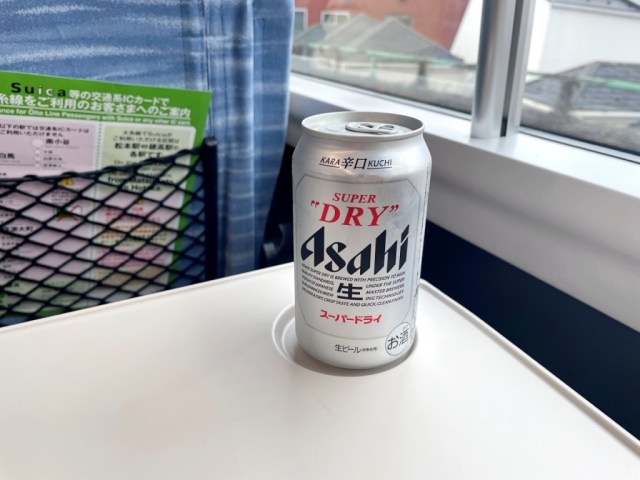
…which was that he didn’t feel self-conscious at all cracking open a beer. While soft drinks are OK on commuter trains, alcoholic ones are a faux pas, but they’re considered fine on travel trains. As a matter of fact, the man sitting next to him had prepared even more thoroughly for the ride, having bought not only a canned grapefruit sour cocktail prior to boarding but also a bag of peanuts that he was munching on.
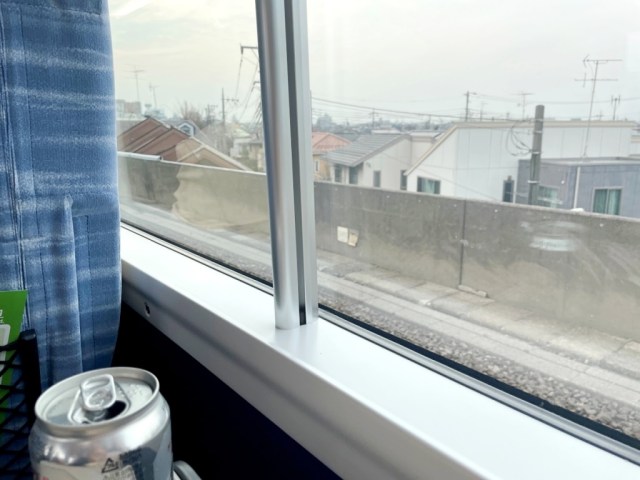
With fewer stops being made between Shinjuku and Tachikawa, Ahiruneko was able to really settle in, and the Kaiji also took slightly less time to make the trip than the Chuo Rapid Line Green Car train did (22 minutes versus 26 minutes). On the other hand, the Green Car train’s extra stops make it the more flexible option, since the Kaiji blows right past so many stations at a stretch. If you’re the kind of person who gets adult beverage-thirsty like Ahiruneko does, though, and the Kaiji will get you to the station you ‘re headed to, it’s the way to go.
Photos ©SoraNews24
● Want to hear about SoraNews24’s latest articles as soon as they’re published? Follow us on Facebook and Twitter!
[ Read in Japanese ]
 First-class section being added to Tokyo commuter trains this month with double-decker Green Cars
 Tokyo trains now have new first-class Green Cars, but are they a sell-out hit?
 Tokyo’s downtown Chuo Line now has first-class Green Car carriages for no additional cost to ride
 Tokyo trains add live in-car musical performances, including Ghibli anime themes
 How to escape the Tokyo crowds with a trip to a hidden gem on a special Japanese train
 Mt. Fuji decorated with a 500,000-flower pink carpet is Japan’s ultimate spring view
 30 Pikachus want to share a Tokyo hotel room with you that has separate Grass, Water, Fire spaces
 Lawson convenience store at popular tourist site is one of the most unusual in Japan
 Howl’s Moving Castle’s scene-stealing dog is here to clean your home as a plushie mop
 Police in Japan warn of new Shinkansen/travel-related scam
 Dragon Quest Burgers and Slime drinks are coming to McDonald’s Japan【Video】
 Eight Ways You Really, Really Shouldn’t Use a Japanese Toilet
 Get a Complete Psych Profile in a Few Minutes Using Only a Pen and Paper
 McDonald’s and Gundam team up for customized anime mecha and fried chicken sandwiches[Video]
 Road trip! All-you-can-eat tempura for just 700 yen in Kumamoto Prefecture
 Japan reportedly adding Japanese language skill requirement to most common foreigner work visa
 Pokémon and Ikea Japan cross over into each other’s worlds with collaboration events
 Starbucks Japan closing only Shinkansen platform branch for popularity-triggered renovations
 You can assemble a well-balanced team of Pokémon, them eat them, thanks to Japanese cake chain
 Two food hacks take Japan’s convenience store fried chicken to amazing new sandwich heights
 7-Eleven Japan’s new baked-in-store sweet treat is only available in three parts of the country
 Man bites woman at cherry blossom park in Japan, dies shortly after
 Peanuts and Coke becomes a viral hit in Japan, but is it a trend worth joining?
 Japan now has a special desk for people who work at home with a pet cat[Photos]
 Famous Tokyo cherry blossom spot installs view-blocking screens to fight overcrowding[Video]
 Uniqlo announces new T-shirts for One Piece, Naruto and more for manga publisher’s 100th birthday
 Train station platform ramen store closes its doors on half a century of history in Tokyo
 Starbucks Japan releases new My Fruit³ Frappuccino at only 34 stores around the country
 Krispy Kreme releases Super Mario doughnuts in Japan for a limited time
 Japanese onsen egg maker from 100-yen store Daiso needs to be on your shopping list
 Studio Ghibli releases Catbus pullback keychain that runs like the anime character
 Survey asks foreign tourists what bothered them in Japan, more than half gave same answer
 Japan’s human washing machines will go on sale to general public, demos to be held in Tokyo
 Starbucks Japan releases new drinkware and goods for Valentine’s Day
 We deeply regret going into this tunnel on our walk in the mountains of Japan
 Starbucks Japan releases new sakura goods and drinkware for cherry blossom season 2026
 Studio Ghibli releases Kodama forest spirits from Princess Mononoke to light up your home
 Japan’s newest Shinkansen has no seats…or passengers [Video]
 Major Japanese hotel chain says reservations via overseas booking sites may not be valid
 Put sesame oil in your coffee? Japanese maker says it’s the best way to start your day【Taste test】
 No more using real katana for tourism activities, Japan’s National Police Agency says
 Japan’s train travel soundscape faces sad change as JR East axes special station departure melodies
 JR’s new overnight sleeper train will connect Tokyo and northern Japan, is private cabin-only
 New Shinkansen design unveiled, bullet train exterior includes cherry blossom Easter egg
 Tokyo’s busiest commuter line slowing things down with special one-lap Yamanote sightseeing train
 Tokyo trains set to become less convenient with new last train schedule
 Here’s why you may want to switch your train home after a night of drinking in the big city
 Tokaido Shinkansen ending in-train food/drink sales for all non-first-class-passenger cars
 What’s the rule for where to put strollers on Japan’s Shinkansen bullet trains?
 Is the Shinkansen bullet train Green Car upgrade worth it when traveling in Japan?【Photos】
 Shinkansen bullet trains adding semi-private booths on most popular travel route【Pics】
 Japan’s bullet train-upholstery chairs bring Shinkansen style to your living room【Photos】
 Sanyo Shinkansen ending in-car food cart sales (unless you’ve got the cash for first-class)
 Private booths are coming to Japan’s Shinkansen bullet trains even sooner than we’d thought【Video】
 “Passengers who don’t want to be groped, please use the rear train cars” announcement angers Japan
 Swapping seats on Japan’s bullet trains is not allowed, Shinkansen operator says
 Not so fast! Japan’s super-high-speed maglev Shinkansen line opening has been officially delayed