
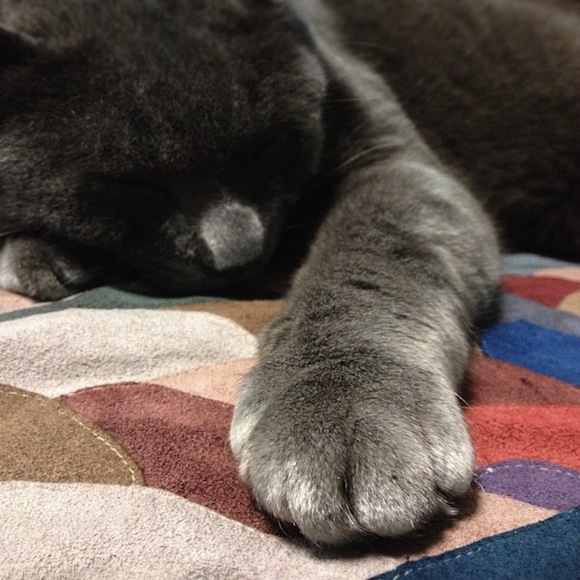
A little while ago, we introduced you to the Japanese expression “hana yori dango” (dumplings over flowers), using a picture of one of our capybara friends at the Ueno Zoo as a living example of the phrase. Well, that article got us thinking about Japanese idioms/expressions that may sound strange or funny in a different language when translated literally, and we thought it might be interesting to share a few of them with you. Here are some common phrases that we use in the Japanese language as a matter of course, but could make you laugh if you visualize their literal meaning in your mind. And yes, some of them involve cats!
1. It’s acorns comparing heights: どんぐりの背比べ (donguri no seikurabe)
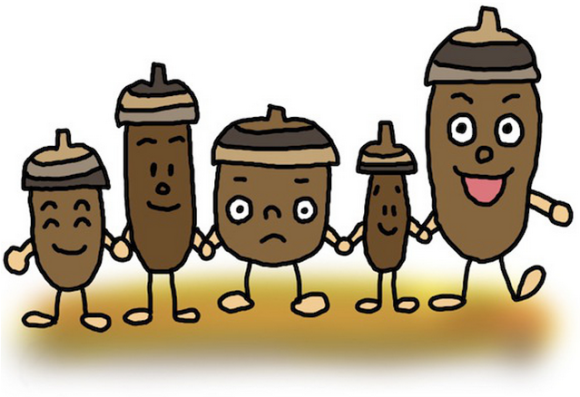 Image: by koharu
Why would acorns be comparing sizes? Well, that’s the expression we use to describe a group that is roughly the same in ability or quality, usually not at a high level, and without any standouts. In this case, acorns are used as an example of something that comes mostly in the same sizes and appearances, which makes comparing them somewhat moot. For example, when there’s nothing special among the entries in a writing or photography contest, you might look at the pile of submitted works and say, “Donguri no seikurabe desu ne.” (It’s acorns comparing heights.)
2. My hand is coming out of my throat: 喉から手が出る (nodo kara te ga deru)
 Image: Hare tokidoki Paroday blog
You know when you really, really want something and you’re thinking that you’ll die if you can’t have that bag or job promotion or concert ticket or whatever it is that you need? Well, then this is the Japanese phrase to use. The expression probably comes from a time when food was much more scarce and people were so hungry that it would feel like a hand might come out from your stomach through your throat to grab any food that was around, but nowadays, it can be used to refer to anything that you really want. If, like yours truly, you have a weakness for fashion items, you could say, “Ano kutsu, nodo kara te ga deru hodo hoshii!” (I want those shoes so much, my hand is coming out of my throat!)
3. A weasel’s last fart: イタチの最後っ屁 (itachi no saigoppeh)
 Image: by Tarcy Kyoju
This phrase comes from the fact that itachi (Japanese minks or weasels) emit a highly unpleasant smell when cornered or facing danger, and is used to describe a desperate act by someone in a troubled situation, something done as a last resort. It’s not exactly a polite expression, as you may have guessed from the word “fart”, written as 屁, which is pronounced “heh”on its own but is “peh” in this case because of the letters that come before it. (A more polite way to refer to this type of gas in Japanese would be “onara”.) You could say, “Tondemonai itachi no saigoppeh datta!” (That was one heck of a weasel’s last fart!) when, for example, someone forced to quit their job after problems with a coworker sends a vicious and damaging message to said (supposedly evil) coworker in an e-mail that everyone in the company can read.
4. Like washing potatoes: 芋を洗うよう (imo wo arau yō)
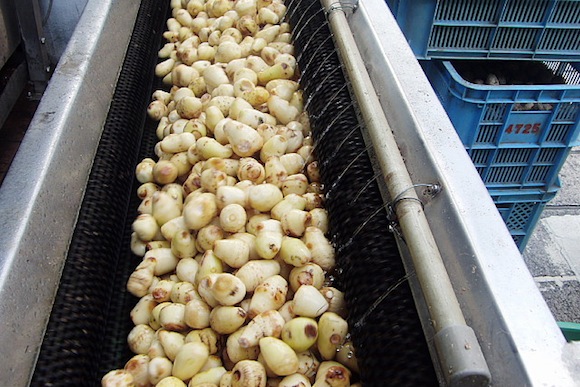 Photo: Chienowa Ma Nukesaku no Blog
No one likes to be caught in a large crowd that you can barely squeeze through. Well, it turns out we have an expression in Japanese to describe precisely that kind of crowd, which probably isn’t too surprising, considering that crowded situations are quite common in Japan, from the subway during morning rush hour to amusement parks and even art exhibits. The phrase comes from the old-fashioned practice of washing a huge amount of potatoes in a barrel, with the sight of all the potatoes soaking in the water looking somewhat like a mass of people crowded into a small space. If you’ve gone to a museum exhibit that was so crowded that you felt like you spent most of the time looking at the back of people’s heads, you could say, “Sugoku konde ite imo wo arau yō na hito datta!”(It was so crowded, it was like washing potatoes!)
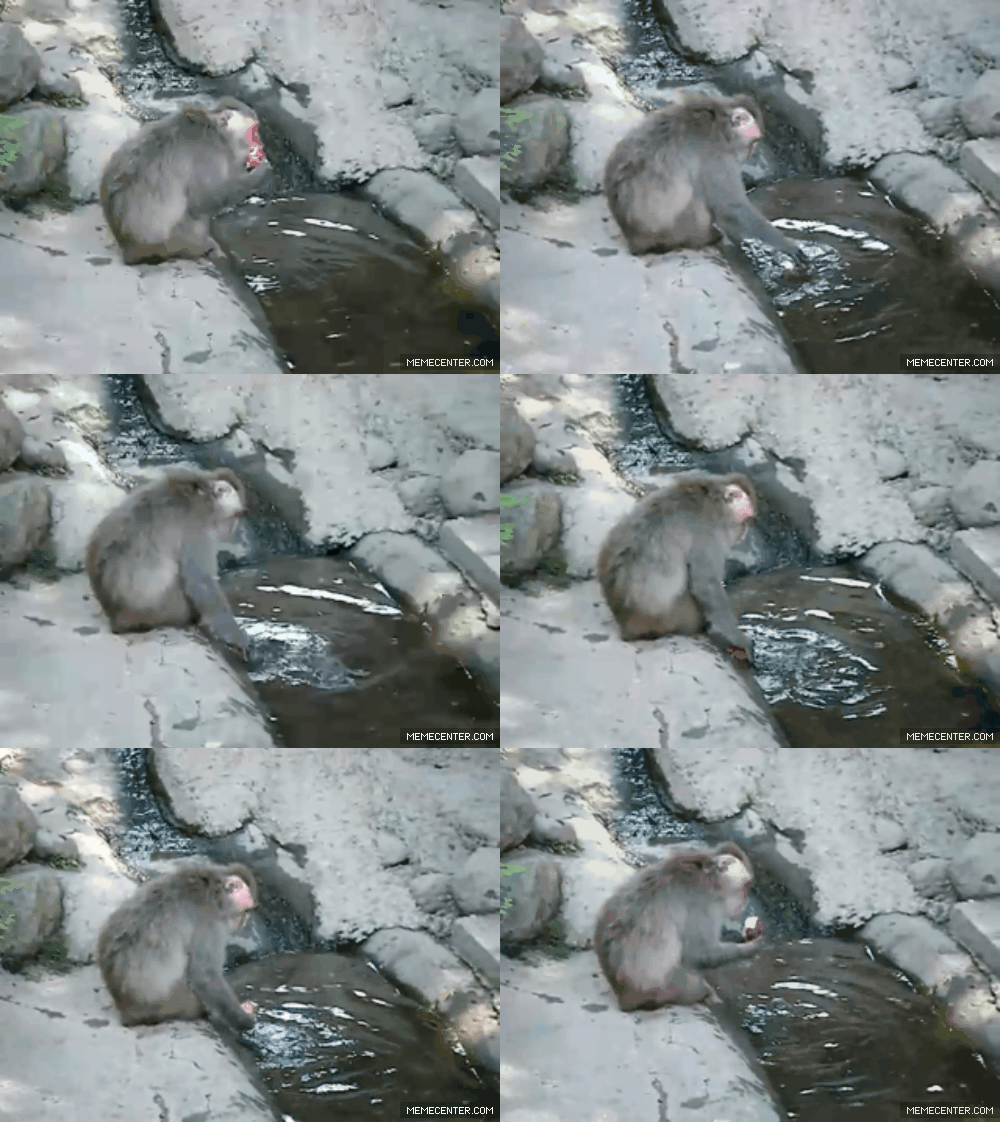
▼In Japan, even monkeys wash potatoes!
 Gif:
Gif: 5. It won’t hurt to put him/her inside my eye: 目の中に入れても痛くない (me no naka ni iretemo itaku nai)
 Image: by Miho
Umm… of course putting objects in your eye will hurt! But when you find someone, usually a child or grandchild or sometimes even a pet, so cute that you have no words to describe how dear he or she is to you, you can say in Japanese that so-and-so is so cute, it won’t hurt even if you put him/her in your eye. That’s quite a drastic declaration of affection to make, isn’t it? And not one that anyone would be tempted to try literally, but it’s still quite a frequently used expression in Japanese. In my case, I have an adorable young niece about whom I can definitely say, “Me no naka ni iretemo itaku nai hodo kawaii!” (She’s so cute, it won’t hurt even if I put her in my eye!)
6. I’m growing callouses in my ear: 耳にたこができる (mimi ni tako ga dekiru)
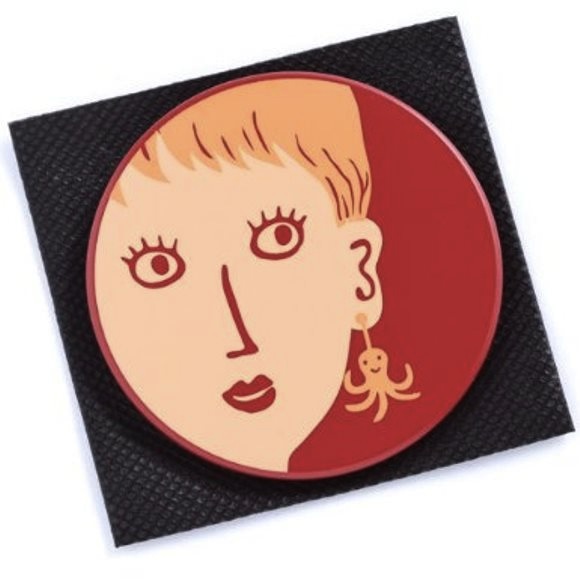 Photo: mirror by Atsuko Matano via AMAZON.JP
Have you ever been tired of hearing the same comments, complaints or words of caution over and over again? If you’re expressing your thoughts in Japanese, you might respond to such a situation by saying literally that you’re growing callouses in your ear. Funnily enough, the word for callous in Japanese is pronounced exactly the same as the word for octopus — tako (pronounced like the mexican food taco). As a result, although it’s not an accurate association, we also tend to think of octopus when we hear this expression, which makes for an even funnier image when visualized. If, for example, like many mums around the world, your mother is constantly telling you to be careful of this and that, you may be tempted to say in exasperation, “Oka-san, mo mimi ni tako ga dekiru hodo kiitayo.” (Mom, I’ve heard that so many times, I’ve grown callouses in my ear.)
7. Brew and drink the dirt from under someone’s fingernails: 爪の垢を煎じて飲む (tsume no aka wo senjite nomu)
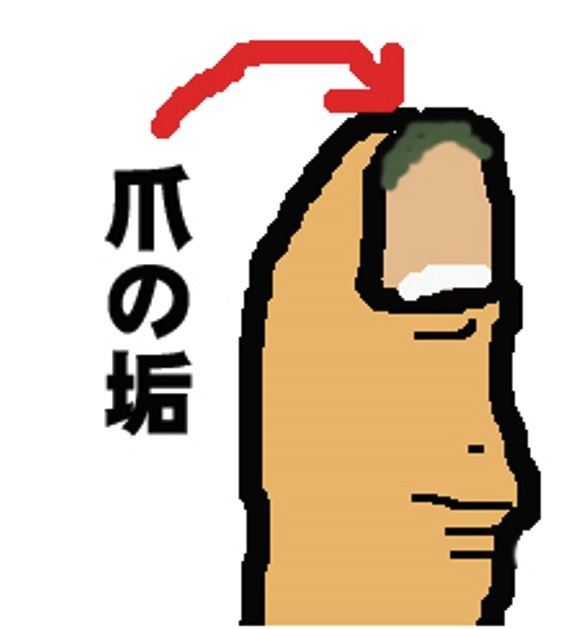 Image: Sanorechan blog
What should people who need serious discipline and inspiration do to improve their situation? Well, according to this common Japanese idiom, they should brew the dirt from under the fingernails of someone capable and worthy of respect and drink it like a tea in the hopes that some of the admirable qualities of the person contributing the dirt will somehow be transferred onto them. Of course, no one takes this expression literally, but someone who is acting selfishly might be reprimanded, “Maza Teresa no tsume no aka wo senjite nondara ii.” (You should brew and drink the dirt from under Mother Theresa’s fingernails.)
8. Snake legs: 蛇足 (dasoku)
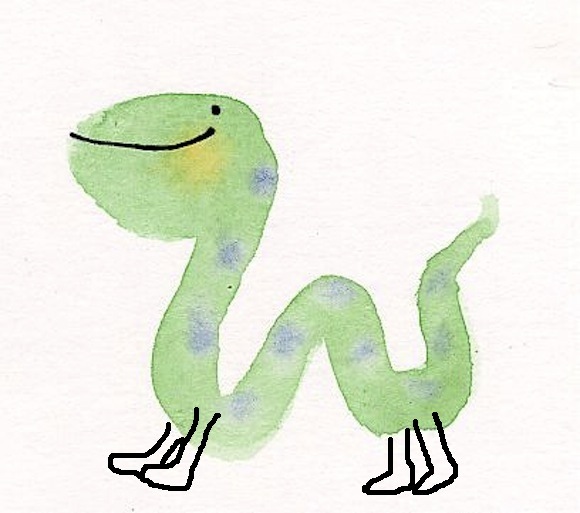 Image: by Rakubo
But wait, snakes don’t have legs … do they? Well, that’s kind of the point behind this “slithery” expression which actually has its origins in one of the episodes recorded in the ancient Chinese historical text Zhan Guo Ce (Strategies of the Warring States) but nonetheless has become firmly incorporated into the Japanese language. In the original Chinese account, it is said that a group of servants were given some alcohol to drink — not enough to be shared by everyone in the group, but plenty for one person. The servants decided that they would have a little drawing competition and whoever was able to draw a picture of a snake on the ground the fastest would get to have the drink by himself. One servant who drew very quickly was the first to finish and was about to claim the drink for himself when he boastingly said that he completed his drawing with so much time left that he can even add legs to his snake, which he promptly did, drawing on legs to the snake he had just drawn. While he was adding the legs, however, another servant finished drawing and took the alcohol, saying that he was the first to complete a picture of a snake, since snakes don’t have legs and a drawing with legs couldn’t be considered a proper snake. From this episode, the expression “snake legs” has come to mean something additional that is unnecessary and possibly detrimental. If someone makes a remark that is uncalled for and nonconstructive, you could say, “Ima no wa dasoku da.” (That comment just now was snake legs.)
9. Borrowing the cat’s paws: 猫の手も借りたい (neko no te mo karitai)
Image: by eiko
The Japanese language has a surprising number of expressions involving cats, and of course we had to present some of them here. I’m sure we’ve all had the experience of being so maddeningly busy that we barely seem to have the time to breathe. At times like those, in Japanese you can say that you’re willing to borrow even cat’s paws for extra help. If you have a work assignment deadline coming up, a pile of dirty laundry and dishes staring at you accusingly and a young child screaming for your attention all at the same time, then yes, you’re allowed to say “Tasukete! Mo neko no te mo karitai hodo isogashii!” (Help! I’m so busy I want to borrow even cat’s paws)
10. Putting on a cat: 猫を被る (neko wo kaburu)
 Photo: photo AC
We undoubtedly all have times we consciously try to act sweet and look like we’re on our best behavior. That’s what we would call “putting on a cat” in Japanese. The expression is perhaps quite apt, since cats seem to have a great knack for getting into all sorts of mischief like destroying the furniture or toppling breakable ornaments and looking like they’ve done absolutely nothing wrong. If you put on too much of an act when you start your new job or when meeting your boyfriend’s parents for the first time, then someone might comment accusingly, “Zuibun neko wo kabutteru ne!” (You’re putting on quite the cat!)
So, what did you think of these expressions? We use them in Japanese without really considering their literal meaning, but they sound quite funny when you think about it. And by all means, do let us know if there are others you think should be on this list. Personally, my favorite is the one about putting your loved ones in your eye, just because it’s such a silly and unreal expression when taken literally. Every language probably has its share of strange-sounding expressions, but we hope you enjoyed our little session on Japanese idioms and phrases!
 “Good on the floor?” Five funny times Google Translate drops the ball with Japanese idioms
 Five magic Japanese phrases to know before starting a job in Japan
 Sega’s Like a Dragon yakuza teaches “useless” English, let’s use it to learn some useful Japanese
 Cat got your tongue? 10 unusual Japanese phrases that use the word ‘cat’
 Words they don’t teach you in Japanese class: How to say “straw man” in Japanese
 Train station platform ramen store closes its doors on half a century of history in Tokyo
 Studio Ghibli adds new Mother’s Day gift sets to its anime collection in Japan
 Starbucks Japan opens new Kyoto store in Place of Scenic Beauty
 Komachi Shokudo: Japanese mum’s-style cooking for breakfast, lunch and dinner in Tokyo
 Japanese convenience store sandwiches get extra protection from new business backpack
 Virtual idol Hatsune Miku redesigned with look that adds new elements and brings back old ones
 Tokyo big walk – Walking from Tokyo Station to the Big Sight convention center on Tokyo Bay【Pics】
 Studio Ghibli releases Catbus pullback keychain that runs like the anime character
 Godzilla-shaped ice cream on sale in Tokyo near the sight his most adorable rampage
 Starbucks Japan releases first-ever Hinamatsuri Girls’ Day Frappuccino
 Nine great places to see spring flowers in Japan, as chosen by travelers (with almost no sakura)
 Starbucks Japan opens new cafe and art gallery in top Tokyo tourist neighbourhood
 Is Japan’s Crab-shaped Cup Ramen Timer worth the hype?
 Pizza Hut Japan teams up with creator of one of the country’s best kinds of ramen for ramen pizza
 Starbucks Japan releases a new Cream Puff Frappuccino for a limited time
 The top 10 graduation songs in Japan as chosen by current Japanese high school students
 Pikachu and Eevee become handmade Lladró porcelain sculptures to celebrate Pokémon’s 30th birthday
 Starbucks Japan releases new sakura goods and drinkware for cherry blossom season 2026
 Starbucks Japan unveils new sakura cherry blossom collection for hanami season 2026
 Foreign tourists in Japan will get free Shinkansen tickets to promote regional tourism
 The 10 most annoying things foreign tourists do on Japanese trains, according to locals
 Super-salty pizza sends six kids to the hospital in Japan, linguistics blamed
 Starbucks Japan unveils new sakura Frappuccino for cherry blossom season 2026
 Naruto and Converse team up for new line of shinobi sneakers[Photos]
 Survey asks foreign tourists what bothered them in Japan, more than half gave same answer
 Japan’s human washing machines will go on sale to general public, demos to be held in Tokyo
 Starbucks Japan releases new drinkware and goods for Valentine’s Day
 We deeply regret going into this tunnel on our walk in the mountains of Japan
 Studio Ghibli releases Kodama forest spirits from Princess Mononoke to light up your home
 Japan’s newest Shinkansen has no seats…or passengers [Video]
 Major Japanese hotel chain says reservations via overseas booking sites may not be valid
 Put sesame oil in your coffee? Japanese maker says it’s the best way to start your day【Taste test】
 No more using real katana for tourism activities, Japan’s National Police Agency says
 Nose songs, bug teeth and dirt sticks: 10 Japanese words translated way too literally
 Japanese netizens discuss the ulterior meaning of “kawaisou” (how sad/pitiable)
 The three ways to say “love” in Japanese, and when to use them
 Should you say “Itadakimasu,” Japan’s pre-meal expression of thanks, when eating by yourself?
 Textbook gives Chinese otaku Japanese lessons with a side of anime girls and dialogue
 Japanese Twitter shares the funniest “mysterious Japanese” that they’ve heard from foreigners
 Learning Japanese? Beware these 19 loan words—they’re not what they sound like!
 W.T.F. Japan: Top 5 most hilarious Japanese euphemisms 【Weird Top Five】
 How should you respond when a Japanese person gives you a compliment?
 Learn Japanese schoolgirl vocabulary with new video from Line【Video】
 Seven mistakes foreigners make when speaking Japanese—and how to fix them
 Arrest proves a common Japanese saying about apologies and police
 The top 10 words to describe Japanese people (according to foreigners)