A trend a century and a half in the making.
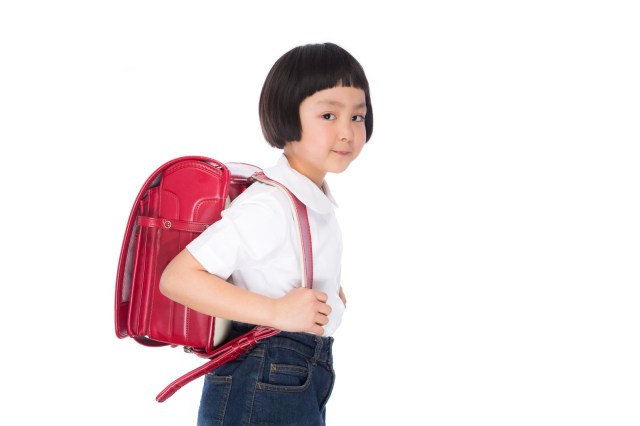
April is the beginning of the school year in Japan, and it’s a time when many young students strap on their boxy leather (or often simulated leather) randoseru backpacks for the first time. Even without living in Japan, you may have seen these sturdy but expensive carriers in anime, film, or one of our many articles about them.
But why does Japan of all countries use these distinctly old-fashioned western designs?
It all started around the end of the Edo era in the middle of the 19th century. After Japan was opened up to trade with other countries, western culture and fashions became a craze.
▼ Suit jackets and samurai swords weren’t exactly made for each other, but these guys made it work.
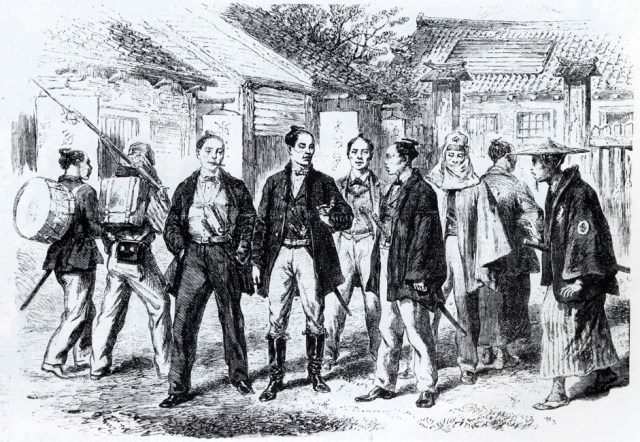 Wikipedia/Illustrated London News
This was true for military technology at the time as well, and the concept of using backpacks to free up soldiers hands was adopted. Early on they were given the Japanese name of “haino” but in keeping with the western wave of influence, the Dutch word “ransel” was also adopted into Japanese as “ranseru” or “ranuseru.”
It’s a bit of a mystery how a “do” was added to the middle of the word. One theory is that the Dutch “ransel” was conflated with the German “landser” which refers “foot soldier.” Logically it makes a lot of sense, but according to German dictionaries “landser” gained prominence during WWII. Its origins could be traced back to the late 19th century, but that would mean it was a brand new term even in German when it first appeared in Japanese.
▼ These Japanese soldiers in the 1890s probably weren’t concerned with Dutch and German linguistics enough to take note of it
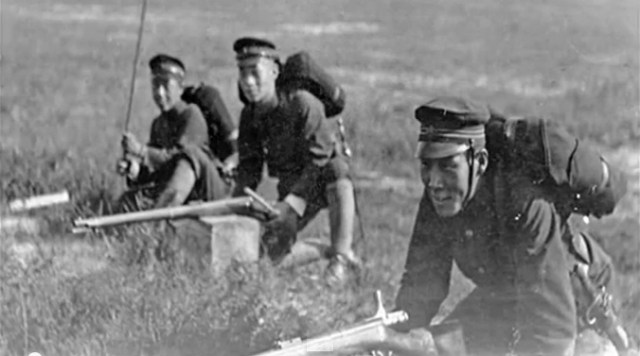
In military texts imported from the Netherlands and translated in the 1860s the kanji characters for “haino” were given a katakana subtitle of “rantoseru.“ At that time “t” and “d” weren’t so clearly distinguished in Japanese, but even still, the timing is really tight for “landser” to have migrated from German to Dutch to Japanese. It’s not impossible though.
Another possibility is that adding a “to” or “do” simply made the word easier for Japanese people to pronounce. Other words that made the leap from Dutch to Japanese have also been slightly altered – presumably for comfort – such as “penki” which means “paint” and stems from the Dutch “pek,” and “kamitsure” which came from the Dutch “kamille” which means “camomile.”
In these early years, randoseru were still totally made of cloth. It wasn’t until the beginning of the Meiji Era and the establishment of the Imperial Japanese Army that soldiers were fitted with square leather packs which began to resemble those used by children today.
▼ A platoon of new Imperial Army recruits led by Tom “I’m-too-cool-for-randoseru” Cruise
Speaking of children, the other western influence that marked the change from the Edo to Meiji Era was an end to the samurai aristocracy in exchange for a more democratic society. Part of this meant opening up education beyond the nobility.
▼ Goofing off in class would no longer be a privilege but a right.
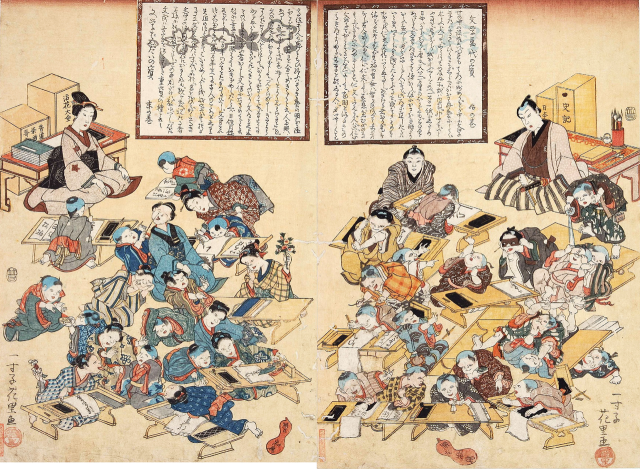
One such school was Gakushuin, an educational organization set up in 1847 to teach the aristocratic children of Japan. In 1885 they made a few changes to keep up with the times, including the opening of a school for women as well as an experimental elementary school which members of any social class could attend.
The overarching principle of this new school was to enforce a sense of equality among students, and wealthy children were forbidden from commuting in carriages or rickshaws. Furthermore, they weren’t allowed to use servants to carry their school supplies for them. Instead all students had to carry their own supplies in any kind of backpack.
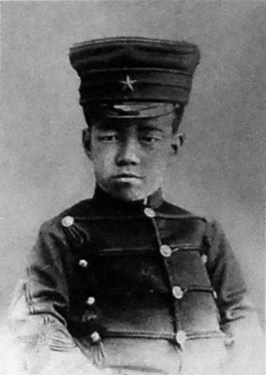
In 1887, an eight-year-old boy by the name of Prince Yoshihito – who would grow up to become the emperor of the Taisho Era – enrolled in this school. To celebrate this occasion Japan’s first prime minister, Hirobumi Ito, gifted the prince a leather school bag that looked just like the ones used by the Imperial Army.
▼ By the time this photo of Prince Yoshihito was taken in 1892, he had already dropped out of Gakushuin due to health issues
Idol groups were still nearly a century away, so when it came to trendsetters back then, one needn’t look any further than the crown prince of Japan. Leather military-grade randoseru became the hot school supply of the era, but their cost was beyond the means of many people, and Japan’s ensuing wars and defeat in World War II made leather randoseru an even more unattainable item. It took about a decade for the economy to pick up enough and material costs to drop enough for these bags to come back into fashion around the mid-’50s. Then, once the bubble economy took hold in Japan and people started spending money like water, these bags went from being a status symbol to a cultural standard.
▼ They were so hot, you didn’t even really have to show them that much in commercials.
It’s a norm that continues today despite the generally icky economic situation.
Still, the average 50,000-yen ($450) cost of a randoseru can be rationalized by their longevity (and it’s often doting grandparents with cash to spare who pick up the tab). One bag will often last a student their entire time at elementary school which can stretch their cost out to about 8,000 yen ($70) a year, but also means the kid better be really committed to their love of Mickey Mouse or Harry Potter.
The duration of the entire concept of randoseru has also impressively lasted throughout the whole history of modern Japan. However, with the country on the verge of converting textbooks to tablets and cloud data, the need to strap an expensive leather box to little kids’ backs will be increasingly questioned from now on.
Will the not-so-humble randoseru survive, or just evolve into something else? The answer might not be too far from now.
Source: News Online, Comzine, National Diet Library
Top image: Pakutaso
● Want to hear about SoraNews24’s latest articles as soon as they’re published? Follow us on Facebook and Twitter!