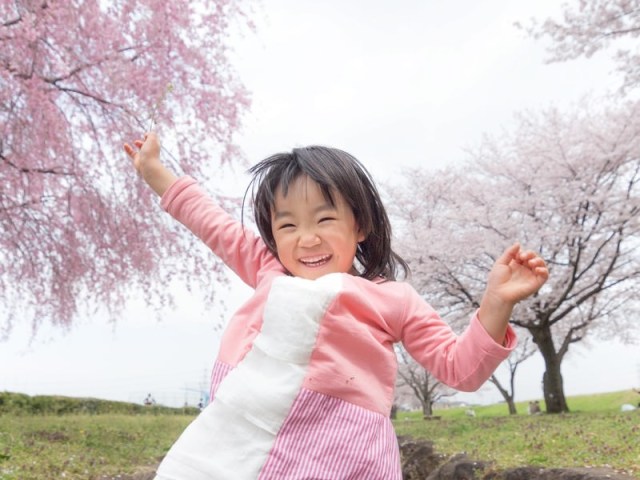
Let’s celebrate Japan’s Children’s Day by learning how to talk children in Japanese.
In Japan, May 5 is a holiday called Children’s Day. In Japanese, it’s “Kodomo no Hi,” and the translation is pretty straightforward: kodomo means “children,” no is equivalent to “’s,” and hi is “day.”
But kodomo is just one of many ways to say “children” in Japanese, so with today being Children’s Day, let’s take a look at some of them, what makes them different, and when each is used.
1. Kodomo
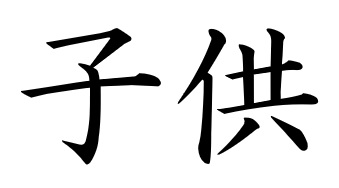
“Hey, didn’t we already cover this? You said kodomo means ‘children,’ right?” That’s true, I did, but in a convenient twist, it also means “child.” That’s because Japanese uses the same words for both the singular and plural forms of a noun.
Kodomo is the most common, broadly used word for “children” or “kids.” You can use it in just about any context or conversation and it won’t sound particularly weird or out of place.
2. Ko
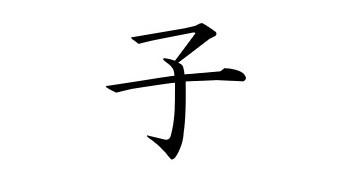
Ko is the even shorter version of “child,” written with just the first of the two kanji characters used for kodomo. While the meaning of ko and kodomo are the same, there’s a difference to be aware of in how they’re used, which is that ko is usually used to talk about a specific child or children, not children in abstract or collective terms.
So if you want to say “That kid loves ramen,” you could use either ko or kodomo (“Ano ko/kodomo wa ramen ga suki desu”). But if you wanted to say “Kids [in general] love ramen,” kodomo would sound natural, but just ko wouldn’t. So while kodomo is the longer word, it tends to be more useful than ko.
3. Chibikko
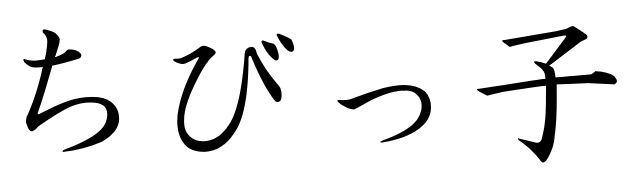
Chibi, meaning “tiny,” is one of those words that’s seeped into the vocabulary of overseas Japanophiles in recent years, with overseas anime fans using it to describe scaled-down, cuteness-up versions of characters. The same sentiment applies to combining chibi with ko, making chibikko a word for when you’re not just talking about kids, but specifically “cute little kids,” sort of like “little tykes” in English.
As a side note, chibisuke is a variant of chibikko. The nuance of “cute little kid” is the same, but -suke is a traditional ending for male names in Japan, so chibisuke is used for talking about boys, akin to “cute little guy.”
4. Jidou
In contrast to the casual tone of chibikko, jidou is a very proper-sounding term. It’s the word used to talk about things such as “children’s education” (jidou kyouiku), “children’s welfare” (jidou fukushi), and “child psychology” (jidou shinrigaku), and other societal senses. On the other hand, it’d sound weirdly stuffy to use jidou in our above example sentence about a kid eating ramen, or to use it when talking about a group of cute kids playing in the park.
5. Gaki
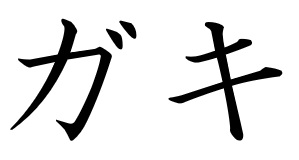
And jumping back to casual vocabulary, but with a very different tone from chibikko, we’ve got gaki, Japanese’s version of “brat.”
Originally, gaki is written with the kanji 餓鬼, which translate literally as “hungry demon,” which should give you an idea of the dim view of the kids in question in the eyes of the person saying/writing it. Nowadays, in written form you’re more likely to see it rendered in phonetic katakana script. Katakana is usually used for loanwords, but its angular lines make it a good fit for gaki’s harsh sound. Speaking of harshness, when someone has really had it up to here with those brats, you might hear them step their choice of words up to kuso gaki, or “shit brats” or “shitty little kids.”
That said, gaki doesn’t always carry a sense of genuine dislike for the kids being talked about. Some people use it as a gruff term of endearment, sort of like “rugrat” in English. Even then though, it’s probably a good idea to use it sparingly, always with a smile, and never with the kuso modifier stuck on the front of it.
Top image: Pakutaso
Insert images: SoraNews24
● Want to hear about SoraNews24’s latest articles as soon as they’re published? Follow us on Facebook and Twitter!
Follow Casey on Twitter, where he’s always in the mood for Japanese linguistics.




Japan celebrates Children’s Day by flying beautiful carp streamers 【Photos】
11 different ways to say “father” in Japanese
KFC Japan is heart-warming and finger-licking good with new food donation program for poor kids
The three ways to say “love” in Japanese, and when to use them
Kids takoyaki charity almost shut down by reselling middle schoolers, but owner soldiers on
Studio Ghibli calendar figures are back, look amazing whether you check the date or not[Photos]
Three new starter Pokémon Jets to fly in Japan, first begins carrying passengers this month
Uniqlo looks back to the very start of Pokémon with new black-and-white pixel art T-shirts[Pics]
Japanese recipe for Tempura Twinkies takes America’s favourite snack to a whole new level
Studio Ghibli has a new anime out, and there’s only one place in the world where you can see it
Family Mart opens new “Famima” flagship store in Tokyo that’s like a tourist attraction
Japan reacts to Donald Trump’s “Islamic Republic of Japan” remark
Enoshima’s magical night lantern festival is back this summer with spectacular views
Solid gold Hedorah kaiju from the Godzilla series is now available to pre-order
Survey shows foreigners’ desire to work in Japan long-term dropping, but that’s not the whole story
Japanese airport rebrands itself as “Sushi Airport” to attract foreign tourists
A visit to Sri Lanka’s knockoff knockoff Uniqlo (no, we didn’t stutter) to see its rare “Pikachus”
Salomon releases Japan-exclusive Mt. Fuji hiking gear that doubles as an amazing souvenir

New Mt. Fuji overnight bus takes travelers from downtown Tokyo straight to the most popular hiking trail
7-Eleven Japan releases chocolate cookies that taste like freshly baked melon bread
7-Eleven Japan now has Vietnamese banh mi sandwiches, but how do they taste?[Taste test]
Japan announces sudden 400-percent increase in visa fees for foreigners entering the country
Japanese ninja certification exam attracts 131 candidates from Japan and abroad
Studio Ghibli store Donguri Republic announces opening of first-ever store in America
New Japanese overnight train coming to connect Tokyo with Tohoku in sleep-travel style
Japan triples departure tax, foreign tourists and locals now must pay more to leave country
Japan launches first overnight Shinkansen bullet train between Tokyo and Osaka this summer
Japanese sweets shop sells an ohagi so exquisite it sells out by noon
Sanrio Character Poll announces winners, Hello Kitty absent from top 10 in many countries
Japan’s human washing machines will go on sale to general public, demos to be held in Tokyo
Starbucks Japan releases new drinkware and goods for Valentine’s Day
Starbucks Japan releases new sakura goods and drinkware for cherry blossom season 2026
Japan’s newest Shinkansen has no seats…or passengers [Video]
Put sesame oil in your coffee? Japanese maker says it’s the best way to start your day【Taste test】
Japan reportedly adding Japanese language skill requirement to most common foreigner work visa
How should a guy say “I” in Japanese? Japanese women give their opinions【Survey】
Why does Japanese writing need three different sets of characters? (Part 2)
Survey finds more than 70 percent of Japanese children have an online friend
One simple kanji character in super-simple Japanese sentence has five different pronunciations
KFC’s Colonel Sanders is becoming a samurai in Japan this week
Record number of foreign children in Japan need help understanding Japanese in school
Japanese schools banning nicknames, mandating use of -san divides opinions
Only one out of five Japanese people can pronounce these hiragana — can you?
Anime film Children of the Sea’s trailer is heartbreakingly beautiful, looks like nothing else
Japanese adult acts as perfect train driver using just a children’s picture book 【Video】
Japan’s buzzword of the year nominees: A great way to learn and be baffled by Japanese vocabulary
Japanese college students discuss whether kids should be allowed to watch anime, play video games
Tried-and-tested ways to learn Japanese while having fun!
How to respond to Japanese people saying “I don’t speak English” when you’re speaking Japanese?
Five magic Japanese phrases to know before starting a job in Japan
Hachiji juppun mae – A Japanese phrase that even Japanese people can’t agree on the meaning of