
A new take on honzen ryori in the holy land of mochi.
When the weather gets colder and New Year looms large on the horizon, people in Japan start craving warming, seasonal foods like mochi rice cakes. One of the best places to try mochi is Ichinoseki in Iwate Prefecture, where restaurants serve the dish year round, and even have unusual ways to eat it that’ll surprise out-of-towners.
▼ Ichinoseki is located in the northern Tohoku region, which is known for its chilly winters.

Mochi is so beloved in Ichinoseki that you’ll even find it at Michi no Eki roadside stations like the one at Genbikei. Though the roadside station is rustic, the meals it serves are surprisingly chic, with lots of “もち料理” (“mochi ryori” or “mochi meals”) to choose from.
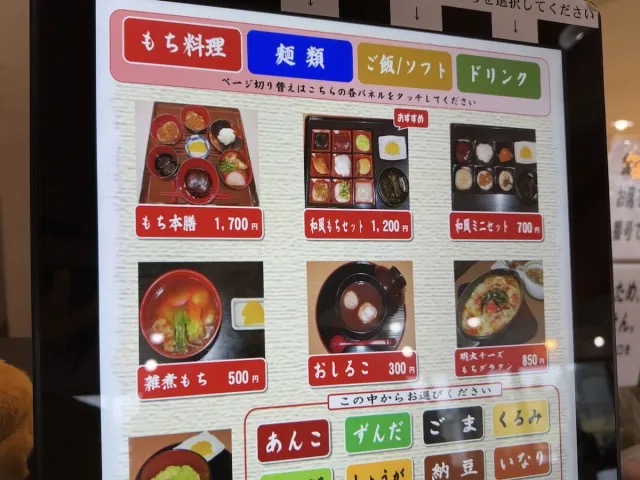
It’s said that over 300 types of mochi dishes have been handed down in Ichinoseki and nearby Hiraizumi through generations dating back to the Date samurai clan. Some of the options you’ll find on the touch panel here are ozoni (a soup containing mochi, commonly eaten at New Year), oshiruko (sweet red bean soup), and “Mochi Honzen” (pictured top left in the photo above), a multi-course meal originally eaten at annual samurai events.
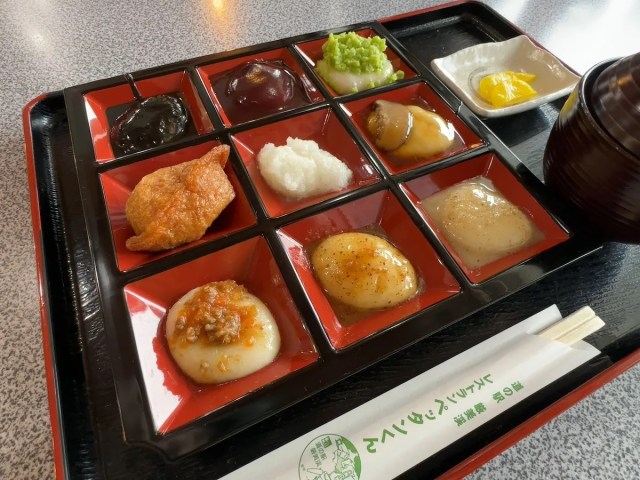
One of the most highly recommended dishes at this roadside station is the Japanese-style Mochi Set (1,200 yen [US$7.76]), which allows you to enjoy many types of mochi, in a similar but less formal way than a traditional honzen ryori.

This set contains eight types of bite-sized mochi, and instead of being placed on individual plates, they’re served on a convenient tray that’s been divided into nine sections.
▼ It’s so beautifully eye-catching that you might find yourself uttering “wow” as soon as you see it.
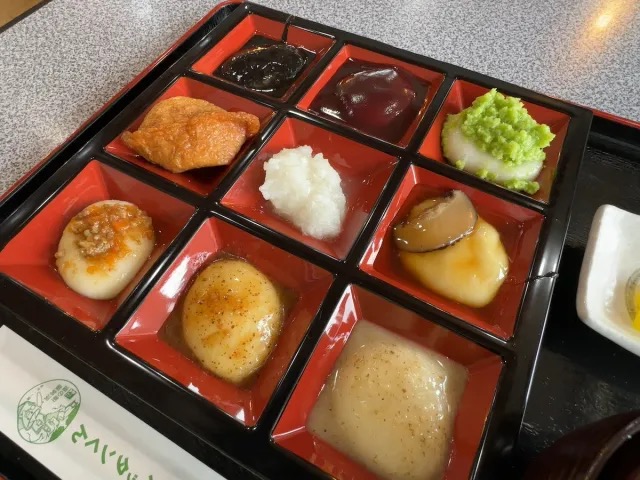
The eight types of mochi included are: Sesame, red bean paste, zunda (a sweet edamame soybean paste), inari (deep-fried tofu), ginger, minced meat, walnut, and one seasonal item. It covers everything from sweet to savoury, and is a good introduction to some of the unusual types of mochi generally only found in this area.
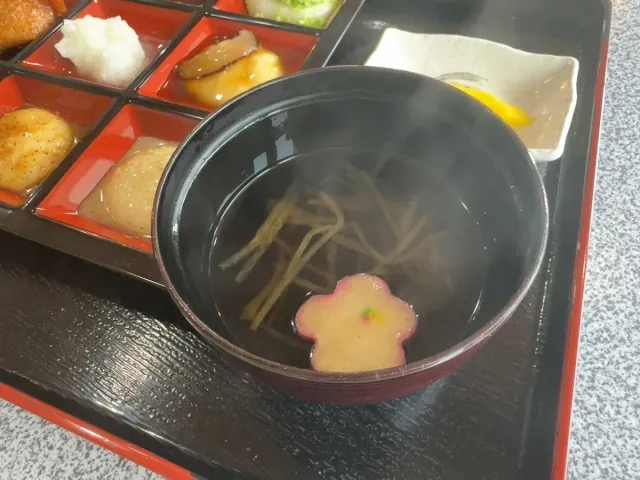
▼ The set comes with a bowl of soup on the side.
The middle section of the tray is reserved for grated radish, and this one was slightly piquant, suggesting it had been pickled.
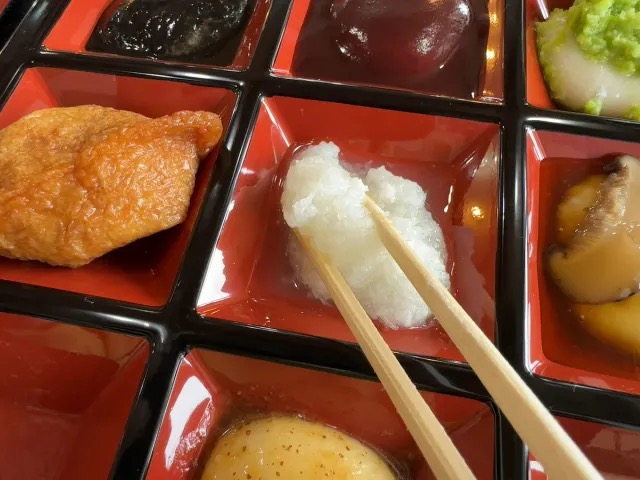
When eating a traditional honzen meal, there’s a specific order in which the food should be consumed, namely grated radish first, followed by red bean paste mochi, then grilled mochi and ozoni. However, this set is slightly different so it’s fine to eat the morsels in any order you please.
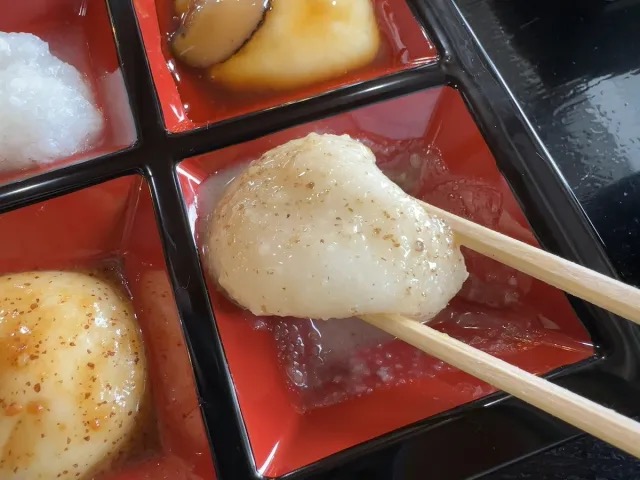
The mochi are so wonderfully soft they spill out over your chopsticks as you raise them to your mouth. However, once you eat them, they stretch to just the right amount so you can enjoy their chewy textures.

As mochi is made from rice, it pairs perfectly with strong-flavoured ingredients such as ginger, shiitake mushrooms, and meat. The minced meat above, for instance, added just the right amount of flavour to the mochi so you could enjoy both the rice and the meat.
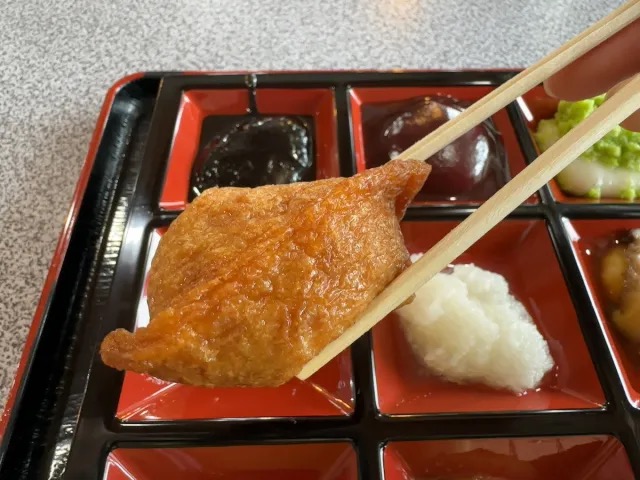
Another pairing that makes sense is the inari, seeing as these fried tofu pockets are usually filled with rice. However, instead of grains of rice, the inari above contained a bite-sized chunk of chewy mochi, and some say it’s even more delicious to eat it this way rather than with regular rice.
▼ The red bean mochi was just as delicious and well-made.
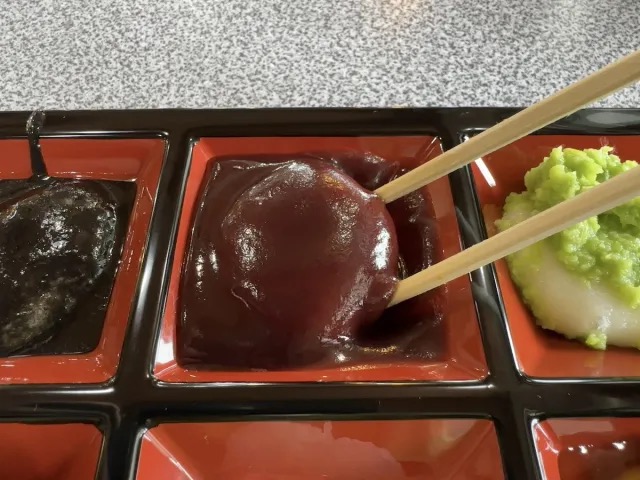
When serving a honzen meal at an event, there are a number of other etiquette rules to follow, such as allowing refills of red bean paste mochi and ozoni, but not other rice cakes.
▼ Another rule is to leave one piece of pickled radish behind, to help clean the dishes at the end.
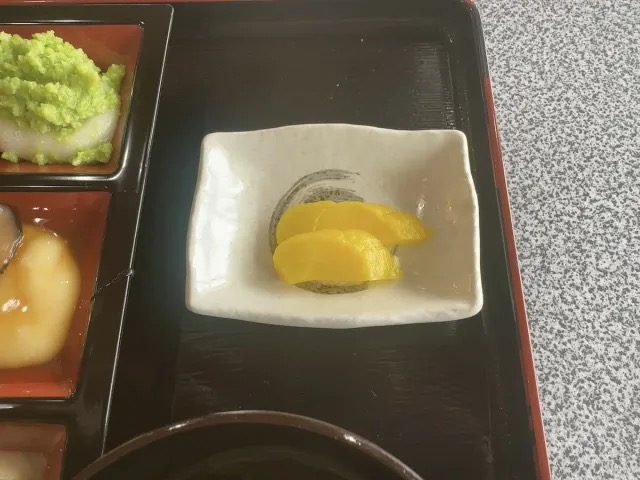
Our reporter Saya Togashi remembers pouring tea or milk into her bowls after meals at her grandparents’ house in the countryside when she was little to help clean them so they weren’t so hard to wash up afterwards. At that time, she didn’t really appreciate the benefit of saving water and reducing the effort of washing up, but as she looked at the daikon on this tray, she had greater appreciation for her grandparents’ smart, environmentally friendly ways.
▼ These mochi were so delicious she knew she wouldn’t leave a skerrick behind.

A mochi meal like this is hard to come across in Japan, but in Ichinoseki, they have a “mochi calendar” that consists of 60 special days a year when people eat mochi for special occasions. Mochi pounding, which is usually a New Year’s activity, is also enjoyed throughout the year in this region, for events such as festivals, entrance ceremonies, graduation ceremonies, and agricultural milestones.
So if you’re keen to try mochi, be sure to add a visit to Ichinoseki to your itinerary. And don’t forget to add a stop to the flying dango restaurant nearby!
Restaurant information
Michi no Eki Genbikei / 道の駅 厳美渓
Address: Iwate-ken, Ichinoseki-shi, Genbi-cho, Okinono 220-1
岩手県一関市厳美町字沖野々220-1
Open 10:30a.m.-4 p.m.
Closed from March to October; Closed every third Wednesday from November to February
Website
Related: Ichinoseki/Hiraizumi Mochi Map (Ichinoseki City Official Tourism Site)
Photos ©SoraNews24
● Want to hear about SoraNews24’s latest articles as soon as they’re published? Follow us on Facebook and Twitter!
[ Read in Japanese ]
 Japan’s most dangerous New Year’s food causes death once again in Tokyo
 The Mochi Bacon Cheeseburger comes to Tokyo and our stomachs
 W.T.F. Japan: Top 5 Japanese winter foods【Well-Fed Top Five】
 Starbucks Japan closing only Shinkansen platform branch for popularity-triggered renovations
 Pokémon and Ikea Japan cross over into each other’s worlds with collaboration events
 You can assemble a well-balanced team of Pokémon, them eat them, thanks to Japanese cake chain
 Animal Crossing plushie pouch towels and cozy socks show up at Family Mart convenience stores
 Two food hacks take Japan’s convenience store fried chicken to amazing new sandwich heights
 Japan’s full-facemask Ninja Parka still lets you eat ice cream[Photos]
 We found an underground Kyoto vending machine that sells multi-course French meals
 Japan’s prime minister exchanges Dragon Ball kamehamehas with president of France[Video]
 This ad for Ueno Clinic makes no sense… until you realize what the clinic specializes in【Video】
 Look stylish while working out on the daily with these crazy geta sandals
 Tokyo’s best museum for foreign travelers finally reopens after being closed for four years
 Pokémon lacquerware series expands for Year of the Horse with new handcrafted design[Video]
 Famous Tokyo cherry blossom spot installs view-blocking screens to fight overcrowding[Video]
 Tokyo subway and almost all Tokyo train lines now accepting credit card tap payments
 Fading Tokyo – Searching for signs of the Showa era as local neighborhoods evolve[Photos]
 Totoro Fund line of beautiful artwork and apparel lets you help the real-world Totoro Forest
 Tokyo turns its phone booths into free Wi-Fi hotspots, and here’s how to use them
 Studio Ghibli adds new My Neighbour Totoro 2026 Corn Gift to its anime store for Mother’s Day
 Japan now has a special desk for people who work at home with a pet cat[Photos]
 Uniqlo announces new T-shirts for One Piece, Naruto and more for manga publisher’s 100th birthday
 Train station platform ramen store closes its doors on half a century of history in Tokyo
 Starbucks Japan releases new My Fruit³ Frappuccino at only 34 stores around the country
 Studio Ghibli releases Catbus pullback keychain that runs like the anime character
 Krispy Kreme releases Super Mario doughnuts in Japan for a limited time
 Japanese onsen egg maker from 100-yen store Daiso needs to be on your shopping list
 Nine great places to see spring flowers in Japan, as chosen by travelers (with almost no sakura)
 Survey asks foreign tourists what bothered them in Japan, more than half gave same answer
 Japan’s human washing machines will go on sale to general public, demos to be held in Tokyo
 Starbucks Japan releases new drinkware and goods for Valentine’s Day
 We deeply regret going into this tunnel on our walk in the mountains of Japan
 Studio Ghibli releases Kodama forest spirits from Princess Mononoke to light up your home
 Starbucks Japan releases new sakura goods and drinkware for cherry blossom season 2026
 Japan’s newest Shinkansen has no seats…or passengers [Video]
 Major Japanese hotel chain says reservations via overseas booking sites may not be valid
 Put sesame oil in your coffee? Japanese maker says it’s the best way to start your day【Taste test】
 No more using real katana for tourism activities, Japan’s National Police Agency says