

One simple chart could have made all the difference.
The average level of English capability in Japan is pretty low, despite the language being a required subject in schools starting from junior high. There are a number of possible reasons for this dichotomy, but Japanese Twitter user @Heehoo_kun has found what, for him, is the biggest.
英語でこれを教えないせいでどんだけ今まで無駄な時間を費やしてたのか pic.twitter.com/b6ihPbxoQf
— (っ╹◡╹c) (@Heehoo_kun) April 15, 2019
“We wasted so much time in English class,” tweeted @Heehoo_kun in exasperation, “because they didn’t teach us this.”
So what’s this missing piece of the English puzzle @Heehoo_kun says he was never given? Phonics. Specifically, he tweeted a page from a book showing a basic phonics pronunciation chart for each letter of the alphabet.
While phonics might seem like a practically self-explanatory concept to native English speakers, that’s often far from the case for Japanese learners of English, for a number of reasons. First off, in Japanese almost every consonant has to be connected to a vowel (aside from a small handful of exceptions like “n” and consonant blends “sh” and “ky,” and even the blends have to be followed immediately by a vowel). Because of that, there’s no indigenous Japanese concept that the letter b or t can have any sort of sound by itself.
▼ “What is the sound of one t existing?

The second problem is that in Japanese, even when using the phonetic scripts called hiragana and katakana, there’s no difference between the name of the character and the way it’s pronounced. For example, if you write “ramen” in Japanese, it’s ラーメン, and that first character, ラ, is both called and pronounced “ra.” Compare that to English, where the first letter in ramen, r, makes a “r-“ sound, but the name of the latter itself is pronounced like “ar.”
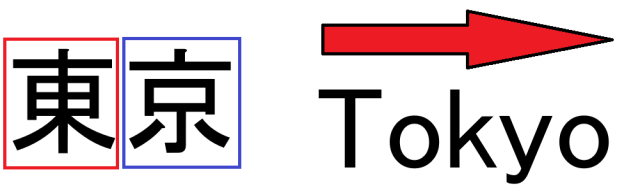
Combined, these two factors mean that when they’re reading Japanese, Japanese people largely string together pre-determined sets of characters, each of which they’ve already memorized the correct pronunciation for. Even when using non-phonetic kanji characters, words are made up of pre-set chunks, like with Tokyo, 東京, which a native Japanese reader’s brains parses by recognizing that 東 is “To” and 京 is “kyo.”
English, though, requires the complete opposite approach. The reader must stay patient and pronounce one letter at a time until the sounds eventually blend together to form the word. However, if teachers and texts don’t properly explain that, as seems to be what happened with @Heehoo_kun, English is going to feel like an arbitrary and intimidating mess of vocabulary words that have to be memorized in their entirety.
▼ Reading is a staccato process in Japanese, but a flowing one in English.
@Heehoo_kun says he found the phonics chart in a book from Japanese author Hiroshi Matsui titled One-Shot Understandable English Pronunciation for Japanese People (available on Amazon here), and a number of other Twitter users were equally impressed with its phonics chart, leaving comments such as:
“This is so true!!!!! When I was in the first year of junior high, I tried reading A, B, C, D as “ah, bu-, cu- du-,” and my teachers all told me I was wrong!!! My method was just too advanced for them.”
“I did the same thing, and my teacher got mad at me.”
“Schools don’t teach phonics because Japan is all about written tests for English.”
“I wanted a chart like that. I kept trying to tell my teacher I just couldn’t figure out how to read words in English, and this would have been such a big help.”
“I’m in high school now, and I don’t remember doing phonics in junior high.”
However, the quality of English instruction in Japan tends to vary widely depending on the specific instructor and institution, and a few other online commenters chimed in to say this wasn’t their first exposure to phonics.
“I think schools are required to teach this starting in junior high now.”
“They cover phonics in the English-learning programs on [public broadcaster] NHK.”
“I took after-school classes at an English conversation school starting in the third year of elementary school, and I learned phonics then.”
Still, @Heehoo_kun and others like him never got this critical English-learning tool, which is probably something important to keep in mind should you find yourself working in the English-teaching field in Japan, or otherwise trying to communicate with a Japanese person in English.
Source: Twitter/@Heehoo_kun via Jin
Top image: Pakutaso
Insert images: Pakutaso, SoraNews24
● Want to hear about SoraNews24’s latest articles as soon as they’re published? Follow us on Facebook and Twitter!
Follow Casey on Twitter, where he’s always up for some linguistics.