Ever wondered what J.K. Rowling’s Harry Potter would have looked like if it had been an anime made in the 1980s? Neither had we, but now that we’ve seen it we think it’s the <hyperbole but for good reason> BEST THING EVER </hyperbole>.
Join us after the jump for bike-based quidditch, a cat-eared Hermione, Tetsuo/Voldemort battles and more.
Bukatsu, or club activities, are a big part of school life in Japan. In the majority of schools, all kids are required to become a member of a club, be it track and field, judo, or even computer club, and have to attend every session regardless of the time of year and the weather (yes, athletics club kids jog up and down the hallways when it’s raining heavily). Naturally, there are distinct levels of coolness that students are more than aware of when they sign up, with clubs like baseball generally considered to be for the jocks, and soccer-bu for those who want to look good while sharpening their shooting skills.
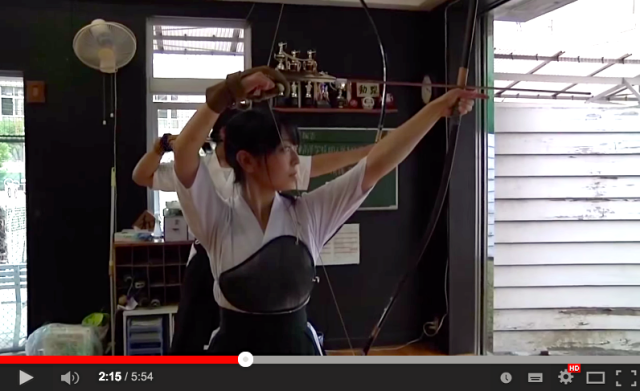
Japanese archery, or kyūdō to use its native moniker, may not be considered the coolest club to belong to by kids in Japan, but as this video fromJapanese culture blogger Danny Choo shows, as far as non-Japanese are concerned, it’s pretty epic, and if we were somehow reincarnated as a Japanese high schooler it’s definitely the club we’d sign up for.
The lack of both L and V sounds in Japan’s language hasn’t kept Canadian musician Avril Lavigne from achieving widespread popularity here. As a matter of fact, given the country’s affinity for female solo acts, and its decades-long ready acceptance of “girls’ rock” music, you could make the argument that Lavigne has an even broader fan base in Japan, or at least one that’s split more evenly across the gender line.
So when Lavigne recently revealed she’d filmed her latest music video in Japan, maybe it wasn’t so surprising, even if a few of her choices for representing Japan were.
Ah, whack-a-mole, that fun childhood arcade game where the only goal is to smash all the moles back down into their holes. No one ever felt sorry for the little plastic rodents, but what if they were actual kitties? Take a look at this video featuring kittens in their own version of the classic game. (Don’t worry, no kitties were whacked in the making of this video!)
Throughout his long career as an animator and manga artist, Hayao Miyazaki has created a particular style and theme throughout his works that have inspired an untold number of younger artists. However, what if Miyazaki himself had been influenced by some of the other popular series to come out of Japan, like Dragon Ball Z or Sailor Moon?
Brian Murphy and Patrick Cassels from College Humor have dreamt up exactly such scenarios by combining anime hits like Pokémon with Miyazaki classics such as Spirited Away in an animated short titled: If Miyazaki Films Were Like Other Anime. And it’s truly glorious.
In planning any large-scale sporting event, organizers have to take security needs into consideration. Any time you combine thousands of people in a confined space with heightened emotions and flowing alcohol, there’s at least the chance that some individuals will be tempted to cross the line of polite behavior or even public safety, so it’s always a good idea to have a few security guards or uniformed police officers on hand.
Or, as shown in this awesome time-lapse video filmed outside a stadium in Chiba Prefecture, the giant robot from Patlabor.
When looking at old photographs and video, there’s a strange phenomenon that sometimes occurs. Between the visual grain and the way colors bleed together, sometimes those images don’t seem like they’re just from another time, but from another world, one somehow less defined and concrete then the one in which we now live.
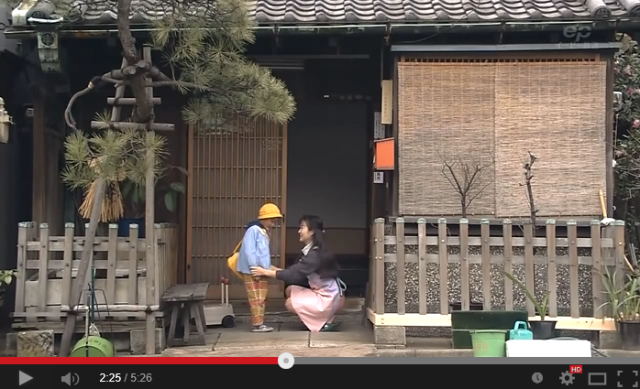
Of course, that’s all just outdated technology playing tricks on you. While camera and monitors have certainly gotten better over the years, the resolution of real life hasn’t gone through any upgrades, and the physical world has always been as sharp and vibrant as what we see today. As proof, take a look of these amazing HD videos of Tokyo taken over two decades ago.
2014 marks 25 years as a band for the pillows. They are celebrating with a song entitled “Happy Birthday,” and also by announcing a cover and dance contest. For those with the misfortune of not knowing who the pillows are, they are a Japanese rock band whose style has changed over the last 25 years from pop to jazz experimentation to alternative rock.
Many of the band’s fans outside of Japan became acquainted with them through the six-episode animated series, FLCL, for which the pillows provided the music. The caffeinated, crunchy soundtrack is the perfect complement to the nonsensical but purely fun plot that includes a robot that emerges from a boy’s head wound, the spirit of a powerful pirate king and the sexy maniac who hunts him down riding a Vespa with an electric bass as a weapon.
The newest song to hit India is about an unprecedented topic: poop. The song was written by Shri, celebrated composer of the promo song for Life of Pi, and the animated video features hordes of poo piles assailing horrified people holding their noses and running for their lives. Now why is UNICEF involved with something that sounds like the plot from a niche B-movie horror flick?
While most people in developed countries take it for granted that they can find a functioning bathroom anytime they need one, that is not true everywhere. In developing countries like India, sanitation has not always kept up with exploding populations. It’s estimated that half the country’s residents defecate in public, leading to a daily addition of 65 million kilograms (71,650 tons) of feces in public places. Almost none of the poorest 20% ever have access to toilets and have no choice but to defecate outdoors.
When people talk about Japan, they usually talk about its beautiful landscapes, rich culture, and delicious food. They talk about the cherry blossom in spring, the soft, powder snow in winter, the deep red autumn leaves, and the summers that, while swelteringly hot, go perfectly with a big glass of cold Japanese beer.
What they don’t talk about are the bugs.
Although Japan has nothing on “Don’t Touch That, It’ll Probably Kill You” Australia, it nevertheless has its fair share of creepy-crawlies, and the oosuzumebachi, or Japanese Giant Hornet is perhaps the worst of the bunch. It’s still only April, but it would seem that the Japanese branch of Satan’s striped servants are already out and about, and getting into people’s apartments, no less…
I can’t even remember the last time I “said Grace” before a meal. It must have been before my teens, when my parents realized I was a Godless, hopeless heathen that shoveled food into my mouth so fast I couldn’t even taste it.
Which, I guess, puts my manners one level below four Chinese dogs that dutifully bow and lower their heads as their owner/trainer says a few words of thanks for their meal.
Last September, we brought you news that Japanese cup noodle maker Nissin was about to launch a new product, Kare Meshicurry rice in a cup. Hoping to do for rice what it did for noodles and ensure that a new generation of Japanese never give in to the urge to cook a real meal for themselves, the idea is that lazy diners simply add water to the pre-cooked curry and rice, heat it in the microwave and get stuck in. All the taste with minimal washing up and none of the fuss of cooking rice the regular way.
This week, in an effort to lodge Kare Meshi more firmly in the minds of consumers, the noodle king has launched a new ad for its cup rice. And it is positively insane.
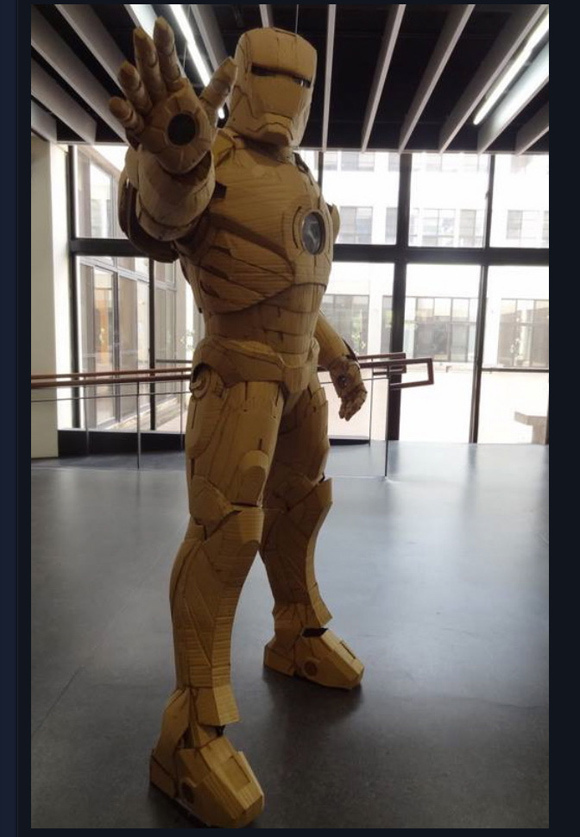
Tony Stark is a character whose power comes from his ingenuity in designing and building his Iron Man suits and weapons. And of course having millions of dollars at his disposal helped.
Meet Kai-xiang Xhong, the Tony Stark (sans riches) of cardboard art. Some people might laugh at the phrase “cardboard art,” but this man’s sculptures are so stunning that it’s hard to believe they are made of the same stuff your Amazon purchases arrive in. Take, for instance, the life-size Iron Man suit shown above. (Did we mention it’s wearable? There is a person in that suit, walking around and bending parts without it falling to pieces!)
Unlike cats, dogs are usually pretty easy to win over. Constantly seeking praise and approval, with a few “good boy”s and a scratch behind the ear they’ll immediately cheer up and want to be friends again. You can praise a cat until you’re blue in the face — it neither wants nor needs your approval, and if it’s not in the mood, you’ll soon know about it.
This little shiba inu, though, looks especially irked, and is making no secret of the fact that he’s cross by ignoring his owner no matter what she says or does. All until…
In October last year, Yokohama City joined forces with Japanese automobile manufacturer Nissan for a special project dubbed Choi-Mobi Yokohama. Furnishing the historic port city with a small fleet of rentable,ultra-compact electric vehicles, Nissan set out to examine the feasibility of making such modes of transport commonplace in urban centres. Allowing anyone with a valid license to zip around the city – emission free, of course – for just 20 yen (US$0.19) per minute of use, ultra-compacts like the Choi-Mobi are tipped to be a useful replacement for taxis and private vehicles in urban areas in future years.
The concept alone was enough to have tech-heads and environmentalists alike grinning from ear to ear, but on April 1 this year, Nissan asked a group of Choi-Mobi renters to use their time together inside the vehicle to convey important messages to one another, telling not April Fools but “April Truths”.
In a way, small children are scary. Their language skills aren’t fully developed, so you can’t negotiate with them. When they’re angry, their lack of adherence to societal norms means they’re likely to scream at or even bite you. Really, the only thing that keeps them from being paralyzingly frightening is the superior size and strength we have as full-grown adults.
So when we first heard about toddlers practicing judo, which would eventually allow them to use our strength against us, we assumed they must be terrifying. Then we watched this video, and learned that they’re somehow even more adorable as a result of their training in Japanese grappling techniques.
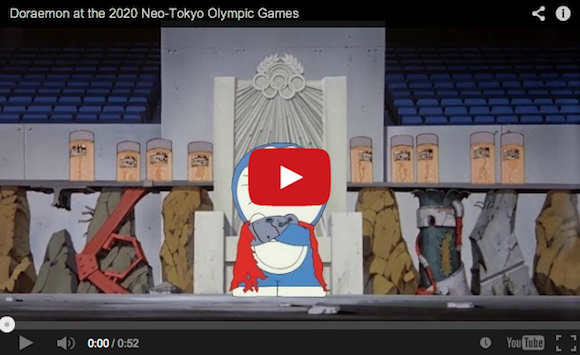
What do you get when you mix the 2020 Tokyo Summer Olympic Games ambassador, the iconic and famous Doraemon, with a fictional doomsday scenario, as foretold by Akira? An eerie crossover that will populate your nightmares for weeks.
Don’t even bother getting up on stage; this kid has just stolen the show.
Three-year-old Zhang Junhao blew audiences away recently with a genuinely impressive performance at a Chinese talent show. After handing the judges the remote control to flick between audio tracks at will, the pint-sized performer showed his skill on the stage, wowing the judges with an array of cute dances before revealing that his dream is to “make people happy.”
Well, good afternoon/evening/morning/day everyone! Today we’re going to talk about Japanese greetings and what they really mean.
Just as in English, “Konnichiwa” or “Good day” is a greeting that is technically an idiom with a complex and near-forgotten past. Just as English language greetings tend to stem from bastardizations of foreign loan words and/or full sentences that have been gradually shortened over the years, “konnichiwa” is actually a shortened version of a full and meaningful greeting, because, if anything, human beings are a lazy sort with a bad habit of cutting corners whenever possible.
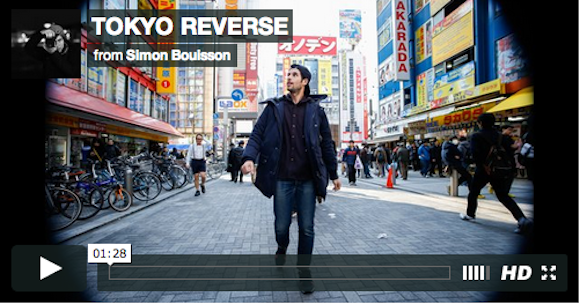
In the age of affordable digital cameras and programs that can make even photos and footage taken by a team of cavorting chimps look artistic and cool, footage of popular destinations like Tokyo are ten-a-penny online. But this video from Simon Boulsson is not just noteworthy by stop-and-gawp-worthy.
Titled “TOKYO REVERSE”, the video is set to a pumping soundtrack and takes us on a brief tour of some of the capital city’s most famous spots. The views are of course stunning, but as its title suggests there’s even more to the video than that.














 Create a tiny Ghibli anime world on your bookshelf with new miniature papercraft art kits
 7-Eleven Japan releases a crazy new viral sandwich: Chocolate Sprinkles and Whipped Cream
 Japan now has a “for foreign tourists only” Mt. Fuji sightseeing train[Video]
 Ghibli Museum building becomes a cuddly cushion
 Starbucks Japan releases new My Fruit³ Frappuccino at only 34 stores around the country
 How to write “sakura” in Japanese (and why it’s written that way)
 7 great places to see Mt. Fuji from without having to climb it
 Train station platform ramen store closes its doors on half a century of history in Tokyo
 Take a look inside the Future Train, a unique new restaurant diner and cafe in Kyoto
 Japanese jam jar lids close on their own, as if by magic
 Japanese onsen egg maker from 100-yen store Daiso needs to be on your shopping list
 Cherry blossoms begin blooming in Japan with record-early starts for sakura season
 Tokyo government organizes food truck event to clear out delinquent/homeless teen gathering area
 Nine amazing off-the-beaten-path cherry blossom spots in Japan for yaezakura and shidarezakura
 Stunning central Japan wisteria festival is like a purple fantasy straight out of a Ghibli movie
 When will the cherry blossoms reach full bloom in Japan this year?[Forecast]
 Studio Ghibli unveils new Rollbahn notebook in honour of Howl’s Moving Castle
 Studio Ghibli adds new anime tumblers to its cool streetwear brand in Japan
 Universal Studios’ Sailor Moon theme park attraction is finally coming to America
 Starbucks Japan unveils new sakura cherry blossom collection for hanami season 2026
 Studio Ghibli releases Catbus pullback keychain that runs like the anime character
 Nine great places to see spring flowers in Japan, as chosen by travelers (with almost no sakura)
 Starbucks Japan releases first-ever Hinamatsuri Girls’ Day Frappuccino
 Studio Ghibli adds new Mother’s Day gift sets to its anime collection in Japan
 Virtual idol Hatsune Miku redesigned with look that adds new elements and brings back old ones
 Survey asks foreign tourists what bothered them in Japan, more than half gave same answer
 Japan’s human washing machines will go on sale to general public, demos to be held in Tokyo
 Starbucks Japan releases new drinkware and goods for Valentine’s Day
 We deeply regret going into this tunnel on our walk in the mountains of Japan
 Studio Ghibli releases Kodama forest spirits from Princess Mononoke to light up your home
 Starbucks Japan releases new sakura goods and drinkware for cherry blossom season 2026
 Japan’s newest Shinkansen has no seats…or passengers [Video]
 Major Japanese hotel chain says reservations via overseas booking sites may not be valid
 Put sesame oil in your coffee? Japanese maker says it’s the best way to start your day【Taste test】
 No more using real katana for tourism activities, Japan’s National Police Agency says
 How to write “sakura” in Japanese (and why it’s written that way)
 7 great places to see Mt. Fuji from without having to climb it
 Train station platform ramen store closes its doors on half a century of history in Tokyo
 Take a look inside the Future Train, a unique new restaurant diner and cafe in Kyoto
 Japanese jam jar lids close on their own, as if by magic
 Tokyo Station staff share their top 10 favorite ekiben
 Is Oni Koroshi sake in a drink box wino fuel or a hidden gem?
 Japan’s Mos Burger discontinues old teriyaki burger and rolls out new recipe, but is it as good?
 Elementary and junior high students speak out on Japan’s strangest school rules
 One of Japan’s rarest sweets is a sell-out hit that looks and tastes like frost
 You can now get Poké Ball-shape diamonds for your rings in Japan【Photos】
 Fake police phone scam also highlights dumb stereotype about how foreigners speak Japanese[Video]