A few weeks ago, a handful of motorists in Chiba Prefecture witnessed a sight few of us will ever be fortunate enough to see: a man dressed as Batman riding a customized trike, speeding down the expressway. Chibatman, as he soon came to be known, quickly caught the attention of not only comic fans around the world, but also the local police, who recently called the Caped Crusader in for a little chat.
cars (Page 17)
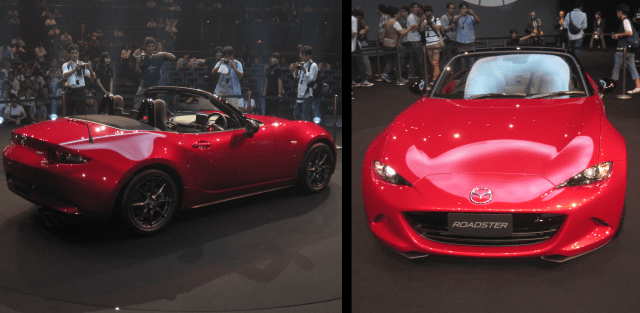
Mazda’s Roadster, also known as the Miata and MX-5, hit showrooms in 1989 and became an instant hit. In the years since, though, doomsayers have emerged every time a competing automaker releases a would-be rival, with predictions having been made that the BMW Z3, Porsche Boxter, Mercedes-Benz SLK, Toyota MR-S, Honda S2000, Pontiac Solstice, and Saturn Sky were all going to kill Mazda’s lightweight open sports car.
The three German cars are still around, although now at price points so far above the Roadster’s that they’re really not in competition with the Japanese Mazda. As for those other pretenders to the affordable convertible crown? All dead and buried. The Roadster’s even outlasted some of those companies, as Pontiac and Saturn have both shut down entirely.
With this history of success, it must have been tempting for Mazda to spend all of the Roadster’s 25th anniversary celebration patting itself on the back for a job well done. Instead, the automaker from Hiroshima chose to do fans one better, by unveiling the fourth generation of the world’s best-selling two-seat sports car.
As a car-loving foreigner living in Japan, for me, any cruise around Tokyo can suddenly turn into an automotive photo safari. Japan has tons of cool domestic cars which were never exported to the U.S., and whenever I come across one in the wild, I feel the need to whip out my camera for a few photos.
But while I’m happy my photo collection includes snapshots of Mazda AZ-1s and Subaru 22B Imprezas, motorists in Chiba Prefecture recently spotted something even rarer, in the form of a street-legal trike being ridden by none other than Batman!

Japanese culture places a lot of importance on taking care of yourself and not inconveniencing others. Sooner or later we all end up needing a little help, though, which is why the Japanese language has a half-dozen regularly used phrases that all mean “thank you.”
But while having that arsenal of expressions with which to show your gratitude comes in handy, it won’t do you much good if you want to thank someone who’s not in earshot, such as a fellow motorist who let you into their lane on the expressway. That’s why Japanese drivers follow a bit of automotive protocol that lets them deliver a message of thanks with the push of a button.
With Tokyo’s extremely efficient public transportation system, there really isn’t much need to ever drive anywhere in downtown. Still, if you’re the owner of a sweet sports car, we imagine you’d be itching to take it out for a spin whenever you get the chance, especially on a day like last Sunday, when the city was blessed with perfect driving weather. The skies were clear, the humidity was remarkably low for a Japanese summer, and the temperature was pleasingly warm.
Things got a little too hot for the driver of one Lamborghini, though, whose exotic Italian car went up in flames on the Tokyo expressway.
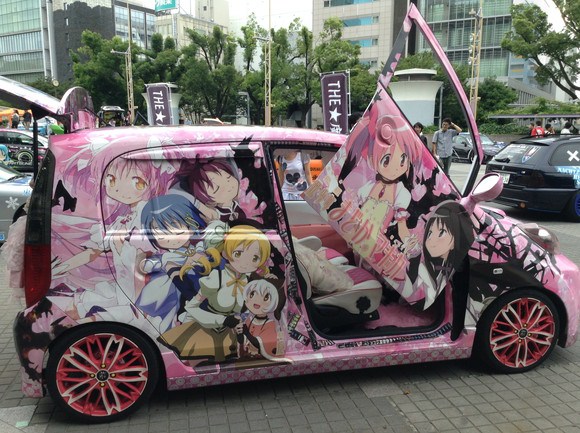
This summer, Nagoya once again served as the host city of the World Cosplay Summit. With anime fans arriving from all over, some of them came by car, and you know what that means: itasha, automobiles covered with anime graphics.
Held concurrently with the costuming competition was an itasha exhibition, and we strolled by to check out the rides adorned with their drivers’ favorite 2-D heroines.
Translation apps are very popular for people visiting foreign lands. With only internet access and a tap of the finger you can convey “I swallowed a june bug” in any number of languages like Spanish (Me tragué un error junio) and Hatian Creole (Mwen vale yon ensèk mwa Jen). I’m pretty sure those are both wrong, but still better than I could do by myself with no knowledge of either language.
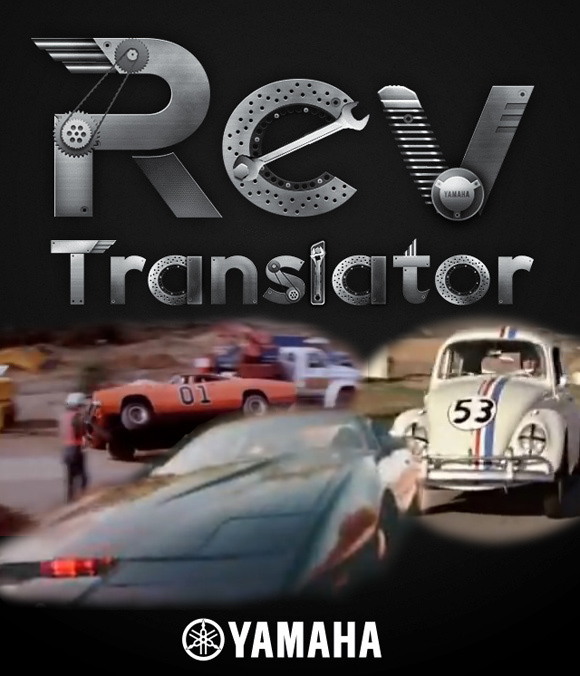
Now Yamaha has brought the translation app beyond the boundaries of humanity and into the realm of the machine with their engine revving translation app, RevTranslator. As the name suggests, this app will listen to an engine and deliver its message in Japanese.
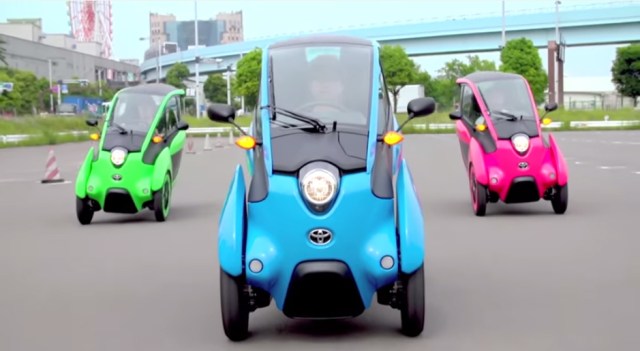
Toyota Motor Corporation’s sleek and compact vehicle shows off its moves in a new promotional video after successful public trials in Tokyo. Watch these cute and colorful little vehicles whizz past the city’s landmarks and glide around corners while leaning at an incredible angle.
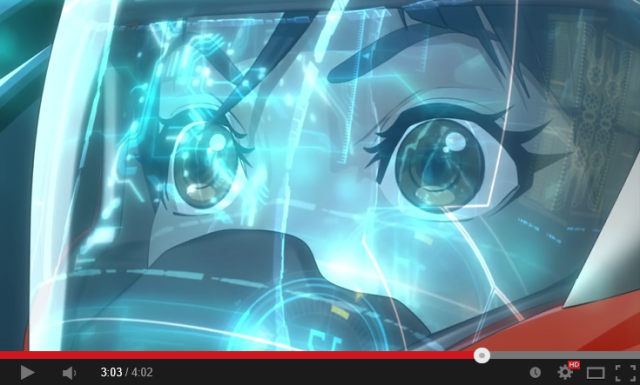
In the beginning, motorized vehicles were designed to be the prefect horse. They’d get you from A to B while allowing you to bypass the bowleggedness and poop shoveling that were inherent parts of equestrian transportation. With time, though, things changed. Cars got bigger and comfier. Plush, roomy interiors designed to isolate passengers from outside sounds and elements moved the design target from the perfect horse to the perfect living room.
So how do you communicate the appeal of a motorcycle to younger people who’ve grown up in these conditions? How do you get them excited about something that sacrifices all of those creature comforts and doesn’t insolate the connection between you, the machine, and the road, but enhances it?
If you’re Yamaha, you create a stylish anime series, and put it on YouTube for all to see.

Remember back in May this year when Mercedes-Benz teamed up with Nintendo to create an unusual little ad for the new Mercedes-Benz GLA? Featuring none other than Nintendo’s Super Mario behind the wheel of the sleek SUV, the commercial became quite the hit, with media and news outlets all over the world reporting on it.
Well, as it happens, it wasn’t just YouTube users the commercial was appealing to: Mercedes-Benz Japan has recently announced that it has seen a marked increase in visitors to its showrooms and demand for the car driven by this muscular Mario was far higher than expected.

Toyota recently announced it plans to begin consumer sales of a Fuel Cell Vehicle sometime around the beginning of 2015, which has the potential to be a huge step towards a more environmentally-friendly system of personal transportation. Rival carmaker Honda isn’t about to let Japan’s largest auto manufacturer have this new field all to itself, though, as it looks to be moving ahead with plans to start selling an FCV of its own within the country that aims to be the class leader in both performance and price.
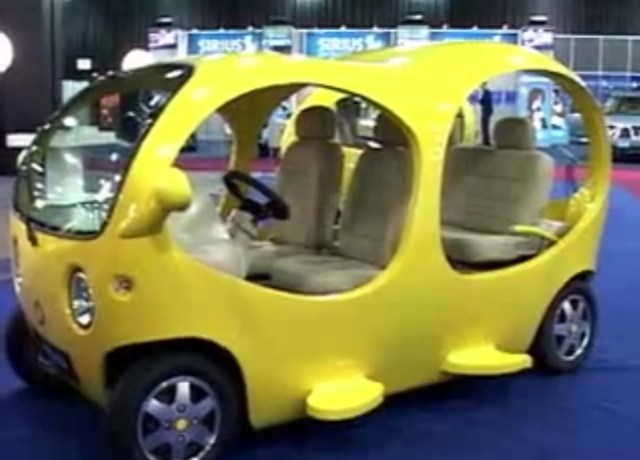
As a teenager, I spent hours playing racing games on our PlayStation, trying to elicit compliments from the miniskirted race queen in Rage Racer or trying to smash all my brother’s records in Gran Turismo. One thing that bugged me in these games was the goofy car names: Rage Racer’s fictional Lizard Hijack truck is as clumsily-named as it is boxy (maybe the bed was full of kidnapped chameleons?) Gran Turismo features real-life Subaru Impreza WRX TypeR STi, which is always annoying to read. I guess they want to say it’ll ‘imprez ya,’ but if it’s got an STI, you might need some antibiotics afterwards.
It turns out I’m not the only one who finds Japanese car names strange and amusing. The search term “funny Japanese car names” is so common that Japanese bloggers are writing about the names that the English-speaking world is talking about. The funniest part is often that the bloggers don’t quite understand why they’re funny, over-explaining a joke that wasn’t there.
Soichiro Honda, the man who founded Honda Motor Co., was once quoted as saying that the best-selling car cannot be the best-driving car, because the compromises needed to become the former are incompatible with the lack of compromises required to be the latter.
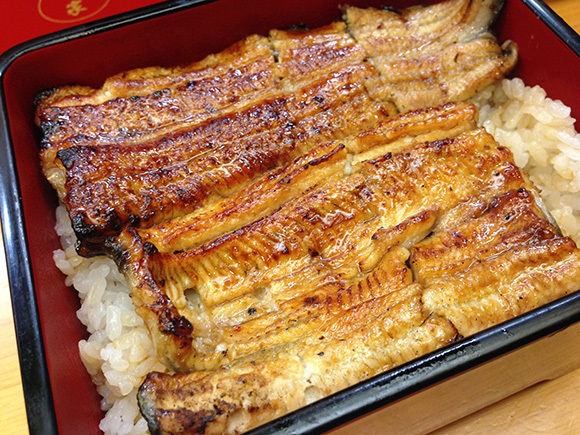
It’s hard not to respect a person with such unflinching standards, and even want to emulate him a little. So when we found out one of the legendary engineer’s favorite restaurants was just a short train ride from our office in downtown Tokyo, we decided to check it out. Even after we found out it’s famous for its grilled eel livers.
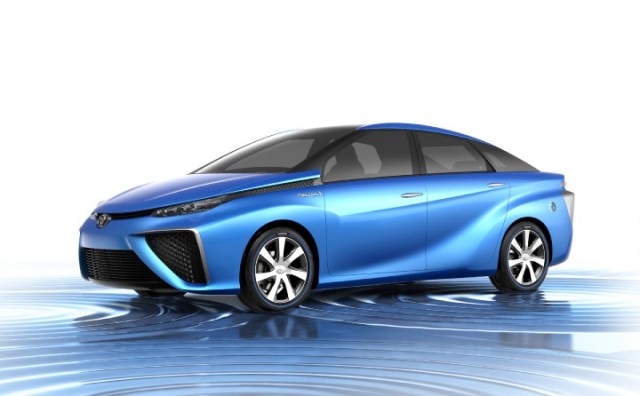
Although the technology has been talked about for quite some time now, the concept of using oxygen and hydrogen to power an automobile seems poised to finally hit the market.
According to reports, the Toyota Motor Corporation has recently declared that their sedan-type Fuel Cell Vehicle (FCV) will begin production at the end of this year. At the moment Toyota claims this would make them the first automaker in the world to market such a vehicle to the public at large.
Isn’t it a little weird that whenever Princess Peach gets kidnapped, and ostensibly needs to be rescued as soon as possible, Mario literally runs off to save her? Why is it that when time is of the essence, Nintendo’s greatest hero insists on doing the job on foot? After all, it’s not like he can’t drive, since there are now eight titles in the Mario Kart racing series.
Really, it’s about time Mario got himself some motorized transportation, and a star of his caliber needs a suitably prestigious ride. Something like a new Mercedes-Benz GLA, perhaps.

Chinese cities have featured a lot in the news over the past few years. With the country experiencing rapid economic growth and its industries going into overdrive – though often with scant regard for the environment – the air quality in some cities has deteriorated to the point that health organisations have warned against spending too much time outdoors. The country’s rivers, too, bear the scars of progress as factories pump tons of waste into them, in some cases turning the water dark red.
Thankfully, though, the Chinese government has pledged to address the situation, and has this week announced plans to remove as many as six million vehicles from its roads in an effort to detoxify city air.
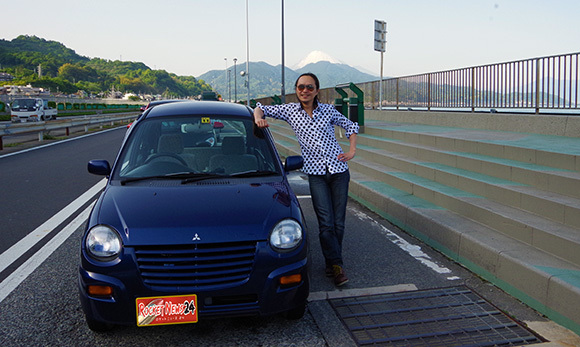
Japan has an image as an expensive country, but with a little searching, you can find some pretty good deals. For example, the other day I went out and got a haircut, bought a shirt, and had a pretty good sushi lunch, and none of those three expenditures cost me more than a thousand yen (US $9.80).
Still, my bargain hunting skills can’t compete with those of our Japanese-language correspondent Go, who with 980 yen just bought himself a car.
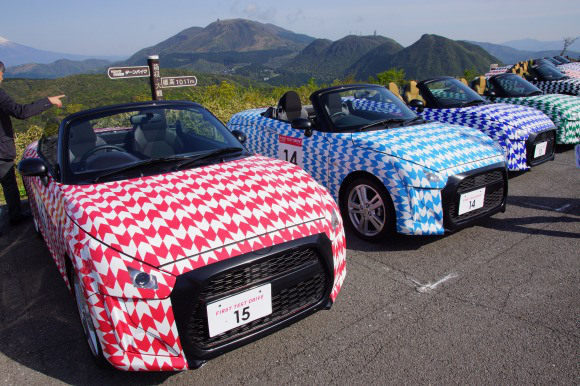
The town of Hakone, located high in the mountains of Kanagawa Prefecture, is one of Japan’s most popular tourist destinations. Visitors come to enjoy its soothing hot springs, beautiful views of Mt. Fuji, and art museums focusing on outdoor sculpture installations and Venetian glass.
Hakone also happens to be home to some of the best driving roads in east Japan, too, which is why Daihatsu picked the site to show off its new compact convertible, the Copen, to fans and press.
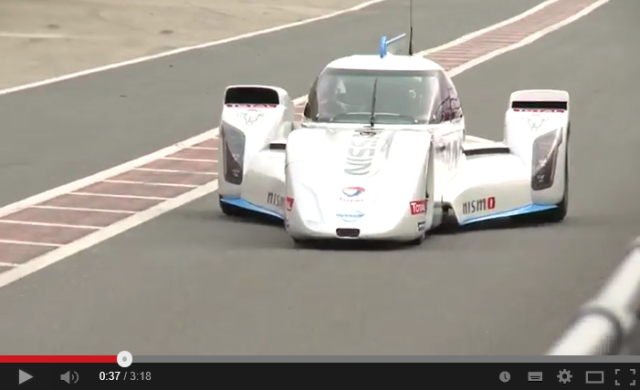
Most if the time, video games and sports cars are two of the more trivial things in life. That said, sometimes it’s those non-productive luxuries that give us the recharge we need to be industrious in our daily grind. Some people draw energy and inspiration from an afternoon spent with a good book or favorite album, others get it from a few hours working a PS4 controller or rowing through a crisp-shifting gearbox.
Competitive gaming and motorsports are getting another boost in legitimacy this summer, as the first has led to a job for some talented virtual racers, and their team’s car is helping pave the way for cleaner, more efficient engines.
Believe it or not, the anime with a character named Full Frontal isn’t an animated porno, as Mr. Frontal is actually the villain in Mobile Suit Gundam Unicorn
As with most installments of the Gundam saga, Unicorn isn’t really a direct sequel to any of the more than two dozen pre-existing anime to bear the Gundam name. Still, there’re plenty of winks and nods to fans who’ve been around since the franchise’s start. Full Frontal’s blond hair, penchant for masks, and complex psychology closely mirror that of the original 1979 Mobile Suit Gundam’s antagonist, Char.
So it’s only fitting that since last year Char got his own car, now Full Frontal has a customized ride too.
MOST POPULAR
Today
 Osaka man arrested for running little pet shop of horrors with dangerous crocodile
 Starbucks Japan releases new Halloween Frappuccino for 2026, inspired by a cat in a mystery forest
 Make-your-own-Totoro plushie workshop event coming to Ghibli Park park this fall
 Wendy’s Japan goes big with new limited-edition Mega Wendy’s, but is it worth the calories?
 Family Mart releases 47 convenience store socks and stickers, one for every prefecture in Japan
 Starbucks Japan unveils new Halloween goods with secret glow-in-the-dark details
 Krispy Kreme Japan gets extra-local with adorable new Hokkaido snow fairy donuts
 Tokyo no-map-app walk! Getting lost with Mr. Sato on the way to Kishimojin
 Japan now has facial-recognition ticket gates, but why aren’t people using them?
 Yogurt and Japanese koji fungus is Japan’s latest food trend, but how does it taste? [Taste test]
Weekly
 Japan announces new permanent residency guidelines, foreigners must earn more than average Japanese person
 Studio Ghibli’s Calcifer is ready to light up your home as a magical-looking candle lamp [Photos]
 Japan’s first-ever conveyor-belt Sushi Bus announces Tokyo tour start date, reservations now open
- Family Mart releases 47 convenience store socks and stickers, one for every prefecture in Japan
- Make-your-own-Totoro plushie workshop event coming to Ghibli Park park this fall
 Starbucks Japan says sayonara to the Filone for new sandwiches and a Pumpkin Soupuccino
 Casio collaborates with a Kyoto foil master for a luxurious one million yen G-SHOCK
 Toys R Us is leaving Japan after 35 years in the country
 Foreign tourist numbers drop in Osaka, despite record-setting highs from U.S. and Korea
- Osaka man arrested for running little pet shop of horrors with dangerous crocodile
Monthly
- Japan announces new permanent residency guidelines, foreigners must earn more than average Japanese person
- Family Mart releases 47 convenience store socks and stickers, one for every prefecture in Japan
 Starbucks Japan unveils new Pokémon collaboration with Pikachu Latte and exclusive goods
- Studio Ghibli’s Calcifer is ready to light up your home as a magical-looking candle lamp [Photos]
 Lady Gaga and Family Mart team up for a Japanese convenience store work video [Video]
 New Gundam Base superstores coming soon in the U.S., with one opening this month
 Studio Ghibli releases new plush mascot character collection with a focus on friendship
 Studio Ghibli releases new onigiri rice ball-shaped lunch bag for Kiki’s Delivery Service fans
 Do Japan’s new single-minded convenience store bento show depressing poverty or satisfying focus?
 How to watch Studio Ghibli’s new anime in Japan, with a special after-dark outdoor screening for Halloween
Yearly
 Japan announces sudden 400-percent increase in visa fees for foreigners entering the country
 Japan’s human washing machines will go on sale to general public, demos to be held in Tokyo
 Studio Ghibli has a new anime out, and there’s only one place in the world where you can see it
 Starbucks Japan releases new drinkware and goods for Valentine’s Day
 Starbucks Japan releases new sakura goods and drinkware for cherry blossom season 2026
 Japan’s newest Shinkansen has no seats…or passengers [Video]
 Tokyo subway installing new ticket gates that don’t accept payment through Suica or other IC cards
 Japanese ninja certification exam attracts 131 candidates from Japan and abroad
 Salomon releases Japan-exclusive Mt. Fuji hiking gear that doubles as an amazing souvenir
 Japan reportedly adding Japanese language skill requirement to most common foreigner work visa
RECOMMENDED STORIES
 Starbucks Japan unveils new Halloween goods with secret glow-in-the-dark details
 Krispy Kreme Japan gets extra-local with adorable new Hokkaido snow fairy donuts
 Tokyo no-map-app walk! Getting lost with Mr. Sato on the way to Kishimojin
 Japan now has facial-recognition ticket gates, but why aren’t people using them?
 Yogurt and Japanese koji fungus is Japan’s latest food trend, but how does it taste? [Taste test]
 Tokyo government announces removal of all public phones from city’s Toei subway stations
 Japan announces new permanent residency guidelines, foreigners must earn more than average Japanese person
 Sendai Bank gifts babies their weight at birth in money upon opening a new bank account
 Starbucks Japan releases new seasonal chilled cup tea latte with surprising accents in flavour
 One of Japan’s best convenience store egg sandwiches is one you won’t find at the big three chains
 My Neighbor Totoro calendar for next year can be yours right now at Donguri Kyowakoku
 Nissin takes the lid off its first-ever Cup Noodle Point Program for you to win fun prizes
 Japanese food hack says to soak your grapes in carbonated water, but is the fizz worth the buzz?
 Viral Yokohama cafe tops teas with mini teapots with a clever smoldering secret [Photos]
-
