
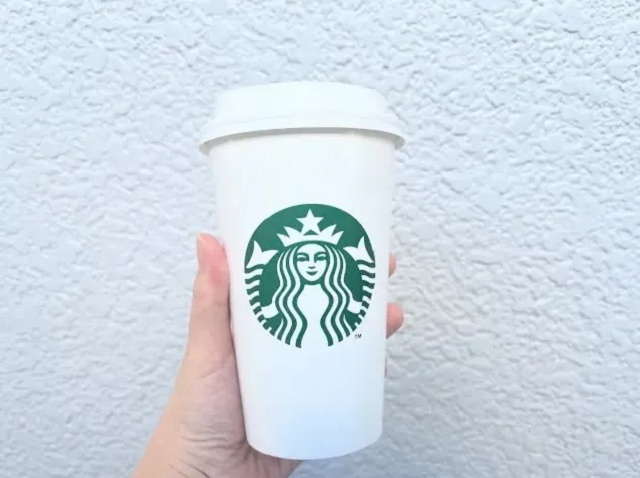
Ecological goals and economic concerns mean no more free bags and more by-location price variations.
There’s been a lot for Japanese Starbucks fans to be happy about over the last few days, as the chain rolled out its new sakura beverages and drinkware. But while those additions to Starbucks’ menu and merch catalog are putting smiles on many people’s face, there are some less crowd-pleasing ones going into effect too.
Starting with the one that has a silver lining, as of February 18 Starbucks Japan branches will no longer be providing free bags to takeout customers. Instead, customers who need a bag and haven’t brought one of their own will be charged 11 yen (approximately 7 U.S. cents) per order, and can receive a number of bags up to the number of items they’re purchasing. It’s a very modest fee, and is part of Starbucks’ initiative to reduce the chain’s environmental impact by encouraging customers to bring their own reusable shopping bags.
▼ Since 2009, Starbucks Japan has been using FSC (Forest Stewardship Council)-approved sustainable-source paper for its takeout bags, but they want to be even more ecologically friendly.

The less popular change, though, will be that Starbucks is raising its prices, or, to use their press release’s terminology, “adjusting” them, in response to “rising materials and energy costs.”
The nature of the price increases is complex and vague. To start with, in 2025 Starbucks introduced a system of “location-specific pricing,” with Starbucks locations inside certain Japanese airports and expressway rest stops put into the category Location A, and branches in major metropolitan areas such as Tokyo’s 23 central wards and Osaka in the Location B classification. Prices at Location A Starbucks are, on average, six percent higher than they are in a normal Starbucks, and at Location B branches they’re four percent higher than the norm. In total, about 30 percent of Starbucks Japan branches are in either the Location A or B group.
Under the new system, though, Starbucks will be transferring some of the Tokyo 23-wards branches to the more expansive Location A group. In addition, while the beverage prices for Location A and B branches will not change, at Starbucks Japan’s remaining branches (i.e. those with the cheapest prices under the old system), prices for some permanent-menu beverages will be increased by 5 to 30 yen. And at all participating Starbucks Japan branches, regardless of location classification, the price for the chain’s “One More Coffee” brewed coffee refill service will be increased by 20 yen, and some regular-menu food items will have their prices raised by between 5 and 30 yen.
None of these are massive changes, but with consumers in Japan growing exhausted at the constant string of prices for just about everything going up while most workers’ wages remain stagnant, being asked to pay more for what’s supposed to be discretionary, “fun” eating and drinking probably isn’t going to sit well with some people. In addition, while it might be a common practice in the U.S., in Japan it’s somewhat unusual for a national chain to charge different prices based on branch location. Starbucks Japan isn’t the first company to do so (McDonald’s Japan also charges different prices for certain items depending on location), but Starbucks does run the risk of being seen as trying to squeeze every last yen they can out of their customers by saying that people in certain parts of Tokyo have to pay more for the same cup of coffee than they would in another part of the country, or even another part of the same city.
All that said, with how consistently crowded Starbucks Japan branches in prime locations are, Starbucks probably isn’t too worried about losing a handful of customers if they can earn more per person who does buy something.
Source: Starbucks Japan (1, 2)
Top image ©SoraNews24
Insert image: Starbucks Japan
● Want to hear about SoraNews24’s latest articles as soon as they’re published? Follow us on Facebook and Twitter!
[ Read in Japanese ]
 Starbucks Japan now offers close-to-closing discounted items through its mobile order app
 What’s in Starbucks Japan’s fukubukuro lucky bag for 2025?
 Starbucks Japan reveals this year’s lucky bag bundle, pre-order lottery opens tomorrow
 Starbucks Japan announces its lucky bag for 2017 – feel free to start lining up now
 Starbucks turns its milk packs into notebooks with popular Japanese stationery brand
 Fading Tokyo – Searching for signs of the Showa era as local neighborhoods evolve[Photos]
 Haunted hospital near Mt Fuji re-opens after renovation at Fuji-Q Highland, and it’s terrifying
 Famous Tokyo cherry blossom spot installs view-blocking screens to fight overcrowding[Video]
 The Almost All Lettuce Burger from Dom Dom Burger really lives up to its name
 Uniqlo announces new T-shirts for One Piece, Naruto and more for manga publisher’s 100th birthday
 Studio Ghibli adds new My Neighbour Totoro 2026 Corn Gift to its anime store for Mother’s Day
 Nintendo’s Animal Crossing crosses over into Japanese convenience store cosmetics line[Photos]
 Totoro Fund line of beautiful artwork and apparel lets you help the real-world Totoro Forest
 Which Gundam is the favorite for fans in different countries? Gundam election announces results
 Huge life-size Eevee Eeveelution Pokémon plushies will steal hearts, conquer living rooms【Photos】
 Japan now has a special desk for people who work at home with a pet cat[Photos]
 Krispy Kreme releases Super Mario doughnuts in Japan for a limited time
 Totoro and Calcifer become little light-up lanterns for Ghibli-style excursions or at-home decor
 Tokyo’s best museum for foreign travelers finally reopens after being closed for four years
 Pokémon lacquerware series expands for Year of the Horse with new handcrafted design[Video]
 Picturesque Tokyo park plays host to millions of flowers and soap bubbles this spring
 Tokyo subway and almost all Tokyo train lines now accepting credit card tap payments
 Fatal stabbing at Pokémon Center in Tokyo reignites concern over rising stalking cases in Japan
 Starbucks Japan unveils new sakura cherry blossom collection for hanami season 2026
 Train station platform ramen store closes its doors on half a century of history in Tokyo
 Starbucks Japan releases new My Fruit³ Frappuccino at only 34 stores around the country
 Studio Ghibli releases Catbus pullback keychain that runs like the anime character
 Japanese onsen egg maker from 100-yen store Daiso needs to be on your shopping list
 Nine great places to see spring flowers in Japan, as chosen by travelers (with almost no sakura)
 Survey asks foreign tourists what bothered them in Japan, more than half gave same answer
 Japan’s human washing machines will go on sale to general public, demos to be held in Tokyo
 Starbucks Japan releases new drinkware and goods for Valentine’s Day
 We deeply regret going into this tunnel on our walk in the mountains of Japan
 Studio Ghibli releases Kodama forest spirits from Princess Mononoke to light up your home
 Starbucks Japan releases new sakura goods and drinkware for cherry blossom season 2026
 Japan’s newest Shinkansen has no seats…or passengers [Video]
 Major Japanese hotel chain says reservations via overseas booking sites may not be valid
 Put sesame oil in your coffee? Japanese maker says it’s the best way to start your day【Taste test】
 No more using real katana for tourism activities, Japan’s National Police Agency says
 Late-night Starbucks run? Chain will start discounting items before closing time in Japan
 Is this the most relaxing Starbucks in Japan?
 Starbucks starts selling cute reusable straws in Japan
 Starbucks Japan’s Lucky Bag #2: Is it as good as the first fukubukuro?
 Starbucks Japan is calling it quits with paper straws
 The pros and cons of Starbucks Japan’s new reusable straws
 Highest Starbucks in Japan set to open this spring in the Tokyo sky
 【Lucky Bag Roundup 2018】Starbucks Japan lucky bag only available to lottery winners this year
 Starbucks Japan saves the best for last in our fukubukuro lucky bag haul
 Starbucks comes to Tottori, local coffee chain’s poster compares it to Perry arriving in Japan
 Starbucks Japan teams up with Japanese bag brand Porter for stylish, sophisticated collection
 Uniqlo and GU announce they will now charge for shopping bags in a new, eco-friendly initiative
 Starbucks Japan releases new popcorn Frappuccino at one special location
 Starbucks: More expensive in China than Japan or America, but why?
 Starbucks Japan’s newest Frappuccino is a summer cake delight
 Starbucks adds a clear coffee to all its stores in Japan this summer
 What’s inside Starbucks Japan’s fukubukuro lucky bag for 2026?