Conveyor belt sushi chains Sushiro and Misaki spontaneously create an akashari season with unexpected results.
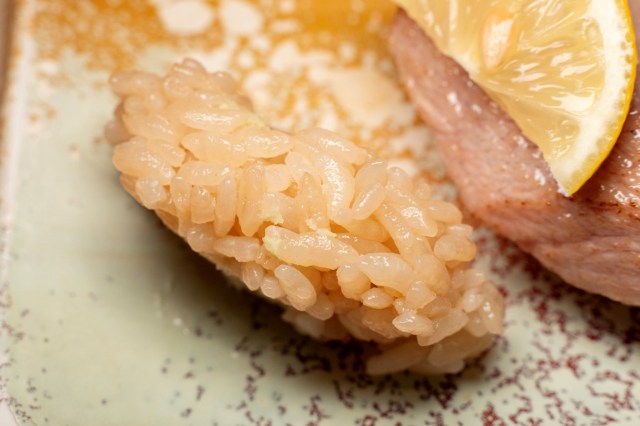
This month, conveyor belt sushi chains Sushiro and Misaki both kicked off exciting events featuring a twist on conventional sushi: using red rice instead of the usual white. This rice, known as akashari, is made with akazu, a red rice vinegar that gives it a distinctive hue.
So, what’s the deal with akazu? It’s a red rice vinegar derived from sake lees. This process takes a lot longer—about two years for the sake lees to mature and an additional three to four years for the vinegar to develop, compared to the 11 to 14 months for the vinegar used in regular white sushi rice. That’s why akazu is a bit pricier and often found in high-end sushi restaurants. While Sushiro was offering akashari sushi as part of a limited-time event before, Misaki has it on their regular menu, but also has a special promotion going in which the chain says it’s increased the quality of its red sushi rice just for this promotion.
With both chains offering akashari around the same time, we couldn’t resist the chance to compare their offerings. We’d never tried akashari before and wondered if swapping out the vinegar would make a noticeable difference but we had out doubts. If it was soy sauce or wasabi, perhaps the average person could distinguish a difference but… vinegar? We weren’t sure.
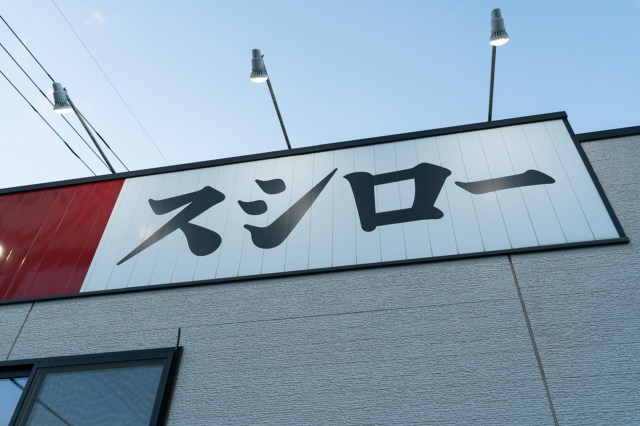
First up was Sushiro.
Since we were doing a taste comparison, we chose Sushiro items as close to possible as the ones on Misaki’s event menu: lean tuna (akami), medium-fatty tuna (chutoro), fatty tuna (otoro), seared tuna (aburi), tuna gunkan, shrimp, bonito, and squid.
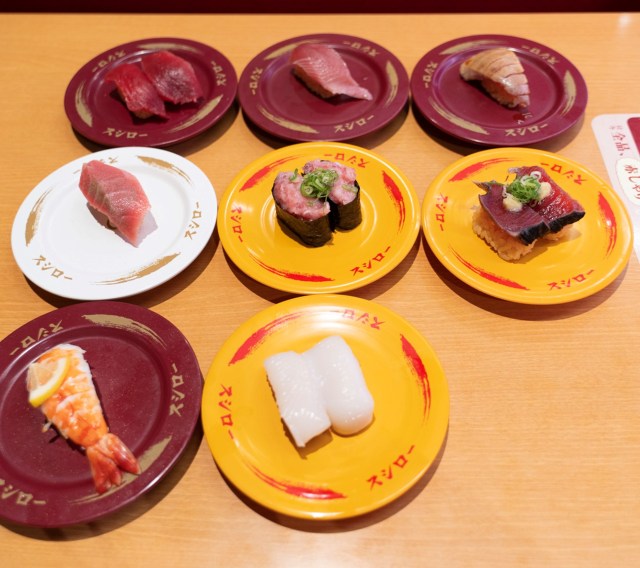
Starting with the akami, we were surprised by how red the rice was—much more vibrant than we expected.
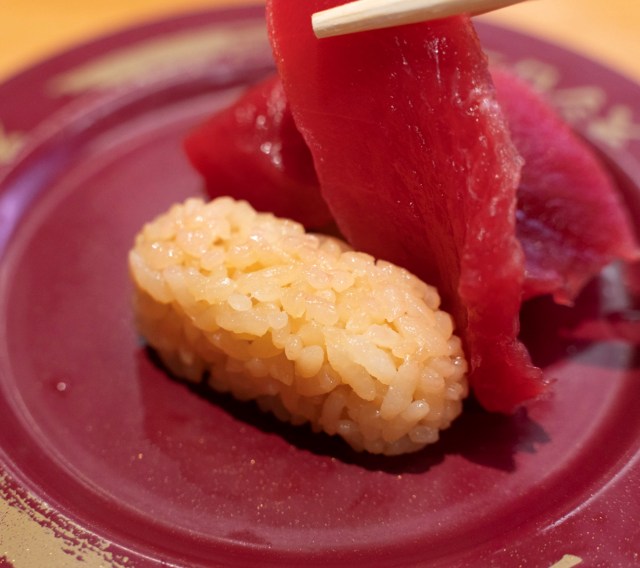
Delicious, as always. You really can’t go wrong with Sushiro’s tuna, but we found it hard to pinpoint the difference in flavor compared to the usual white sushi rice. First came the taste of the soy sauce, followed with the taste of the tuna and then… that was it. As we had expected. Picking up on the difference in vinegar is simply not what an average person can do.
It might be different, though, if we tried eating the sushi rice by itself. We decided to give it a try using the shrimp sushi, since the shrimp was less likely to have transferred its flavor to the rice than the cuts of fish, so we lifted the shrimp off and, sans soy sauce, ate the red rice.
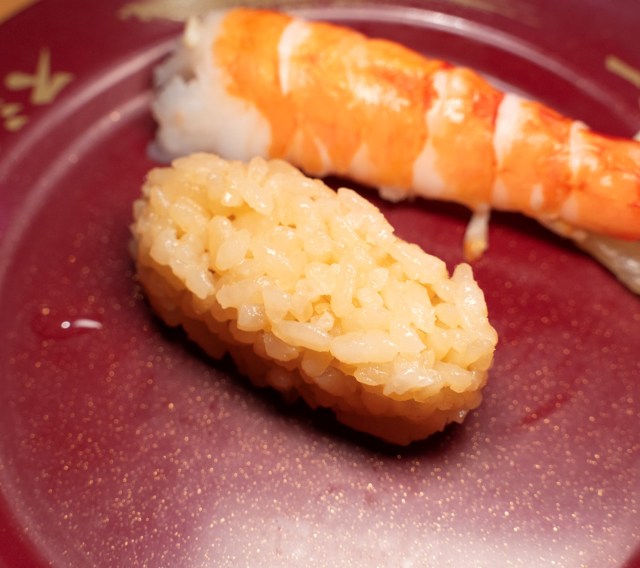
The subtle sour note in the aftertaste, much like the taste of sake lees, of the akazu was now noticeable. There was also a faint hint of sweetness, but it was the sourness that stood out most predominantly. With such a light flavor, we felt it would be better paired with a mild-flavored topping so as not to be overpowered, which was unfortunately the case with the rest of the tuna we tried.
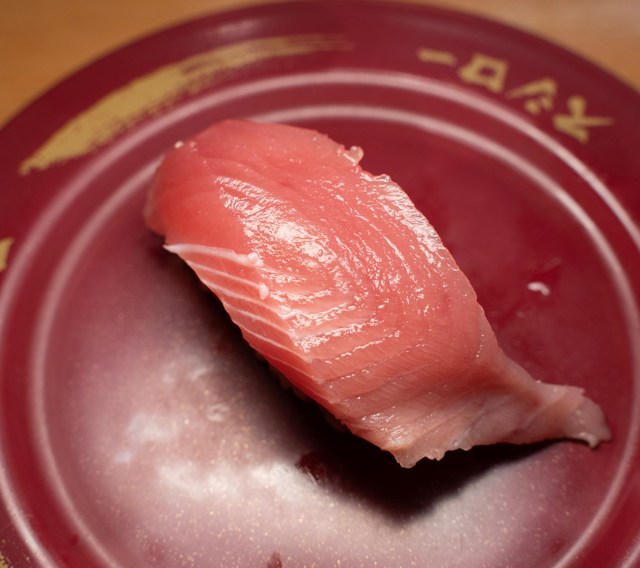
The bonito was overflowing with the flavor of both the onion and the ginger, and the sushi was as delicious as it always is, but the taste of the akashari was nowhere to be found.
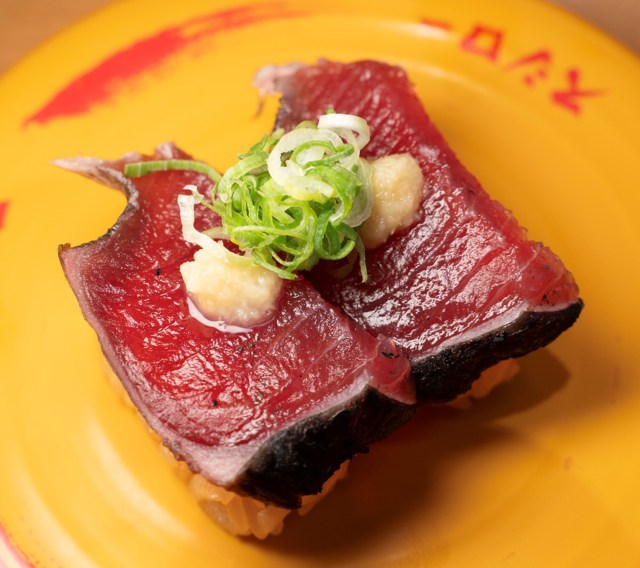
When we ate the squid, however, we noticed something. There was a distinct akazu flavor. So we determined that it’s not the taste itself that is weak, it’s just affected by what it’s eaten with. If we wanted to enjoy the unique qualities of akashari, it seemed like we really would have to try it with a topping that had a lighter flavor.
With that in mind, we ordered a few more types of sushi to see how they fared with red rice.
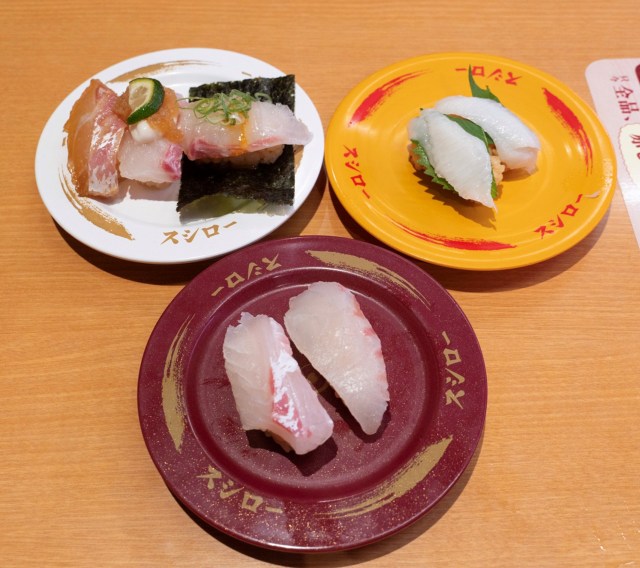
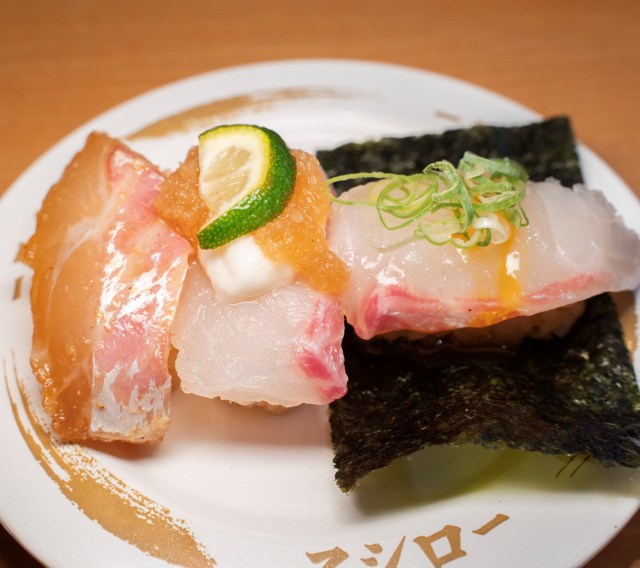
First was sea bream seasoned with sesame oil and ponzu sauce. Those forceful flavors, along with the nori (seaweed), completely suppressed the taste of the akashari.
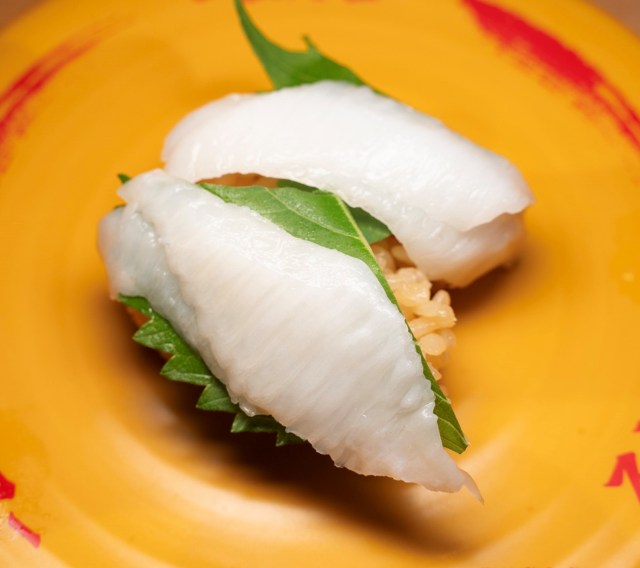
The shiso (Japanese basil) on the flounder fin was also overpowering.
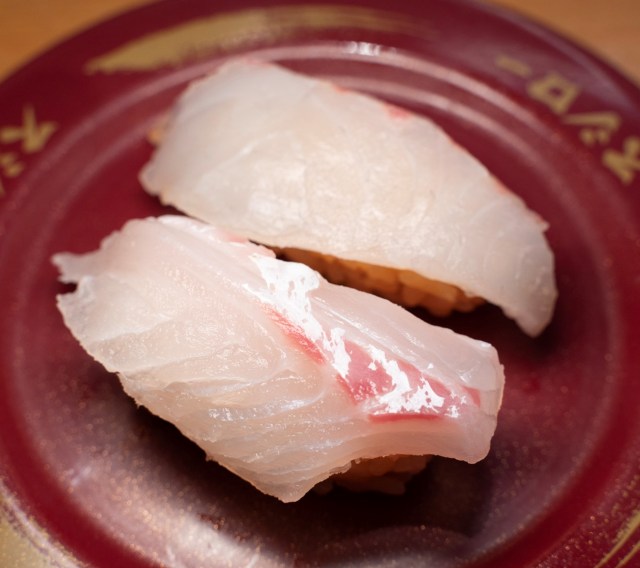
Not a lot changed until we came to the unseasoned red sea bream and what a development it was. The chewy texture and its subtly sweet and mild flavor paired fantastically with the sake lees-like flavor of the akashari. This was probably the best sea bream that we’ve ever had at Sushiro. The compatibility of the two was simply remarkable. When we thought about it some more, we realized that red sea bream is also used in sakamushi (sake-steamed) dishes, so fish that go well with sake might shine when combined with akashari. If you’re trying akashari, red sea bream is the way to go!
After our Sushiro adventure, we headed to Kaiten Sushi Misaki to try their akashari in a set featuring one each of various types of tuna.
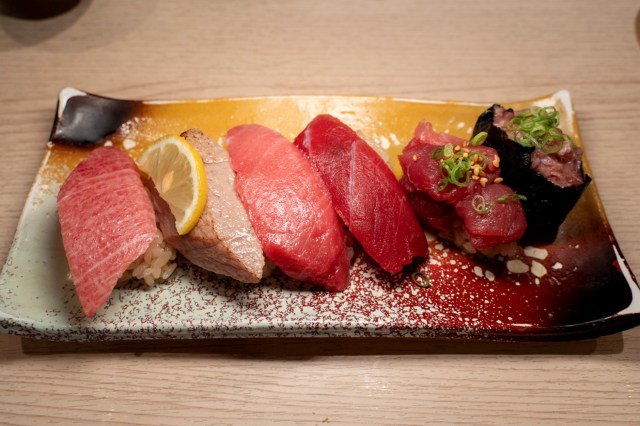
The color of Misaki’s lean tuna was not that much different to that of Sushiro’s, and while the tuna was tasty, we still couldn’t detect much difference in the rice’s flavor. We did feel that the fatty tuna had an edge over Sushiro’s in terms of deliciousness, though.
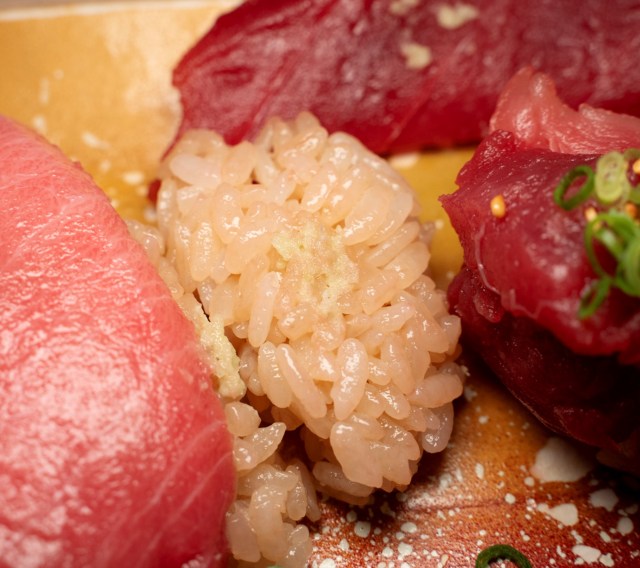
We also tried bonito at Misaki, but again the strong flavors of the ginger overpowered the akashari.
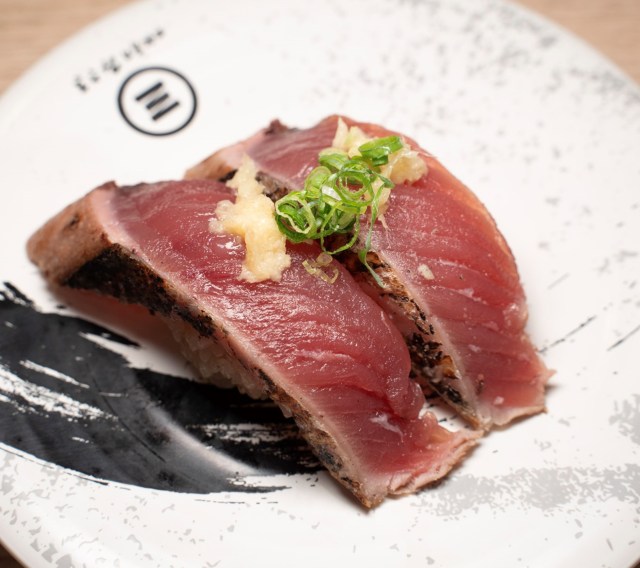
On closer inspection, we feel like this is to be expected. Misaki uses less rice per piece than Sushiro does, so with the relatively larger size of Misaki’s toppings, it can be especially hard for the flavor of the akashari to stand out.
There was one final item on our taste-testing list: longtooth grouper with kelp (konbu). Even though Sushiro did not offer it, we had a feeling that it would go great with akashari, much like it did with the red sea bream. We put it in our mouth and—it was so delicious! The texture was chewy and deliciousness seeped out without any particular flavor. This is what delicious white fish should be like! However, unlike Sushiro’s red sea bream, we couldn’t sense the distinctive akazu taste. It was strange. Surely there should be a sake lees-like aftertaste with a white fish like this.
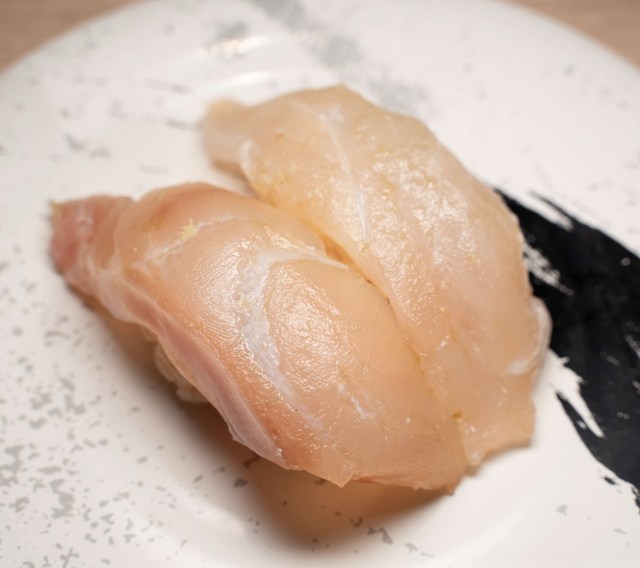
We tried the akashari by itself and noticed that it was a lot milder in flavor than Sushiro’s. The main characteristic of Sushiro’s was its sake lees flavor, followed by its sweetness, whereas Misaki’s akashari was almost the reverse with the sweetness being the main factor and a weak hint of sake lees. However, the level of sweetness of both was about the same, meaning that Misaki’s akashari didn’t trigger the same synergy with the white fish. Without comparing the akashari at Misaki to its regular sushi rice, it’s likely you won’t be able to see what makes it special.
It seems that Sushiro’s akashari is designed to stand out with its bold sake lees flavor, making it a perfect match for certain types of fish. This is probably due to it only being used during special promotions, so they want the presence of the akazu to be noticed by everyone. Misaki’s version, being part of their regular menu, is milder and more versatile, being able to be paired with any fish, at the cost of weaker flavor impact.
Sushiro’s akashari event wrapped up on September 16, but if you missed out, don’t worry—it’s bound to come again. In the meantime, Misaki’s akashari is still worth a try. It might not have the same punch, but it is undeniably delicious.
Related: Sushiro location list, Misaki location list
Photos ©SoraNews24
● Want to hear about SoraNews24’s latest articles as soon as they’re published? Follow us on Facebook and Twitter!
[ Read in Japanese ]