In Japanese, obachan is a word that means aunt, but is sometimes used to refer to a middle-aged or elderly woman in a derogatory way. There is no good translation in English, but the image is of an eccentric, loud, irritating busybody long past youth or beauty. Not many women would choose to apply this word to themselves, but a new political party has emerged out of Osaka that is proudly claiming ownership of the word and attempting to reform the image of Japan’s obachans. We went to find out more about this All Japan Obasan Party. Read More
culture (Page 66)
According to a story in the South China Morning Post, more than 90 percent of Hong Kong citizens polled in a recent survey said that they wanted the region to return to British rule, stating that they fear much of what makes the region great will eventually be lost.
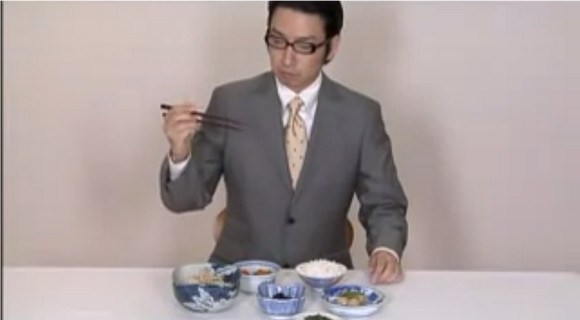
As anyone who has ever entered a Japanese-style pub, or izakaya, will tell you, whether you want it or not, as soon as you’ve ordered some form of alcohol, a small plate or bowl will be placed in front of you alongside your chopsticks and hot towel. The contents of said vessel are almost always a mystery to the customer prior to its arrival; it could be noodles, vegetables, fish or even meat. Sometimes it’s piping hot, sometimes it’s as cold as the ice in your Bill Murray-inspired Suntory whiskey.
Known as お通し (otōshi) or sometimes 突き出し (tsukidashi), this appetizer is given to each and every alcohol-imbibing customer, and sometimes even to those only sipping on soft drinks, regardless of whether you’re drinking at a chain pub or a family owned watering hole. The customer has no say whatsoever in what the snack will be, and even if it remains completely untouched it is added to the bill, costing on average 200-500 yen (US$2-5) per head.
Japan has had a complicated relationship with tattoos over its history. Unlike in most western countries where it’s simply considered a form of expression or drunkenly poor decisions, currently body art is generally looked down upon in Japanese society despite having some of the best artists and techniques in the world.
And yet most people in Japan are unaware that not too long ago, for a time during the Edo Period (1603-1868) the go-to form of punishment for non-violent crimes was a tattoo right in the center of your forehead.
On March 6, the Osaka edition of the Asahi Shinbun published an article which featured a single mother of two from Japan who was in receipt of a 290,000 yen (about $3,000) monthly social security allowance. Despite this hefty amount of cash arriving in her bank account each month, though, she was alarmed to hear that her benefits may be cut in the near future.
You’ve all heard the joke about the sinking ship, right? This joke explicitly reveals the deep inner motivations of the men of many different nations. It’s famous for hitting the nail on the head when it comes to cultural stereotypes. Really, this joke knows you better than you know yourself. Popular in Japan, it also goes down a treat at drinking parties worldwide.
So, what is this joke that so accurately pinpoints cultural stereotypes? Here it is…
In Japan, pachinko – a game similar to pinball but with multiple balls in play and minus the flippers – has always been a big business. “Pachinkoten” (dedicated pachinko parlors) have become about as commonplace as temples and hot springs, and it’s not uncommon to see small crowds of men waiting outside such establishments early in the morning, waiting for them to open.
A phenomenon that is particularly noticeable in recent years is that of the large numbers of Koreans coming to Japan to gamble. Up until seven years ago, Korea’s pachinko industry was booming. However, when gambling laws were introduced to combat the recent rise in addictions, many players were left out in the cold with nothing to fill the gap. But with a thriving pachinko scene just a couple of hours away on the plane, many Koreans are heading to Japan to pick up where they left off.
A while back, we reported that Tokyo Disneyland had agreed to offer its wedding packages to same-sex couples in Japan. This month, the very same lesbian couple that encouraged the company to do so became the first to get hitched at the park, with Mickey and Minnie in attendance, of course. Read More
It’s famously said that there’s no such thing as a free lunch, and while that may be true, you can at least get some of the ingredients without laying down a penny. We check out a new website that claims to offer free produce, straight from the farmer to you. Swag!
Read More
When you hear the word, “Japan,” what comes to mind? Mt. Fuji? Animé? Cherry blossoms? Those of us who have lived in Japan came to this country with ideas of what we might encounter and many of those preconceived impressions turned out to be completely false. We asked foreigners who have been living in Japan for at least three years to share what they thought about Japan before ever stepping foot inside the country. Take a look at their answers:
It’s well known that within every Disney Park, small Mickeys are hidden throughout the grounds. If you look close enough, Mickey Mouse seems to be everywhere; on buildings, carpets, and even the vehicle speakers on Space Mountain.
But you would never expect Mickey to be hidden on a helmet used by ancient Japanese warriors and samurai. You also wouldn’t expect it to be made of silver and cost a staggering 250,000 yen (US $2,697).
Speakers and learners of the Japanese language will no doubt be familiar with giongo and gitaigo, onomatopoeic words that are used to imitate or describe real-world sounds or sensations, respectively.
For many English speakers, sentences like “And the rain was falling like ‘tccccchhhh’, and my heart was going ‘boom boom boom,'” might come across as informal at best, or perhaps even suggest that the speaker is not especially articulate. In Japanese, though, onomatopoeia is employed far more frequently in both spoken and written communication, and this new commercial from Sony announcing a price cut for its Vita portable games console has it in droves.
For many of us in the northern hemisphere, winter is finally showing signs of packing up and leaving us alone for a while. People are starting to use their heaters less or, wear fewer layers and, if you live in a paper-thin, central heating-less house in Japan like I do, risk not putting on a woolly hat when going to bed at night.
But winter in Japan isn’t all bad! There are beautiful snow festivals and alternative snow cones to be enjoyed! And, according to a report over on Japan’s R25 news site, even wrapped up in all that winter weather gear, the nation’s ladies still manage to look so very, very cute.
Women-only cars on Japan’s railways have existed in some form or other for more than 50 years, with “hana densha” (lit. “flower train”) carriages originally being introduced as a way of keeping female students safe from the advances of lecherous men during the peak hours. Now considered by many to be a vital part of many inner-city rail services, the train car closest to the driver’s cabin is often reserved for females only and is clearly marked both at boarding locations on the platform and inside the train itself.
Many unwitting foreign males have no doubt hopped on board these carriages during rush hours without realising it. Although foreigners usually escape relatively unscathed, when native Japanese men dare to cross that pink line and invade the sanctity of the josei senyou sharyou (women-only carriage), more often than not they are berated by the women on board until they alight or switch cars.
But is it actually illegal for a man to ride in the women-only car? Surely when other carriages are packed to the rafters, men shouldn’t be forced to squeeze in when the first car would be much less tortuous? Yahoo! Japan News spoke with legal professional Ikki Hashimoto as well as representative from Japan Rail to get the facts about men’s rights when it comes to riding the pink car.

Commercials: a lot of celebrities in the west won’t touch them with a borrowed pole. After working hard to build up their portfolio and making themselves a household name, for many professional actors the mere thought of putting their face on an advertisement is completely abhorrent.
In Japan, however, it’s a very different story. TV celebrities, singers and sports stars are a common feature on commercials, whether they be on television, magazines or even hanging over our heads as we take the train to work each morning. Watches, skin cream, beer, anti-hair loss, cars, language courses; you name it, someone famous is smiling and pretending they love it in exchange for a few extra yen.
This time it’s the turn of hollywood heart-throb Leonardo DiCaprio to take the cash and smile for the camera. Because, as we all know, DiCaprio never shuts up about how much he loves Jim Beam whiskey usually…
Here’s a story that’s bound to ruffle a few feathers down south. According to those in the know, okonomiyaki – a savoury “pancake” dish loved by millions and one of Osaka’s most acclaimed culinary delights – may in fact have been created in none other than Tokyo.
As linguists and scholarly types routinely profess, language is something that is continually evolving. It is a living, breathing entity that twists, turns and grows on an almost daily basis. As our lives change, so too does language. We don’t always like the changes, but, realising that the amount of time we spend on this earth is a mere blink of the eye compared to how long language itself has existed, we come to accept that words are no more ours than the valleys and hills we trek over. (Although I must confess that I still face-palm whenever I hear someone utter the phrase “I could care less” to suggest that they do not care an iota about something.)
Nevertheless, when changes in language begin to occur, people notice them. The first time we heard the word “Facebook” used as a verb or saw our first “LOL”, many of us likely furrowed out brows and thought, “Is that right?” In much the same way, in July and August last year Japanese broadcasting giant NHK launched an online survey asking the people of Japan whether they had noticed the rather peculiar use of the word “arigatou” (thank you) cropping up in conversation in recent times.
Japanese are generally perceived as being particularly fastidious when it comes to bodily cleanliness, what with the special toilet slippers and showering before getting in the bath and all. But it turns out that doesn’t keep some of them from engaging in a much debated activity: peeing in the shower. Read More
Flipping through any travel guide about Japan you will learn that Japan is a country where tipping is non-existent. Leaving your change on the table at a restaurant may result in the waiter chasing you down to give it back.
But in Japan there actually is a system of tipping that exists but is tangled in a mysterious system of formality that no one really seems sure of. In an interview with Yahoo! Japan, Nobuko Akashi of the Japan Manners & Protocol Association attempts to unravel this system so we can all know when and where it’s appropriate to tip in Japan.

“Ignore the rules and you’ll get jam in your sneakers.”
The teachers may not always know about them, but throughout schools in Japan there are a number of unwritten rules that have been passed down from school generation to school generation and must be obeyed. First graders may only use the old, “haunted” toilet block nearest to the gym; only third graders may wear their backpack with just one strap; the cute art teacher must never be gazed upon by anyone other than the boys from class 2-F…
Entering a new school and being told to obey these long-standing rules “or else”, many kids probably wonder why their seniors, or “senpais“, are such jerks. But as the years go by and they, too, slowly rise to power and reap the rewards of having aged a couple of years, few are in a hurry to abolish the “ura“, or “other side”, code of conduct.
According to a report by Japan’s Yomiuri Online, however, students at a school in Tainai City, Niigata Prefecture have taken the unusual step of openly discussing these rules and swearing to abide by them no more.


Japan’s awesomely beautiful Alpen Route snow corridor is now open
Japanese-style afternoon tea in this Japanese manor house outside downtown Tokyo is something special
We try Tokyo restaurant’s crab ice cream that tastes more like crab than cream【Taste test】
Almost all Japanese women say they dislike random gacha/blind-box toys in survey
Pokémon hot spring footbath opening in Japan this spring
Move aside, convenience store egg sando – there’s a better version of the iconic sandwich in Japan
New Totoro carabiner pouches are ready to clip/tag along with you on all your adventures[Photos]
The old-school awesomeness of the New Akao, a Showa-era hot spring hotel still standing tall
Japanese survey picks “slightly plump” as the cutest body type for women
Lawson convenience store at popular tourist site is one of the most unusual in Japan
Wisteria season starts early with blooming of Japan’s Great Wisteria in its beautiful garden
Japan’s best conveyor belt sushi restaurant of seven years ago has now, finally, come to Tokyo
Brand-new Pokémon manhole covers coming to help the recovery of a disaster-stricken part of Japan
Injuries on stairs in Tokyo highlight an overlooked design flaw
Japanese trains in Sapporo might be better than those in Tokyo, thanks to one special feature
Japanese government wants overseas anime market to roughly triple in 10 years, but are they crazy?
Starbucks Japan releases FIVE new Frappuccinos in a day, and we try them all in 90 minutes
Japanese bento shop sells croquettes for 13 cents, but are they any good?
Japan reportedly adding Japanese language skill requirement to most common foreigner work visa
Pokémon and Ikea Japan cross over into each other’s worlds with collaboration events
Japan now has a special desk for people who work at home with a pet cat[Photos]
Famous Tokyo cherry blossom spot installs view-blocking screens to fight overcrowding[Video]
Uniqlo announces new T-shirts for One Piece, Naruto and more for manga publisher’s 100th birthday
Krispy Kreme releases Super Mario doughnuts in Japan for a limited time
Survey asks foreign tourists what bothered them in Japan, more than half gave same answer
Japan’s human washing machines will go on sale to general public, demos to be held in Tokyo
Starbucks Japan releases new drinkware and goods for Valentine’s Day
We deeply regret going into this tunnel on our walk in the mountains of Japan
Starbucks Japan releases new sakura goods and drinkware for cherry blossom season 2026
Studio Ghibli releases Kodama forest spirits from Princess Mononoke to light up your home
Japan’s newest Shinkansen has no seats…or passengers [Video]
Major Japanese hotel chain says reservations via overseas booking sites may not be valid
Put sesame oil in your coffee? Japanese maker says it’s the best way to start your day【Taste test】
No more using real katana for tourism activities, Japan’s National Police Agency says
Move aside, convenience store egg sando – there’s a better version of the iconic sandwich in Japan
New Totoro carabiner pouches are ready to clip/tag along with you on all your adventures[Photos]
The old-school awesomeness of the New Akao, a Showa-era hot spring hotel still standing tall
Japanese survey picks “slightly plump” as the cutest body type for women
Lawson convenience store at popular tourist site is one of the most unusual in Japan
Super Extra-Large Big Totoro plushie is super-cute for a super extra-large big price【Photos】
Why does it take so long for Japanese trains to start running again after an accident?
Japan’s new life-size Gundam is complete and standing proud in Yokohama!【Photos/Video】
Police in Japan warn of scam artists posing as cops to collect fines for breaking new bike rules
11 different ways to say “father” in Japanese
Brand-new Pokémon manhole covers coming to help the recovery of a disaster-stricken part of Japan
Pikachu and Eevee become handmade Lladró porcelain sculptures to celebrate Pokémon’s 30th birthday
Tokyo’s Kabuki-za Theater curry has a photo that looks deceptive but it’s a star performer