shinto (Page 5)
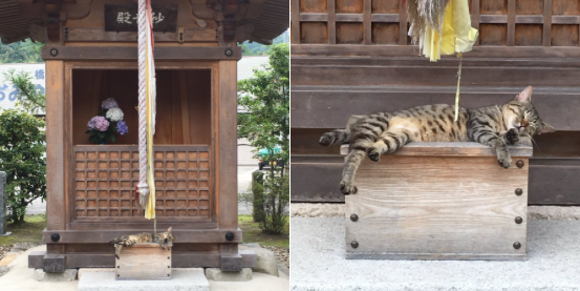
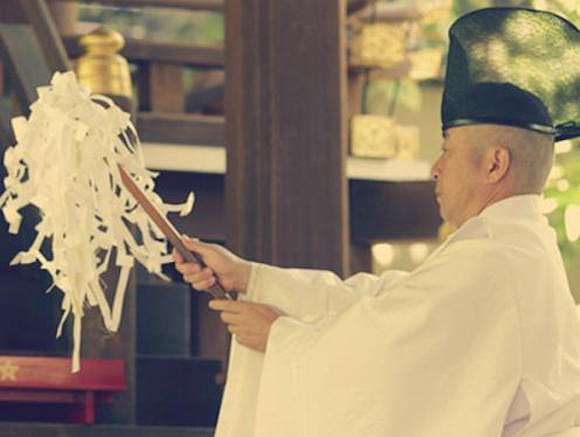
Have your pet feeling rejuvenated both physically and spiritually after a getaway in Japan.
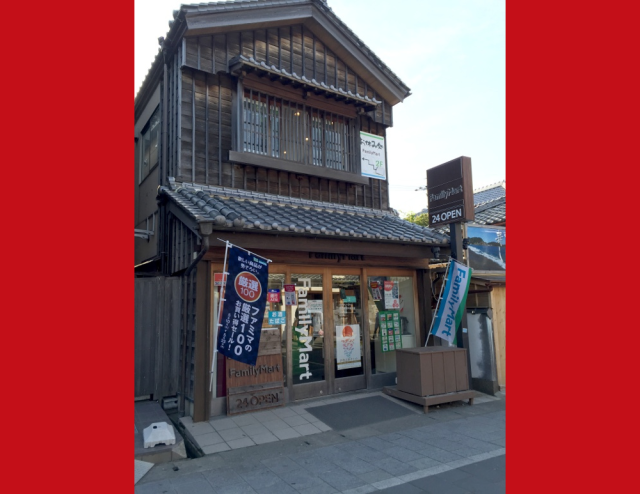
Convenience stores in Japan are often like mini supermarkets, but this one near one of Shinto’s holiest shrines also feels like a time machine.
Simple craft project lets you tell your cat, in no uncertain terms, that he exists on a higher plane than you do.

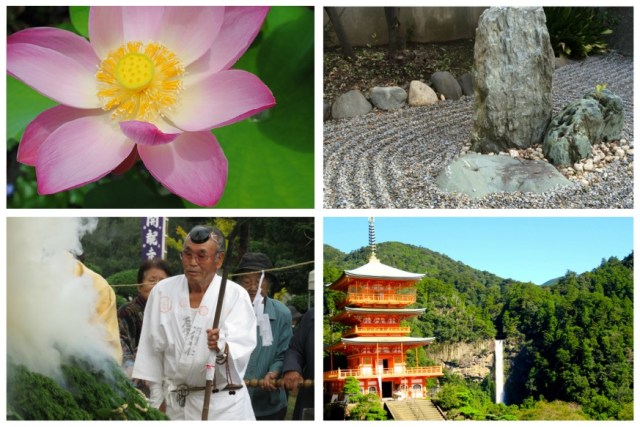
Today we’re introducing you to the basics of Japanese Buddhism, plus highlighting some of the Buddhist images you’ll see in Japan and help you distinguish them from Shinto ones.
Any proper itinerary for a trip across Japan should include stops in its three most famous Shinto shrines: Hiroshima’s Itsukushima Shrine, Kyoto’s Heian Shrine, and the Meiji Shrine in Tokyo. Those, however, are just the tip of Japan’s iceberg of breathtaking sacred Shinto spots.
Even if you’ve got no pressing interest in Japan’s indigenous religion, its shrines are often sites of breathtaking natural and architectural beauty, and here are four that, while off the beaten path, are not to be missed.

Much like “humdinger” and “roughneck,” “foxy” is one of those words that’s far past its golden age. But really, why shouldn’t it be used to describe an attractively fashionable woman, especially is she’s sporting a pair of these cute knee-high socks decorated with Shinto-style kitsune fox spirits and other culturally quirky touches?

Every fall, parents in Japan who have children that are three, five, or seven years old celebrate something called Shichi-Go-San (literally “Seven-Five-Three”). The family heads to a Shinto shrine, where the priest performs a blessing for girls aged three and seven and boys aged five, praying for them to have long and healthy lives.
But since some pet owners will argue that their animal companions are their children, certain shrines now offer Shichi-Go-San blessings for pets, too, some of whom show up wearing delightful pet kimono!
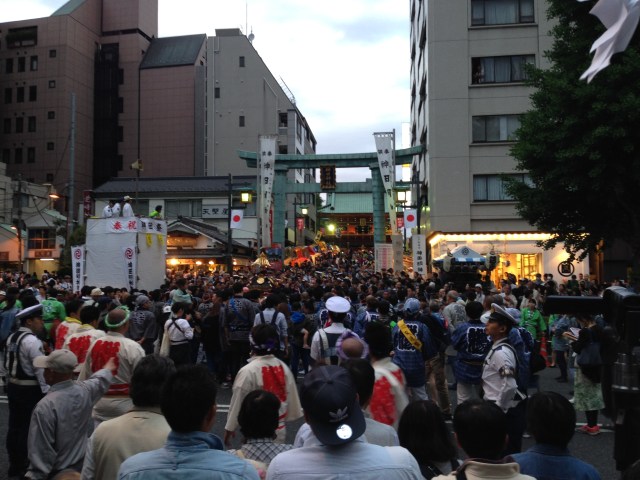
Even in a city as packed with people as Tokyo, some places, and times, are more crowded than others. So when and where can you find the largest, densest mass of humanity? Some would say the Yamanote loop line during the morning rush hour. Others would vote for Shibuya’s scramble crosswalk intersection on a Saturday night.
But before you go awarding the crown to either of those two candidates, take a look at the massive crowds that came out for the Kanda Matsuri festival last weekend.
When entering the grounds of a Shinto shrine in Japan, it’s customary to first stop by the water basin near the gate and rinse your hands, and sometimes your mouth, in order to cleanse them. Water isn’t the only classical element held to have purifying properties in Shintoism, though, since the same can be said about fire.
Obviously, worshippers aren’t called upon to put fire on their palms or inside their mouths. Instead, Shinto priests light pyres of charms and decorations during the Dondo Yaki ceremony, with the towering blazes regularly reaching 15 meters (49.2 feet) into the air.
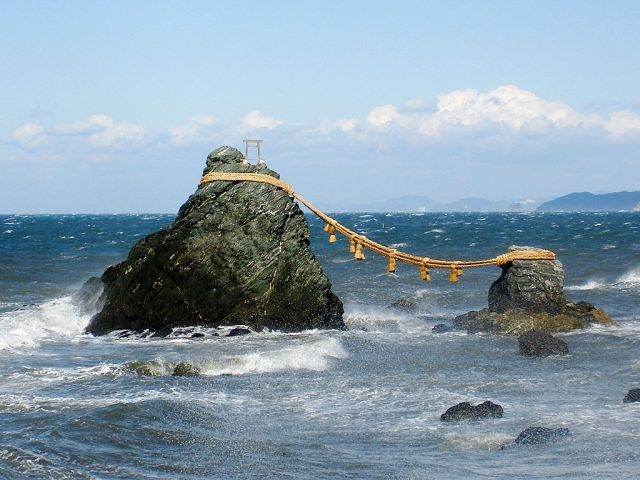
The Japanese have long had a fascination with rocks. In fact, rock worship is an integral part of Shinto, Japan’s original religion. Iwakura (sacred rocks) can be found all over Japan. Rocks can be found in any Japanese garden, whether as stepping stones or objects of admiration themselves in dry landscape gardens or Zen rock gardens. One thing is for sure: Rocks are an integral part of the Japanese psyche.
So it’s no wonder that sacred rocks are popular among the Japanese as power spots. By harnessing the energy of these rocks, the Japanese are rediscovering their roots and the power of nature. But before we tell you about the three top rock power spots in Japan, we investigate how these monoliths and boulders gained their rock star status. Our rockin’ reporter uncovers the history and folklore of iwakura in Japan and gives suggestions on how to access the power of these rocks!
One of the trickier questions to answer about Japan is whether or not it’s a religious society. On one hand, the ideas of daily prayer, weekly visits to a temple, or consulting religious texts or advisors in times of personal crisis are about as foreign to most Japanese people as playing a game of cricket or eating a plate of grits and gravy.
Still, spiritualism is a big part of life in Japan. Most visitors to a shrine might not spend more than a few seconds reflecting on their place in the universe, but they’ll still toss a coin into the collection box in hope of pleasing the deity said to make its home there. Even as many Japanese people claim to have no religion, most homes include an alter with a place to hang photos of deceased relatives and offer incense.
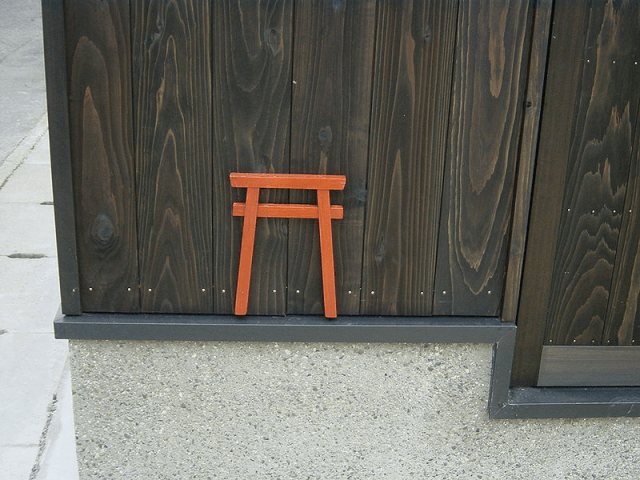
The vagaries of theology in Japan are now being turned to in an effort to curb a growing problem in many neighborhoods, as people are putting up small versions of the torii gates that mark Shinto shrines to prevent people from illegally dumping waste, whether produced by their lifestyles or bodies.

In Japan, there’s a saying that goes: “Japanese people are born into Shintoism, get married as Christians and die as Buddhists.” Usually it’s meant to be a comment on Japan’s laissez-faire attitude towards religion. However, having experienced all three of these life events in Japan, it’s a surprisingly accurate aphorism.
In the case of birth, after one month it’s common practice in Japan to take the baby a Shinto shrine for its Hatsumiyamairi (literally “first shrine visit”) often shortened to Omiyamairi. Like weddings and funerals, these ceremonies can differ greatly depending on the region, so I thought I’d share my own recent experience at an Omiyamairi to shed some light on this lesser-known Japanese tradition.
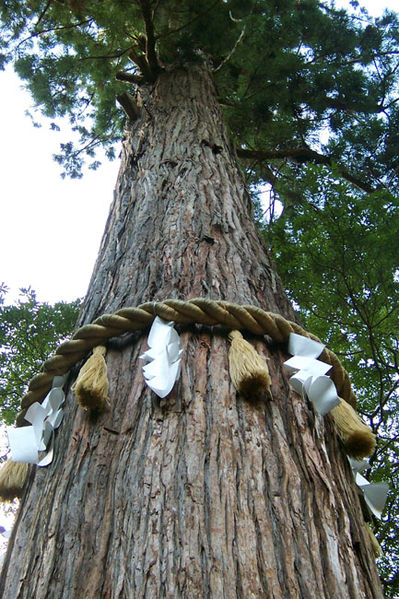
Scattered across the landscape of Japan are Shinto shrines of various shapes and sizes. In many of the larger shrines you’ll find one or more especially old trees known as Goshinboku which means “sacred tree.”
Sacred trees are usually massive in size and centuries old with some reportedly over 1,000 years old. You can usually tell them from the shimenawa wrapped around their trunks. A shimenawa is an extremely thick rope which encloses something holy and wards off evil from outside.
These age-old trees are beautiful specimens of nature’s strength and longevity and add an extra level of serenity to their shrines. However, in the past month someone or some group has been killing off these sacred trees of shrines in 5 separate prefectures in Japan’s mid-west.
MOST POPULAR
Now
 Famous Tokyo cherry blossom spot installs view-blocking screens to fight overcrowding[Video]
 Japan now has a special desk for people who work at home with a pet cat[Photos]
 Uniqlo announces new T-shirts for One Piece, Naruto and more for manga publisher’s 100th birthday
 Final Fantasy invites you to adventure in Fukushima with Fukushima Fantasy Chocobo fun[Video]
 Rumors say this is Japan’s very best McDonald’s branch, but what makes it special?[Taste test]
 Starbucks Japan adds new Sencha Matcha Tea Frappuccino to its menu, but only at 28 locations
 Krispy Kreme releases Super Mario doughnuts in Japan for a limited time
 This upcycled Kyoto train cafe is the ultimate kawaii spring experience
 Japan’s ministry of economy reminds us to “use sound judgment” before buying toilet paper
 Create a tiny Ghibli anime world on your bookshelf with new miniature papercraft art kits
Weekly
- Japan now has a special desk for people who work at home with a pet cat[Photos]
- Uniqlo announces new T-shirts for One Piece, Naruto and more for manga publisher’s 100th birthday
- Krispy Kreme releases Super Mario doughnuts in Japan for a limited time
 7-Eleven Japan releases a crazy new viral sandwich: Chocolate Sprinkles and Whipped Cream
 Japan now has a “for foreign tourists only” Mt. Fuji sightseeing train[Video]
- Famous Tokyo cherry blossom spot installs view-blocking screens to fight overcrowding[Video]
 Starbucks Japan releases new My Fruit³ Frappuccino at only 34 stores around the country
 Studio Ghibli releases the My Neighbour Totoro tea caddy, with a magical self-closing lid
- Create a tiny Ghibli anime world on your bookshelf with new miniature papercraft art kits
 Stunning central Japan wisteria festival is like a purple fantasy straight out of a Ghibli movie
Monthly
 Starbucks Japan unveils new sakura cherry blossom collection for hanami season 2026
- Japan now has a special desk for people who work at home with a pet cat[Photos]
 Train station platform ramen store closes its doors on half a century of history in Tokyo
- Starbucks Japan releases new My Fruit³ Frappuccino at only 34 stores around the country
 Studio Ghibli releases Catbus pullback keychain that runs like the anime character
 Japanese onsen egg maker from 100-yen store Daiso needs to be on your shopping list
- Uniqlo announces new T-shirts for One Piece, Naruto and more for manga publisher’s 100th birthday
 Nine great places to see spring flowers in Japan, as chosen by travelers (with almost no sakura)
- Krispy Kreme releases Super Mario doughnuts in Japan for a limited time
 Cherry blossoms begin blooming in Japan with record-early starts for sakura season
Yearly
 Survey asks foreign tourists what bothered them in Japan, more than half gave same answer
 Japan’s human washing machines will go on sale to general public, demos to be held in Tokyo
 Starbucks Japan releases new drinkware and goods for Valentine’s Day
 We deeply regret going into this tunnel on our walk in the mountains of Japan
 Studio Ghibli releases Kodama forest spirits from Princess Mononoke to light up your home
 Starbucks Japan releases new sakura goods and drinkware for cherry blossom season 2026
 Japan’s newest Shinkansen has no seats…or passengers [Video]
 Major Japanese hotel chain says reservations via overseas booking sites may not be valid
 Put sesame oil in your coffee? Japanese maker says it’s the best way to start your day【Taste test】
 No more using real katana for tourism activities, Japan’s National Police Agency says
RECOMMENDED STORIES
 Starbucks Japan adds new Sencha Matcha Tea Frappuccino to its menu, but only at 28 locations
 Krispy Kreme releases Super Mario doughnuts in Japan for a limited time
 This upcycled Kyoto train cafe is the ultimate kawaii spring experience
 Japan’s ministry of economy reminds us to “use sound judgment” before buying toilet paper
 Create a tiny Ghibli anime world on your bookshelf with new miniature papercraft art kits
 Cherry blossoms begin blooming in Japan with record-early starts for sakura season
 Believe it or not, this isn’t a Tokyo vending machine – It’s a secret door to deliciousness
 Japan now has a “for foreign tourists only” Mt. Fuji sightseeing train[Video]
 Starbucks Japan unveils sakura cherry blossom drinkware range for 2021
 A secluded British mansion in Chiba is a hidden holy land for afternoon tea lovers
 A winter work-from-home essential from Japan: The kotatsu desk【Photos】
 Japan’s most famous Mt. Fuji view park cancels cherry blossom festival because of overtourism
 The mystery of the phantom “sake pass card” at Japanese alcohol vending machines
 One taste of toasted egg mushipan bread and you’ll never go back to eating it the normal way!
-
