At a recent budget meeting in the Japanese Diet, a member asked Prime Minister Abe to explain his growth strategy. As you probably know, the prime minister has been focused on improving the Japanese economy, though he’s not having the greatest of luck. As Abenomics–the cheeky name given to Abe’s economic policies–fluctuates in and out of favor, many are wondering if it’s working at all. We’re not sure the Prime Minister’s response is going to assuage anyone’s fears…
We’re used to seeing a lot of unbelievable-sounding coverage concerning the Cobra-style antics of North Korea’s totalitarian dictatorship. But the country’s tightly-closed borders make many reports difficult to verify, so a lot of patently false stories end up circulating through legitimate outlets. This means that, sadly, what you’ve read about North Korea putting a man on the sun and finding a unicorn lair are less than legit.
Some stories, however, are frighteningly real: Like the one about Pyongyang launching a series of Scud missiles over the Japan Sea recently as a show of military might.
Brace yourselves, Republicans and Libertarians: it turns out Japan’s social safety net provides free healthcare to people that need medical attention but have no money or insurance. It’s like Obamacare’s angry, ‘roided-up samurai cousin.
That’s because there’s a somewhat vaguely-worded provision in Japanese law that states the government is obligated to provide care for those with “troubled livelihoods,” at low or no cost, regardless of insurance coverage. “Troubled livelihood” is kind of a broad definition, which ensures that those without the means to pay for medical treatment – even if they aren’t necessarily poor, homeless or unable to work – can still see a doctor.
Yoichi Masuzoe, the politician who once publicly stated that women “are not normal” during their period and “couldn’t possibly” be relied upon to run the country because of it, has been elected as governor of Tokyo, it has been announced.
For most of its history, Japan was separated from the rest of the world by the surrounding seas and an isolationist policy strictly enforced by its feudal period government. These centuries of isolation led to a unique culture, and it’s long been a favorite challenge for researchers and commentators to try to pin down just what defines the Japanese character.
Chinese news portal BW Chinese recently published a list of characteristics of the Japanese psyche, as originally put forth by Australian Gregory Clark, whose educational and professional career dealing with Japanese sociology, education, and economics has spanned more than five decades.
America throws the best linguistic hissy fits when political relationships sour. Remember when Congress tried to change French fries to “freedom fries” because France didn’t want to come along on the Iraq invasion? Or how about when sauerkraut became so unpopular during World War I that makers suggested changing the name to the less Germanic “liberty cabbage”? Good times.
Well, it may be that the Yanks aren’t the only ones who want suitably patriotic cabbage. In Korea, it looks like Chinese cabbage, the vegetable used to make the most common variety of kimchi, is now being referred to as “kimchi cabbage” or just “cabbage”.
Much to the joy of political comedians, recent years have seen a sharp increase in international political gaffs thanks to the Internet and the ease with which stupid comments can go viral. And Japan is no stranger to this trend, with numerous politicians having resigned after letting inappropriate jokes slip to the wrong reporter.
Now one Japanese career bureaucrat in his 50s is in hot water for his inflammatory, supposedly anonymous blog posts. But many Japanese netizens feel his punishment is far too light.
On 25 September, Japanese Prime Minister Shinzo Abe made a speech and rang the closing bell at the New York Stock Exchange. His aim was to promote US investment as a part of his economic reform plans known as “Abenomics.”
However, the highlight of the speech came towards the end when he mentioned the heavy metal band Metallica and their hit song Enter Sandman while discussing Japan’s future and the Tokyo Olympics. While this may have seemed perfectly innocent at first, this name-drop may have hurt the PM’s standing in the metal community with previous supporters now wondering if Abe is, in fact, a “poser” – someone who only acts like they know about metal.
Ah Shinto, you’re the stoner roommate of world religions. People pride you on your laid-back “everything is god” and “it’s okay to have other religions” policies. Often times they wish they could be just like you. However, when you forget to pay the internet bill for the fourth time that way of thinking gets old real quick.
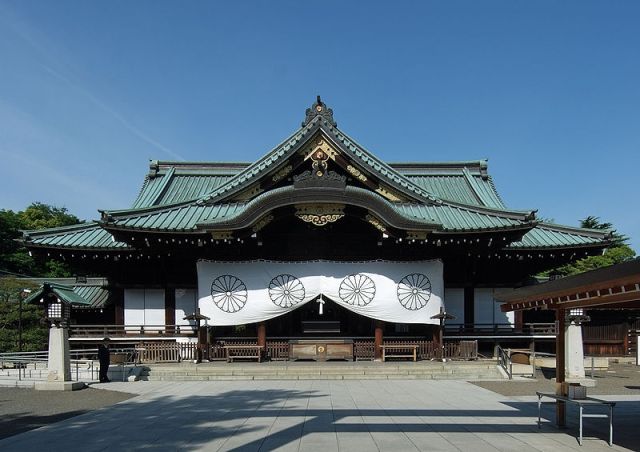
In Shinto’s case, that ISP’s final warning came in the form of Yasukuni Shrine, a shrine which serves to hold the souls of those who died in the Japanese armed forces. When it came time to include some convicted war criminals among those souls, Shinto coughed and said, “Sure man, they probably did something good along the way.”
And so, Yasukuni Shrine has become a political lightning rod inspiring right-wing nationalists in Japan and spurning the nation’s neighbors. Thankfully, this Obon season, when Japanese people habitually visit shrines to honor those who have gone before us, bread-headed children’s superhero, Anpanman, flew into Yasukuni and lent some sanity to an otherwise volatile situation.
Japan loves ice cream, so when Ben and Jerry’s started opening locations here in 2012, it was welcomed with open arms.
But the Vermont-based company didn’t just bring its assortment of tasty flavors with untranslatable pun-based names. It also brought its well-known commitment to social activism with it. In keeping with those values, Ben & Jerry’s Japan is offering free ice cream to encourage people to vote in the country’s upcoming election.
Changes are expected to be made to the Vietnamese constitution this October during sessions of the country’s National Assembly. The current constitution was ratified in 1992 as part of the doimoi political movement that relaxed many of the government’s economic controls, and was a major departure from its previous incarnation.
Although minor revisions were made to the constitution in 2001, far more extensive alterations are expected in the next round. Among the many points to be discussed is the possibility of altering the country’s official name.
On 24 May, members of Prime Minister Shinzo Abe’s cabinet convened to make and official statement concerning long standing rumors swirling around the opposition party. These rumors are regarding the Prime Minister’s Residential Quarters (Sori Daijin Kotei) and the super spooky ghosts that may dwell inside.
Since taking power last September Prime Minister Abe has implied, “I’m not spending the night in that place,” by never spending the night in that place.
In Japanese, obachan is a word that means aunt, but is sometimes used to refer to a middle-aged or elderly woman in a derogatory way. There is no good translation in English, but the image is of an eccentric, loud, irritating busybody long past youth or beauty. Not many women would choose to apply this word to themselves, but a new political party has emerged out of Osaka that is proudly claiming ownership of the word and attempting to reform the image of Japan’s obachans. We went to find out more about this All Japan Obasan Party. Read More
According to a story in the South China Morning Post, more than 90 percent of Hong Kong citizens polled in a recent survey said that they wanted the region to return to British rule, stating that they fear much of what makes the region great will eventually be lost.
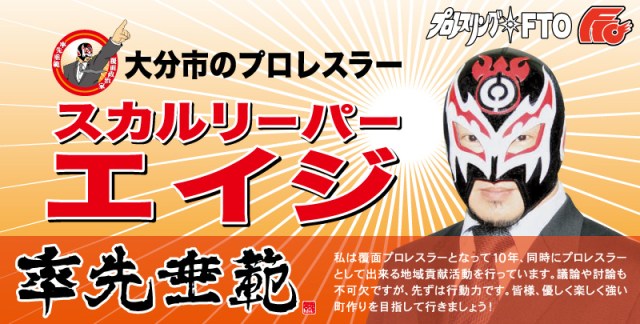
The masked wrestler rights movement was dealt a blow on 11 March as wrestler turned municipal legislator, Skull Reaper A-ji, was refused entry to a scheduled city council session as long as he was wearing his mask.
When interviewed by reporters、 Councilman Skull Reaper, who was elected last month, expressed regret over the matter saying, “Frustrating. If I take my mask off, I’m an entirely different person. I will not take it off.”
Since Shinzo Abe’s election win late last year, a faint hope for some kind of action in the long stagnant government of Japan was kindled. “Perhaps the return of his Liberal Democratic Party (LDP) to power could finally get some gears turning again in the nation?” people thought.
So far the fruit of LDP leadership has been a novel way to filibuster by frequently going potty – which I guess makes it a fig.
Yasuhisa Tokugawa is a descendant of the Tokugawa family consisting of the legendary Shoguns such Ieyasu Tokugawa. Yasuhisa, now 64, had a successful career in the oil business from which he retired.
Now he’s doing what you’d probably expect a retired business man to do: he became the head priest of the most controversial shrine in Japan.
Usually when you hear about a fresh-faced new voice in politics, it’s usually, well, a fresh face. Not so much with Ryukichi Kawashima, who is running for office for the first time at the ripe old age of 94.
Kawashima is running to represent Saitama Prefecture’s 12th District and is the oldest candidate out of the 1,504 people running in the current election. He had been putting aside money from his pension to use for his own funeral expenses, but decided the 3 million yen (about US$36,000) would be better spent as an election fund. Deep concern over the future of the country motivated him to run, he says. “I thought it was time I did something.”
With Japan’s general election looming on 16 December, the tension in Japan is so thick you could cut it with a noodle. Yes, the country has been mired in a political malaise of apathy since the days of Koizumi.
The Prime Minister’s seat has been a musical chair for the past 6 years with no dynamic leadership on the horizon to guide the country into the future. Government in Japan is largely a good old boys club where people rise to positions of power simply by being the grandson of some great leader way back when.
Google has set up a campaign to help politicians get more in touch with their electorate and hopefully hash out a plan for Japan’s future that people can get behind – not to mention help promote the social network Google+. Google Japan will be putting regular people face to face with representative of the major political parties for a little Q & A session on 14 December.








![[Election 2012] Google Sets Up Face Time between Japanese Politicians and Voters](https://soranews24.com/wp-content/uploads/sites/3/2012/12/top.jpg?w=638 "[Election 2012] Google Sets Up Face Time between Japanese Politicians and Voters")
 New Shinkansen luggage drop-off system begins in Japan, making train travel even easier
 Which country’s foreign tourists spend the most money per-person in Japan? Hint: Not the U..S. or China
 Brand new Shinkansen bullet train unveiled in Japan… but it won’t carry passengers
 Beautiful exclusive Totoro tenugui towel is a gift from Disney to Ghibli physical media buyers
 Foreign hiker on Mt. Fuji loses consciousness and dies, becoming climbing season’s second fatality
 Starbucks Japan adds a new summer Frappuccino to the menu, but is it as refreshing as it looks?
 Cup Noodle releases cold-water instant ramen in Japan, but can it really be made with just cold water?
 Yakuza members arrested for building a road on mountain they don’t own
 Cup Noodle and Columbia team up for a weird and wonderful T-shirt that’s very Japanese
 Studio Ghibli releases anime T-shirts that pay homage to one of Hayao Miyazaki’s most personal films
 Japan now has human refrigerators inspired by Japanese vending machines
 Hatsune Miku collaborates with Hokusai’s art in new Vocaloid ukiyo-e illustration series [Pics]
 Japanese convenience store releases Japanese convenience store-flavor fried chicken
 Family Mart’s new Tokyo flagship convenience store doesn’t feel convenient, but is that a problem?
 Starbucks Japan releases new Discovery Series collection celebrating local regions and traditions
 Teen girl in Japan refuses to be victim, personally escorts train pervert to police for arrest
 Is Japan’s tourism boom slowing down? Foreign visitor numbers fall for first time in five years
 Starbucks Japan releases exclusive new Bearista collection…with beary cute details
 Studio Ghibli has a new anime out, and there’s only one place in the world where you can see it
 Japan announces sudden 400-percent increase in visa fees for foreigners entering the country
 Salomon releases Japan-exclusive Mt. Fuji hiking gear that doubles as an amazing souvenir
 Japan triples departure tax, foreign tourists and locals now must pay more to leave country
 Japan launches first overnight Shinkansen bullet train between Tokyo and Osaka this summer
 Family Mart opens new “Famima” flagship store in Tokyo that’s like a tourist attraction
 Japan’s human washing machines will go on sale to general public, demos to be held in Tokyo
 Starbucks Japan releases new drinkware and goods for Valentine’s Day
 Starbucks Japan releases new sakura goods and drinkware for cherry blossom season 2026
 Japan’s newest Shinkansen has no seats…or passengers [Video]
 Japanese ninja certification exam attracts 131 candidates from Japan and abroad
 Put sesame oil in your coffee? Japanese maker says it’s the best way to start your day【Taste test】
 Japan reportedly adding Japanese language skill requirement to most common foreigner work visa
 Starbucks Japan adds a new summer Frappuccino to the menu, but is it as refreshing as it looks?
 Cup Noodle releases cold-water instant ramen in Japan, but can it really be made with just cold water?
 Yakuza members arrested for building a road on mountain they don’t own
 Cup Noodle and Columbia team up for a weird and wonderful T-shirt that’s very Japanese
 Studio Ghibli releases anime T-shirts that pay homage to one of Hayao Miyazaki’s most personal films
 Sanrio eco-friendly plushies are here for the earth-conscious lovers of all things kawaii
 Japan now has human refrigerators inspired by Japanese vending machines
 Japanese government sets up new group to deal with trading card boom
 Hatsune Miku collaborates with Hokusai’s art in new Vocaloid ukiyo-e illustration series [Pics]
 If you love Pokémon and cats, you’ll love Japan’s cat Pokémon cat toys and feeding dishes[Photos]
 Hatsune Miku, VTuber Suisei Hoshimachi perform opening pitch at pro baseball game in Japan [Video]
 Japanese convenience store releases Japanese convenience store-flavor fried chicken
 McDonald’s Japan reveals new Pokémon collaboration range, covering McNuggets and lucky bags
 Giant Snorlax, other snoozing Pokémon appear in Yokohama for Pokémon Sleeping Faces Research [Pics]