
The promotional poster for the new entry in the Star Wars franchise appears to omit or downplay non-white actors.
Bringing you yesterday's news from Japan and Asia, today.

With nothing better to do in his native Ohio, Mike took a leave of absence from all responsibilities in life and came to Japan for the first time in 2006. After several years of what amounted to an extended vacation with occasional Japanese lessons, circumstances led Mike to finally settle down in Tokyo and get serious about life in 2009. He’s worked at magazines, a Japanese ad agency, and currently works in the entertainment industry. He also co-founded and writes for the humorous Japan news website Tokyodesu.com.
Posted by Mike (Page 6)
The promotional poster for the new entry in the Star Wars franchise appears to omit or downplay non-white actors.

Studies show that only 60 percent of Japanese 20-somethings are able to correctly solve this math problem, compared to a whopping 90 percent 30 years ago.
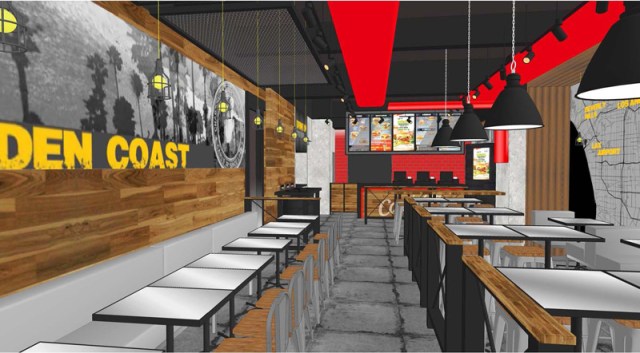
The legendary California burger joint says it will open its first Japan location in March 2016, to the delight of Tokyo expats and Japanese alike.

A 343 Industries render artist shows us what Link might have looked like if The Legend of Zelda had been in a western developer’s hands.
14 Japanese volunteers tell us about moments in their lives that seemed to come straight out of an anime.
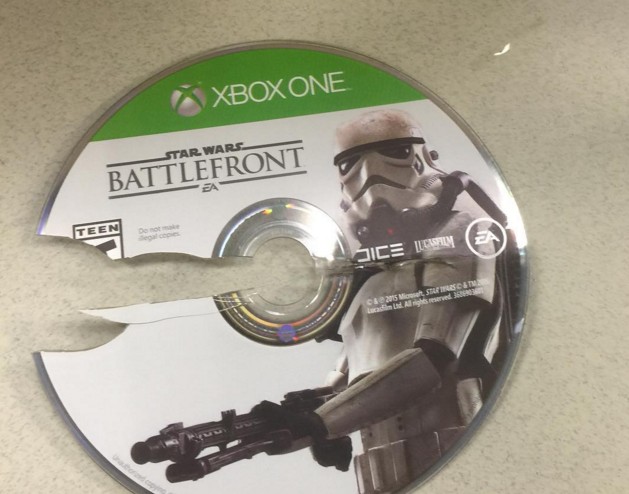
At least one minor celebrity has posted an angry rant on social media alleging video game publisher Electronic Arts tried to buy his endorsement of the upcoming Star Wars-themed game.
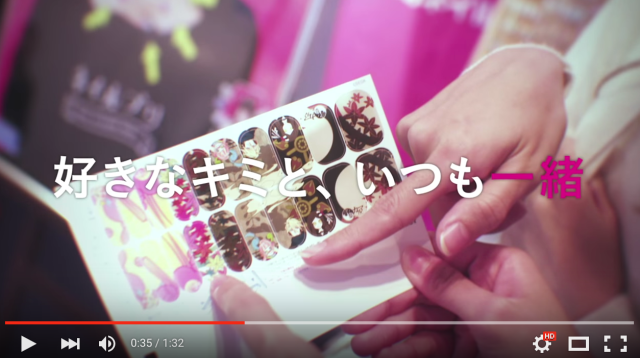
The machines are available at arcades and amusement centers in the “purikura” section and offer over 1,500 designs.

Black and white photos of the Philippines from as far back as the late 1800s look shockingly modern with just a splash of color.
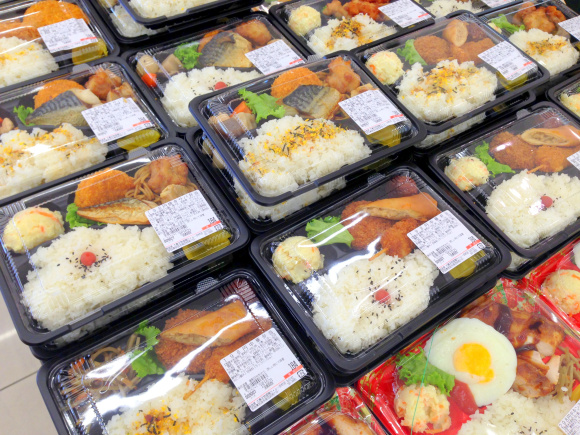
If we had to pick one thing that represented how Japanese food maybe isn’t quite as healthy as generally perceived, it would probably have to be the bento lunchbox. Bento are readily available practically everywhere in Japan—when not being handmade for you by a parent or spouse, usually in the shape of Pokémon characters and the like—and are widely consumed by office workers and other day laborers as a cheap, convenient lunch.
Despite healthy origins back in the old days, bento—perhaps by design—have become increasingly unhealthy, with your standard box available from a retailer or food truck usually weighing in at a thousand calories (or frequently even more) and containing a bunch of fried food in addition to huge portions of rice.
But heck, when a filling, albeit cholesterol and calorie-packed bento sets you back only a measly 200 yen (US$1.50) over at discount supermarket Lamu, well, we’ll happily do the extra time on the treadmill.
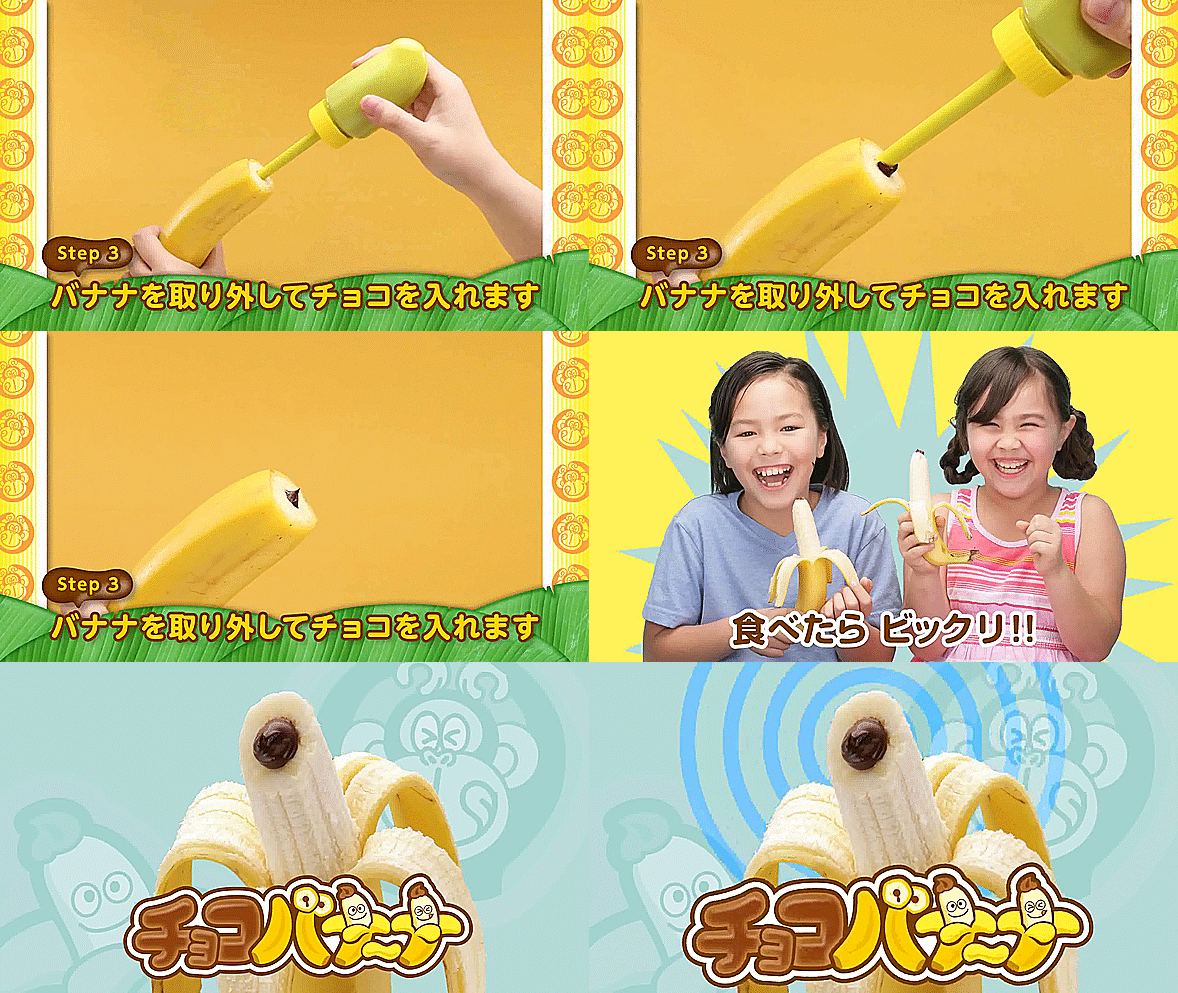
Sliced bread. The smartphone. A computer that sits on your lap. The flying buttress. Occasionally, a new person or thing comes along that proves to be a total game changer; something that completely redefines the way you look at and interact with the world around you.
This unassuming device is one of those: A contraption that literally injects chocolate into a banana, forever rendering the humble banana into an amazing new food group and essentially negating any nutritional value the protein-packed fruit once had (not that this bothers us).

ZOZOTOWN, the Japanese fashion retailer with a name that kind of sounds and looks like they’re shouting at you, is a pretty big deal in Japan.
The company, which operates an online marketplace, primarily markets to women – so much so that you’d be hard pressed to find a Japanese teen or 20-something girl that doesn’t have at least a few items of clothing purchased there – which makes their choice of a certain bearded model for a new clothing line all the more unexpected.
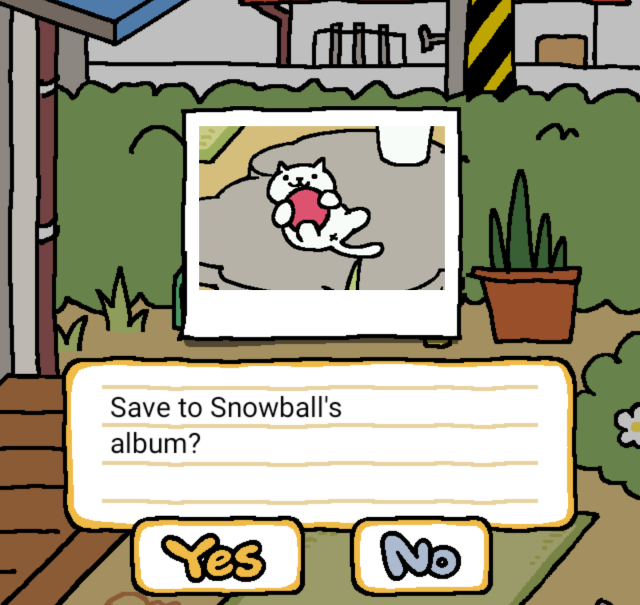
As further proof that cats rule the Internet and humanity at large, the relaxed, mostly goal-less mobile app time waster, Neko Atsume—which tasks players with simply collecting a bunch of cartoon cats and kind of just watching them do stuff—proved a massive success in Japan despite a distinctive lack of explosions, destruction and, er, constantly running from left to right that are the typical hallmark of successful mobile games.
In fact, the game is so popular among cat lovers (read: everyone) that the Japanese version of the game began trending abroad, even though the large majority of fans surely had to resort to Internet guides to make any sense of the Japanese kanji plastered all over the in-game menus and inventory.
Said fans were in for a great surprise, though, when last week, developer Hit-Point updated the game with full English support thanks to renowned localization agency 8-4. We had a chance to sit down with the 8-4 team and chat about the behind-the-scenes work that went into localizing the app for an English speaking audience.

Super Mario Maker, the toolkit/game for Wii U that allows Mario fans to build their very own levels using a vast array of items and characters from the games’ universe, is without a doubt a huge hit. Players had been craving the ability to DIY their own levels for the classic series pretty much since the original handful of games were released for the original NES.
One addition to the game that players never expected to see was the inclusion of the crazy “Weird Mushroom”—originally a glitch in the first Super Mario Bros.—which turns Mario into “Skinny Mario,” a creepy, distorted Mario whose lanky limbs wiggle about all over the place with each (giant) jump.
Skinny Mario was, to put it lightly, not well-received by the gaming community, and Nintendo had a golden opportunity to fix it when it released the first update to the game a few days ago. Except, instead of doing away with Skinny Mario, Nintendo actually decided to include even more, super creepy, Skinny Mario appearances.
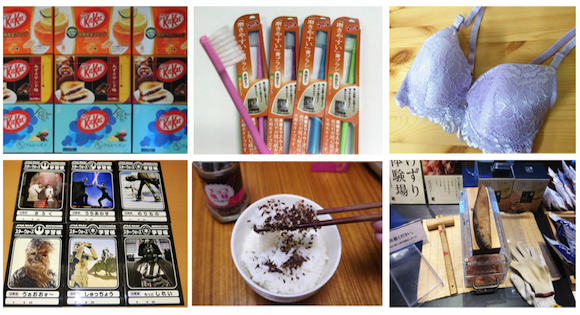
Any expat, exchange student, or anybody who has otherwise spent a long period of time abroad will tell you that, while the local food is exciting and fun and delicious for a while, eventually you’ll start to experience intense urges for the comfort foods and products of your native land. For some, these urges may be occasional, mild pangs, but for many, the urges are so strong they can’t resist stocking up on boxes and boxes full of their favorite items from home every time they head back.
Recently, a Japanese female expat who has been living in America for years introduced our sister site to the top 10 items that she likes to stock up on when she visits Japan:

If you thought having to send a couple of Christmas cards to close friends and far-flung cousins during the holidays was annoying, wait til you get a load of the nengajo (New Year’s card) tradition here in Japan. Not only is one obligated to send nengajo to family and friends, but you’re also obligated to send them to co-workers, bosses, anyone who regularly provides you a service, anyone whom you regularly provide a service to, your landlord, your mother’s landlord, Crazy Uncle Jeb over at the asylum, the stray cats in your neighborhood, and your mortal enemy (just to let him know you’ve got your eyes on him).
In fact, you’ve gotta send these things to so many people, it’s not uncommon to drop by the Japan Post near you and see people purchasing stacks of hundreds of these things. And unless, like me, you avoid any and all human contact, you’ll probably also come home one winter day to find your mailbox stuffed to the brim with the things. So, given their ubiquity, it’s no surprise that Japan Post (who prints and distributes loads of nengajo every year through both their yubin-nenga.jp website and physical post office locations), occasionally tries to mix it up with some very nontraditional designs.
This year, bizarrely, the running theme seems to be… moe. As in those super-cute anime girls and dreamy, slightly effeminate anime guys who are all the rage in Japan.
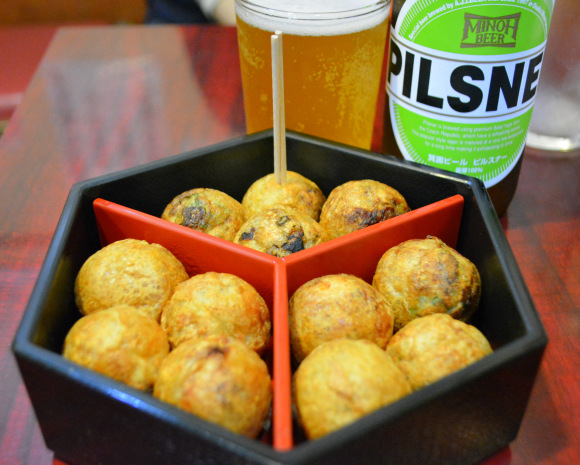
In Japan, takoyaki (somewhat unappealingly translated as “octopus balls”) is known as “B-Class Gourmet” food. Takoyaki is the domain of sometimes shady street vendors and national chains where there are literally no chairs whatsoever on the premises. They’re meant to be consumed while still blazing hot, fresh off the special cratered griddle used to make them, chewed and swallowed at lightning speed while you suck in air to make them just cool enough that they don’t burn a hole in your esophagus on the way down.
Therefore, takoyaki is not, one would think, within the purview of the Michelin tire company’s prestigious Michelin Guide for world-renowned restaurants. But, surprisingly, the 2016 Michelin Guide contains not just one but several restaurants specializing in takoyaki, okonomiyaki, and other “B-Class Gourmet” foods famous around Osaka and the Kansai area.
One of those featured restaurants, Aizuya, is, it turns out, actually rumored to be the restaurant that flat-out invented takoyaki. And since that sounds like a good premise for an article, and gives us an excuse to stuff our faces with this delicious local street food, we went to check it out.
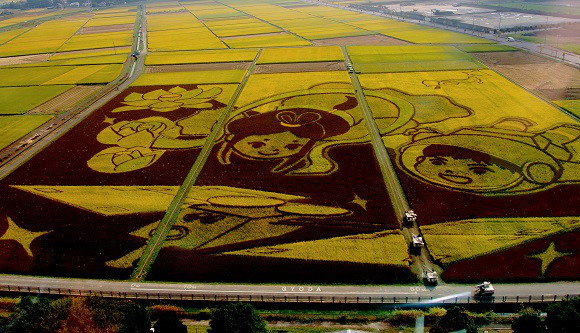
You may have already heard about rice field art: Those complex works that use dyed or naturally colored rice grains to create gorgeous patterns, or that turn the whole rice field into a canvas for a massive “painting” that can only be fully appreciated from the skies. Also, because Japan, Ultraman is sometimes involved.
But the phenomenon, once a niche practice for small Japanese cities that otherwise had nothing in the way of tourist destinations, has caught on to the point that the Guinness Book has actually recorded, for posterity, the current world’s largest work of rice field art.

The last couple of years have been benchmark ones for Halloween in Japan. What was once a holiday marked mostly by the infrequent sighting of a handful of mildly embarrassed-looking, costumed foreigners on the Yamanote Line train has grown into a massive industry.
In fact, Halloween has become just as much a holiday about 20 and 30-somethings dressing up as sexy nurses, sexy zombies, sexy superheroes, and other sexy-choose-a-nouns as its American counterpart. But while those costumes were no doubt getting plenty of attention on Shibuya Crossing last night, the Japanese Internet had already decided the undisputed Queen of Halloween was this far more conservatively dressed “once-in-millenium beauty”.

If you saw this car on the street, you’d half expect a comically large number of clowns to come piling out of it. But it turns out despite its Looney Tunes-esque look, there’s a noble—if somewhat bizarre—concept behind this new car from Toyoda Gosei.
This is the “Flesby,” a new concept car that Toyoda Gosei will display at the 2015 Tokyo Motor Show next week, with the “concept” being essentially that the entire outer body of the car is one gigantic airbag. Let’s take a look.
 Famous Tokyo cherry blossom spot installs view-blocking screens to fight overcrowding[Video]
 Japan now has a special desk for people who work at home with a pet cat[Photos]
 Uniqlo announces new T-shirts for One Piece, Naruto and more for manga publisher’s 100th birthday
 Rumors say this is Japan’s very best McDonald’s branch, but what makes it special?[Taste test]
 Krispy Kreme releases Super Mario doughnuts in Japan for a limited time
 Totoro and Calcifer become little light-up lanterns for Ghibli-style excursions or at-home decor
 Nephew receives SD card after his uncle passes away, finds treasure trove of gems from the past
 Japanese kindness restores our faith in humanity after a highway bus accident in Tokyo
 Kyoto’s “ikezu” culture of backhanded compliments explained in hilarious souvenir sticker series
 Japan now has a “for foreign tourists only” Mt. Fuji sightseeing train[Video]Krispy Kreme releases Super Mario doughnuts in Japan for a limited time
 7-Eleven Japan releases a crazy new viral sandwich: Chocolate Sprinkles and Whipped Cream
 Starbucks Japan releases new My Fruit³ Frappuccino at only 34 stores around the countryJapan now has a “for foreign tourists only” Mt. Fuji sightseeing train[Video]Uniqlo announces new T-shirts for One Piece, Naruto and more for manga publisher’s 100th birthday
 Nine amazing off-the-beaten-path cherry blossom spots in Japan for yaezakura and shidarezakura
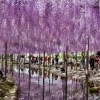 Stunning central Japan wisteria festival is like a purple fantasy straight out of a Ghibli movie
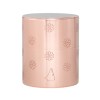 Studio Ghibli releases the My Neighbour Totoro tea caddy, with a magical self-closing lid
 Create a tiny Ghibli anime world on your bookshelf with new miniature papercraft art kits
 Studio Ghibli unveils new Rollbahn notebook in honour of Howl’s Moving Castle
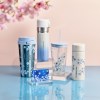 Starbucks Japan unveils new sakura cherry blossom collection for hanami season 2026
 Train station platform ramen store closes its doors on half a century of history in TokyoStarbucks Japan releases new My Fruit³ Frappuccino at only 34 stores around the country
 Studio Ghibli releases Catbus pullback keychain that runs like the anime character
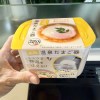 Japanese onsen egg maker from 100-yen store Daiso needs to be on your shopping list
 Nine great places to see spring flowers in Japan, as chosen by travelers (with almost no sakura)
 Starbucks Japan releases first-ever Hinamatsuri Girls’ Day FrappuccinoKrispy Kreme releases Super Mario doughnuts in Japan for a limited time
 Cherry blossoms begin blooming in Japan with record-early starts for sakura season7-Eleven Japan releases a crazy new viral sandwich: Chocolate Sprinkles and Whipped Cream
 Survey asks foreign tourists what bothered them in Japan, more than half gave same answer
 Japan’s human washing machines will go on sale to general public, demos to be held in Tokyo
 Starbucks Japan releases new drinkware and goods for Valentine’s Day
 We deeply regret going into this tunnel on our walk in the mountains of Japan
 Studio Ghibli releases Kodama forest spirits from Princess Mononoke to light up your home
 Starbucks Japan releases new sakura goods and drinkware for cherry blossom season 2026
 Japan’s newest Shinkansen has no seats…or passengers [Video]
 Major Japanese hotel chain says reservations via overseas booking sites may not be valid
 Put sesame oil in your coffee? Japanese maker says it’s the best way to start your day【Taste test】
 No more using real katana for tourism activities, Japan’s National Police Agency says
 Totoro and Calcifer become little light-up lanterns for Ghibli-style excursions or at-home decor
 Nephew receives SD card after his uncle passes away, finds treasure trove of gems from the past
 Japanese kindness restores our faith in humanity after a highway bus accident in Tokyo
 Kyoto’s “ikezu” culture of backhanded compliments explained in hilarious souvenir sticker series
 Japan now has a “for foreign tourists only” Mt. Fuji sightseeing train[Video]
 New Family Mart cinema opens inside Japanese airport
 We hung out at one of Tokyo’s most popular pickup spots, drank our hearts out and met many men
 We ventured into a hidden gem of a Chinese Internet cafe in downtown Tokyo【Pics】
 Taste-testing every single sakura sweet and cherry blossom drink we could find at Mujirushi
 All-you-can-eat tacos arrive in Tokyo’s Shibuya neighborhood for under nine bucks
 McDonald’s Japan’s new spicy McNuggets promise to punch you in the face with spiciness
 New sakura cherry blossom viewing sheets bring old-school beauty to hanami picnics
 Hotel’s amazing breakfast buffet shows why it’s your loss if you skip Nagoya on your Japan trip