Do you think putting together broken bits of pottery sounds like fun? No, me neither. And I’d never imagine something that’s so tedious in real life would make a good basis for a game. However, that’s the theme behind this free Android app which draws upon an ancient Japanese philosophy and, after reading some reviews, I was convinced that I had to give it a go myself.
culture (Page 44)
Seeing as how the entire English-language RocketNews24 team is composed of people who at some point moved to Japan, we’re pretty big proponents of living here. One unpleasant part of the package, though, it that since you can’t claim the whole country as your residence, living in Japan means finding an apartment in Japan, which is generally agreed upon as one of the least enjoyable parts of the expat experience.
Why? For the following four reasons.
Japan has a fascinating art history. From early cord designs on clay vessels in the Jomon period (c. 11000–c. 300 BC) through to picture scrolls, ukiyo-e woodblock prints, and the distinctive style of animation that exists today, people in Japan have always found unique ways to capture the world around them for the rest of the world to see.
One little-known art technique from the 1800s is now making a comeback, and while its roots are firmly planted in Japan’s traditional history, it’s a method of printing that people all around the world can enjoy. All you need is paper, some paint and a nice-looking fish.
Until recently, rice-loving Americans looking to add a little zing to their favorite grain would need to trek out to the nearest Asian grocery store to pick up a pack of furikake rice topping. But now, according to Japanese media, the toppings are gaining traction on the US west coast and is becoming more widely available.
Furikake consists of a mish-mash of ingredients that have been dried and powdered and, in Japan, is intended specifically and only to be sprinkled atop a steaming hot bowl of sticky Japanese rice; which explains why many Japanese people are reacting with shock at how the Americans are choosing to deploy the condiment.
Japan has an incredibly rich history of traditional performing art forms that have lasted through the centuries. It has noh, kabuki and bunraku, all of which provide classical entertainment even if you have no idea what is happening. Another popular form of Japanese entertainment is rakugo, which involves a lone storyteller sitting on a stage, telling comical stories with only two props traditionally: a fan and a small cloth. So while the rest of the world has stand-up comedians, Japan has sit-down comedians. All of these performances though have one small problem for foreigners, though: they’re almost always in Japanese.
That’s where Showko enters the scene. A brilliant entertainer who has traveled the world with her hilarious Rakugo performances and ventriloquist acts has been taking the comedy world by storm. Learn more about some of her performances and where to see her after the jump.
Japanese society may greatly value education, but it’s not like every kid in the country is born with an innate attraction to long division or vocabulary lists. Given the choice, even Japanese kids would much rather be playing video games or watching cartoons than doing homework, and given how active the country is in producing content for those two entertainment sectors, steering your children away from such tempting distractions and back towards their studies can be a tough challenge.
So what do you do when your kid declares he’s sick of school, and asks “Why do I have to study?” One Japanese education expert has an answer that’s half kind, half harsh, and entirely wise.
When foreigners first move to Tokyo, they’re often amazed and overwhelmed by Japan’s biggest bustling metropolis. But sometimes culture shock can be more localized, and just because you haven’t left the country doesn’t mean there aren’t any surprises in store when you move to a new town.
Hokkaido has more than five times the area of any other Japanese prefecture, and the lowest population density in the country to boot. So when someone born and raised on the northern island moves down south to Tokyo, which is more than 90 times as crowded as Hokkaido, he’s sure to be surprised by a lot of things, and here are 30 of them.
Idol singers exist in an extremely specialized, and often contradictory, corner of the already specialized Japanese pop music industry. Successful idols are expected to walk the fine line between having a polished, attractive appearance and an approachable, unassuming aura. Even more ironic is that while their songs’ lyrics are often focused on love and devotion, it’s practically unheard of for an active idol to openly be in a romantic relationship.
Every now and again, though, word gets out that an idol secretly has a boyfriend, or had an illicit liaison with a guy. The revelation is usually followed by a solemn apology to fans, and often the offending member being removed from the group. But this time the story of an idol’s amorous activities coming to light has something we’ve never heard about before: a court-ordered fine equivalent to several thousand dollars for breach of contract.
No matter how much you love your kids, no matter how strongly you want to protect them and guide towards what you believe are the best decisions, at some point they’re going to grow up and lead their own lives. Past a certain age, you just have to face the reality that your while they’ll always be your children, they’re also now adults, and you have to accept them as the people they’ve chosen to become.
Or, alternatively, you could harbor resentment towards them, like the men polled for this survey of the top 10 ways Japanese fathers are disappointed in their daughters.
A while back, we talked about how it’s common in Japan for people to place dropped property in a place where it’ll be easy to spot when the owner retraces his steps looking for it. There’s hardly any fear that anyone else will take it, whether the item in question is as cheap as a mitten or something much more valuable.
But such admirable conduct isn’t limited to private citizens’ interactions with one another. A recently tweeted snapshot of a train station ticket gate has been getting laughs in Japan for its unusual design, and while it is kind of funny-looking, it also shows the extremely honest character of Japanese society.
It’s far from the happiest place on earth, but Japan certainly has a reputation for kindness and hospitality. Most foreigners that visit the country return home with starry-eyed tales of over-the-top customer service and even random acts of kindness from total strangers.
But, this isn’t just a case of the Japanese putting on a good front for visiting foreigners: heartwarming acts of kindness in Japan are pretty commonplace (although this isn’t a Japan-exclusive thing; let’s be honest). If you’re in need of a Japan-flavored pick-me-up today, check out these stories of people being awesome, via Japanese Twitter users:
Much like “humdinger” and “roughneck,” “foxy” is one of those words that’s far past its golden age. But really, why shouldn’t it be used to describe an attractively fashionable woman, especially is she’s sporting a pair of these cute knee-high socks decorated with Shinto-style kitsune fox spirits and other culturally quirky touches?

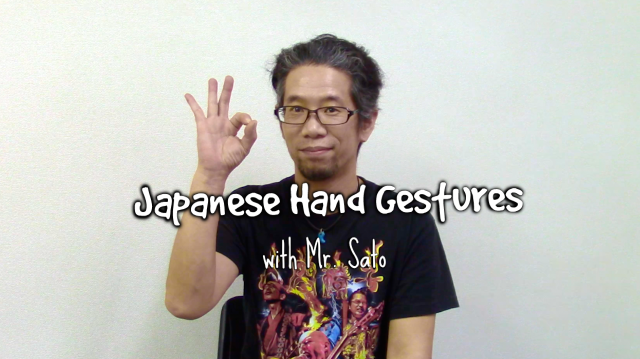
Earlier this week, a Twitter user turned to the masses in the hope of learning the meanings behind four common gestures she had often seen in Western cartoons. While many, if not all, of these may be instantly recognizable to our readers, in Japan they are seldom seen and for that reason look understandably odd.
We’ve already examined some Japanese hand gestures; now let’s see how the other half lives as Japanese Twitter users try to unravel the meanings behind licking our fingers and touching someone or “crab-like movement and bending fingers“.
Just about every community in Japan puts on a local festival in the summer, but few are as spectacular as Aomori City’s Nebuta Matsuri. For almost a solid week, gigantic floats topped by lanterns shaped like samurai and dragons are paraded through the streets, accompanied by dancers and musicians.
But while Aomori is one of the largest cities in the largely rural Tohoku region of Japan, its relatively remote location in the northeastern corner of the country’s main island of Honshu means not everyone can make it out to see the festivities in-person. As long as you’ve got an Internet connection, though, you can get a taste of the fun with Google’s awesome Nebuta Matsuri Street View that lets you see the amazing floats even closer-up than spectators standing on the sidewalks the towering works of art are carried by.
Every fall, parents in Japan who have children that are three, five, or seven years old celebrate something called Shichi-Go-San (literally “Seven-Five-Three”). The family heads to a Shinto shrine, where the priest performs a blessing for girls aged three and seven and boys aged five, praying for them to have long and healthy lives.
But since some pet owners will argue that their animal companions are their children, certain shrines now offer Shichi-Go-San blessings for pets, too, some of whom show up wearing delightful pet kimono!
Before we had bags in Japan, we used furoshiki — elegant cloths that come in various colors and decorative patterns that can be used to wrap and carry various items. While you don’t really see them in daily use now, furoshiki are quite useful in their own way, as they can be folded and tied in different ways and be used to wrap items of varying shapes and sizes, in addition to being eco-friendly.
But it turns out that the traditional cloths have recently served as the inspiration for a completely new and unexpected product — Furoshiki Shoes that wrap around your feet!
Any good athlete obviously needs some measure of speed, strength, and stamina, but the list of necessities starts getting much longer if we’re talking about good student athletes. Youth sports are supposed to be as much about developing character as physical skills, so any proper high school athletic program should want its players to be just as dedicated to sportsmanship and integrity as they are to on-the-field performance.
That’s why we think Fukuoka Prefecture’s Kyushu International University Senior High School (called Kyukoku for short) is doing a fine job with its baseball team, since after a heartbreaking loss on the road, players from Kyukoku immediately started cleaning the stadium.
It might seem a little odd to hear that yukata, the lightweight kimono worn at summertime festivals, fireworks shows, and bon dances, are in the middle of a revival in popularity in Japan right now, but it’s absolutely true. After several years in which young Japanese found yukata to be too expensive and troublesome to bother with, they’re back in fashion with teens and young adults in a huge way.
Part of this is no doubt due to more and more manufacturers offering reasonably priced yukata, as you can now often find sets that include the robe and sash for around 6,000 yen (US$48). And as for not knowing how to put everything on and tie it properly? That’s also a problem of the past, thanks to online explanations like this pair of videos from fashion and yukata retailer Uniqlo.

Sure, you may have killed, like, 230 lions in Skyrim and traded in their pelts for a sweet dagger and maybe a cool tricorn hat, but it’s safe to say that, in real life, you probably wouldn’t fare so well against one of nature’s most efficient predators. First, where are you going to get a sweet set of gold armor and a giant warhammer? Secondly, humankind’s fight or flight response being what it is, you’re probably far more likely to projectile urinate onto your attacker while fleeing at top speed like the damn Roadrunner or something.
No, outside of Skyrim, there is only really one group of people (that don’t routinely use high-powered, modern weapons like they’re hunting the Predator) that can actually boast of taking on lions and walking away not only alive but victorious. Lucky for us, we’re tight with these folks – the Maasai people of Kenya and Tanzania – and they graciously taught us their technique, using one of our most unfortunate Japanese writing staff to demonstrate.


Japanese ninja certification exam attracts 131 candidates from Japan and abroad
7-Eleven Japan to start selling Vietnamese banh mi sandwiches this summer
Studio Ghibli store Donguri Republic announces opening of first-ever store in America
Japanese sweets shop sells an ohagi so exquisite it sells out by noon
Starbucks Japan releases new Frappuccino, tea and soda drinks for summer
Forget Tokyo go-karts – there’s a new way to sightsee on four wheels in Japan
Studio Ghibli adds new My Neighbour Totoro music box to its anime merchandise store in Japan
Suspected Japanese ice cream cartel under investigation for price-fixing
All-you-can-eat cheese restaurant in Tokyo is a hidden gem not many people know about
100-meter tall Hello Kitty artwork appearing on Japanese Ferris wheel, jumbo Pompompurin nearby
New Japanese overnight train coming to connect Tokyo with Tohoku in sleep-travel style
Universal Studios Japan is giving Frieren anime fans the chance to make unforgettable memories.
Tokyo’s life-size Gundam is getting a new look before its end-of-summer removal
Starbucks Japan releases new limited-edition summer drinks…and a pastry for dunking
Japanese bento shop touches hearts by selling super cheap boxed lunches for around a dollar
Uniqlo reveals third round of massive 100-year-anniversary manga T-shirts for Jump’s Shueisha
Even at twice regular Daiso price, this handy item is still great for summer travel in Japan
New official Ghibli anime food cookbook will teach you how to make Ponyo’s ramen and more
Japanese convenience store Lawson launches new “mini supermarket” chain, L Minimart
Japan’s real-world Pokémon hot spring’s first photos are here![Photos]
Kyoto public junior high school becomes first in Japan with a hoodie school uniform
Japan’s human washing machines will go on sale to general public, demos to be held in Tokyo
Starbucks Japan releases new drinkware and goods for Valentine’s Day
We deeply regret going into this tunnel on our walk in the mountains of Japan
Starbucks Japan releases new sakura goods and drinkware for cherry blossom season 2026
Japan’s newest Shinkansen has no seats…or passengers [Video]
Put sesame oil in your coffee? Japanese maker says it’s the best way to start your day【Taste test】
Japan reportedly adding Japanese language skill requirement to most common foreigner work visa
Japan’s 5.3 million beautiful Hitachi Nemophila flowers are now in full bloom[Photos]
Pokémon and Ikea Japan cross over into each other’s worlds with collaboration events
Wisteria season starts early with blooming of Japan’s Great Wisteria in its beautiful garden
Forget Tokyo go-karts – there’s a new way to sightsee on four wheels in Japan
Studio Ghibli adds new My Neighbour Totoro music box to its anime merchandise store in Japan
Suspected Japanese ice cream cartel under investigation for price-fixing
All-you-can-eat cheese restaurant in Tokyo is a hidden gem not many people know about
100-meter tall Hello Kitty artwork appearing on Japanese Ferris wheel, jumbo Pompompurin nearby
Pokémon coming to Japan’s highway rest stops with exclusive merch and stamp rally this summer
New adorable Osaka foodie destination, Chiikawa Bakery Osaka, opening soon with crazy ramen bread
Starbucks Japan releases new limited-edition summer drinks…and a pastry for dunking
Harajuku Custom Icees come to help Tokyo’s Takeshita Street stay cute and cool this summer
Lawson upsizes convenience store food for a limited time with two must-try Japanese meals
Studio Ghibli releases new anime character fans to keep fans looking and feeling cool this summer
Tokyo has a cafe that prohibits talking inside, and here’s why it’s awesome
Lawson Japan releases a crazy new product to remind us it’s not just famous for convenience store food
Japan’s Pokémon Slowpoke Train goes on hiatus, but a mini version could be yours to own