We asked expats living in Japan if they thought that simply living here has made them a better person. Find out the results: the good, the bad and the ugly!
Bringing you yesterday's news from Japan and Asia, today.
Japanese language (Page 17)
We asked expats living in Japan if they thought that simply living here has made them a better person. Find out the results: the good, the bad and the ugly!
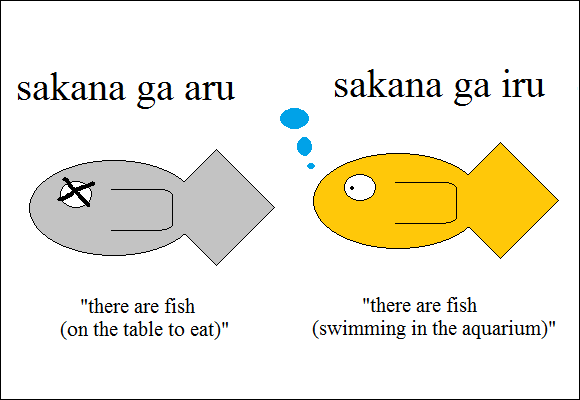
Master these and you can convince anyone you’re a native Japanese speaker…over the phone anyway.

English language proficiency is a tricky subject with Japanese people. There’s always an excuse about why they can’t understand it, from, “I’ll never use English,” and “It’s not interesting,” to the catch-all, “It’s too hard.” Well, it’s a good thing the Ministry of Education isn’t looking to adopt any new fonts for their textbooks as a little-known computer font developed back in 1998 is gaining some notoriety for being absolutely impossible to read by native Japanese. You might be able to read it, but can your Japanese friends?
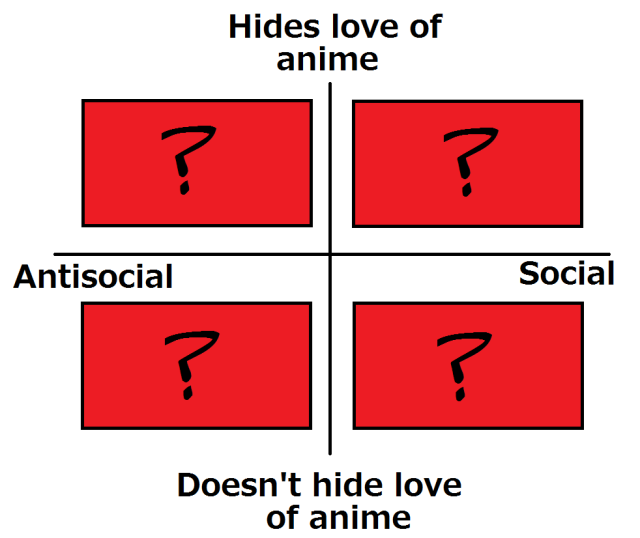
The international anime fan community has adopted a number of Japanese loanwords for concepts that originated in Japan and don’t have succinct, ideal vocabulary equivalents in other languages. English-language discussions between foreign fans are peppered with terms like otaku (fans whose enthusiasm for their hobby is so strong it affects their life balance), tsundere (a person whose expressions of emotion towards an object of affection run hot and cold), and moe (a feeling of devotion and protectiveness, often in response to a display of innocence or purity), just to name a few.
Now, though, the shoe’s on the other foot, as one woman in Japan with a soft spot for anime showing deep, emotional bonds between male characters is calling for the popularization of an English loanword to help her avoid being mistaken for a fan of homoerotic anime and fan fiction.

Kanji characters are one of the most fascinating, but also the most troublesome, aspects of the Japanese language—and that goes not just for foreign learners but also for Japanese natives. The Kanji Kentei is a standardized test that you can take to prove your kanji knowledge, but after being drilled on the kanji throughout their school lives Japanese people might not be taken by the idea of sitting for even more exams on the subject.
That’s why the Kanji Kentei administrators, in an effort to encourage people to give up their free time to study kanji and take their exams, has fallen back on the failsafe go-to of Japanese advertising: cute, nostalgic anime.

As in any country, a Japanese newspaper’s credibility often rests on a very fine political line. If their reporting leans even a little left or right, they run the risk of being called a stack of toilet paper scribbled on by talentless hacks by half the population. It’s a precarious position, and one in which releasing an app wherein you dress up school girls as a reward for current event awareness only seems to provide fuel for your detractors.
And yet on October 14 one of Japan’s leading newspapers, Asahi Shimbun, released just such an app called Kikasete Tensei Jingo. It features several moe girls reading from selected editions of the paper’s long-running Tensei Jingo editorial column. However, as pointless as it may appear on the surface there is some heavy language practice potential buried in there.

Travelling in a foreign country can be daunting, especially if you don’t know the language. While a one-year preparatory course isn’t necessary for just a week or so in a foreign land, learning a few key words and phrases is certainly recommended.
Some time ago, travel culture website Matador Network put together a list of “10 Extraordinarily Useful Japanese Phrases for Travelers“, a mostly tongue-in-cheek collection of phrases which, while at times giving some useful material, is probably more suited for those looking to jazz up their Japanese than it is for the average traveler. For that reason, perhaps, the list recently caught the eye of Japanese net users and has been garnering a lot of attention in the language’s homeland.
Check out the list below and see what you can use!

For roughly the past two decades, I’ve woken up every morning and asked myself the question “How can I use more Japanese vocabulary today?” That desire was the major reason I decided to study abroad in college, plus move back to Japan after graduation, and I’ve actually reached the point where I’ve got a pretty sizeable stockpile of Japanese words I wish I could import into my native language.
And yet, often when I hear someone use the Japanese honorific “-san” when speaking English, it feels awkward and superfluous to me. But it turns out there’re actually a few compelling reasons behind English-speakers peppering their speech with “-san,” as it solves a couple of linguistic limitations of the English language.
So what are the pros and cons of importing the word into English? Let’s take a look.

Clothing with incorrect and funny English (so-called Engrish) is everywhere in Japan, and has given many foreign visitors a chuckle over the years. So it’s always nice to see the tables turned, and Japan having the opportunity to marvel at clothing with odd Japanese writing on it.
That’s what happened this week when our reporter Mr. Sato got wind that actress and model Lily-Rose Depp had been spotted in New York wearing a particularly nonsensical T-shirt with Japanese kanji characters on it. He had only one question: “Where did she get it?”
…only one question, Mr. Sato? We’ve got a few more questions than that! So let’s take a look at the shirt in question, and crack the code behind its oddball message.

Why do we love Japan so much? What drives us to obsess over its culture, language, food, and everything else? Why do we keep coming back day after day to read articles about a country that, for many of us, is on the other side of the planet? For some the answer is easy, but for others, not so much.
One group for whom foreigners’ love of Japan is especially difficult to comprehend is the Japanese people themselves. Many of them have no idea why so many of us would bother to take an interest in Japan, much less learn its intimidating language. In an effort to try to figure this out, one of our RocketNews24 Japanese writers who lives in England did some investigate journalism and interviewed three students studying Japanese at the University of Cambridge.
Do their reasons for loving Japan match yours? Read on to find out!
What do you think of when you imagine a “cute girl?” The term seems like it should be straightforward enough, whether you’re using the English word “cute” or the Japanese equivalent, kawaii. But one Japanese Twitter user claims that guys and girls use the word to mean vastly different things, and has even shared an illustration diagraming what she feels is the difference between what men and women mean when they talk about a “cute” girl.
One day in college, my business operations management professor was talking about Japanese automaker Toyota, and about the huge impact of its production processes and corporate culture on the business world. “Toyota owes much of its success to its kaizen system,” he told us, and while I largely agreed with what he was saying, I didn’t really agree with how he was saying it.
See, while Toyota’s ideal of continually looking for better, more efficient ways of handling tasks is nifty and all, there’s nothing particularly special about the word kaizen, which just means “improvement.” Even as someone who’s spent most of his life looking for excuses to speak Japanese, insisting on using the word kaizen, when otherwise speaking English, has always seemed a little odd to me.
Oddly enough, though, right now there’s probably a Toyota employee sitting at his desk and scratching his head over one of his Japanese coworker’s penchant for using foreign loanwords, many of which might be on this list of the top 10 commonly used English business terms that Japanese businessmen wish their colleagues would use Japanese for.
You may have heard that Japan is obsessed with youth, which is ironic for a country with an ageing population , this is ironic. In fact, Japan is purported to have the highest proportion of elderly citizens compared to all other countries. With so many older folks making up a vast percentage of the population, why is Japan’s society still often casually ageist, particularly towards women?
A recent poll asked “at what age does a woman become middle-aged?” and the results are extremely telling.
Sometimes, the Japanese language is a pain in the butt. Seriously, how is it that in the millennia over which it evolved, no one ever said, “Hey, guys, why don’t we come up separate words for ‘leg’ and ‘foot’?”, which are both ashi in Japanese?
But speaking Japanese isn’t all frustrating head-scratchers. As we’ve talked about before, it also has some handy, expressive terms and phrases that don’t have direct English equivalents. So today we’re dipping back into our Japanese dictionaries for another batch of words we’d love to import into English.
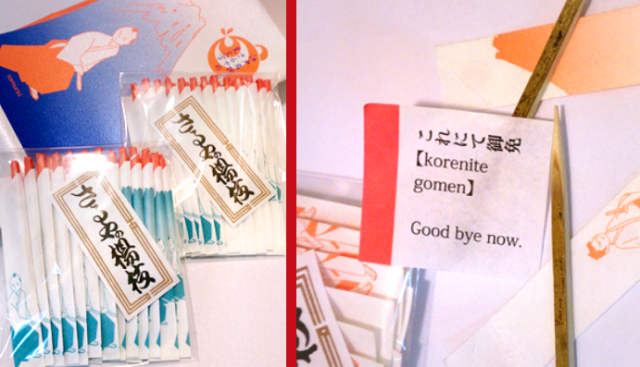
If you watch a lot of samurai movies or TV shows, you might have noticed that a toothpick is about as common a costume accessory as a set of paired swords. The reason isn’t because samurai were particularly fastidious about dental hygiene, though. Many fictional samurai stories re set in the Edo period, when the end of Japan’s centuries of civil war caused the warrior class’ power and prestige to begin slowly but surely eroding.
The samurai were a prideful bunch, though, and were loath to admit the new societal reality that swordsman had suddenly become a far less lucrative profession. So even if they couldn’t afford to regularly fill their stomachs, many would still lodge a toothpick between their teeth to give the impression that they’d just polished off a lavish meal fit for a man of high rank.
Of course, it takes more than just a toothpick to transform yourself into a samurai. You’ll also need to talk the talk, which is why these traditionally made Japanese toothpicks come individually wrapped with period-correct samurai phrases, and even helpful English translations and pronunciation guides.
Even as a guy who’s spent all of his adult life, and before that a good chunk of his juvenile one, studying Japanese, I’ve never been completely sold on the concept that the process of learning a foreign language has to be made “fun” at each and every stage. While you can break high-level linguistic concepts into intermediate ones, when you get down to a language’s most fundamental components, they’re really just a collection of arbitrary sounds that a group of people implicitly decided to use in the same way in order to give them meaning.
As such, there’s always going to be a certain amount of rote memorization involved with becoming actually proficient with a foreign language. But once those core concepts are introduced, they’re definitely going to stick in your memory better if they’re presented and demonstrated in a colorful way, which might be the logic behind this textbook for learners of Japanese that contains dramatic tales of romance, disease, and devotion.
The Japanese language takes a lot of cues from English when it comes to talking about romance. For example, “kisu”, the corrupted pronunciation of “kiss,” is about 100 times more common than “kuchitzuke,” the purely Japanese word for locking lips. Found the love of your life? Then it’s time to puropozu (propose), and when your bride walks down the aisle, she’ll probably be wearing a uedingu doresu (wedding dress).
Still, sometimes Japanese goes its own way, and while “boyfriend” and “girlfriend” are pretty readily understood, the indigenous terms kare and kanojo are much more widely used. And every now and again, the two languages get mixed together to describe something in the Japanese dating scene, such as with the newly coined phrase uiru kare, or “will boyfriend.”
Even after living in Japan for more than a decade, I still get excited when I see a restaurant with paper lanterns hanging out in front of it. The mix of vibrant colors and bold calligraphy is just so uniquely Japanese that it instantly fills me with a sense of excitement.
Of course, just a bit of the eroticism has faded over time, especially now that I can read the calligraphy and tell that it usually doesn’t say anything more dramatic than “draft beer” or “grilled chicken skewers.” But while those lanterns are usually giving the menu highlights in Japan, at this Japanese restaurant in Thailand, they’re instead plastered with non sequiturs, gags, and the occasional philosophical declaration and/or love letter to women’s breasts.
It’s time once again for an episode of Why Does Engrish Happen in Japan? If you missed the first installment (which we really should have given a clever name like Why Does Engrish Happen in Japan? ~Unexpected Opening to the Truth~) you can check it out here.
Today, we’re taking a look at a hotel in Japan that seems to be clamping down on solo peeing, with a sign posted in its lobby that requests visitors “Please refrain from using the bathroom alone.”
 How are you supposed to wash a Japanese futon duvet at the laundromat?
 Face lettuce appears in Japan, with the face of Death Note’s Light Yagami, but why?
 Family Mart’s new Famima flagship in Tokyo has a hidden gem that most visitors miss
 Studio Ghibli adds new Ponyo glassware to its anime lineup for summer
 Tokyo subway installing new ticket gates that don’t accept payment through Suica or other IC cards
 Japanese Shinkansen becomes an overnight hotel for three nights this summer
 Starbucks Japan releases a miniature display rack so you can create your very own store at home
 Universal Studios Japan requiring consent form for adults-only horror attraction
 Japanese Coo-Che becomes a viral sensation, and everyone wants a taste
 Pokémon’s cozy city builder game inspires Cozy (Corner) cakes in Japan! [Photos]Tokyo subway installing new ticket gates that don’t accept payment through Suica or other IC cards
 New Shinkansen luggage drop-off system begins in Japan, making train travel even easier
 99-year-old woman rescued while attempting to climb Mt. FujiJapanese Shinkansen becomes an overnight hotel for three nights this summer
 Japanese convenience store releases Japanese convenience store-flavor fried chicken
 Which country’s foreign tourists spend the most money per-person in Japan? Hint: Not the U..S. or China
 Japan now has human refrigerators inspired by Japanese vending machines
 Giant Evangelion Spear of Longinus to be installed at Japanese train station with Eva art trainsStarbucks Japan releases a miniature display rack so you can create your very own store at home
 Studio Ghibli releases anime T-shirts that pay homage to one of Hayao Miyazaki’s most personal films
 Studio Ghibli has a new anime out, and there’s only one place in the world where you can see itTokyo subway installing new ticket gates that don’t accept payment through Suica or other IC cards
 Salomon releases Japan-exclusive Mt. Fuji hiking gear that doubles as an amazing souvenirJapan now has human refrigerators inspired by Japanese vending machines
 Hatsune Miku collaborates with Hokusai’s art in new Vocaloid ukiyo-e illustration series [Pics]New Shinkansen luggage drop-off system begins in Japan, making train travel even easier
 Japan triples departure tax, foreign tourists and locals now must pay more to leave countryStudio Ghibli releases anime T-shirts that pay homage to one of Hayao Miyazaki’s most personal films
 Family Mart opens new “Famima” flagship store in Tokyo that’s like a tourist attraction
 Sanrio Character Poll announces winners, Hello Kitty absent from top 10 in many countries
 Japan announces sudden 400-percent increase in visa fees for foreigners entering the country
 Japan’s human washing machines will go on sale to general public, demos to be held in TokyoStudio Ghibli has a new anime out, and there’s only one place in the world where you can see it
 Starbucks Japan releases new drinkware and goods for Valentine’s Day
 Starbucks Japan releases new sakura goods and drinkware for cherry blossom season 2026
 Japan’s newest Shinkansen has no seats…or passengers [Video]Tokyo subway installing new ticket gates that don’t accept payment through Suica or other IC cards
 Japanese ninja certification exam attracts 131 candidates from Japan and abroad
 Put sesame oil in your coffee? Japanese maker says it’s the best way to start your day【Taste test】Salomon releases Japan-exclusive Mt. Fuji hiking gear that doubles as an amazing souvenir
 Japanese Shinkansen becomes an overnight hotel for three nights this summer
 Starbucks Japan releases a miniature display rack so you can create your very own store at home
 Universal Studios Japan requiring consent form for adults-only horror attraction
 Japanese Coo-Che becomes a viral sensation, and everyone wants a taste
 Pokémon’s cozy city builder game inspires Cozy (Corner) cakes in Japan! [Photos]
 A roadside hair salon stall in China made us Norway’s Haaland for US$1, and warmed out hearts too
 Which country’s foreign tourists spend the most money per-person in Japan? Hint: Not the U..S. or China
 Pokémon Card Stores requiring facial recognition scans for entry in Japan in latest anti-scalper move
 Giant Evangelion Spear of Longinus to be installed at Japanese train station with Eva art trains
 Why is Taco Bell failing in Japan, even as the country falls in love with tacos?
 Studio Ghibli Laputa figure looks like it’s really flying thanks to cool visual trick
 Starbucks Japan adds a new summer Frappuccino to the menu, but is it as refreshing as it looks?
 61-year-old Kyoto man arrested for playing guitar and radio too loudly for seven years
 Kodama Shinkansen trains on popular Japan route get a whole new look this winter