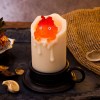
Maybe we’re just predisposed to thinking with our stomachs, but even with all the brightly colored pleated skirts and magical monster battles in Sailor Moon, we always find our attention drawn to the food that shows up in the hit anime series. So when we heard that the official Sailor Jupiter bento boxed lunch is now being offered by a Tokyo cafe, took a break from marathoning episodes of the magical girl saga to go and try it for ourselves.
Posted by Casey Baseel (Page 538)
Even among animation aficionados, it can sometimes be hard to justify spending the equivalent of a hundred dollars or more on an anime character figure. No matter how high the quality of the product is, that’s a lot of cash to shell out for something that’s going to just sit there gathering dust on your shelf, even if it looks pretty doing it.


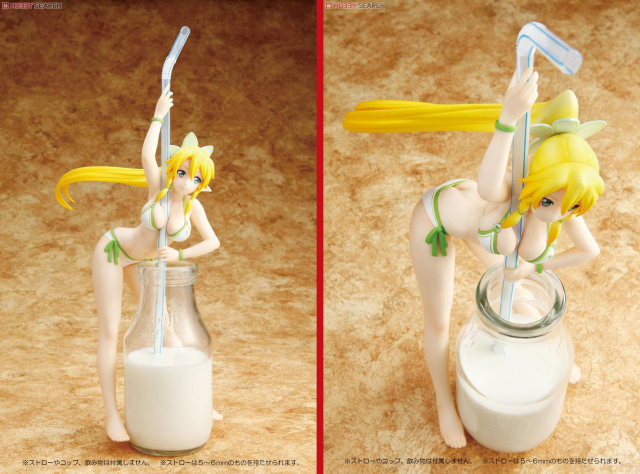
But perhaps it’ll be easier for shoppers to pull the trigger on this particular figure. True, the subject being a busty and bikini-clad anime heroine isn’t anything we haven’t seen before, but what makes this figure special is that it’s designed to let otaku cram a straw between its breasts to suck on as they enjoy a refreshing glass of milk.
I’m pretty sure that by this point Nintendo is used to being one of the giants on whose shoulders many other video game developers stand. After all, just about every platformer or action RPG owes a debt to the company’s Mario and Zelda franchises, and its Metroid series was so influential in the design of similar exploration-heavy titles that gamers just threw their hands up and decided to call the genre “Metroidvania” (somewhat unfairly giving half the credit to Konami’s Castlevania, which wasn’t nearly as groundbreaking in establishing the category).
Still, it’s one thing when some third-tier software publisher or homebrew video game outfit toes the line between being inspired by your creation and outright copying it, and another when it’s world-famous Disney.
Sometimes when I’m in Tokyo, I find myself wandering through seemingly endless subterranean passages that twist and turn back on themselves in a disorienting serpentine labyrinth. As I trudge forward I can feel my stamina fading, as well as my spirit. Still, though, I press on, delving deeper and deeper into the bowls of the earth, knowing that only at the very bottom level will I find what I seek: the platform for the subway line that takes me home from Shibuya Station.
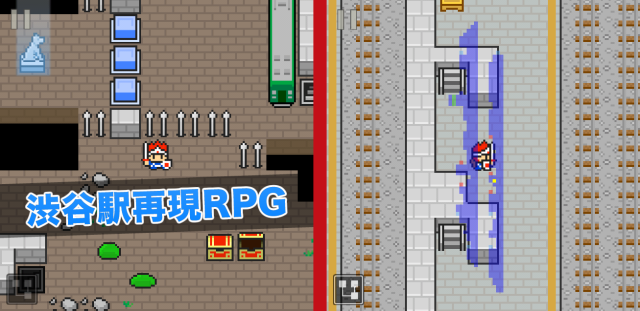
And apparently I’m not the only one who feels that Shibuya Station feels more like an RPG dungeon than a rail hub, since there’s a new smartphone game that uses the map of the station as the layout for its fantasy adventure.
Even though it came out in July, I still haven’t played Pokkén Tournament, the coin-op video game that sticks Pokémon into a fighting game developed by Tekken publisher Bandai Namco. Don’t get me wrong, like anybody with a soul, I’ve got a soft spot for Pikachu. It’s just that I’m happier to see the beloved Pokémon mascot dancing, not fighting.
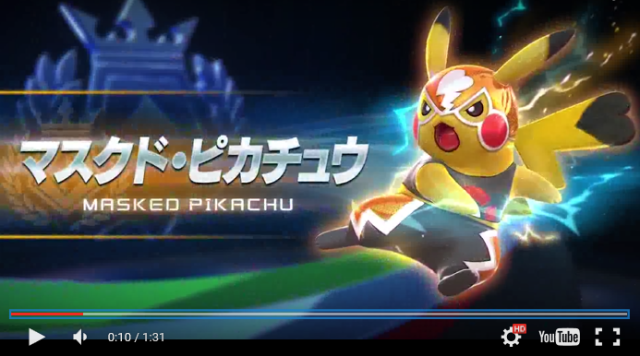
But I think I may have to swing by the arcade now that the game has a masked wrestler Pikachu that’s a perfect mix of equal parts adorable and awesome.
In case you’ve never read any of the Akira manga or seen the landmark 1988 anime movie based on it, here’s a basic rundown of the plot. A powerful organization comes up with what it thinks it a great idea, but before its plan come to fruition, the whole thing blows up in their faces. Years later, though, it tries again, unleashing the danger of potentially even more disastrous results.
In the anime, the “powerful organization” is the military, and the “great idea” is cultivating weaponized psionic children. Some would say this parallels the real-world situation of another powerful organization, Hollywood movie studio Warner Brothers, and its own ambitions to turn Akira into a live-action film, which have faced nothing but roadblocks and angry backlashes from fans of the source material for more than 10 years now.
But just like Akira’s military, Warner Brothers seems convinced that it can still get all the variables just right, and new rumors suggest that the studio might be planning to make not one, but three Akira films, and that it’s courting one of Hollywood’s hottest filmmakers to help.
Growing up in suburban southern California, my elementary, junior high, and high schools were all single-story structures. As such, my classmates and I went through our K-12 education without knowing the excitement of the romantic rendezvous and bare-knuckle showdowns that so often occur in the stairways of schools in TV shows, movies, and other works of fiction.
Still, we made do, as the student body just had to find alternate locations in which to swap spit or punches. One thing we definitely missed out on, though, was the opportunity to create awesome stairway art, like these students in Japan who decorated their school steps with the cast of Super Mario Bros., Love Live!, and Attack on Titan.
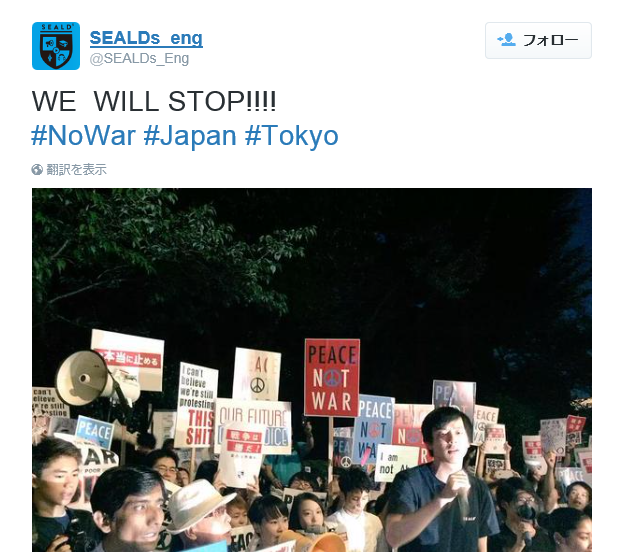
Over the past few weeks, the Japanese organization SEALDs, which stands for Students Emergency Action for Liberal Democracy, has been staging large-scale protests in opposition of those politicians who’ve proposed expanding the role of the Japan Self-Defense Forces. The gatherings have become regular features on news programs, with footage showing large groups of impassioned youths chanting for Prime Minister Shinzo Abe to step down.
So after such a show of conviction, it must have been surprising for followers of SEALDs’ English Twitter account to see a tweet that suddenly announced the group is calling it quits.
A while back, we talked about how it’s common in Japan for people to place dropped property in a place where it’ll be easy to spot when the owner retraces his steps looking for it. There’s hardly any fear that anyone else will take it, whether the item in question is as cheap as a mitten or something much more valuable.
But such admirable conduct isn’t limited to private citizens’ interactions with one another. A recently tweeted snapshot of a train station ticket gate has been getting laughs in Japan for its unusual design, and while it is kind of funny-looking, it also shows the extremely honest character of Japanese society.
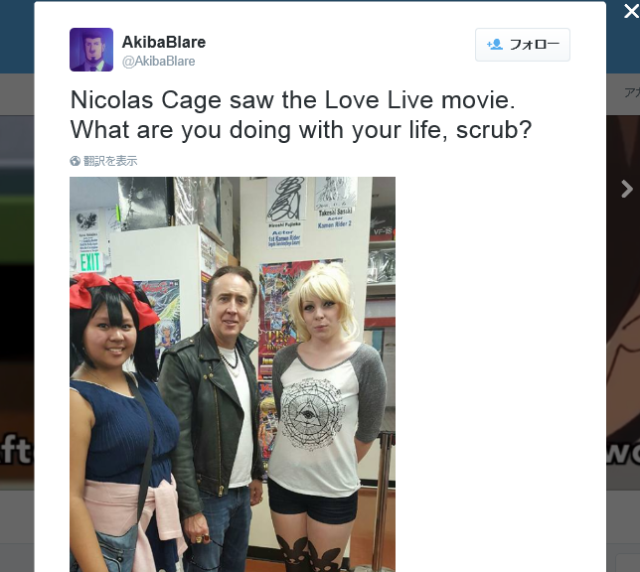
When you stroll into an anime specialty shop in the U.S., there are a couple of demographics you expect to see among the customers. Teenagers with brightly dyed hair. Thirty-somethings digging through discounted single-volume VHS and DVD releases for those elusive remaining episodes of Maison Ikkoku or Mobile Suit Gundam: The 08th MS Team. Maybe a handful of Japanese expats.
But if you happen to be shopping for anime goodies in Los Angeles, just a stone’s throw away from the world’s leading film studios, you also might spot a famous Hollywood actor, like these Californian otaku who ran into Nicolas Cage.
Just like they do in many other countries, adults in Japan like to periodically grumble about “kids today” and the simple things they can’t do that previous generations could. Sometimes we can sympathize with the exasperated grown-ups. After all, who doesn’t get frustrated when faced with one of these modern kids who can’t put in a full day’s work without whining, show his elders the respect they deserve, or start a fire by himself?
Wait, what was that last one again?
When you’re feeling down, there’s nothing like a kiss on the lips to lift your spirits, but not everyone has a consenting lip-lock partner nearby. According to one manga, though, you don’t even need another person, because there’s a trick that’ll let you make out with your own forearm.
But is this one-person romantic gesture a viable substitute for actual companionship, or more pervy manga snake oil? We decided to investigate.
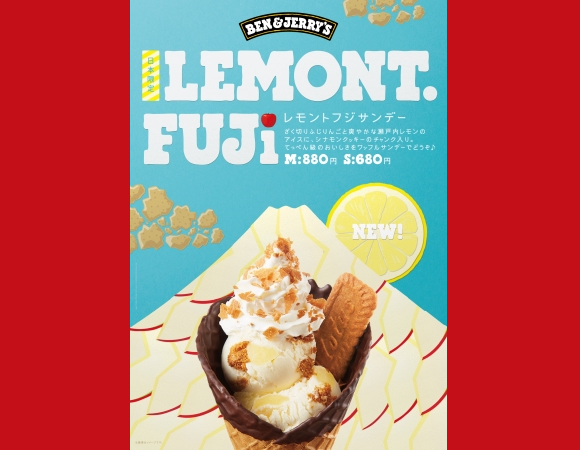
Since coming to Japan, American ice cream outfit Ben & Jerry’s has been slowly but surely building up its fanbase. But while its high quality ice cream tastes as good in Japan as it does in the company’s home country, the humor behind its pun-filled names for its signature flavors doesn’t always translate.
As such, we’re not sure how many people will get the joke about Ben & Jerry’s newest Japan-exclusive flavor, Lemont. Fuji, but once they get a look at the mouth-watering, Japanese-sourced ingredients, we’re sure plenty of them will want to try it.
We tend to think of silly Internet and photo memes as being strictly a human pastime, but is it possible that our pets, in an attempt to further increase their influence over online culture, have decided to get in on the act? The answer may be yes, since after a pair of Shiba Inu captured our hearts by squeezing themselves into narrow garden spaces, this member of the breed’s domestic rival, the Akita dog, is getting in on the trend with a bit of Tetris-style contortionism as he pops out from a garden wall.
Japan’s beautiful mountainous scenery and relaxing hot springs are all thanks to volcanic activity, and even today there are still a handful of active peaks to be found in the country. One of the most famous, Kyushu’s Mt. Aso, is even a popular tourist destination. We don’t recommend visiting today, though, because the 1,592-meter (5,223-foot) volcano is currently erupting, as seen in these photos taken by locals.
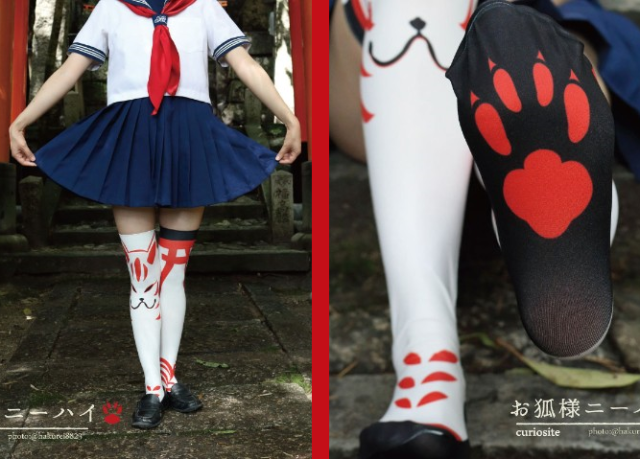
Much like “humdinger” and “roughneck,” “foxy” is one of those words that’s far past its golden age. But really, why shouldn’t it be used to describe an attractively fashionable woman, especially is she’s sporting a pair of these cute knee-high socks decorated with Shinto-style kitsune fox spirits and other culturally quirky touches?
If you’ve grown up eating bacon and sausage for breakfast, a Japanese morning meal can be refreshingly light. Generally consisting of a slice of grilled fish, small bowl of white rice, miso soup, and some vegetables, Japan’s take on the most important meal of the day will give you enough energy and nutrients to kick-start your body while leaving out excess fat and calories that can have you ready to crawl back into bed for a nap.
But not everyone in Japan has such a modestly sized breakfast. In fact, pro wrestler Manabu Nakanishi’s breakfast looks more like dinner…for a family of four!
Although he’s one of the most respected figures of all time in the manga industry, Kazuo Koike isn’t typically associated with the otaku subculture. When his most popular creation, Lone Wolf and Cub, was translated into English it attracted as many international fans from among Western comic readers as from those who favored Japanese manga, and in general his works have a gritty, somber tone to them, unlike the brightly colored daydreams and self-insert power fantasies that are often associated with otaku-pandering fare.
There’s also the fact that Koike was born in 1936, and being old enough and of the corresponding gender to fill two-thirds of a “grumpy old man” bingo card, you might expect him to have harsh words for Japan’s legions of hobby-obsessed individuals, like those that often sputter forth from Studio Ghibli founder Hayao Miyazaki.
But it turns out that not only is Koike accepting of the otaku life, but he thinks that being an otaku from the cradle to the grave makes for a beautiful life.
At some point in life, someone is going to ask you a question that makes you feel uncomfortable. How much money do you make? How many people have you slept with? Just what did happen to all of your political rivals from the junior high student body president election?
Quite often, though, you can get out of answering by asking in return “Why do you want to know?” As a matter of fact, the question “Why?” is so disarming it can even prevent armed robbery, as one foreigner working in Tokyo just found out.