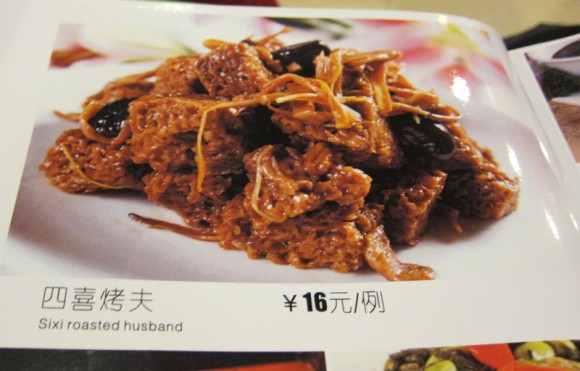
With their complex writing systems, getting around in Japan or China can be stressful for even the most seasoned of tourists. Sure, you could carry a travel dictionary in your pocket while you go sightseeing, but how are you supposed to look up all those funny looking sticks and squiggles when you don’t even know how to pronounce them? Often the locals try to be helpful by providing an English translation, but there are reasons why that doesn’t always work out. If only there was a way to just wave your magic smartphone over some unintelligible text and have it provide a reliable translation on the spot. Well, as we discovered over at Shanghai List, there’s an app for that.

Japanese (Page 5)
As anyone who has studied Japanese for any length of time will tell you, leaning lists of vocabulary can be tough. On some occasions, the very first time you’ll meet a word will be on paper; some abstract or complex term that’s almost impossible to remember as it’s so rarely used in the real world. Other times, you’ll have heard–or perhaps even used a word yourself–in conversation, but when encountering it on paper for the first time it may appear completely alien due to the characters with which it’s written.
Thankfully, though, since kanji characters are based on meaning rather than speech sounds, it can be easy to decipher a written word even if you’re still not sure how to pronounce it. But sometimes, translating a word too literally can land you in all kinds of trouble, or at the very least leave you chuckling to yourself while native Japanese speakers are left wondering what’s so funny…
Ask any group of students why they like a particular class and you’ll probably get a range of sincere-sounding answers professing love of learning and enthusiasm for the subject matter. While those things may well be true, in real life our reasons for making even the most crucial of life decisions aren’t always particularly noble or earnest.
When a beautiful young female teacher named Ms. Du took charge of Japanese language classes at one Chinese university this year, so many students turned up that she had to move to a larger classroom. Now, the stunning sensei at China’s Southwestern University of Finance and Economics has even become an internet sensation after photos of her were posted online.
When I left England for Japan in 2011, I received a card from four schoolfriends of mine. “Keep in touch!” the girls had written. “Have a great time!” The one guy in the group had a slightly different message for me: “Enjoy the tentacle rape porn!”
While for many, Japan evokes imagery of ancient temples, plates of sushi, and Shinkansen, it is also known as the land of crazy weird sex stuff. (Tentacle erotica, by the way, is much older and, I might add, much rarer than you might think). So when we stumbled across (I know, right! I can’t remember what we were looking for in the first place, either!) a Japanese blog post about surprising sexual fetishes, we knew it was worth sharing.
“What’s your fetish? An introduction to the fetishes you won’t believe exist” runs the title of the list, compiled by 26-year-old Japanese NEET Nura Hikaru. We bring you our top three, plus a few bonus ideas for good measure.
Eighty-four percent, apparently, is the magic number. And there I was thinking it was three all this time.
When we brought you the news last year that 84 percent of Japanese women said that not wearing an undershirt to work was “totally gross and, like, we can see your nipples, ewwwwww…”, little did we expect that some eighteen months later, a completely separate survey – this time with seven times as many participants – would not only confirm a general freaking-out about male summer nipple protrusion, but also come up with – get this – exactly the same number of non-nipple-showage fans: 84 percent.
This time, though, there’s a but. We should’ve known! There’s always a but.
Although Italian in origin, the words pasta and spaghetti are now everyday words in English. Thanks to the foods’ proliferation around the world these words can also be found in Japanese, pronounced pasuta and supagettī respectively.
But in recent years, it seems as if the word “spaghetti” has been falling out of favor in Japan, being replaced by the word “pasta.” Although in English the distinction between “spaghetti” and “pasta” is pretty clear (pasta being the foodstuff, spaghetti one of its many varieties), it seems there is a whole other world of nuances when the words cross over into Japanese.
Everyone knows that there are certain nuances in every language that you just can’t learn from school. Humor, for instance, but also cursing. Sure, you might know the definitions of a few key words, but stringing them together is a task unlikely to be perfected except by those who have spent some time with folks who are native speakers.
A recent book written by MADSAKI and published by Transworld Japan is giving Japanese speakers the fine opportunity to learn how to creatively curse in American-English. Titled, How to use F*** Correctly: 99 Phrases Using F***, S***, D***, and H*** that Schools Won’t Teach You, Handle with Care, it promises 176 pages of illustrated cursing, with examples.
Are you a Japanese girl? Are you terrified that your implausibly popular foreign boyfriend might run off after one of those other girls that are constantly throwing themselves at him? Japanese website Madame Riri has come up with a whistle-stop guide to things Japanese girls do that make foreign guys back off. Avoid these pitfalls, and you too can have a fairytale ending with your Price Charming… Apparently. Let’s see what they came up with!
Read More
Japanese is not an easy language to learn. Though, we have to say, we’re not sure that any language is easy to learn when you’re a beginner! But for English speakers, Japanese is certainly one of the most difficult languages to pick up. Anyone who’s taken a class will surely remember the first time they opened their textbook and saw two massive charts full of squiggly lines and realized that they now had to learn two more alphabets! And then start on kanji…
However, it looks like one Japanese-speaking UK native has found the key to Japanese using just one word!
Funny things, names. In Japan, I am lucky enough to share mine with a delicious kind of stick-chocolate treat, which not only means that I can introduce myself as such: “Fran – you know, like Pocky, but not as cheap”, but also means that I often get given chocolates with my name on the packet, which I can confirm is something of a win-win situation.
My family name, however, is a terrifying mix of Rs, Ls, Ys and Ws that tends to provoke confusion and mild panic here in Japan. I have a good stock line for accurately communicating its spelling and pronunciation in the UK (“Wrigley, like the chewing gum”), and another one for Americans and/or baseball fans (“like Wrigley Field”). I’ve never come up with a good line to use on Japanese people, though, except to awkwardly mutter “um… yeah, sorry, it’s kind of a difficult name. Don’t worry, people in England can’t pronounce it either.”
But what if your name means something embarrassing or just downright odd in another language? Today, we bring you five kinds of Japanese names that make English speakers do a double-take, or a little snort into their coffee.
We’ve talked countless times about how to learn Japanese. Heck, we’ve even brought you lists of essential applications and resources to help you in your quest to master the language. But we’ve always maintained that the best way to learn Japanese, or any language for that matter, is to make practical use of it and make it relevant to your own life.
And what better way to use your newly acquired Japanese than making friends all over the world while avoiding being crushed to death by spiked ceilings or knocked into a bottomless pit?
It’s no surprise that in the field of entertainment many talented individuals have found work in Japan and many more have expressed an interest in Japanese culture. But beyond those who stop by Japan and utter a simple “oishi” in a beer commercial or create a music video wearing a cupcake skirt, are a select few who have learnt or are well on their way to learning the Japanese language. Here are a few of them representing the fields of film, sports, and music.
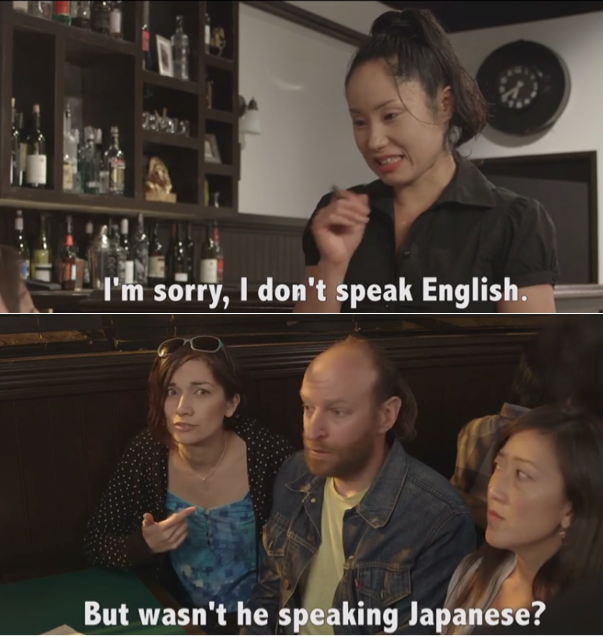
One of the most frustrating parts about living in Japan was when I would go out to dinner with my husband. No, it wasn’t because I wasn’t able to read the menu or because I don’t like Japanese food – it was because more often than not, the server wouldn’t speak to me.
Since my Vietnamese-American husband cannot speak or read Japanese, I would always do the ordering. What the servers saw was a woman with a caucasian face speaking Japanese and what appeared to be a Japanese man not ordering for himself. After placing my order in Japanese, the server would turn to my husband (who couldn’t understand anything she was saying) and ask follow up questions about our drink order or any add ons. I would in turn, translate for my husband in English, and then answer our server in Japanese, but any remaining questions would be directed once again to my husband. This language triangle would continue until all the ordering was completed.
Of course, this didn’t happen every time, but enough for both my husband and I to take notice. When relating the story to my friends, many would confirm that they have encountered a similar situation. Some would posit that the server thought my husband was letting me practice my Japanese and was looking to him to confirm that’s actually what I wanted. But no matter the reason, I was always left a little frustrated.
A recent video on YouTube titled, “But we’re speaking Japanese!” confronts this exact situation, bringing light to a lingering stereotype in Japan.
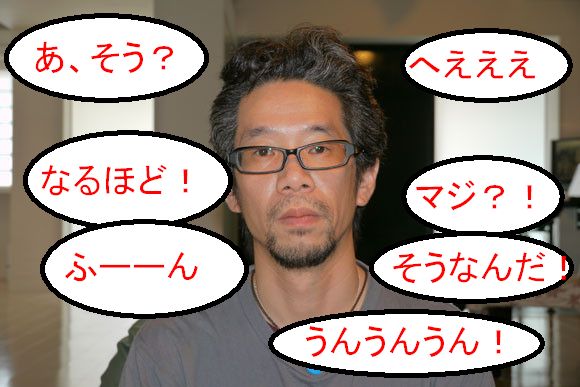
Chances are, if you’ve ever had a conversation in Japanese – or even any other language – with a native Japanese person, you might have been slightly disconcerted by their constant interjections.
That’s because nodding along, saying things like “I see” (naruhodo), “Oh really?” (sou desu ka?) and just plain grunting is considered a polite way to indicate to a speaker that you’re following along in a conversation.
This technique is called “aizuchi” in Japanese and, sure, it seems common sense in any culture to occasionally give a nod of the head or look up from your riveting game of Candy Crush Saga to indicate you have at least a passing interest in what’s being said, but the Japanese really turn it into an art form.
If you’re an English-speaking foreigner living in Japan and are prone to cracking jokes, it won’t be long before someone responds to something you’ve said with a shrug of the shoulders and the phrase “American joke”. This used to confuse me immensely (“but, but, I’m not American!”) before I realised that an Amerikan Jōku doesn’t have to be told by an American, or be related to the United States in any way. It’s just what you say in Japan when you have the feeling the person you’re talking to is making a joke, but you don’t really understand what’s funny – and want to avoid the potential awkwardness of explicitly saying so.
Today we bring you 10 “American jokes” posted to Japanese website 2channel. Impress and appall your Japanese friends in equal measure by trying out one of these painful puns on them. Who says humour doesn’t translate?
You may already be aware that there is a subculture of train fanatics in Japan known as densha otaku, or train nerds. But did you know that there are loads of sub-subcultures within the densha otakus? From those obsessed with train noises to experts in train lunch boxes, we’ve got them all covered for you.
A little while ago, we introduced you to the Japanese expression “hana yori dango” (dumplings over flowers), using a picture of one of our capybara friends at the Ueno Zoo as a living example of the phrase. Well, that article got us thinking about Japanese idioms/expressions that may sound strange or funny in a different language when translated literally, and we thought it might be interesting to share a few of them with you. Here are some common phrases that we use in the Japanese language as a matter of course, but could make you laugh if you visualize their literal meaning in your mind. And yes, some of them involve cats!
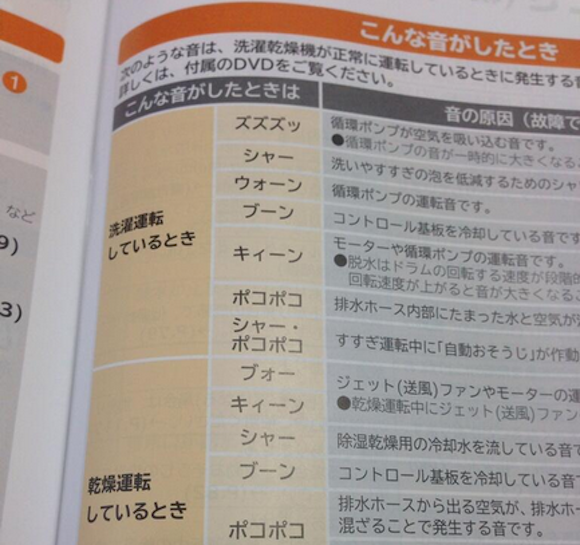
Anyone who has spent any length of time in Japan will tell you that onomatopoeia is not just common, but an integral part of the Japanese language. While English speakers might find sentences peppered with additional ‘sound effects’ somewhat inelegant, in Japanese onomatopoeic words are not only considered perfectly normal, but there are mimicking sounds for every possible occasion – including states of being where there is no sound to mimic – and most people know exactly how to write them.
We’d wager than few native Japanese have ever come across an instruction manual that uses mimicking words to explain potential problems with a washing machine, though…
As we’ve said before, Japanese isn’t actually as hard to learn as it’s often made out to be. Unlike English, for example, Japanese follows its own grammatical rules far more rigidly, pronunciation is easy because there is only one variant of each vowel sound to choose from (none of this tomayto/tomahto business), and it’s possible to create entire, perfectly meaningful and valid sentences without uttering a single pronoun or bothering to conjugate a verb.
Nevertheless, the language will not magically seep into you through a desire to speak it alone — you still need to encounter and study it as often as possible. With that in mind, we’d like to present to you the six and a half resources that no dedicated student of the Japanese language should ever be without. Oh, and the good news is some of them are completely free.


China’s don’t-go-to-Japan warning seems to be affecting Osaka’s Namba and Dotonbori neighborhoods
Nintendo releases Metroid-shaped ice cube/cooking tray and Samus arm cannon pillow【Pics】
Ueno Park’s panda bread is just as warm, fluffy and cute as the pandas themselves 【Photos】
New anime mecha figure’s pilot is…you!?!【Photos】
You can now visit a recreation of Evangelion’s Tokyo-3 and live there in miniature form in【Pics】
Staircase National Highway: the only highway in Japan that cars can’t enter
Is it worth eating at Akihabara Ramen Center?
Everything you wanted to know about the Ainu, with photos and video【Rocketpedia】
We deeply regret spending five hours on this artistic Japanese island (we should have spent more)
Is China’s don’t-go-to-Japan warning affecting tourist crowds in Shibuya’s Don Quijote?
Japan’s human washing machines will go on sale to general public, demos to be held in Tokyo

Nintendo’s Kirby now delivering orders at Kura Sushi restaurants, but not in Japan
Japan considering raising international traveler departure tax even more than previously reported
Is China’s don’t-go-to-Japan warning affecting tourist crowd sizes in Nara?
Studio Ghibli stamps lift your spirits with motivational phrases from Totoro
Japanese town suing resident for being a jerk
Is Kyoto less crowded with tourists after China’s don’t-go-to-Japan warning?【Photos】
You can now buy a Japanese train station clock in Japan
Japanese police attempting to clamp down on “zombie cigarettes”
Starbucks Japan unveils new Christmas goods and a rhinestone tumbler that costs 19,500 yen
Real-world Nausicaa Ghibli anime glider completes its final flight in Japan【Video】
Brand-new Pokémon park opens in Japan with larger-than-life-size Lapras【Photos】
Japanese train company is letting fans buy its actual ticket gates for their homes
Is China’s don’t-go-to-Japan warning affecting tourist crowds in Tokyo’s Asakusa neighborhood?
The 10 best day trips from downtown Tokyo【Survey】
Naturally brown-haired Osaka student sues government for forcing her to dye her hair black
Japanese government considering tripling departure taxes to combat overtourism
Unique inclined elevator in Japan leads to a town that inspired Studio Ghibli’s Spirited Away
Survey asks foreign tourists what bothered them in Japan, more than half gave same answer
Japan’s deadliest food claims more victims, but why do people keep eating it for New Year’s?
We deeply regret going into this tunnel on our walk in the mountains of Japan

Studio Ghibli releases Kodama forest spirits from Princess Mononoke to light up your home
Major Japanese hotel chain says reservations via overseas booking sites may not be valid
Put sesame oil in your coffee? Japanese maker says it’s the best way to start your day【Taste test】

The top 10 annoying foreign tourist behaviors on trains, as chosen by Japanese people【Survey】
No more using real katana for tourism activities, Japan’s National Police Agency says
Starbucks Japan reveals new sakura drinkware collection, inspired by evening cherry blossoms
Staircase National Highway: the only highway in Japan that cars can’t enter
Is it worth eating at Akihabara Ramen Center?
Everything you wanted to know about the Ainu, with photos and video【Rocketpedia】
We deeply regret spending five hours on this artistic Japanese island (we should have spent more)
Is China’s don’t-go-to-Japan warning affecting tourist crowds in Shibuya’s Don Quijote?
Nintendo’s Kirby now delivering orders at Kura Sushi restaurants, but not in Japan
Starbucks Japan’s Sakura Ball Cookies and other cherry blossom sweets look beautifully delicious
Cardcaptor Sakura engagement rings are here to help you capture your bride-to-be’s heart
Sanrio characters take over Baskin Robbins Japan for My Melody and Kuromi’s Sweet Christmas
Meet the eerie police statues of Miyakojima in Okinawa Prefecture
Hey guys, unlucky with women? There’s always Latvia!