If you’re feeling a little jaded on romance in these days of impersonal dating apps, casual hookups and seeing who can pretend to be the most indifferent, then pull up a chair and watch this heart-warming video! RocketNews24’s intrepid team of reporters hit the streets of Sugamo, Tokyo to interview some of the shopping district’s oldest and wisest residents on matters of the heart, touching on topics such as money vs looks, where to find hot guys in Tokyo, and why you’re never too old to fall in love.
Japan (Page 1384)
There’s a unique art to making video game background music. It has to be engaging enough to produce an emotional response, but not so much that it becomes a distraction from the gameplay. Each piece has to quickly establish its tone, but can’t be so simplistic that it becomes repetitive on the many occasions where the music loops around for a second play during the hero’s journey across the map or epic boss fight.
For years, the Pokémon franchise has been hitting the nail on the head with its soundtracks, and if that musical accompaniment adds a special something to your quest to catch ‘em all, why can’t it do the same to a late night of studying or your commute to work? So not only will a new app let you play Pokémon music on your smartphone, it’ll even give you a regular batch of free listens.
We can just imagine how immensely excited all of England must be about the birth of the new princess (and we’ve all swooned over the darling pictures, haven’t we?) … because we’re pretty excited here in Japan too! It seems the Japanese public has always had a fondness for the British royal family, perhaps because we have our own well-respected and loved imperial family, and the new royal baby has received huge attention on the Japanese media.
We’ve been so delighted with the birth of Princess Charlotte, in fact, that a British themed boutique in Omotesando, Tokyo, has welcomed to their store the Duke and Duchess of Cambridge — well, their very life-like figures, actually, and we visited the shop to join in the celebration!
Every now and then, Japan takes a shine to something that’s new to it but much more common overseas. Chairs, for example, were pretty much nonexistent in the country until the late 1800s, but now you’ll find them in just about every home except the most bare-bones of bachelor pads. Beer (one of the greatest beverages to enjoy while sitting on said chairs) is another foreign concept that’s gained mainstream popularity.
Likewise, although it’s taken some time to catch on, the number of places offering free Wi-Fi in Japan has been steadily increasing over the last few years, and is now available on the Tohoku Shinkansen and all of the stations on Tokyo’s most convenient train line.

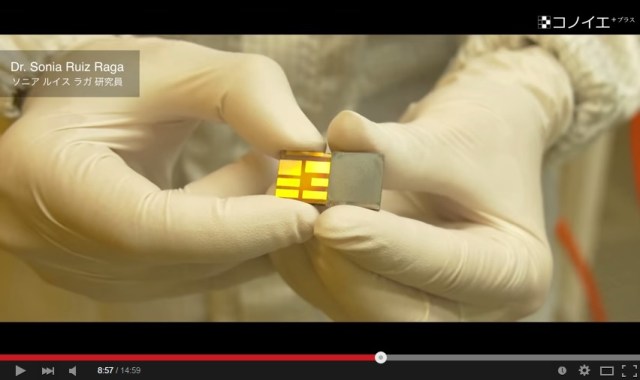
Back in 2009, a research team from the University of Tokyo led by Professor Tsutomu Miyasaka found that a substance called perovskite had the potential to generate solar power. However, at the time it only had a very weak power conversion efficiency (PCE) of about four percent and would break down in just a few minutes.

Because of these sizable flaws, not could practical use could be made of perovskite and the discovery lay dormant for a few years. Then, after a Korean team managed to double the PCE in 2011, research into the material was reignited. Now as scientists around the world continue to work on it, the PCE has become well above 20 percent and comparable with the standard silicon-based solar panels that we see today.
With perovskite being drastically cheaper to produce, more flexible to use, and now as efficient as regular solar panels, could we be on the verge of a solar energy revolution?
One of the great things about services like Airbnb, which help travelers and independent lodging owners find each other, is that they let guests find exactly the type of accommodations they want. For example, you might not have any need for the business center or room service of a traditional hotel. Maybe your personal checklist instead includes laundry facilities, a kitchen, and a full complement of awesome Super Mario interior accents.
If so, this short-term apartment in Tokyo is just the place for your next stay in the capital.
Japan’s always had a soft spot for the dashing, regal couple of the U.K.’s Prince William and wife Catherine, Duchess of Cambridge. The warmhearted admiration got kicked up a notch when the prince (who’s also a duke, just for good measure) made his first trip to Japan this spring, and the infatuation went into overdrive this week with the news of the birth of the couple’s second child.
That exuberance has manifested itself in many ways, including visitors to an animal park in Oita Prefecture deciding that the facility’s newborn baby should share the infant princess’ name, Charlotte.
Not everyone agrees that’s such an honor, though.
You guys, it’s May, so that means you can finally go see the beautiful wisteria tunnel that we told you about last October! If you find yourself anywhere near northern Kyushu or have time for a weekend getaway, head to Fukuoka Prefecture’s Kitakyushu City. If you think we’re exaggerating or doctoring the pictures to make them more beautiful (we’re not), at least trust the opinion of the Japanese Twitter users gushing over the wisteria’s beauty!
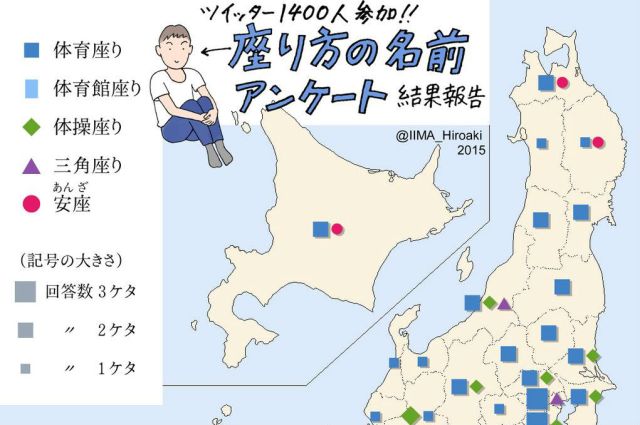
Even when speaking with fellow English speakers, sometimes you realize that the same thing can be called a variety of names. (Try calling soda “pop” in most of the US and enjoy the funny looks you get.) The same is true in Japan, where, thanks to regional dialects, some people have a hard time being understood when they leave their hometowns.
One Twitter user recently brought regional dialect differences to the forefront of the Internet when he surveyed over a thousand people about the word they would use to describe a certain way of sitting. Collecting and plotting the data on a map of Japan, the results have been surprising people from all regions!
So there’s some good news and some bad news about Digimon Adventure tri., the follow-up to the phenomenally popular Digimon Adventure anime that’s set 15 years after the events of the original. The bad news is, contrary to early speculation, Digimon Adventure tri., isn’t going to be airing on Japanese TV during either the spring or the summer.
The good news is, the latest installment in the franchise is a theatrical feature, just the first of six parts of the new series, and we now know when we get to see it!
It seems that when Japanese food makes its way over to America, something gets lost in translation and the food winds up inside-out. Just look at California rolls, for example.
And now, here’s another example of Japanese food being flipped: “Ramen burgers” which usually consist of a bun filled with ramen noodles, have been reborn in the US as, um, “ramen burgers”, but with a twist – the meat patty is sandwiched between two “buns” made of tightly packed noodles!
We sent our resident office culinary “expert” Mr Sato down to the first “US-style ramen burger” joint in Japan for a taste test!
It’s time once again for an episode of Why Does Engrish Happen in Japan? If you missed the first installment (which we really should have given a clever name like Why Does Engrish Happen in Japan? ~Unexpected Opening to the Truth~) you can check it out here.
Today, we’re taking a look at a hotel in Japan that seems to be clamping down on solo peeing, with a sign posted in its lobby that requests visitors “Please refrain from using the bathroom alone.”
Congratulations, Japan; you’re on your way to being awarded yet another UNESCO World Heritage honor!
This time around the honor will be going to “Sites of Japan Meiji Industrial Revolution,” which includes Nagasaki’s legendary (and awesomely spooky) “Battleship Island” among others, granted it passes the final approval stage.
While people in Japan put up decorations to celebrate different holidays, most of them are placed inside the home, such as the dolls for Girls’ Day/Hina Matsuri in March or the vegetables displayed during Obon in the summer. Out in public, though, though, you’d be hard-pressed to tell one Japanese holiday from another, with the exception of Children’s Day/Kodomo no Hi on May 5.
That’s because when Children’s Day rolls around, all you have to do is look up at all of the beautifully awesome carp streamers flying overhead,
Hilton’s Odawara Resort & Spa, tucked away in Kanagawa Prefecture’s southwestern Odawara City, is offering something that you and your children simply can’t refuse: the opportunity for them to participate in special ninja training during your brief stay at the hotel!
Thanks to Japan’s love of fashion and animals, you can walk into just about any pet shop and find cute outfits for your dog. From styles that copy human duds such as shirts and dresses to playful costumes that look like cartoon characters or other animals, you can easily put together a wardrobe a pooch that’s as extensive as that of its human owner.
On the other hand, there’s a lot less to choose from in off-the-rack clothing for a pet squirrel. It turns out that you don’t have to go to the pet supply store to have your loveable little companion looking dashing, though, or even be handy with a needle and thread. All you need is some leftover veggies.
Miso soup: the quintessential Japanese food. The soup takes on a different form from region to region and in different households throughout Japan, but it wouldn’t be inaccurate to say that miso soup is the soul of Japanese cooking.
However, one of England’s top chefs recently published his own take on the soup. What kind of “neo-Japanese soup” could this possibly be!? Of course, our reporter just had to find out by making it herself–keep reading to see the results of her cooking after the jump.
Even after years of living in Japan, I’m always pleasantly surprised by how awesome the highway rest stops are. Not only do the larger ones have food courts and markets with all manner of local delicacies on offer, but the bathrooms are almost always incredibly clean.
Part of the thanks for all that shining porcelain goes to the hard-working cleaning crews, but you also can’t discount the Japanese cultural mindset that stresses not making trouble for others, which in turn keeps people conscious of the importance of using public restrooms in a way that leaves them clean for the next person.
But does this series of photos of cats sitting on toilets mean even the feline guests of Japanese rest stops have an advanced sense of courtesy?
Aside from having a way with words and a pleasant smell, it’s a job requirement at RocketNews24 that every man, woman, and child who works for us be physically fit enough to wrestle a crocodile to submission. As part of his quest to keep in fighting shape, our Japanese-language reporter Nakano regularly hits the gym, because if he doesn’t, who knows when we might decide to give his job to someone with more developed pecs.
Sometimes you find yourself running into some strange characters at the fitness center, as we documented in Nakano’s guide to the most annoying people you might meet at the gym. On occasion, though, their behavior goes so far beyond strange that it’s hard to see it as the actions of mundane human beings, and so today we’re taking a look at Nakano’s illustrated list of five people you might encounter in a Japanese gym shower room that are so weird they must be possessed by evil spirits.
If you’ve been to an onsen resort in Japan, you’ve probably tried onsen tamago, eggs slow-cooked to runny perfection in the nutrient-rich waters of local hot springs. While the unusual texture and reported health and beauty benefits make these immensely popular with visitors, nobody has thought to capture and reproduce the flavour of hot spring eggs. Until now.
Curious for a taste, we went hunting and picked up a bag of the limited-release chips. Would they have a pungent, sulphur-like aroma? Or could this be as refreshing as a dip in onsen waters? Come with us as we find out!