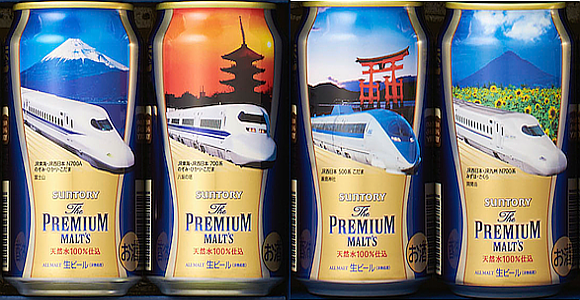
Now you can enjoy the beauty of a high-speed rail journey through Japan with this collection of exclusive picture-perfect cans.
Bringing you yesterday's news from Japan and Asia, today.
shinkansen (Page 9)
Now you can enjoy the beauty of a high-speed rail journey through Japan with this collection of exclusive picture-perfect cans.

The Evangelion Shinkansen opened its doors in November. Modeled after Unit-01, the inside has a cockpit simulator, dioramas, and enough beer to get Misato drunk.
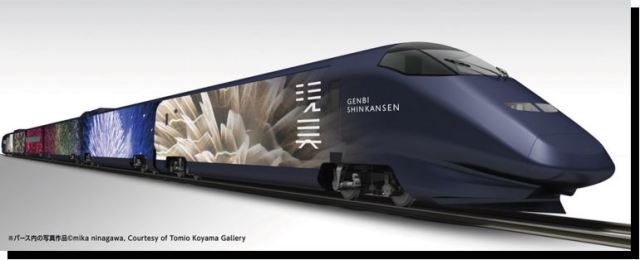
JR East has finally announced the dates of operation and ticket prices for its contemporary art Shinkansen set to begin running in late April.
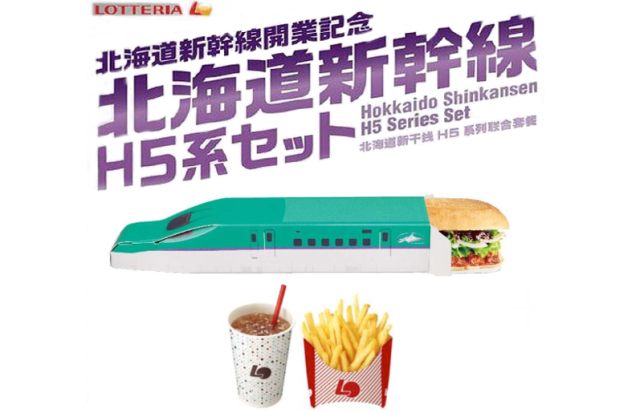
Because the best way to celebrate the arrival of a fast train is with a serving of fast food.
New year, new bullet train as Japan Railway debuts its high-speed art gallery.
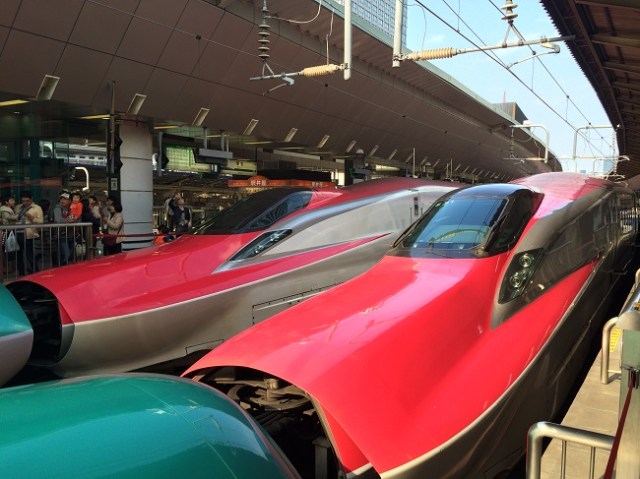
Amidst talks that strengthened the ties between the two countries comes news that you will soon be able to ride a Shinkansen in India.
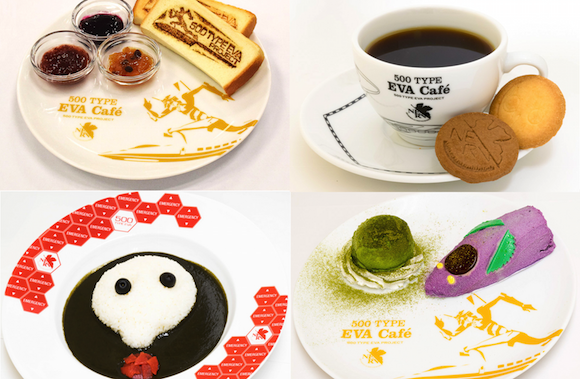
November 7 means two things to Evangelion fans in Japan: the awesome Eva-themed bullet train makes its highly-anticipated inaugural run from Osaka to Fukuoka on the Sanyō Shinkansen line; and the eagerly awaited 500 Type Eva Café opens its doors to customers at JR Hakata Station for the very first time.
To add to all the excitement, Japan Rail West has just released the very first images of the café’s exclusive original menu. From specially marked toast to Eva sweets and an Angel curry, this themed collection of edible goods is the perfect way to celebrate the official launch of the Shinkansen Evangelion Project!
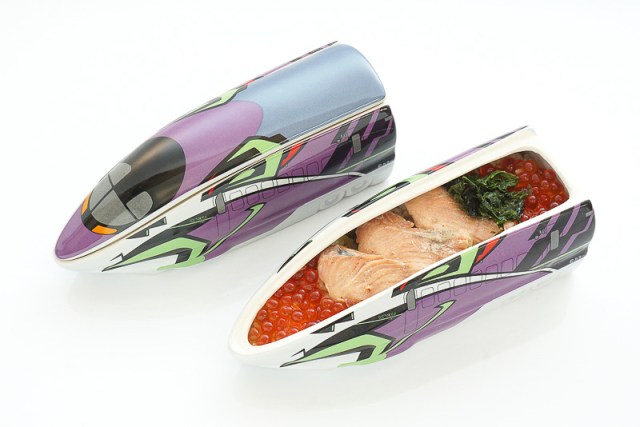
A train journey in Japan is much more than a means to a destination; with spotless carriages and unique tie-in promotions, riding the Shink is an event in itself. And with the Evangelion Shinkansen bullet train scheduled to start running from November 3, things are set to get even more exciting as passengers can now ride the rails from Osaka to Fukuoka and back inside a train dressed up as a giant bio-machine.
To mark the special occasion, Japan Rail West is releasing a whole range of commemorative Eva bullet train goods for travellers in the country, including stationery, snacks, and an awesome ekiben bento that comes in a keepsake ceramic shinkansen-shaped container.
Fans of hit anime Evangelion are used to having their patience tested. Almost three years after the Japanese theatrical release of the Evangelion 3.0 feature film, the movie still isn’t available on home video in North America. Meanwhile, the fourth, and reputedly final, chapter of the Rebuild of Evangelion film series remains without a release date.
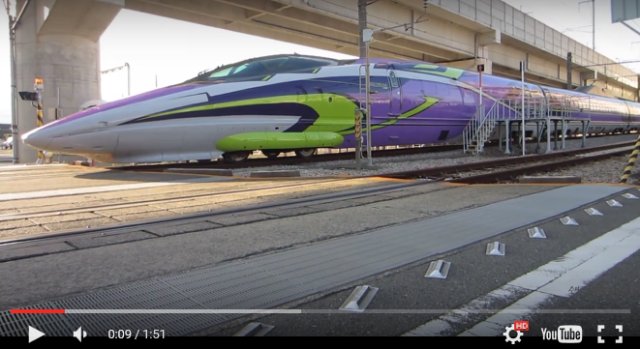
But if there’s one thing Japan demands punctuality from, it’s the country’s trains. So with the Evangelion Shinkansen scheduled to go into service next month, the anime-themed bullet train is practically complete and recently made its public and video debut.
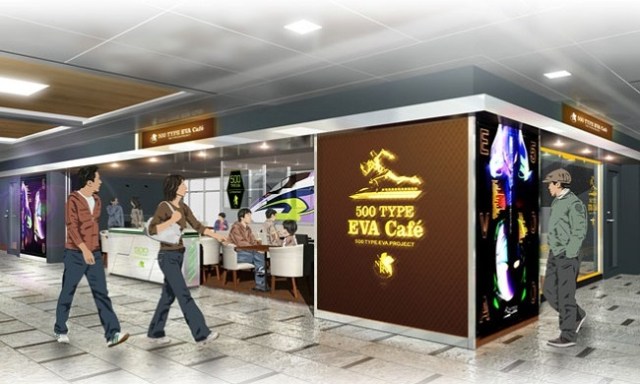
Thanks to Japan Rail West, we will soon be able to ride a Shinkansen train modeled after Shinji Ikari’s Evangelion unit. Details have been flowing in about the train itself, but what about the stations that will be receiving this special train? The most appropriate thing would be for Hakata Station or Shin-Osaka Station to redecorate itself to look like Neo Tokyo-3, but the futuristic decor might not be for everyone. Instead, Hakata Station will be opening two Evangelion-themed stores in order to fill all our needs for special Evangelion eats and goods!
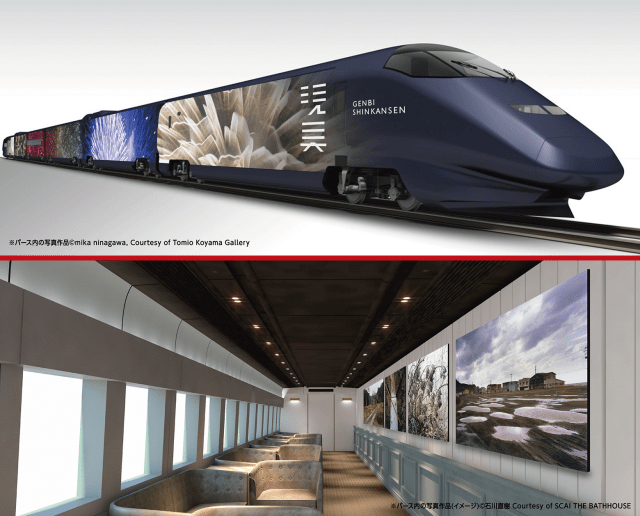
From an engineering standpoint, Japan’s famed Shinkansen is already a work of art. Recently, though, the country’s bullet trains have been putting a renewed effort into their appearance, taking inspiration from centuries-old tradition and science-fiction anime.
The latest Shinkansen to be unveiled, though, incorporates design cues more modern than tatami reed floors yet not as futuristic as giant robots. Instead, it’s envisioned as a travelling gallery of contemporary art, allowing for what operator East Japan Railways calls “the world’s fastest art appreciation.”

As far as joint collaborations go, the Shinkansen Evangelion Project is set to go down in the annals of history, with Japan Rail West joining up with the hit anime franchise to make our wildest dreams a reality, by bringing out a special Eva-themed bullet train to shuttle customers from Osaka to Fukuoka and back on the Sanyō Shinkansen line.
Since the announcement of the project, we’ve been waiting on the edge of our seats for more details, and finally JR West has come through with news of the launch date, along with never-before-seen images of the train’s interior, which includes Eva-themed seats and window blinds, and a designated “cockpit room”.
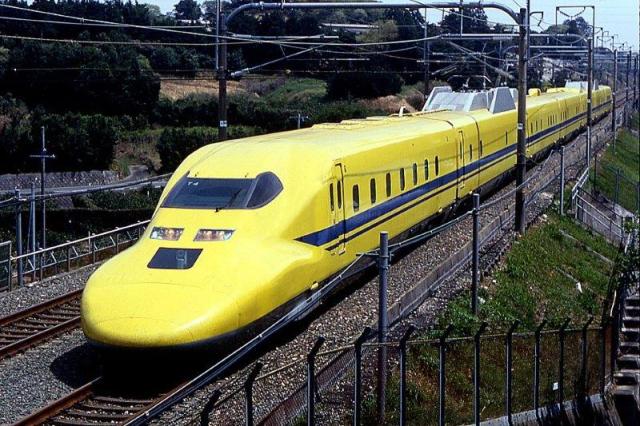
It’s apparently a pretty rare sight, not unlike the majestic (read: ugly as sin) Northern Bald Ibis, the probably made-up Sasquatch, or the sober RocketNews24 writer, but on certain lengths of Shinkansen bullet train track, one can occasionally catch brief glimpses of a completely yellow bullet train as it whizzes past. Japan Rail (JR) doesn’t make the train’s schedule public, it doesn’t stop at stations, and it only runs a few times a month.
And, until a little later this year, no member of the public was ever allowed to ride. Learn how you can ride the special “Doctor Yellow” bullet train after the jump.
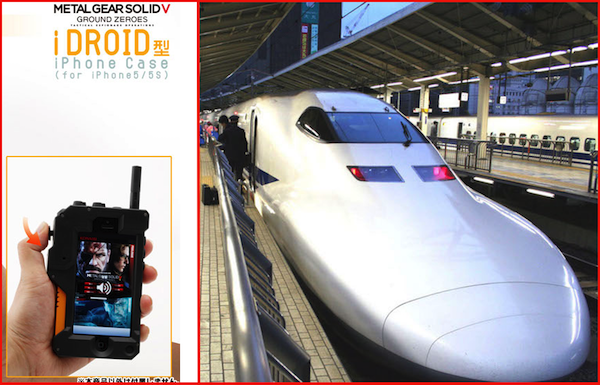
The release of Metal Gear Solid V: The Phantom Pain has been met with as much excitement and frenzy as you might expect from the latest instalment of a legendary video game franchise. But while most players are preoccupied with riding D. Horse around, frolicking in cardboard boxes and puzzling over the intricate story, it’s a certain voiceover that’s had us scratching our heads. Where on earth have we heard iDroid‘s soothing tones before? Oh, that’s right – on the Shinkansen!
Voice actor and vocalist Donna Burke is a veteran of the video game industry, lending her vocal cords to multiple games including MGSV and Silent Hill, and she ALSO provided the English-language spoken announcement that’s broadcast on the bullet train to help foreign visitors navigate their way around Japan!
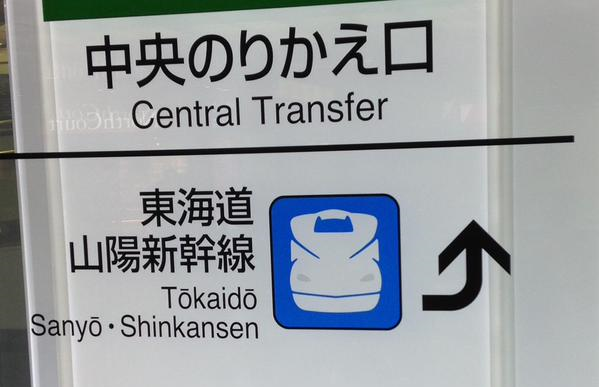
The art of illustration is a funny thing, because it relies on using lines and coloring to trick the mind into thinking it’s looking at a three-dimensional object. But if the whole effect is a matter of perspective, changing how you look at a picture will make you think you’re seeing something else.
Sometimes the result is cute, like when cherry blossom petals turn into a litter of puppies. At other times, the result is quite a bit pervier, like what one traveler can no longer unsee in the symbol for Japan’s bullet train.
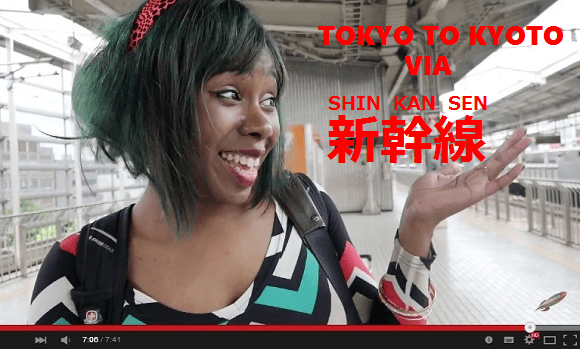
Even if you’re not exactly a trainspotting otaku, chances are you still find the idea of riding a Japanese bullet train seriously appealing. After all, those things get up to some crazy speeds, and the whole process runs like smooth, scientifically adjusted clockwork. Even the cleaning crew get their job done, making the trains absolutely spotless, in seven minutes max!
But if you haven’t quite made it to Japan yet, then we invite you to take a Shinkansen ride with us and our Japan Wish competition winner Ashley. Strap yourself in and feel those G-forces!
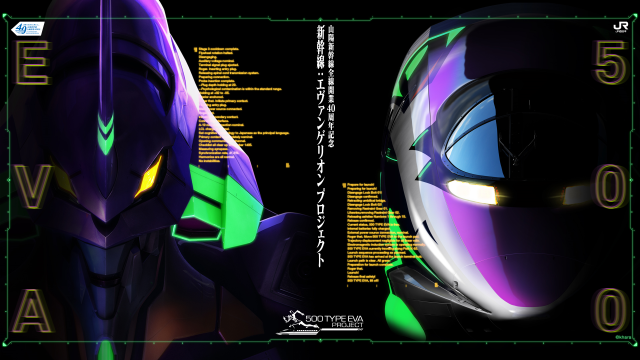
Over the past few years, we’ve seen Japan Railways, Japan’s largest rail operator, embark on a spurt of posh train building, with coaches that feature gold leaf accents, split-level suites, and relaxing foot baths. This fall, though, JR West will be launching a train that dials back the luxury while pumping up the awesomeness in the eyes of anime fans with the Evangelion Shinkansen.
 One of Tokyo’s most beautiful soft serve ice creams is also one of its trickiest to find [Photos]
 Pikachu Shortcake Sandwich set to be Tokyo’s newest photogenic treat for Pokémon Trainers
 Japanese scientists developing cute, autonomously swarming robo dogs for anti-bear patrols [Video]
 Tokyo restaurant adds special seat for live-streaming and social media posting [Video]
 Japan’s mission to Martian moon and back underway
 Family Mart releases 47 convenience store socks and stickers, one for every prefecture in Japan
 Middle Eastern juice bar B-Fresh lands in Harajuku
 Ghibli composer Joe Hisaishi named Composer-in-Residence of Los Angeles Philharmonic
 Super Mario creator Shigeru Miyamoto to receive Order of Culture from Japanese emperor
 There are goats spending every day in downtown Tokyo, but why? [Photos]
 Pokémon Company announces first-ever permanent Pokémon store to open outside Asia
 New Studio Ghibli anime gets extended run at the only cinema in Japan where it’s being shown
 Osaka’s famous Glico Running Man will be removed and replaced with a new-look sign
 Family Mart enters the soft serve game with giga-sized cones of milk or matcha goodness
 Tokyo bakery has a crazy expensive 10,000-yen bread loaf set, and we’ve tried it [Taste test]
 Studio Ghibli creates illustrated Kyoto sightseeing map, available at any 7-Eleven Japan store
 New Studio Ghibli stamps – Too cute to wait until New Year’s to use, so they’re available right now
 Eight low-key great places to spend the day (or half a day) in Japan this fallFamily Mart releases 47 convenience store socks and stickers, one for every prefecture in Japan
 Japanese sushi etiquette: You may have been ordering sushi wrong this whole time
 Japan announces new permanent residency guidelines, foreigners must earn more than average Japanese personPokémon Company announces first-ever permanent Pokémon store to open outside Asia
 Starbucks Japan unveils new Pokémon collaboration with Pikachu Latte and exclusive goods
 Studio Ghibli’s Calcifer is ready to light up your home as a magical-looking candle lamp [Photos]Family Mart releases 47 convenience store socks and stickers, one for every prefecture in Japan
 Lady Gaga and Family Mart team up for a Japanese convenience store work video [Video]
 What’s it like to stay in a Japanese container hotel?New Studio Ghibli anime gets extended run at the only cinema in Japan where it’s being shown
 Tokyo train station will play Godzilla theme song as new departure melody
 Do Japan’s new single-minded convenience store bento show depressing poverty or satisfying focus?
 Japan announces sudden 400-percent increase in visa fees for foreigners entering the country
 Japan’s human washing machines will go on sale to general public, demos to be held in Tokyo
 Studio Ghibli has a new anime out, and there’s only one place in the world where you can see it
 Starbucks Japan releases new drinkware and goods for Valentine’s Day
 Starbucks Japan releases new sakura goods and drinkware for cherry blossom season 2026
 Japan’s newest Shinkansen has no seats…or passengers [Video]
 Tokyo subway installing new ticket gates that don’t accept payment through Suica or other IC cards
 Japanese ninja certification exam attracts 131 candidates from Japan and abroad
 Salomon releases Japan-exclusive Mt. Fuji hiking gear that doubles as an amazing souvenir
 Japan reportedly adding Japanese language skill requirement to most common foreigner work visa
 Family Mart releases 47 convenience store socks and stickers, one for every prefecture in Japan
 Middle Eastern juice bar B-Fresh lands in Harajuku
 Ghibli composer Joe Hisaishi named Composer-in-Residence of Los Angeles Philharmonic
 Super Mario creator Shigeru Miyamoto to receive Order of Culture from Japanese emperor
 There are goats spending every day in downtown Tokyo, but why? [Photos]
 Japan’s newest tempura is…potato salad tempura?!? [Taste test]
 Pokémon Company announces first-ever permanent Pokémon store to open outside Asia
 Tokyo bakery has a crazy expensive 10,000-yen bread loaf set, and we’ve tried it [Taste test]
 America is getting its first-ever One Piece store, and the opening date has been revealed!
 Japanese sushi etiquette: You may have been ordering sushi wrong this whole time
 Studio Ghibli creates illustrated Kyoto sightseeing map, available at any 7-Eleven Japan store
 Trial of terminally ill cancer patient who found 22 million yen on the street and kept it ends
 New Studio Ghibli anime gets extended run at the only cinema in Japan where it’s being shown
 Tokusatsu hero “Moonlight Mask’s” pocket change donations help traffic accidents victims in Japan