Hololive English will be the first virtual YouTuber project to specifically target English-speaking countries, and it’s starting right away!
Bringing you yesterday's news from Japan and Asia, today.
English (Page 2)
Hololive English will be the first virtual YouTuber project to specifically target English-speaking countries, and it’s starting right away!

The Japanese soccer star shows how a tiny error in grammar and pronunciation can become an embarrassing moment for English learners.
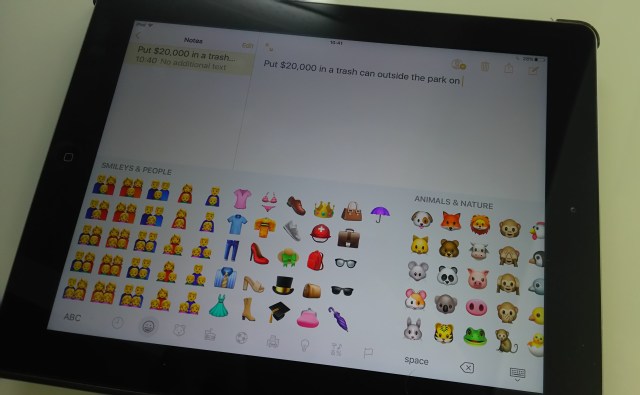
Common sense might lead you to believe that “emoji” is simply a variation of “emoticon,” but Japanese common sense tells a whole different story.

Were the expectations for Japanese English teachers to high…two high…too high?
Read More
Passengers on board this Tokyo train said they felt like they were in an aircraft when they heard the live English announcement.

“Wasei Eigo”, or “English words created in Japan”, can leave native English speakers baffled — but what about Korean speakers?

My entries for the “Top 10 most irritating Japanese borrowed words” weren’t irritating enough for some people – so I’ve formulated a part two (“tsuu”) with your help!

Keep your kitty close, cool, and comfy with this cat-pouch hoodie that makes room for ice packs!

What do ordinary Japanese people think of a viral video which depicts a situation wherein a Japanese person is unable to process foreigners’ fluent Japanese?
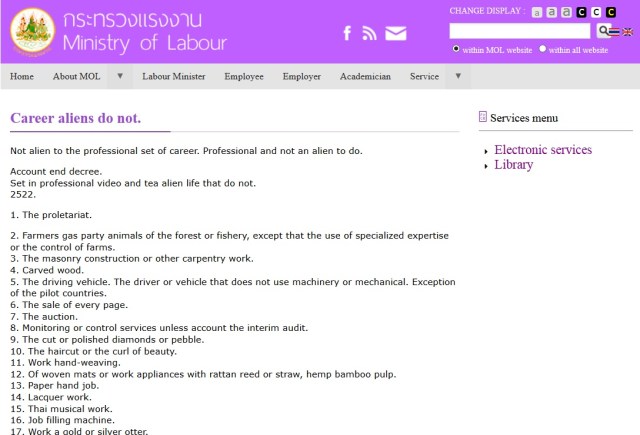
In this increasingly globalized society, controlling immigration and labor practices becomes an ever more challenging issue for nations. In the case of Thailand, the Ministry of Labor has outlined a list of 39 jobs that foreigners are prohibited from performing in the country.
Of course, since the list is directed at those from other countries the ministry had the list carefully translated into English. So, let’s take a moment to educate ourselves in Thai labor laws with their list titled “Career aliens do not: Not alien to the professional set of career. Professional and not an alien to do.”

Bandai Namco Entertainment posted an English-language video to preview Tekken Project’s technology demonstration “Summer Lesson,” which Sony will showcase at its E3 booth this week. The video includes a cameo at the end.
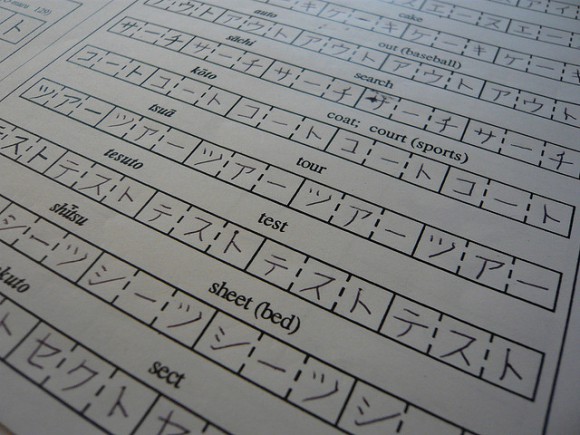
With the 26 letters of the alphabet, we can make pretty much any sound present in the majority of languages. But Japanese just doesn’t contain certain sounds present in English, like “th” or “v”, and their “r” is somewhere right between our “r” and “l”, making them sound almost exactly the same to Japanese ears.
Since most Japanese people grow up only speaking Japanese, it means that when they start learning English at school, they either have to learn entirely new sounds (difficult) or else try to render English in Japanese sounds (which isn’t accurate). As a result, many Japanese English learners feel a lot of anxiety over the accuracy of their pronunciation. But should that really be holding them back?
 Japanese milk carton cakes are a genius idea that the world needs to know about
 Free-flowing cocktails, natural onsen water, and custom pillows make this Osaka hotel a steal
 New Studio Ghibli notebooks are a beautiful reason to write and draw by hand [Photos]
 Family Mart releases 47 convenience store socks and stickers, one for every prefecture in Japan
 Giant wagashi cushions will turn your home sweet home into home sweet Japanese sweets home
 Final Fantasy Fat Chocobo Curry coming to fill up fans, even if they can’t attend Fan Festival
 7-Eleven Japan now has Milk Miso Curry Ramen, but is that too much for one cup? [Taste test]
 Do Komeda’s beefy rice balls continue the chain’s hallowed tradition of “reverse fraud”?
 Sushi Bus starts running in Japan, but is it a tourist trap or tourist must-do?
 Japan lodges formal complaint with China for calling Prime Minister Sanae Takaichi Sanae Takaichi
 Tokyo train station will play Godzilla theme song as new departure melodyFamily Mart releases 47 convenience store socks and stickers, one for every prefecture in Japan
 Experimenting with making hot sandwiches in the microwave with a device from Japan’s 3COINS
 Make-your-own-Totoro plushie workshop event coming to Ghibli Park park this fallNew Studio Ghibli notebooks are a beautiful reason to write and draw by hand [Photos]
 Osaka man arrested for running little pet shop of horrors with dangerous crocodile
 One of Japan’s best convenience store egg sandwiches is one you won’t find at the big three chains
 Japanese food hack says to soak your grapes in carbonated water, but is the fizz worth the buzz?Japanese milk carton cakes are a genius idea that the world needs to know aboutGiant wagashi cushions will turn your home sweet home into home sweet Japanese sweets home
 Japan announces new permanent residency guidelines, foreigners must earn more than average Japanese person
 Starbucks Japan unveils new Pokémon collaboration with Pikachu Latte and exclusive goods
 Studio Ghibli’s Calcifer is ready to light up your home as a magical-looking candle lamp [Photos]Family Mart releases 47 convenience store socks and stickers, one for every prefecture in Japan
 Lady Gaga and Family Mart team up for a Japanese convenience store work video [Video]
 New Gundam Base superstores coming soon in the U.S., with one opening this month
 Studio Ghibli releases new plush mascot character collection with a focus on friendship
 Studio Ghibli releases new onigiri rice ball-shaped lunch bag for Kiki’s Delivery Service fans
 Do Japan’s new single-minded convenience store bento show depressing poverty or satisfying focus?Tokyo train station will play Godzilla theme song as new departure melody
 Japan announces sudden 400-percent increase in visa fees for foreigners entering the country
 Japan’s human washing machines will go on sale to general public, demos to be held in Tokyo
 Studio Ghibli has a new anime out, and there’s only one place in the world where you can see it
 Starbucks Japan releases new drinkware and goods for Valentine’s Day
 Starbucks Japan releases new sakura goods and drinkware for cherry blossom season 2026
 Japan’s newest Shinkansen has no seats…or passengers [Video]
 Tokyo subway installing new ticket gates that don’t accept payment through Suica or other IC cards
 Japanese ninja certification exam attracts 131 candidates from Japan and abroad
 Salomon releases Japan-exclusive Mt. Fuji hiking gear that doubles as an amazing souvenir
 Japan reportedly adding Japanese language skill requirement to most common foreigner work visa
 Final Fantasy Fat Chocobo Curry coming to fill up fans, even if they can’t attend Fan Festival
 7-Eleven Japan now has Milk Miso Curry Ramen, but is that too much for one cup? [Taste test]
 Do Komeda’s beefy rice balls continue the chain’s hallowed tradition of “reverse fraud”?
 Sushi Bus starts running in Japan, but is it a tourist trap or tourist must-do?
 Japan lodges formal complaint with China for calling Prime Minister Sanae Takaichi Sanae Takaichi
 Tokyo train station will play Godzilla theme song as new departure melody
 Starbucks Japan releases new Halloween Frappuccino and drinkware, but are they worth buying this year?
 Criminals of Japan’s Edo Period Were Often Punished by Getting Face Tattoos
 Burger King serves up Pickleball Burgers in Japan, with a tasty nod to the number 11
 Japan announces new permanent residency guidelines, foreigners must earn more than average Japanese person
 Starbucks Japan unveils new Halloween goods with secret glow-in-the-dark details
 Experimenting with making hot sandwiches in the microwave with a device from Japan’s 3COINS
 Japan has convenience store fried chicken-flavor instant ramen, but does it taste like it says it does?
 Yogurt and Japanese koji fungus is Japan’s latest food trend, but how does it taste? [Taste test]