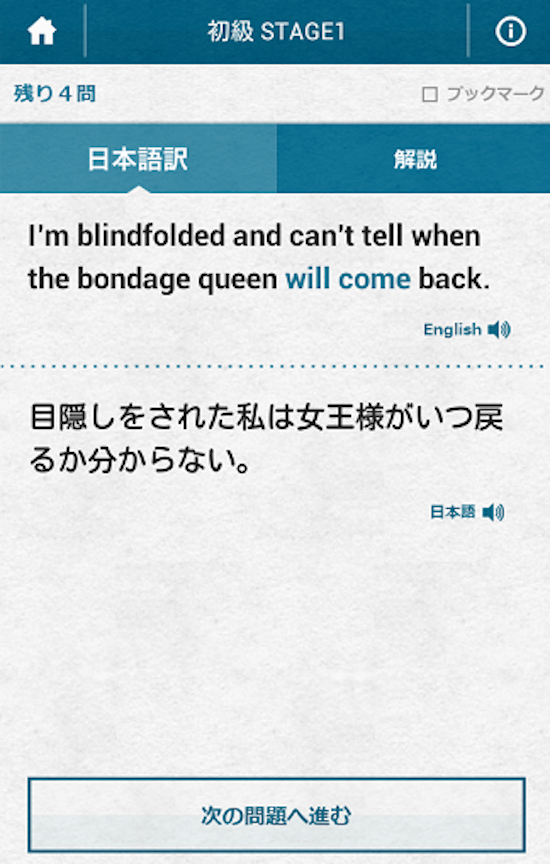
Call us cynical, but we find that our standards over what constitutes funny Engrish have been changing. Unless it’s something really hilarious, perhaps involving naughty words or references to embarrassing body parts, we just can’t muster up the same kind of enthusiasm we once had. When it comes to English that’s just a little bit off in certain ways, it’s sometimes just not that funny, especially when you understand the number of reasons why Engrish happens in the first place. However, visitors to Japan will always remember that first taste of Engrish fondly, even if the same example might fail to raise an eyebrow after a few years of acclimatizing. The last piece of Engrish I felt was worthy of documenting can be seen above – it’s a T-shirt from a store in Osaka and several years later it still blows my mind. However, there’s also plenty of pretty mediocre Engrish to be found, as we’ll demonstrate after the jump.

English (Page 3)
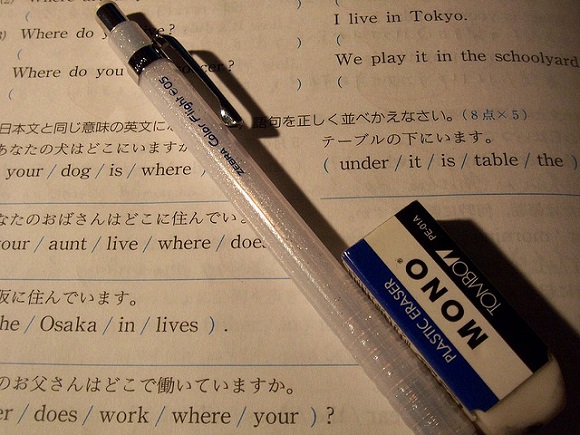
At RocketNews24, we’ve covered how English education in Japan is currently faring, with many people agreeing that much can be done to improve it. Of the many problems, one improvement could certainly be the textbook, which many people believe is bland, uses English improperly and teaches English that feels very outdated. What’s needed is something that surpasses all those inadequacies and features English students would encounter in real life.
Well, how about a textbook that includes dialogues where people use bribes, exploit other people’s weaknesses and make giant broad stereotypes about countries as a whole? Yes, let’s try something like that!
When you speak to foreign English educators in Japan, one thing becomes crystal clear: English education in Japan isn’t working. It’s just awful. While English classes are mandatory in Japanese schools, the percentage of students who emerge with actual English abilities are surprisingly low. Students in China, Korea and Japan are in an arms race to see who can produce students with the best English, and Japan seems to be trailing far behind in third place.
With the Olympic Games coming up in 2020, the Japanese government has proposed changes to increase the level of English ability in their students. Changes like starting introductory English classes in 3rd grade elementary school and making the subject compulsory from the 5th grade. Are these changes really going to help? We’ve gathered opinions from both foreign teachers and Japanese citizens about issues with the system and what might improve it.
The Toronto International Film Festival (TIFF) will host the North American premiere Isao Takahata‘s The Tale of the Princess Kaguya and director Mami Sunada’s The Kingdom Of Dreams And Madness documentary about Studio Ghibli next month. Princess Kaguya will premiere with English subtitles on September 5 with Takahata present for the screening. The Kingdom Of Dreams And Madness will premiere on Monday, September 8.
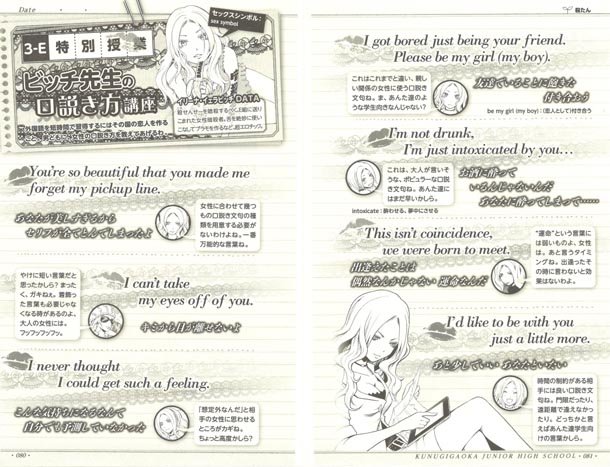
We recently came across this article on English pick up lines for Japanese guys wanting to get ‘close’ to women while they’re on holiday abroad. Some of the tips are a little out there, though. What do you make of the advice offered?
Kunugigaoka Junior High School, and particularly CLASS 3-E’s amazing artificial lifeform teacher Koro-sensei is known for his innovative and unique tactics of teaching his students. From making songs about math based off of anime opening themes, to moving at Mach 20 just to create “after image tutor copies,” Koro-sensei will stop at nothing to make sure that his students learn their lesson.
Now it seems that he’s turned his immense smile in another direction to bring the same one on one quality teaching to the hands of students everywhere, with the official Assassination Classroom English Textbook!
Here at RocketNews24, we spend a lot of time talking about language–particularly Japanese and English in Japan. It’s no secret that English is a difficult language to learn, and not just for folks from Japan. Part of the reason for the difficulty arises from the numerous variations English has–from American to Australian to Singaporean. But one country in particular that stands out is the Philippines, which the BBC recently called “the world’s budget English teacher.” While it’s not exactly the most complimentary title, it certainly is true that the country takes English as one of its official languages (along with Filipino, which is basically a standardized form of Tagalog). Of course, in a country with around 170 living languages, it should be expected that Philippine English is quite a bit different from English in the US or the UK.
But just how different is it?
Despite every student in Japan being required to take English language courses, it may be difficult to find everyday people who enjoy and feel comfortable speaking the language. Sure, there are some former compulsory school students who are completely fluent in English, but overall, finding a native-level speaker or even someone confident enough to speak with can be difficult. That’s why we were surprised and pleased to watch this video of an Australian expat and his English language encounter at the McDonald’s drive-thru in Japan.
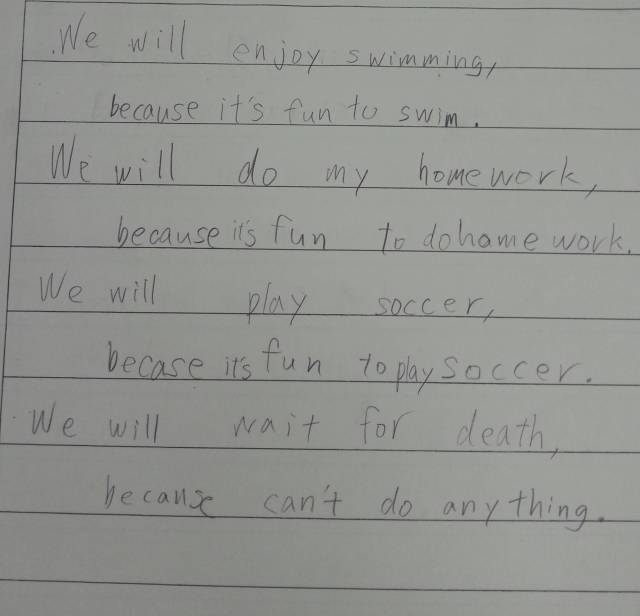
I’ve marked my fair share of English exam papers here in Japan, and there have been a few gems of hilarity in amongst the spelling mistakes and butchered grammar, but nothing that measures up to this beauty. One student’s answer to a simple question was so deep and existential, it read like poetry.
Hearing native Japanese people casually using English slang is a special kind of awesome. All too often, Japanese are taught straight-laced, borderline archaic phrases that, while grammatically sound, remove all trace of the speaker’s personality to the point that they end up sounding like stuffy university professors rather than they people they actually are. So when we spotted this video, which shows one English teacher’s students working their way through the recently released book F*ck no Tadashii Tsukaikata, or “How to Use ‘F**k’“, it brought huge smiles to our faces.
So, if you’d like to hear perfectly nice and respectable Japanese people saying things like “I’m trusting you with the drugs; don’t f**k me over” and “He’s going to sh*t a brick”, make sure there are no impressionable youngsters in the room and join us after the jump.
Everyone knows that there are certain nuances in every language that you just can’t learn from school. Humor, for instance, but also cursing. Sure, you might know the definitions of a few key words, but stringing them together is a task unlikely to be perfected except by those who have spent some time with folks who are native speakers.

A recent book written by MADSAKI and published by Transworld Japan is giving Japanese speakers the fine opportunity to learn how to creatively curse in American-English. Titled, How to use F*** Correctly: 99 Phrases Using F***, S***, D***, and H*** that Schools Won’t Teach You, Handle with Care, it promises 176 pages of illustrated cursing, with examples.
Funny things, names. In Japan, I am lucky enough to share mine with a delicious kind of stick-chocolate treat, which not only means that I can introduce myself as such: “Fran – you know, like Pocky, but not as cheap”, but also means that I often get given chocolates with my name on the packet, which I can confirm is something of a win-win situation.
My family name, however, is a terrifying mix of Rs, Ls, Ys and Ws that tends to provoke confusion and mild panic here in Japan. I have a good stock line for accurately communicating its spelling and pronunciation in the UK (“Wrigley, like the chewing gum”), and another one for Americans and/or baseball fans (“like Wrigley Field”). I’ve never come up with a good line to use on Japanese people, though, except to awkwardly mutter “um… yeah, sorry, it’s kind of a difficult name. Don’t worry, people in England can’t pronounce it either.”
But what if your name means something embarrassing or just downright odd in another language? Today, we bring you five kinds of Japanese names that make English speakers do a double-take, or a little snort into their coffee.
Japanese people seem to love telling me that British food is terrible, and the only good thing we have going for us is fish and chips. No one can believe that I actually get a bit tired of Japanese food and pine for my favourite dishes from home! Perhaps to try and change this perception, the British Embassy has been undertaking a campaign called ‘Food is GREAT!’ (for Great Britain, geddit?), and our Japanese writer decided to put some of their recipes to the test.
Like so many foreigners living in Japan, I first entered the country as an eigo shidou joshu, more commonly known as an Assistant Language Teacher, or ALT for short. Although terms like “grass-roots internationalisation” and “globalisation” are uttered during ALT training seminars and by boards of education across the country with such frequency that you’d swear they’re being sponsored to use them, in reality an ALT’s role at a Japanese junior high school (where the majority in Japan are employed) is to go along to class with a non-native Japanese teacher of English (or JTE) and, as their job title implies, assist in teaching. The idea is that students, particularly those from rural areas, will benefit from the presence of and instruction from a native English speaker.
But are native speakers entirely vital to English language education in Japan? And should native English speakers, rather than Japanese teachers of English, be the ones taking the lead role in the classroom?
Not a day goes by without Japanese school children hearing the terms globalization (グロバール化) or internationalization (国際化), and why it’s so important for their future careers. In fact, the whole country seems to be swept up in a fervor of these two words. But do Japanese people really understand the meanings of them, or are the terms just being used as catchphrases?
Enter Austin, an international student who has been living in Japan since 2012. Last week he posted a thought-provoking piece called “Some Thoughts – And Doubts – About Japan’s Internationalization” on Tofugu, a Japanese language and culture blog. The piece has circulated around the Internet, and was even picked up and summarized in Japanese by popular Japanese blogger Madame Riri. In it, Austin addresses how while Japan may be making efforts to globalize on the surface, it still lacks something on a deeper level that is preventing it from becoming truly internationalized. Join the debate after we take look at some of his thoughts below.
For Japanese people, studying English is almost a given. Even folks who may have no interest in actually leaving their home country may feel compelled to study the language for business or simply because they’re supposed to. But it’s hard to enjoy learning a language that you don’t have any interest in–and having fun is one of the best ways to facilitate learning.
This has opened up something of a cottage industry for people trying to make the learning part fun. There are nonsensical textbooks and sexy teachers, but then there are the college textbooks that seem like their authors weren’t even trying.
Well, for any Japanese English-learners who are on the verge of giving up – and perhaps for those of you struggling with learning Japanese – there may be one ray of hope still shining: Majime na Eibunpou, a surprisingly funny English grammar smartphone app!
Although it’s been debated on this site before, life in a Japanese company can be tough. For some it can be downright war. And with more and more companies beginning to adopt English into their daily routines, it can be hard for an average salaryman (the term given to average full-time company employees) to get ahead or even survive.
Nissin’s Cup Noodle tries to sum it up how the feeling of a typical worker in their advert titled Globalization. Let’s take a look.
Set to be published on 10 April is My Little Sister Can’t Be This Cute and Brush Up on Middle School English by Chukei Publishing.
As the name suggests, this book lets students bone up on the required English curriculum set to the backdrop of the My Little Sister Can’t Be This Cute popular series of erotic game (eroge) otaku themed light novels. Yes, someone actually made this.
Japanese people often get a hard time for their lack of English language skills. But with so few Japanese ever setting foot outside their own country, it’s little wonder that one of the most frequently heard reasons given for struggling with the language is the lack of opportunity to use it.
Just last night, in fact, I was completely caught off guard when a teenage girl in my local convenience store seized the opportunity to break out her English and asked me whether I needed a plastic bag. Unfortunately, I was completely unprepared for the question and it was only after she had repeated herself three times that I realised that a) she was speaking English and b) I’d probably just ensured that she never dare to do so ever again.
But perhaps the prospect of a free cup of coffee would rekindle her enthusiasm for language?
As part of a promotional campaign for the launch of its new ReFLEX language learning software, Rosetta Stone is opening a special limited-time-only cafe in a Shinjuku book store, giving customers the chance to use their English, and doling out free cups of coffee to those who can.
While living in Japan and working as an assistant English teacher, I’ve lost track of how many times Japanese people have asked me why most people in Japan can’t speak English. Due to compulsory education requirements, every Japanese citizen must take 6 years of English language courses. What’s more, starting from the 2011 school year, elementary school fifth and sixth graders are also required to have an English class once a week. Some school districts even offer English classes for kindergarteners and elementary school students in grades first through fourth.
But even after spending half or more of their adolescent years studying the English language, many Japanese struggle to carry out an everyday conversation in English. This isn’t just a casual observation by Japanese citizens, either. Japanese students have among the lowest English TOEFL scores in Asia.
So when Japanese tourists want to take a trip abroad, many are unequipped with the practical language tools necessary to go about daily life in English. The reality of this can be discouraging and even come as a shock to people who have spent years studying back home in Japan, especially when they realize phrases like “Is this a dog? No, It’s a pen.” don’t come up in conversation as much as their textbooks had suggested.
The following is a compilation of impressions of Japanese tourists who have limited English ability while traveling abroad.


Bear attack shelters going on sale in Japan as country experiences record-high number of incidents
The top 8 fast food chains in Japan
We zapped up some tasty hot sandwiches in the microwave with 3COINS’ new gadget from Japan
Secret tourist stop in Japan has a lift car that whisks you away to a mystery mountain destination
Starbucks Japan unveils the new Soupuccino
Japan’s plus-sized idol singer group releases new video about the joys of eating【Video】
Stay in a Tokyo hotel with a train driver’s seat in the room
Tokyo big walk – Walking from Tokyo Station to the Big Sight convention center on Tokyo Bay【Pics】
The top 5 ice creams you should try at Family Mart convenience stores in Japan this summer
Exhibition on the 1,500 year-history of traditional Japanese women’s clothing to open in Shibuya
Brand-new Pokémon park opens in Japan with larger-than-life-size Lapras【Photos】
Japanese government considering tripling departure taxes to combat overtourism
Tokyo Station’s ultra-rare cakes look, and taste, like a cup of coffee
One of the busiest stations in Tokyo is changing the name on its signs, but not necessarily to make it easier for people to find their way around.
Entry to Tokyo’s Pokémon theme park zone has physical fitness requirement, will cost a lot
Never forget that Mister Donut’s super-simple ramen is actually very hard to beat
Studio Ghibli unveils new fluffy purses from films like My Neighbour Totoro and Spirited Away
Japan’s permanent Pokémon theme park zone announces grand opening date, ticket sale start
Studio Ghibli releases new “komorebi” plush toys to brighten your days
Sanrio and Sonic the Hedgehog characters become fast friends with new plushie collection
Tokyo bento boxed lunch shop charges different prices depending on how heavy your laptop is
Japan has vending machines that put protective film on your phone for you — Here’s how to use them
Studio Ghibli anime stoles are here to keep you warm with a range of famous characters
Totoro fountain figurine recreates the sights and sounds of one of anime’s most memorable scenes
Starbucks Japan unveils new Christmas Frappuccino and holiday drinks for 2025
Ghibli Museum clock is now yours to take home with you
Step into Japanese culture with Converse’s new Japan-exclusive shoes featuring gods, sushi style
Survey asks foreign tourists what bothered them in Japan, more than half gave same answer
Possessing Harry Potter’s Sword of Godric Gryffindor is now illegal in Japan
Japan’s deadliest food claims more victims, but why do people keep eating it for New Year’s?
We deeply regret going into this tunnel on our walk in the mountains of Japan
Studio Ghibli releases Kodama forest spirits from Princess Mononoke to light up your home
Major Japanese hotel chain says reservations via overseas booking sites may not be valid
Put sesame oil in your coffee? Japanese maker says it’s the best way to start your day【Taste test】
The top 10 annoying foreign tourist behaviors on trains, as chosen by Japanese people【Survey】
No more using real katana for tourism activities, Japan’s National Police Agency says
Uniqlo announces first-ever collaboration with horror manga master Junji Ito【Photos】
Japan’s plus-sized idol singer group releases new video about the joys of eating【Video】
Stay in a Tokyo hotel with a train driver’s seat in the room
Tokyo big walk – Walking from Tokyo Station to the Big Sight convention center on Tokyo Bay【Pics】
The top 5 ice creams you should try at Family Mart convenience stores in Japan this summer
Exhibition on the 1,500 year-history of traditional Japanese women’s clothing to open in Shibuya
We stress-test Uniqlo’s “Impressive Jacket and Pants” to see if they live up to their names
New and improved self-transforming Transformer toys fight, dance, and are overall awesome【Videos】
How to turn cold McDonald’s fries into the best hash browns you’ve ever tasted
Japan’s permanent Pokémon theme park zone announces grand opening date, ticket sale start
Japan’s Kirby Choco Eggs hide figures that are too cute to resist
Taste-testing Japan’s “I love Obama” cakes【Taste test】
11 different ways to say “father” in Japanese
Totoro Tummy Blanket gives you the belly warmth of Ghibli’s cuddliest character【Photos】