Despite underwhelming sales of its previous games consoles in Japan, Microsoft Corporation has remained true to its promise of bringing Xbox One to the Land of the Rising Sun, and has today announced an official release date and price point.
technology (Page 36)
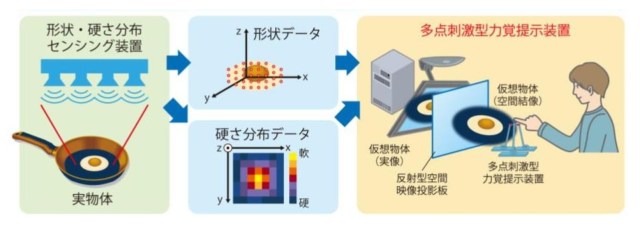
On 23 May, NHK announced that it has been working with Tokyo University to create a way to not only transmit images over long distances but to also send the sense of touch. Using this, viewers would also become able to actually feel whatever appeared on screen with their own hands.
This system makes use of Tokyo University’s newly developed device which can measure the dimensions and hardness of an object in three dimensions simultaneously. On the other end, NHK has been hard at work on a Touch/Force Display which would allow viewers to get tactile feedback from the images presented on screen.
While the typical itinerary for visitors to Japan is Tokyo, Kyoto, and then home, western Japan has a lot to offer. As a matter of fact, as I type this, I’m just about to leave for a few days of enjoying the beautiful sights and delicious food of Hiroshima Prefecture.
In order to maximize my time there, I’m hopping on an overnight bus. But while that’ll get me there bright and early, it’s not nearly as stylish as the new sleeper train that was just announced by Japan Railways.
Part of the reason smartphones have become so popular is the way in which they combine the functions of so many other devices people used to lug around instead. With the ability to browse the Internet, listen to music, play games, and take high-quality photos, it’s becoming increasingly harder to convince people they need to shell out the cash for a dedicated camera, handheld video game system, or music player.
But why is it that as more people buy smartphones, fewer of them are buying chewing gum?

Ties are serious business in Japan. Since all but the most informal businesses require all men to wear one during working hours (unless, of course, it’s “Cool Biz” time), it’s pretty much a necessity for every guy to own a few and if you know more than two or three ways to tie one, all the better.

But, surprisingly, it’s not uncommon for Japanese guys to have no clue whatsoever how to tie a tie. The stereotype goes that these mostly young sartorially-challenged individuals rely on their girlfriends or even dads and moms to knot their tie for them, and in a pinch they’ll just stash an already-knotted tie somewhere in their closet, tighten it on and dash out the door.
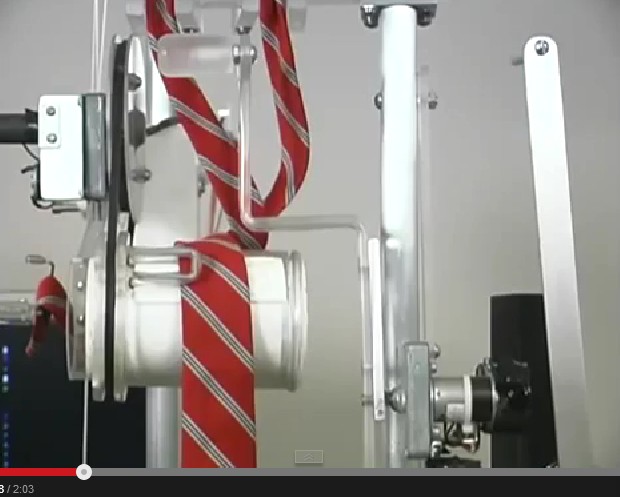
One such less-dexterous individual apparently took it upon himself to solve his problem by building an automatic tie tying machine, presumably so that he could finally stop relying on his dad for his wardrobe and move out of his parents’ basement:
When my brother and his family moved back to America, leaving my wife and I as the last Baseels in Japan, he graciously offered me his practically new iPhone. Sadly, despite the tempting opportunity of upgrading from my old-school flip phone, I had to turn down his generous offer.
Being happily married, this wasn’t because I needed the boost in attractiveness that comes from an outdated cell, but simply because my brother and I had different providers, and his iPhone was SIM locked, like all mobile phones in Japan have always been.
However, that might be changing soon.
What with desktops, laptops, all-in-ones and tablets, we now have an enormous amount of choice when it comes to buying a new computer. While many of us enjoy the raw power that giant desktops have to offer, others prefer the simplicity and convenience of tablets with their slim designs and fingerprint-absorbing touchscreens.
With the Kira L93, Japanese electronics giant Toshiba is clearly hoping to cover all of its bases and please even the most indecisive computer buyer. With a 13.3-inch touchscreen that can be rotated 360 degrees, stand, detachable keyboard and stylus, the latest entry in the Dynabook series can be used up to seven different ways, making it one of the most versatile machines on the market.
The Shibuya crossing, also known as theShibuya scramble, is without a doubt one of the most famous locations in the world. Now the go-to location for establishing shots of Japan when producers aren’t focusing on geisha and picturesque temples, the intersection has been featured in numerous TV shows and movies, and is a must-see for any visitor to Tokyo.
Surrounded by tall buildings, each covered in giant screens and ads vying for pedestrians’ attention, the Scramble is traversed by an incredible 500,000 people each day, with roughly 3,000 pedestrians crossing every time the lights change during peak hours, making it one of the flashiest and most popular places to advertise in Japan.
And now, it’s about to get just a little bit flashier.
The town of Hakone, located high in the mountains of Kanagawa Prefecture, is one of Japan’s most popular tourist destinations. Visitors come to enjoy its soothing hot springs, beautiful views of Mt. Fuji, and art museums focusing on outdoor sculpture installations and Venetian glass.
Hakone also happens to be home to some of the best driving roads in east Japan, too, which is why Daihatsu picked the site to show off its new compact convertible, the Copen, to fans and press.
Most if the time, video games and sports cars are two of the more trivial things in life. That said, sometimes it’s those non-productive luxuries that give us the recharge we need to be industrious in our daily grind. Some people draw energy and inspiration from an afternoon spent with a good book or favorite album, others get it from a few hours working a PS4 controller or rowing through a crisp-shifting gearbox.
Competitive gaming and motorsports are getting another boost in legitimacy this summer, as the first has led to a job for some talented virtual racers, and their team’s car is helping pave the way for cleaner, more efficient engines.
Scientists at Southwest Jiaotong University in China have built a prototype testing platform for a near-vacuum high-speed maglev train that is theoretically capable of reaching speeds up to 2900 km/h or about 1,800 mph. Currently, the fastest commercially operated maglev reaches just 431 km/h and even the world record is just 581 km/hr.
While progress has been slow and begrudging, anti-smoking movements are finally starting to gain traction in Japan. For example, smoking is largely banned in train stations, except for in designated enclosed smoking spaces, and even many of those are being removed.
Likewise, when smartphone advertising firm Adways moved into a new office, management saw it as a chance to rethink how to make the workplace more comfortable for nonsmokers, and came up with a solution that uses a mix of technology and simple common courtesy.
With technology moving faster than ever, it’s hard to imagine what careers will look like 20 years from now. But The Canadian Scholarship Trust Plan (CST), a not-for-profit foundation dedicated to helping Canadian families save for their children’s post-secondary education, wanted to find out.
With help from foresight strategists, CST took a look into the future to find the jobs that may be commonplace by the year 2030.
The social messaging service Line is a huge hit in Japan. It’s easy to use, free, and even lets you decorate your messages with stickers to add a personal touch.
All of this makes Line great for keeping in touch with your friends or dating partner. As a matter of fact, it might have just become a little too good at keeping you connected to your significant other, with a new set of stickers specially designed for clingy girlfriends.
Fantastic octopus wiring!
My brother has been observing the slugs since he got divorced.
Let’s start from where we left off yesterday. Get down on all fours.
No, these aren’t the ramblings of a man with concussion; these are genuine excerpts from Twitter feed and study guide “Non-essential English Vocabulary: Words that will never come up in tests”, a language resource for Japanese students of English that presents entirely useless but infinitely memorable phrases.
With more than 40,000 Twitter followers so far, Twitter feed curator and author Nakayama-san (otherise known as @NISE_TOEIC)’s cheeky tweets are clearly resonating with English learners here in Japan, but why, when the rest of the nation is busy with earnest study, would someone take the time to create a Twitter account dedicated entirely to unusable English? Japanese website Excite Bit sat down with the Nakayama-san to pick up a few study tips and learn little more about the thinking behind the bizarre project.
Electronics giant LG has announced that its line of “HomeChat”-enabled appliances — a refrigerator, washing machine, and Lightwave oven that can be communicated with and operated via messaging service Line — is now available to buy in its native South Korea.
By using the popular smartphone app, users can chat with their various gizmos as if they were ordinary human contacts, asking them questions as well as providing additional information to alter their functions. Thanks to the technology built into the appliances with which the app communicates, it’s possible not just to remotely check the temperature inside the fridge or put on a load of laundry, but to find out how many beers you have or delay your usual wash cycle by 30 minutes simply by telling the machine you’ll be home late.
With over 1,800 commonly-used kanji characters, plus two different sets of 46 phonetic characters each, typing on a word processor in Japanese works a little differently than in English. Many words in Japanese have the same pronunciation but are written differently, so first you have to type the word phonetically, then select the proper rendering from a list that pops up.
The cool thing is that sometimes the selections aren’t just written characters, but drawings of the object in question. Poking around in a Japanese word processor is like a linguistic treasure hunt, and our searches turned up illustrations of mythical creatures, delicious food, and famous landmarks of Japan.
Never has something been the focus of so much simultaneous nerd love and outrage than the venerable flux capacitor from the equally venerable film series that popularized time travel, Back to the Future. After all, it was the defining technology for time travel in the films that made screeching about time travel paradoxes all the rage in geek communities.
And now, it can be yours in all its ’80s glory with this official DeLorean Motors Company-licensed hardware that you can actually install in your real DeLorean – or presumably (and much more likely) – the crappy Pinto you’re currently borrowing from your grandpa.
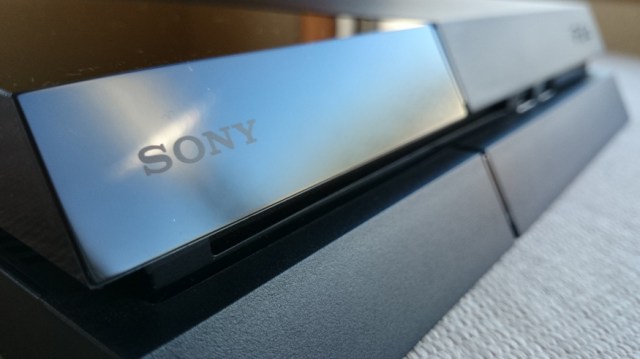
As we’ve said before, the PlayStation 4’s PlayStation Camera is a woefully underused device. Gamers who enjoy streaming footage of the games they play often use their cameras to capture their own expressions and add real-time commentary, and upcoming virtual reality headset Project Morpheus will make use of the unit to provide additional head tracking, but otherwise it gets relatively little love.
Fortunately, Sony Japan looks to be working on content that will inspire a few more PlayStation 4 owners to plug in their cameras. In two videos released last week, Sony staff show off their experiments with augmented reality, which combines real-world footage with computer-generated images that respond to a number of stimuli. These may only be tech demos, but the sight of a miniature T-rex hiding in the darkness, a man decanting water (complete with rubber duck!) between two virtual boxes, and even a short performance from a tiny Hatsune Miku on the living room rug left us thirsty for more.
The Robot Restaurant in China’s Heilongjiang Province is a conventional restaurant in every sense, save the glaring exception that the food is prepared and served entirely by an army of 20 robots with just a modicum of human oversight.


Uniqlo reveals third round of massive 100-year-anniversary manga T-shirts for Jump’s Shueisha
Kyoto public junior high school becomes first in Japan with a hoodie school uniform
Tourists brave Typhoon Jangmi to queue at two famous sites in Tokyo
Starbucks Japan unveils new Frappuccino showcasing “mottainai” culture
Starbucks Japan releases first-ever muscat-flavoured chilled cup drink
New official Ghibli anime food cookbook will teach you how to make Ponyo’s ramen and more
What’s it like to join Tokyo’s walking-and-talking-with-strangers club for a day?
Starbucks Japan has a mesh bag so cute it’s a sell-out hit
Osaka is hosting a “hentai” event, but it’s probably not what you think
Japanese convenience store shows us how to dress for the rainy season
Japanese convenience store Lawson launches new “mini supermarket” chain, L Minimart
What’s up with the Ghibli Park photo and video ban?
Japan’s adorable pudding chick becomes a transit card mascot
The Japan Burger Championship 2026 in Yokohama next month is the ultimate battle of the beef
Mr. Sato takes a walk on Tokyo’s American-style street to get some American/Japanese ice cream
Sushi Pizza surprises diners in one of the best food destinations in Japan
Starbucks Japan has a problem with its sell-out breakfast that might annoy solo diners
Tokyo’s life-size Gundam anime mecha statue will be removed this summer
Ichiraku Ramen-inspired ramen sets from Naruto anime pay homage to Naruto, Sasuke, and Sakura
Kanji ice cream becomes a sell-out hit in Japan
The average age of Japan’s hikikomori shut-ins is getting older, survey shows
Japan now has gyoza doughnuts, and they taste like no other doughnut we’ve tried before
Japan’s real-world Pokémon hot spring’s first photos are here![Photos]
Japan has a new cute and clever sunblock for cat lovers
Japan’s human washing machines will go on sale to general public, demos to be held in Tokyo
Starbucks Japan releases new drinkware and goods for Valentine’s Day
We deeply regret going into this tunnel on our walk in the mountains of Japan
Starbucks Japan releases new sakura goods and drinkware for cherry blossom season 2026
Japan’s newest Shinkansen has no seats…or passengers [Video]
Major Japanese hotel chain says reservations via overseas booking sites may not be valid
Put sesame oil in your coffee? Japanese maker says it’s the best way to start your day【Taste test】
Japan reportedly adding Japanese language skill requirement to most common foreigner work visa
Japan’s 5.3 million beautiful Hitachi Nemophila flowers are now in full bloom[Photos]
Pokémon and Ikea Japan cross over into each other’s worlds with collaboration events
New official Ghibli anime food cookbook will teach you how to make Ponyo’s ramen and more
What’s it like to join Tokyo’s walking-and-talking-with-strangers club for a day?
Starbucks Japan has a mesh bag so cute it’s a sell-out hit
Osaka is hosting a “hentai” event, but it’s probably not what you think
Japanese convenience store shows us how to dress for the rainy season
7-Eleven Japan adds a new watermelon smoothie to its convenience stores…but is it worth the hype?
Art exhibition coming to Tokyo this month brings the cute, scary, and weird to ukiyo-e
Pokémon Center Mega Tokyo to remain closed for the summer following stabbing incident
Japanese government postpones proposals to restrict real estate purchases by foreigners
Krispy Kreme releases a new Doughwich… at only one store in Japan
Extra-cute Sea Animal crepes come to Japan’s cafe chain born from a sweet fashion brand
What’s up with the Ghibli Park photo and video ban?
Japanese convenience store Lawson launches new “mini supermarket” chain, L Minimart
New littering fine now being enforced in some of Tokyo’s most heavily touristed areas