The number of foreign visitors visiting Japan has increased recently, and with Tokyo set to host the 2020 Olympic Games that trend is likely to continue. Now is the perfect opportunity for the city to show off its offerings as a must-see destination.
In an effort to appeal to and satisfy more tourists, a recent survey of Japanese Tokyoites ranked the top 10 drinking districts that they think tourists to Japan should visit to see and experience the “real” Tokyo.
Last Sunday morning, dozens of Tokyoites ran screaming through the streets of the Kamata neighborhood. Ordinarily, this would be cause for concern, but for cinema fans the world over, this is actually something to celebrate, as the crowds, caught on video, are proof that filming has begun for the newest made-in-Japan Godzilla movie.
On September 2, Kurand Sake Market opened a new shop in the Asakusa district of Tokyo. This location is a sister branch to the original Kurand Sake Market which opened earlier this year in Ikebukuro, where sake lovers can sample 100 varieties of sake for 3,000 yen (US$24.64) per person with no time limit.
The Asakusa branch invited curious members of the media in for a sneak peek before its grand opening to the public, so we promptly sent our sake-loving reporters Mr. Sato, a veteran of the Ikebukuro shop, and Sailor Venus-cosplaying reporter extraordinaire Yoshio to check things out. But rather than write their opinions for each of the 30 individual brands they sampled, which would undoubtedly become tedious after a while, they decided to create a handy visual guide so that you can gauge their reactions to each cup with a picture, thus eliminating any language barriers in the process. Let the sake festivities begin!
With the Japanese reverence for aesthetically pleasing food, it’s no surprise that candy crafting artisan Shinri Tezuka has made a name for himself with his fantastic sugar creations. As we reported previously, he has been in charge of his own shop, Asakusa Amezaiku Ameshin, since 2013, and is perhaps best known for his incredibly lifelike candy goldfish.
Since our last report, Tezuka has been so busy raising his profile by appearing on numerous Japanese television shows and at various events, he’s now been able to open up a second store, right underneath Tokyo Skytree!
There’s a huge variety of fees that need to be paid when renting a new apartment in Japan. In addition to an advance payment of your first month’s rent, there’s insurance, the security deposit, the realtor’s fee, and the dreaded “key money,” basically a sign-up cost that you pay to the landlord for the privilege of being allowed to start giving him money on a monthly basis.
Add it all up, and you’ll probably find yourself out several months’ worth of rent before spending the first night in your new home. But there’s a nice upside if you chose to go through one unique realtor, because while you’ll still have some fees to pay, you’ll also get a nice housewarming present in the form of several hundred dollars’ worth of anime merchandise.
As one of Tokyo’s swankiest neighborhoods, Ginza is home to numerous up-scale restaurants and cafes that will as much do damage to your wallet as fill your stomach with delicious food. From French cuisine to delicious brunch, you can find just about anything in Ginza—including a Vampire Cafe!
Though you might not expect to see many theme restaurants like this in Ginza, it turns out these bloodsuckers have been going strong for over a decade. If you’re hoping for a night of spine-tingles and blood-red everything, this is the place for you!
It is perhaps common knowledge by now that folks in Japan tend to go on business trips a lot. Whether this is actually true or an exaggeration, we can’t exactly say, but it certainly seems that there are a ton of workers moving around the country as part of their jobs. And it should go without saying that quite a few of them end up coming to Tokyo.
So, what is it like taking a business trip to Tokyo for someone who lives outside of Japan’s most populous metropolitan area? Read on to find out!
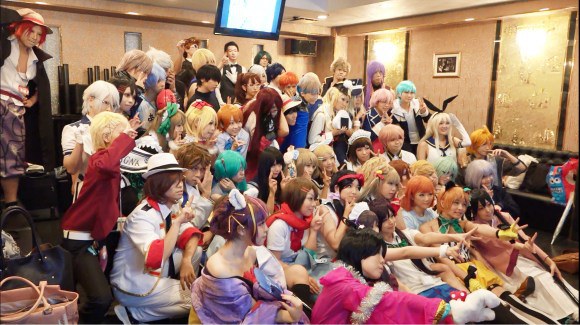
Cosplay has certainly become of Japan’s most well-known and loved subcultures, exploding on the world stage partly thanks to the Internet and partly thanks to the ingenuity of many of its most fervent participants. Despite this, it can still be difficult to find and make friends in the cosplay community if you’re coming in alone, as with any other subculture. But it doesn’t need to be that way! The Japanese cosplay community is just that — a community — and some of its members are working to make sure people can get together and cosplay as often as possible.
Perhaps the most relaxed way to join the fun is to take part is Shinjuku CosKara, or Shinjuku Cosplay Karaoke! While singing in front of others might set your nerves on edge, the events are organized so that people can come, have fun, take lots of cool photos, and make friends. You needn’t worry about your warbling offending anyone either; half the fun of karaoke is doing it badly with a giant grin! So, come along as we take a look at the event and talk to some local cosplayers!
It’s not uncommon to describe a meaty dish by listing how much beef it contains. McDonald’s has had plenty of success with the Quarter Pounder, and some American restaurants will tout their steaks as being 10 ounces or more.
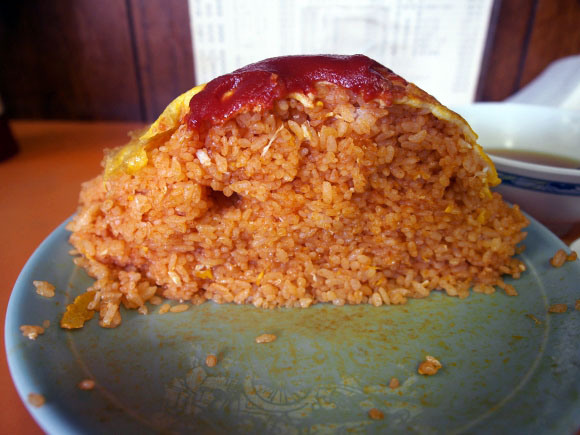
But have you ever stopped to think about how much rice is on your plate? We recently sent one of our reporters to a restaurant in Tokyo to take on a rice omelet, one of Japan’s favorite comfort foods, made with a staggering 600 grams (1.3 pounds) of rice.
Tokyo’s Shibuya is one of the busiest parts of one of the world’s busiest cities. Ginza is filled with high-class cafes, Harajuku is bordered by the tranquil Meiji Shrine, and Shinjuku’s Shinjuku Gyoen is a sprawling green space in the center of the city, but Shibuya is all glitzy entertainment, fashionable boutiques, and trendy restaurants.
But even in Shibuya, every now and then something happens that makes people stop in their tracks and take a moment to smile, like the sight of this adorable kitty taking a nap under the statue of Japan’s most famous pooch.
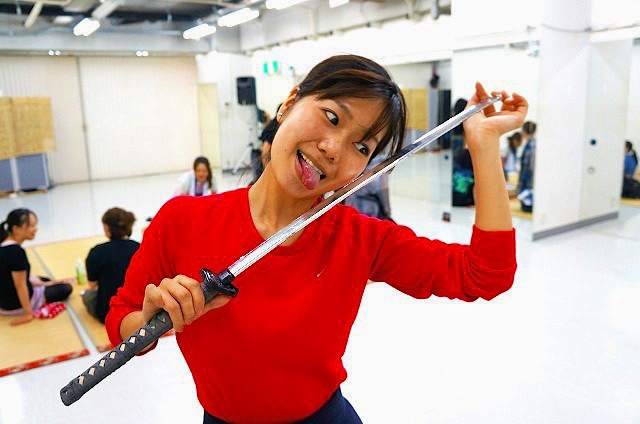
There’s a growing fitness trend in Tokyo, but it’s nothing new really, being based on age-old traditions: Katana Exercise.
Not only will you be taught to swing a sword like a samurai by a handsome teacher, but you’ll cut out stress and extra fat. Check out our hands-on experience of the class after the jump!
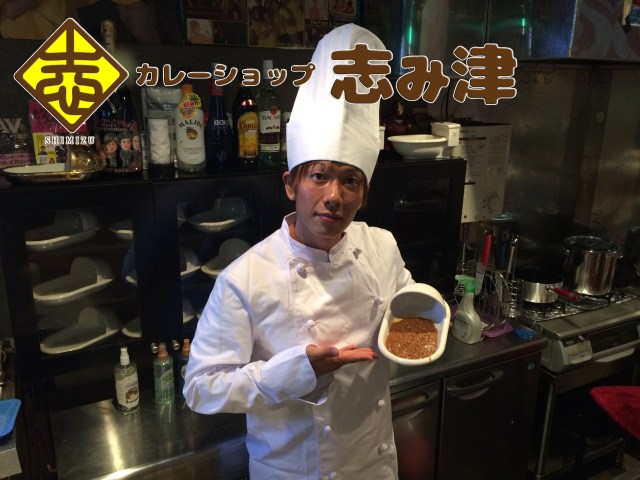
It’s getting harder and harder to be truly original these days, and nothing much seems to surprise anymore. And then something like Curry Shop Shimizu opens in Tokyo. This is a real curry restaurant that specializes in poo-flavored curry.
The very notion of that is sure to send a flurry of questions up to the old cranium, the biggest one no doubt being “How do they know what poo tastes like?” Well, they actually have a good explanation for that, along with answers to other questions you may be pondering…
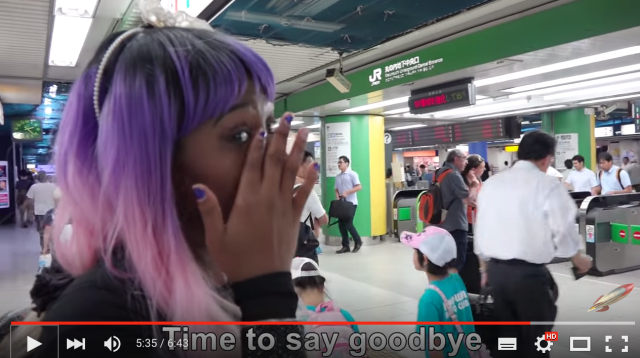
Ashley is now safely back in the US after her exciting adventure here in Japan, so it’s time for a wrap-up post!
Our Japan Wish competition winner’s time with us was a whirlwind of fun, food, and typhoons as her dream of coming to Japan became a reality. Go ahead and watch the video below for a glimpse at just some of the amazing things Japan has to offer for a visitor, as well as to see Ashley’s emotional goodbye.
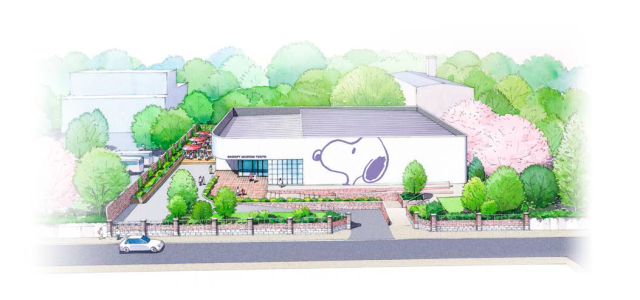
As the glitzy center of Tokyo’s nightlife scene, Roppongi is best known for its high-profile dance clubs, high-class restaurants, and high-cover charge bars. But even if you’ve got no interest in dancing, dining, or drinking, there’s a new attraction coming to the neighborhood: the Snoopy Museum.
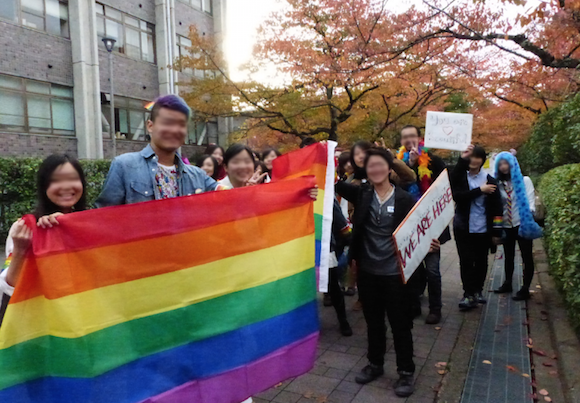
In a landmark move last February, Shibuya Ward in Tokyo announced it would begin legally officiating same-sex partnerships, giving gay couples the same rights as married heterosexual couples. While the movement, set to begin in October this year, has received some scrutiny, it has also seen plenty of support.
Now, in what may be the beginning of a domino effect, one of Shibuya’s neighboring wards, Setagaya, has also announced that it will be offering the same legal recognition to same-sex couples, beginning this November.
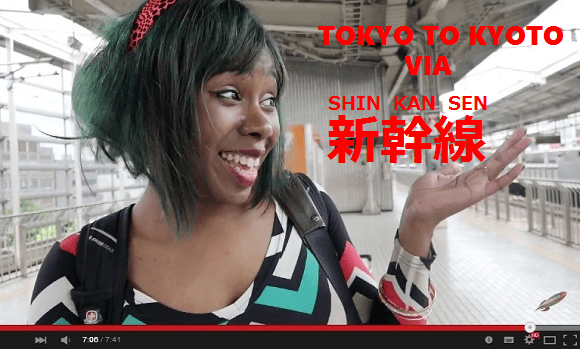
Even if you’re not exactly a trainspotting otaku, chances are you still find the idea of riding a Japanese bullet train seriously appealing. After all, those things get up to some crazy speeds, and the whole process runs like smooth, scientifically adjusted clockwork. Even the cleaning crew get their job done, making the trains absolutely spotless, in seven minutes max!
But if you haven’t quite made it to Japan yet, then we invite you to take a Shinkansen ride with us and our Japan Wish competition winner Ashley. Strap yourself in and feel those G-forces!
We’re not even halfway through summer here in Japan yet, and already we’ve seen a number of strange collaboration combinations, including barley and eel soda and soft-serve sushi.
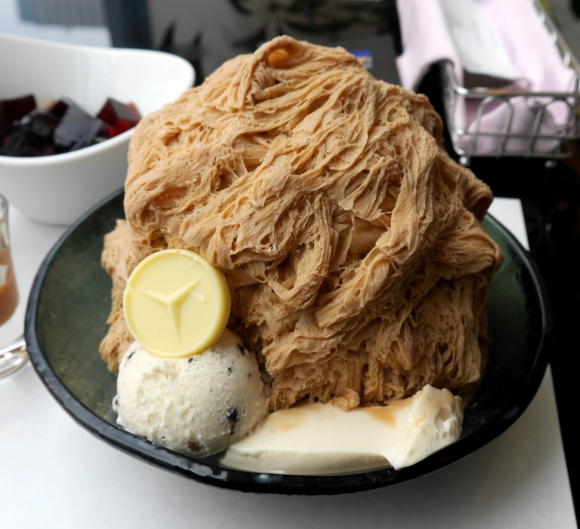
This time we’d like to introduce another curious combination, in the form of a new Mercedes-Benz x Ice Monster shop that recently popped up in Roppongi, Tokyo. But what do luxury car makers know about making the perfect frozen ice treat? Our ever-popular reporter Mr. Sato heads out to investigate.
Ramen is the ultimate Japanese hunger-busting food. With its combination of greasy, fatty soup combined with carb-heavy noodles, it’s the perfect meal for when you’re REALLY hungry in Tokyo (or just really hungover.) But that doesn’t mean that this taste is for everyone. In fact, there’re probably a lot of people out there who just can’t handle that heavy hit of garlicky, salty grease.
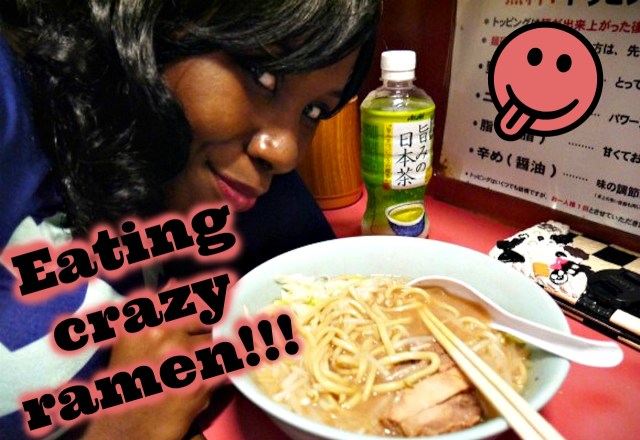
Our Japan Wish competition winner Ashley mentioned in her winning video entry that she really wanted to get a taste of Tokyo ramen. We accompanied her to Ramen Jiro to watch as her tastebuds tangled with the pungent umami of a bowl of their finest slurping fare. Unfortunately, Ashley soon realised that the reality of the truly salty ramen might be a little hard to swallow – along with the actual ramen itself! Check out our video report!
Tokyo’s Shinjuku Station is the Guinness World Record holder for busiest transport hub in the world, with an average of 3.64 million people passing through the station, which has 36 platforms and over 200 exits, each and every day. And it’s never busier than during the morning rush hour, with commuters from all over Tokyo and its neighbouring prefectures pouring through the station on their way to work. No wonder the trains are so crowded!
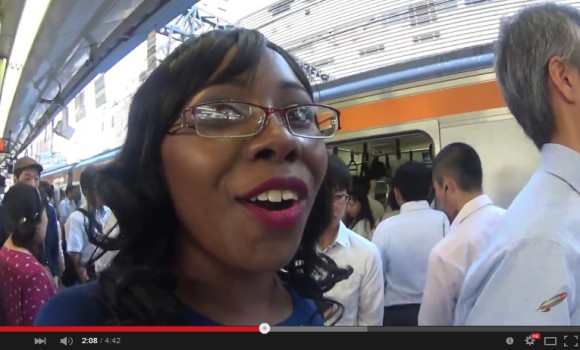
Since Ashley, our “Japan Wish” competition winner is currently in town soaking up as much Japanese culture as she can, we thought it would be great if she could experience the rush hour crush for herself and share her thoughts with her fellow RocketNews24 readers.
Check out the video we took of Ashley being squished like a sardine and see for yourselves how she rates the experience!
I’ve got nothing but love for Tokyo, and I’ve spent a good chunk of my adult life working and playing in Japan’s city of cities. Still, I remember having mixed emotions when it was announced as the site of the 2020 Olympics.
Like everyone at RocketNews24, I truly believe Japan is an awesome place, and I’m happy whenever something happens that gets people to take a peek at what’s going on here. But I was worried that in the run-up to the 2020 Olympics, Japan would embark on a glut of overly extravagant construction projects, building needlessly expensive stadiums that would fall into disuse or disrepair soon after the Games ended, as has happened in so many other host cities.
That certainly seemed to be what was happening with Tokyo’s New National Stadium. Every few months came a new report that cost estimates had been revised up yet again, and the expected price tag recently soared to 252 billion yen (US$2.02 billion). Finally, though, the Tokyo Olympics organizers have said enough is enough, and they’ve decided to toss out the existing design completely and start over from scratch.


 Man arrested in Tokyo after allegedly luring foreign tourists into shady Kabukicho establishments
 Japanese recipe for Tempura Twinkies takes America’s favourite snack to a whole new level
 7-Eleven Japan reimagines the fruit sando with new chocolate bread version
 Uniqlo looks back to the very start of Pokémon with new black-and-white pixel art T-shirts[Pics]
 Studio Ghibli has a new anime out, and there’s only one place in the world where you can see it
 Studio Ghibli calendar figures are back, look amazing whether you check the date or not[Photos]
 Burger King Japan goes viral for its new Big Mouth Dirty, but is it really worth the hype?
 Family Mart opens new “Famima” flagship store in Tokyo that’s like a tourist attraction
 Shizuoka police inspector punished for playing crane games on duty
 Three new starter Pokémon Jets to fly in Japan, first begins carrying passengers this month
 Japan reacts to Donald Trump’s “Islamic Republic of Japan” remark
 Japanese airport rebrands itself as “Sushi Airport” to attract foreign tourists
 New Mt. Fuji overnight bus takes travelers from downtown Tokyo straight to the most popular hiking trail
 A visit to Sri Lanka’s knockoff knockoff Uniqlo (no, we didn’t stutter) to see its rare “Pikachus”
 7-Eleven Japan now has Vietnamese banh mi sandwiches, but how do they taste?[Taste test]
 Tokyo revises accommodation tax amidst tourism boom, Airbnb rentals now included
 Japan announces sudden 400-percent increase in visa fees for foreigners entering the country
 Japanese ninja certification exam attracts 131 candidates from Japan and abroad
 Salomon releases Japan-exclusive Mt. Fuji hiking gear that doubles as an amazing souvenir
 Studio Ghibli store Donguri Republic announces opening of first-ever store in America
 Japan triples departure tax, foreign tourists and locals now must pay more to leave country
 Japan launches first overnight Shinkansen bullet train between Tokyo and Osaka this summer
 Japanese sweets shop sells an ohagi so exquisite it sells out by noon
 New Japanese overnight train coming to connect Tokyo with Tohoku in sleep-travel style
 Sanrio Character Poll announces winners, Hello Kitty absent from top 10 in many countries
 Japan’s human washing machines will go on sale to general public, demos to be held in Tokyo
 Starbucks Japan releases new drinkware and goods for Valentine’s Day
 Starbucks Japan releases new sakura goods and drinkware for cherry blossom season 2026
 Japan’s newest Shinkansen has no seats…or passengers [Video]
 Put sesame oil in your coffee? Japanese maker says it’s the best way to start your day【Taste test】
 Japan reportedly adding Japanese language skill requirement to most common foreigner work visa
 Studio Ghibli calendar figures are back, look amazing whether you check the date or not[Photos]
 Burger King Japan goes viral for its new Big Mouth Dirty, but is it really worth the hype?
 Family Mart opens new “Famima” flagship store in Tokyo that’s like a tourist attraction
 Shizuoka police inspector punished for playing crane games on duty
 Three new starter Pokémon Jets to fly in Japan, first begins carrying passengers this month
 Shake Shack has five regional shakes hiding on the menu in Japan, and here’s how to find them
 Enoshima’s magical night lantern festival is back this summer with spectacular views
 Japan reacts to Donald Trump’s “Islamic Republic of Japan” remark
 Survey shows foreigners’ desire to work in Japan long-term dropping, but that’s not the whole story
 Mister Donut becomes “Mrs. Donut” for sweet new Mrs. Green Apple collaboration
 McDonald’s Japan reveals new Pokémon collaboration range, covering McNuggets and lucky bags
 Onidon opens in Tokyo with unique fusion tempura rice balls you won’t find anywhere else
 Furby is now a sexy anime girl figure[Photos]
 Suntanned Hello Kitty steals the show in Japanese magazine’s Sanrio freebies