business (Page 17)


You wouldn’t know it from the current state of the industry, but the biggest grudge match in video games wasn’t always PS4 versus Xbox One or Skyrim versus Dark Souls. For the bulk of console gaming’s most formative years, the bitterest rivalry was Nintendo versus Sega.

Back before Sega threw in the towel on making its own hardware, the two companies hated each other, and their fans did, too. “Nintendo makes games for little kids.” “Sega’s marketing is obnoxious and juvenile.” “The Super NES processor sucks.” “The Genesis sound chip sounds like a muffled fart.” “Mario is fat.” “Sonic only has one eyeball.”

Soon, you’ll be able to relive the epic struggle for 1990s video game supremacy with the feature film adaptation of the book “Console Wars: Sega, Nintendo, and the Battle that Defined a Generation.”

Read More

Japanese netizens praise Starbucks’ move to promote 800 temp workers

With just over 1,000 stores covering practically every prefecture, Starbucks is a coffee powerhouse in Japan. Since opening its first store in Tokyo in 1996, the company has managed to adapt its business model to suit Japanese tastes with seasonal flavors, expanded (alcoholic) menu options and utilizing Japan’s unique architecture. Last week, Starbucks went one step further in its Japanese expansion plan by announcing that it would promote 800 temp workers to full-time positions, which netizens applauded as a move to create pressure on the Japanese market to provide better benefits to workers.

Read More

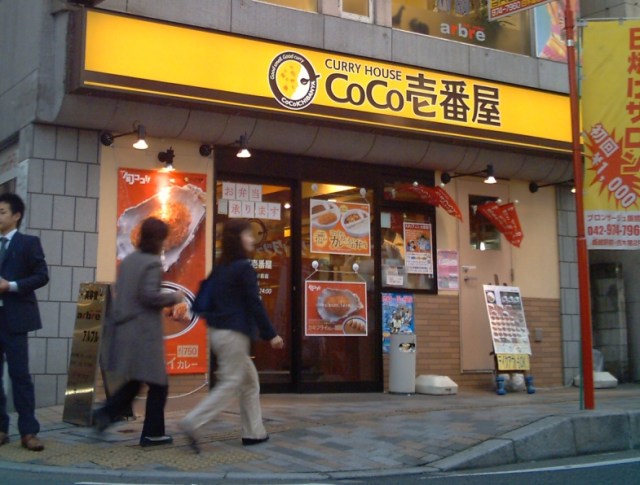
What’s the secret to Coco Ichi’s reign of the curry kingdom?

Curry is pretty much the ultimate Japanese comfort food loved by children, adults and picky eaters alike. And with data showing that Japanese people eat curry more than once a week, it has definitely become one of the country’s national foods despite its Indian-British origins. And one curry restaurant in particular, Curry House Coco Ichibanya or “Coco Ichi” to its patrons, is reaping the benefits of this curry craze, claiming about 80% of the market share! With more than 1,200 shops in Japan and 116 overseas franchises, it seems like nothing can stop this curry giant.

Read More

Japanese women reveal their biggest expenditures ever

A while back, I’d been struggling for months with an old laptop that took a solid 30 minutes to start up each morning. My repeated attempts to rectify the problem, using the most advanced electronics trouble shooting techniques known to me (hurling every curse word I knew in both English and Japanese at the screen), only proved successful in cutting the waiting time down to 29 minutes, unfortunately.

Eventually, I bit the bullet and bought a new laptop. Despite my lovely and crafty wife talking the salesman into a 3,000 yen (US$30) discount, it was still the most expensive thing I’ve ever bought. Not that I’m complaining of course. It works great, and since almost all of my work, in-home entertainment, and overseas correspondence is done through my PC, my life is honestly better for having purchased it.

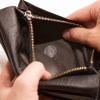
You can’t always count on being completely satisfied every time you drop a giant wad of cash on something, though. Japanese women’s Internet portal My Navi Woman recently released the results of its survey on working women’s biggest expenditures, and whether or not they got hit with a dose of buyer’s remorse afterwards.

Read More

There are certain things almost everyone who moves to Japan seems to like. The food? Tasty and healthy. Public transportation? Clean and punctual. But Japanese TV? Let’s just say there’s a reason Internet access is one of the first things new arrivals in the country look to outfit their apartments with.

It turns out this lukewarm reaction to the country’s programming isn’t just a foreigner thing, either, as some 75 percent of Japanese citizens polled by the Asashi Shimbun newspaper also said that TV has become boring. Today we look at why.

Read More

Among the Japanese language’s many unique loanword mashups is nominikeshon, a hybrid of “nomi / drinking” and the English “communication.” Nominikeshon is a term that gets applied to the common Japanese business practice of workers from the same company going out together for a beer (or six) after work, and hopefully strengthening their bond along the way.
But even if you’ve technically punched out, if you have to spend time with your boss, with a large chunk of it used to talk shop, couldn’t you make the argument that you’re still working? In which case shouldn’t you get paid for drinking with your coworkers?

Read More

Quick, what color means “go” at a traffic signal? If you speak English, odds are you just said “green” (and if you don’t speak English, why are you here? The articles with pictures of cute girls and cool robots are in a different part of the site).

On the other hand, in Japanese that same light is considered ao, which translates as “blue.” Crazy as it may seem, the Japanese concept of the color extends all the way down to the hues of traffic signals and mountain forests. It’s just one example of how the same word can have different meanings in different cultures.

OK, so that may be true for artsy fartsy things like colors, but surely this kind of linguistic flatulence isn’t present in the world of business, right? Wrong. Even seemingly simple things like the term “quality” can have vastly different meanings depending on the nation, as one expert demonstrates by explaining the differing definitions consumers in the U.S., Japan, Korea, and China have for it.
Read More

The incredible business card of the Chinese millionaire who wants to buy The New York Times

Chen Guangbiao is an audacious man, and not just because he wants to buy the New York Times for $1 billion (or $2 billion or $3 billion).

One of China’s top 400 richest people, he was estimated to have a personal fortune of worth $740 million in 2012, but how he’s really made his name is by high-profile charity donations — something he brands “flashy philanthropy.”

Read More

5 reasons Japanese convenience stores rock

You have probably noticed that we here at RocketNews24 are huge fans of Japanese convenience stores. And if you have ever lived in or visited Japan, odds are you too came to love these amazing places. But what exactly makes Japanese convenience stores so different and special compared to those overseas? Click below to see five reasons why we think these “conbini” totally live up to the hype! 

Read More

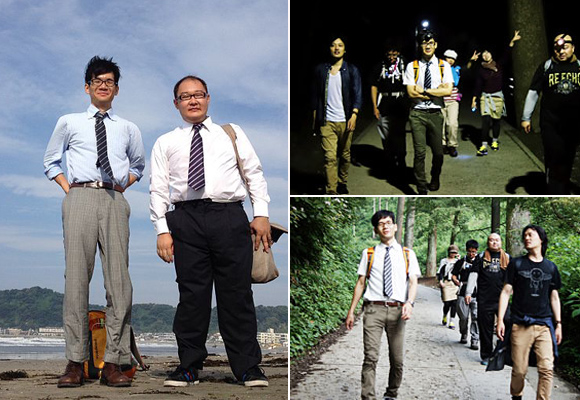
“Extreme going to work” looks to change the way business is done in Japan

Ever consider going having a meal with friends or watching a movie on your way to work? While many of us can’t help reaching for the snooze button in the morning, there is a growing number of people who are waking up hours earlier and having a social life before they go to work.

The movement is called Extreme Shussha (extreme going to work) and as of this summer it has been getting increasingly popular in Japan. The rules are simple: Don’t be late for work; don’t bother anyone; and don’t fall asleep when you get there. Beyond that you can do whatever your heart desires.

Read More

【Partner applications now open】Want to publish your site’s content on RocketNews24?

RocketNews24, the home of all things weird and wonderful from Asia, is currently looking for partners to join our expanding network. If you’d like to share your site’s Asia-related content on RocketNews24, get in touch today!

We are currently working with sites such as America’s Business Insider to provide our readers with the best in fun and entertaining news content from Asia, and our network is growing fast.

For more information about partnering, contact us at: info[at]en.rocketnews24.com

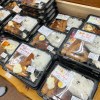
【Thursday Throwback】Best Japanese customer service

I am crazy about Calbee Lightly Salted Potato Chips. I find its balance of saltiness and crispy texture to be really addictive. Some of my friends are fans of other chip brands, but I have stuck to Calbee’s for quite a long time.

The other day, I was enjoying a bag of chips when I happened to feel something like a hair in my mouth. I spat it out and saw something that looked like a thread attached to a chip. There was little doubt that what I saw was an accidental artifact of the production process.

Read More

A Japanese clothing store’s misadventure in Bangladesh: The importance of marketing research

Clothing stores which quickly and cheaply offer fashions based on the latest trends such as H&M and Zara have been enjoying a high level of popularity, especially in the last decade. Shops following this model known as “fast fashion” can also be found in Japan with its largest by far being Uniqlo.

Recently we ran an article speculating why Japanese companies are slow to take risks, but that’s not always the case. In the highly competitive and globalized world of fast fashion sometimes you have to make big moves. That’s just what Uniqlo did, and they moved right into Bangladesh, which has been deemed a “least developed country” by the UN.

Read More


The last couple of years haven’t been particularly kind to Suzuki Motor Corporation. The company’s US division filed for bankruptcy in 2012, and the automaker announced that it would be halting sales of passenger cars in both America and Canada.

Suzuki still sells cars in its home market, but recent moves by Japanese politicians looking to scale back tax breaks for the compact cars the Shizuoka-based manufacturer specializes in have put it in a precarious position. As the man in the hot seat, Suzuki CEO Osamu Suzuki has come up with a bold and unorthodox plan: openly insult his customers.

Read More

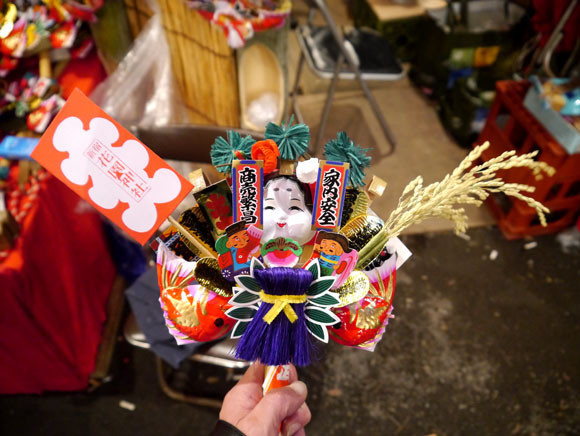
We pick up a new good luck charm at the Tori no Ichi Festival in Shinjuku

Japan’s urban and rural areas alike are dotted with temples and shrines, but there’s no practice of attending regular services at them. Instead, visitors primarily come to offer a few yen as a donation, say a quick prayer, and pick up one of the plethora of good luck charms and amulets sold there, many of which have specific purposes such as passing an important exam or finding a new love.

But every member of our team is already out of college, and so popular with the opposite sex that we’re starting to feel bad about not leaving any for the rest of the populace. Looking further down our to-do list, we noticed that “build mansion with supermodel grotto” was preceded by “achieve economic success,” so we decided to head to our local Shinto shrine for Tori no Ichi, Japan’s annual festival for buying good luck charms for success in business.

Read More

Starbucks: More expensive in China than Japan or America, but why?

It’s safe to say that no one you see at Starbucks is there because they want to stretch their java-buying budget. With locations in more than 60 countries (and seemingly every branch in the Tokyo area at maximum capacity every day between 3 and 7 p.m., the Seattle-based chain must be doing something right, but sometimes it’s hard not to feel a bit surprised at the prices they charge.

But the next time you’re sitting in a Starbucks in Japan or America, pretending to sip from an empty mug because you’re not quite ready to disconnect from the free wi-fi but don’t feel like laying out the cash for another cup, consider yourself lucky. You’d be paying a lot more for your latte if you were at a Starbucks in China.

Read More

Recently, a number of Japanese college students irked their universities when posts about their rule-skirting shenanigans showed up on everyone’s favorite social network for immortalizing bad decisions, Facebook.

But underage drinking is almost universally accepted in Japan, and colleges here lack the animal mascots that are prime kidnapping targets in American institutions of higher learning. Just what kind of shameful, inappropriate behavior had these kids been up to?

They’d been getting job offers from A-list companies.

Read More

Still no arrests one year after Japan officially begins prosecuting Internet pirates

In the year since revisions to copyright law in Japan made illegal downloading a crime punishable with jail time and heavy fines, the music industry hasn’t experienced a significant increase in profits. In fact, police have yet to prosecute anyone for the crime! It kind of make you wonder if they know that Internet pirates don’t have peg-legs and eye patches…

Read More

Just as in other countries, having a high-power, high-paying job such as doctor or banker will do a lot to expand a bachelor’s potential dating pool in Japan. Your profession is a reflection of, and at the same time an influence on, your values and identity. As in most countries, it’s inevitable that when first meeting someone, they’ll use your line of work as a shortcut to try to figure out how compatible you’ll be romantically. Success is always attractive, and there’s no quicker way to communicate it than through wealth.

But money isn’t everything, of course! Sometimes more important than number of yen in your bank account is how you earn them, as shown in a recent online survey that found nine occupations Japanese women find attractive in a potential boyfriend.

Read More

Tokyo’s selection as the site of the 2020 Olympics seems to have put all of Japan in a good mood. Economic analysts wondered if this optimism would carry over into the investment world, and indeed a modest market-wide rally seems to be building.

One corporation caught up in the surge, however, saw its entire stock price increase wiped out in less than an hour, with some saying the fluctuation was caused by its name.

Read More

  1. 1
  2. ...
  3. 13
  4. 14
  5. 15
  6. 16
  7. 17
  8. 18
  9. 19
  10. 20