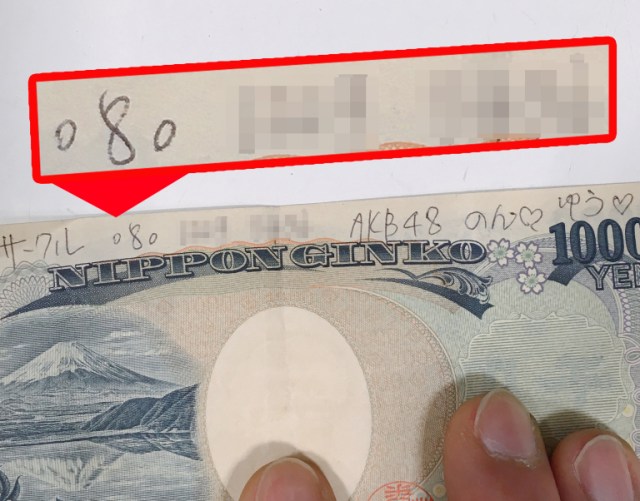
Our reporter tried to uncover the truth behind “AKB48 Non Yuu” and their mysterious phone number.
Bringing you yesterday's news from Japan and Asia, today.
money (Page 6)
Our reporter tried to uncover the truth behind “AKB48 Non Yuu” and their mysterious phone number.
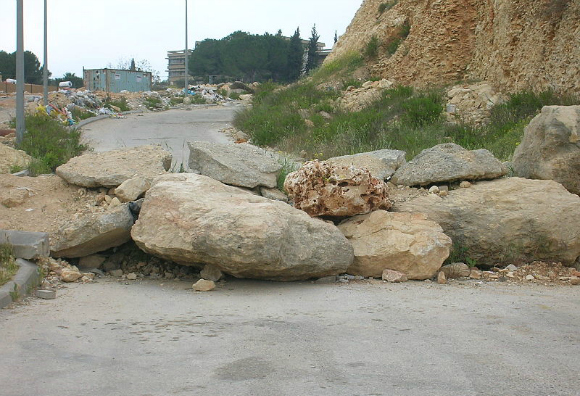
Shimane Prefecture awards a college student’s family a settlement in restitution for the roadside accident that took her life.
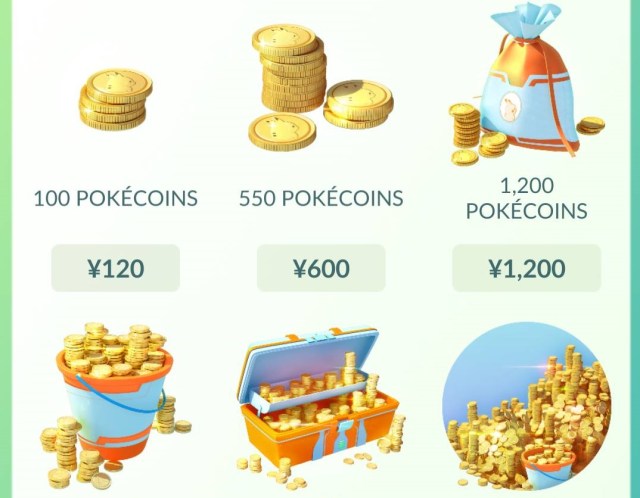
Japan’s Financial Services Agency opens an investigation into whether or not PokéCoins fall under jurisdiction of the country’s Payment Services Act.
Read More
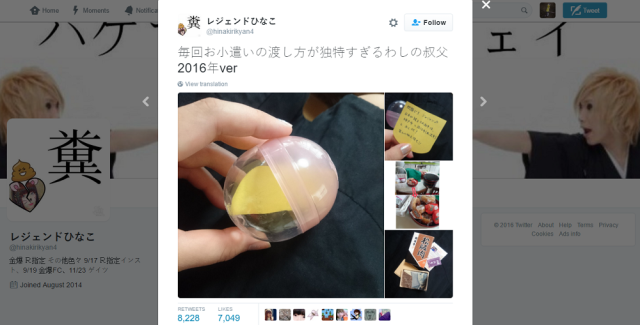
Why just hand your loved ones money when you can send them on an adventure? The experience is priceless!
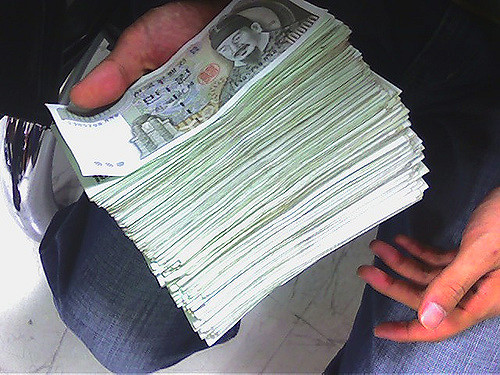
The 58 year-old winner’s mother and daughter say they’re entitled to part of his winnings and went as far as to stage a protest at the local city office.
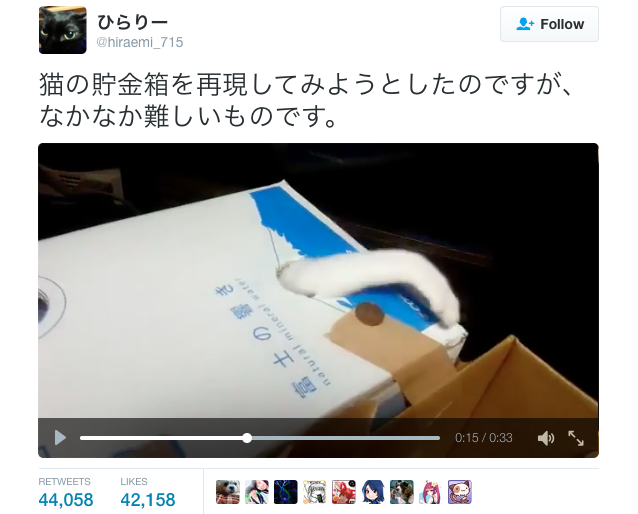
While Japanese coin box toys feature sweet cats who kindly take your change for safekeeping, real cats like this prefer to do other things with your money!
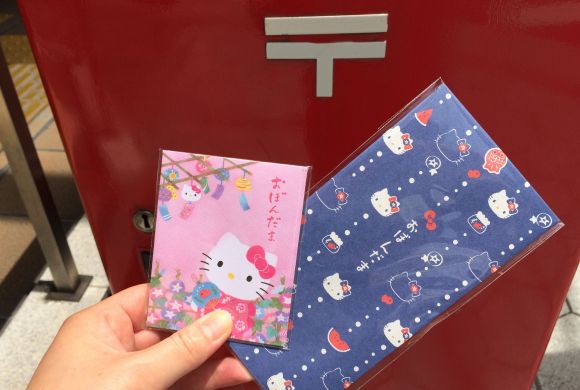
A lesser-known Yamagata Prefecture custom may just be what Obon needs to stave off invasive species of the holiday kingdom like Halloween, Christmas, and Easter.
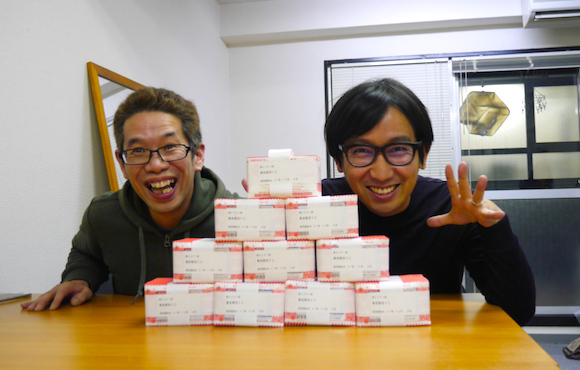
We dropped 1 million yen (approximately US$8,300) on 5,000 Japan National Lottery scratch-off tickets to see if buying in bulk translates to bigger wins.
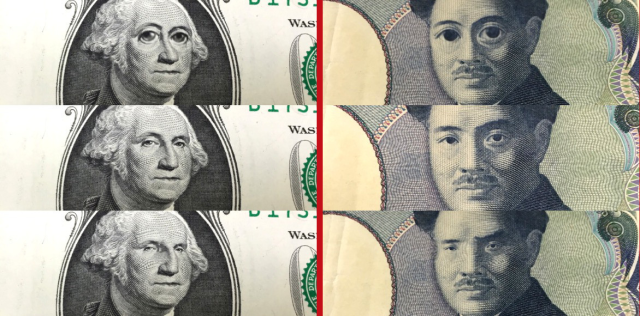
They say the most expressive part of your face is the eyes. The rest of the face might be saying “happy times”, but if you focus on the eyes, you might see “sad times,” or vice versa.
Purikura machines, or sticker picture machines, have long had an eye enhancement option, so it only makes sense for an application on your phone to have one as well. Many of them can even be used on everyday objects that have people’s faces on them, like the money resting in your wallet. But how do the respected and historical figures on cash look when you manipulate the size of their eyes? Is some secret emotion going to be revealed? Let’s find out after the jump.

As you may have heard, there’s an epidemic in South Korea. Since last month, more than 150 people have contracted the deadly MERS (Middle East Respiratory Syndrome) virus, among whom 19 have died.
As a result, foreign tourists in South Korea have been leaving the country in droves, and the usually-thriving tourism industry has been suffering. To try and help alleviate matters, South Korea’s Ministry of Culture, Sports and Tourism has made a somewhat unusual decision: they will pay tourists US$3,000 if they contract MERS while in South Korea.
Ladies, do you think that life is all fun and games for your male counterparts? As a multitude of men would have you know, that’s certainly not always the case.
The following list chronicling all the expectations and financial burdens placed on Japanese men both before and after marriage has been circulating the web. Of course, not to rule out the many challenges that women also face, myself being a woman, perhaps it would be better to just say that life can be a real drag for everyone.
Do you find yourself living in the now, enjoying the time and money you have presently without worrying so much about putting away for the future? According to one economist, the language you speak may play a role in how well you’re able to save money. Speakers of Norwegian or Japanese, for example, are more likely to save more money per year, and have more money saved up by the time they retire, than are speakers of, say, English or Greek.
But what is it exactly that differs between these languages, and most importantly, what relation does that have to money?
Imagine this. You’re at a fireworks festival with almost one million people in attendance. Everyone is scrambling for a place to sit and stampeding for the exit when it’s over. In between standing in line for a tasty treat and being dazzled by the fireworks spectacle, you realize something terrible. You’ve lost your wallet. Now what?
In Japan, you just go to the nearest police box, or koban! In 2014 alone, a stunning amount of cash and lost possessions was turned into police stations around Tokyo. In cash alone, over 3.3 billion yen was turned in. That’s a whopping US$27.8 million picked up and taken to the authorities. Could that happen anywhere else in the world?
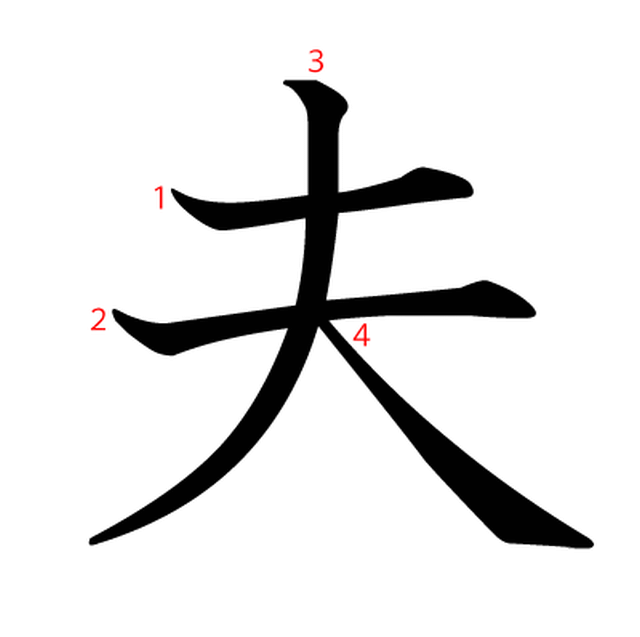
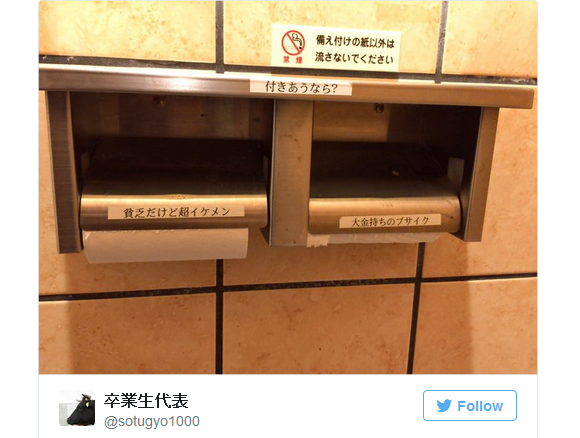
The common stereotype about women among sexually frustrated, mostly parents’ basement-dwelling, men is that girls only go for attractive, rich guys, and never the nice, tender guys with warm hearts and chic fedoras.
Well, when it comes to one of those observations, anyway, there appears to be at least one cultural precedent of a diabolical hidden message that seemingly proves the stereotype right in one of the very words that defines men and women’s relationship in Japan…

Christmas Eve in Japan is very much a date night, perhaps the biggest of the year. Couples go to see festive Christmas lights, have a nice dinner and exchange gifts; the night really matters. But about those gifts…
How much money are you planning on spending on your significant other this holiday season? How much are you expecting them to spend on you? If you’re single, how much do you think your potential darling would want to dish out for a Christmas present? A recent poll gives us a great insight into how much we should probably be spending.
 Pokémon Company announces first-ever permanent Pokémon store to open outside Asia
 One of Tokyo’s most beautiful soft serve ice creams is also one of its trickiest to find [Photos]
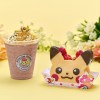 Pikachu Shortcake Sandwich set to be Tokyo’s newest photogenic treat for Pokémon Trainers
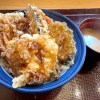 Japan’s newest tempura is…potato salad tempura?!? [Taste test]
 New Studio Ghibli anime gets extended run at the only cinema in Japan where it’s being shown
 Super Mario creator Shigeru Miyamoto to receive Order of Culture from Japanese emperor
 Ghibli composer Joe Hisaishi named Composer-in-Residence of Los Angeles Philharmonic
 Family Mart releases 47 convenience store socks and stickers, one for every prefecture in Japan
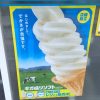 Family Mart enters the soft serve game with giga-sized cones of milk or matcha goodness
 Tokusatsu hero “Moonlight Mask’s” pocket change donations help traffic accidents victims in JapanPokémon Company announces first-ever permanent Pokémon store to open outside AsiaNew Studio Ghibli anime gets extended run at the only cinema in Japan where it’s being shown
 Studio Ghibli creates illustrated Kyoto sightseeing map, available at any 7-Eleven Japan store
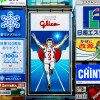 Osaka’s famous Glico Running Man will be removed and replaced with a new-look signFamily Mart enters the soft serve game with giga-sized cones of milk or matcha goodness
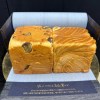 Tokyo bakery has a crazy expensive 10,000-yen bread loaf set, and we’ve tried it [Taste test]
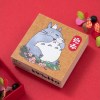 New Studio Ghibli stamps – Too cute to wait until New Year’s to use, so they’re available right now
 Eight low-key great places to spend the day (or half a day) in Japan this fallFamily Mart releases 47 convenience store socks and stickers, one for every prefecture in Japan
 Japanese sushi etiquette: You may have been ordering sushi wrong this whole time
 Japan announces new permanent residency guidelines, foreigners must earn more than average Japanese personPokémon Company announces first-ever permanent Pokémon store to open outside Asia
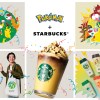 Starbucks Japan unveils new Pokémon collaboration with Pikachu Latte and exclusive goods
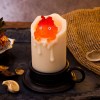 Studio Ghibli’s Calcifer is ready to light up your home as a magical-looking candle lamp [Photos]Family Mart releases 47 convenience store socks and stickers, one for every prefecture in Japan
 Lady Gaga and Family Mart team up for a Japanese convenience store work video [Video]
 What’s it like to stay in a Japanese container hotel?
 Tokyo train station will play Godzilla theme song as new departure melody
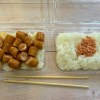 Do Japan’s new single-minded convenience store bento show depressing poverty or satisfying focus?New Studio Ghibli anime gets extended run at the only cinema in Japan where it’s being shown
 Japan announces sudden 400-percent increase in visa fees for foreigners entering the country
 Japan’s human washing machines will go on sale to general public, demos to be held in Tokyo
 Studio Ghibli has a new anime out, and there’s only one place in the world where you can see it
 Starbucks Japan releases new drinkware and goods for Valentine’s Day
 Starbucks Japan releases new sakura goods and drinkware for cherry blossom season 2026
 Japan’s newest Shinkansen has no seats…or passengers [Video]
 Tokyo subway installing new ticket gates that don’t accept payment through Suica or other IC cards
 Japanese ninja certification exam attracts 131 candidates from Japan and abroad
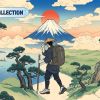 Salomon releases Japan-exclusive Mt. Fuji hiking gear that doubles as an amazing souvenir
 Japan reportedly adding Japanese language skill requirement to most common foreigner work visa
 Super Mario creator Shigeru Miyamoto to receive Order of Culture from Japanese emperor
 Ghibli composer Joe Hisaishi named Composer-in-Residence of Los Angeles Philharmonic
 Family Mart releases 47 convenience store socks and stickers, one for every prefecture in Japan
 Family Mart enters the soft serve game with giga-sized cones of milk or matcha goodness
 Tokusatsu hero “Moonlight Mask’s” pocket change donations help traffic accidents victims in Japan
 Trial of terminally ill cancer patient who found 22 million yen on the street and kept it ends
 Japanese scientists developing cute, autonomously swarming robo dogs for anti-bear patrols [Video]
 America is getting its first-ever One Piece store, and the opening date has been revealed!
 Japanese sushi etiquette: You may have been ordering sushi wrong this whole time
 Tokyo bakery has a crazy expensive 10,000-yen bread loaf set, and we’ve tried it [Taste test]
 There are goats spending every day in downtown Tokyo, but why? [Photos]
 Zombies serve cocktails and Pochita turns into parfait at Universal Studios Japan this Halloween
 Osaka’s famous Glico Running Man will be removed and replaced with a new-look sign
 Studio Ghibli creates illustrated Kyoto sightseeing map, available at any 7-Eleven Japan store